
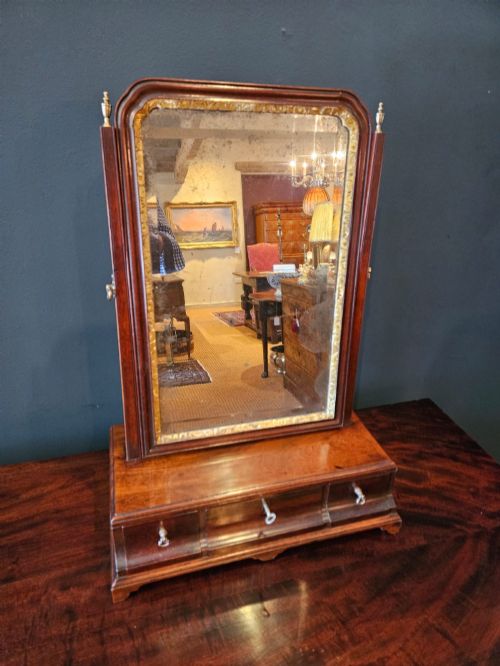


George II Dressing Mirror
A george ii dressing mirror brings mid-eighteenth-century elegance to a chest or table, offering a tilting glass set within a fitted miniature cabinet.
George II Dressing Mirror
When searching for a george ii dressing mirror, buyers examine compact pieces designed for personal grooming on a table or chest. These items combine a movable mirror plate with a small base often fitted with drawers for small valuables.
Walnut and mahogany dominate the selection on this page, appearing in both plain finishes and more decorative parcel-gilt formats. Examples range from eighteenth-century originals to later nineteenth-century revival pieces modelled in the same style.
The form spans standard toilet mirrors and dressing glasses alongside related dressing tables. Many feature upright frames supported by shaped arms resting on a box base.
How they were made
Cabinetmakers constructed these mirrors using solid timbers like walnut and mahogany, frequently applying figured veneers to the base and uprights. Secondary woods provided internal structure for the small drawers housed within the box stands.
Glass plates were silvered by hand and held within frames that pivoted on brass side screws or pivot pins. Detail was added through parcel-gilt touches, gold leaf, and occasionally inlaid marquetry or figuration in the wood.
Hidden small drawers inside the base once kept secret beauty patches safe from curious eyes.
What varies in quality
The selection ranges from utilitarian workshop pieces to finely proportioned examples with exceptional timber figure. Figured walnut and flame mahogany elevate the visual impact of the base significantly.
Details such as parcel-gilt accents, carved mouldings, and original mirror glass distinguish finer pieces from simpler counterparts. The crispness of the joinery on the miniature drawer boxes also marks the standard of the maker's hand.
JOHN FRANKLIN LONDON
The George II Dressing Mirror Glossary
- Toilet mirror
- A small mirror designed to sit on a dressing table or chest, typically incorporating small drawers in the base.
- Parcel-gilt
- Partially gilded woodwork, where thin layers of gold leaf highlight specific carved details or mouldings against a dark wood background.
- Figured walnut
- Wood sliced from walnut trees that displays rich, swirling grain patterns highly prized for cabinet fronts.
- Swing-lock
- A mechanism allowing the mirror plate to tilt to various angles and remain fixed in position.
- Kneehole dressing chest
- A larger furniture form combining a dressing table with a central recess for the user's knees, sometimes topped with a mirror.
George II Dressing Mirror: Frequently Asked Questions
Where were dressing mirrors placed?
These mirrors rested on top of chests of drawers, side tables, or dedicated dressing tables in bedrooms and dressing rooms. Their compact footprint allowed them to be moved easily around the home to follow the best natural light.
Today, they sit comfortably on modern dressing tables or console surfaces, continuing their original function while serving as decorative tabletop antiques.
How do I spot a period piece?
Examine the timber, construction methods, and hardware used in the frame and drawer linings. Eighteenth-century examples display hand-cut dovetails and timber characteristics consistent with the period.
Compare the piece against documented examples from the seventeen-fifties to verify that the proportions, brass fittings, and mirror frame match authentic construction practices.
What is the difference between walnut and mahogany versions?
Walnut versions generally point to earlier eighteenth-century production, frequently displaying rich grain patterns or parcel-gilt details. They offer a warmer, softer tone compared to darker brown woods.
Mahogany alternatives became dominant later in the century, providing a sturdy, dense frame that often accommodated carved mouldings or serpentine drawer fronts with ease.
Are the mirror plates original?
Many surviving dressing mirrors retain later glass plates because original mercury silvering degrades over decades of use. Replacement mirror glass is common and often preferred for a clearer reflection.
When antique glass does survive, it frequently shows minor foxing, distortion, or edge thinning that testifies to its age without detracting from the piece's character.