
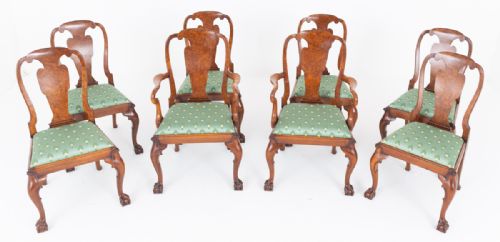


Burr Walnut Dining Set
A burr walnut dining set brings remarkable figuring and period elegance to the room, uniting tables, chairs and sideboards in rich timber.
Burr Walnut Dining Set
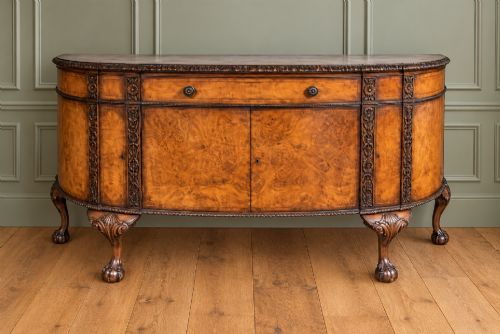
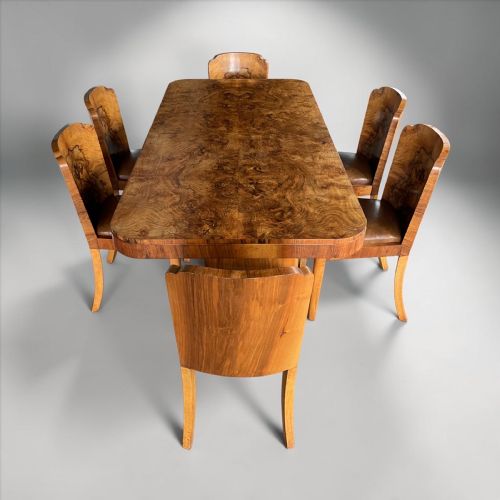
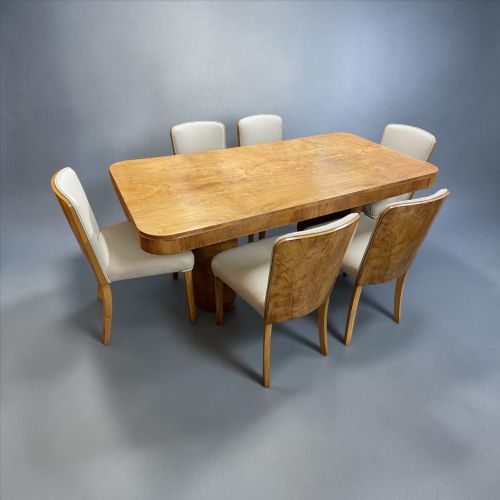
A burr walnut dining set comprises matched groups of dining furniture, typically pairing a central table with a set of chairs, and occasionally accompanied by sideboards or buffets. These ensembles span several distinct periods, most notably the Victorian era, the Edwardian period, and the 1930s Art Deco movement.
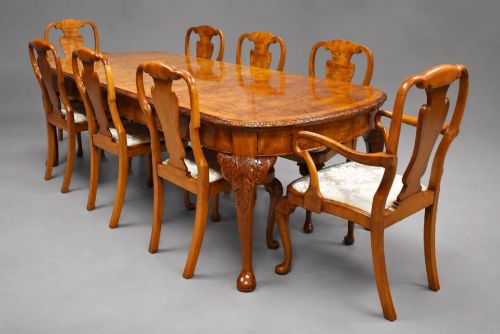
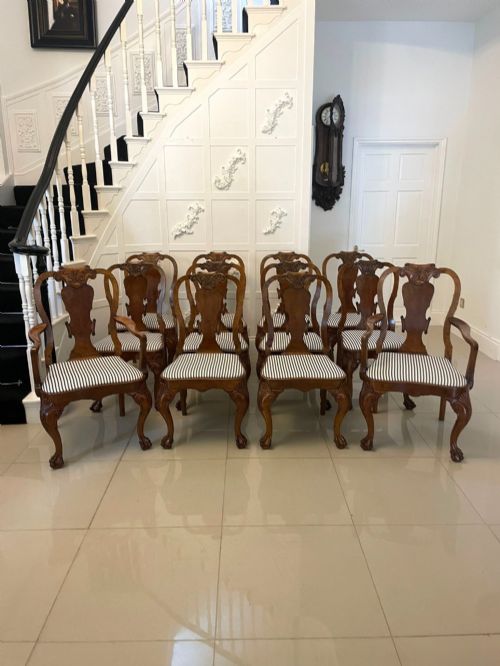
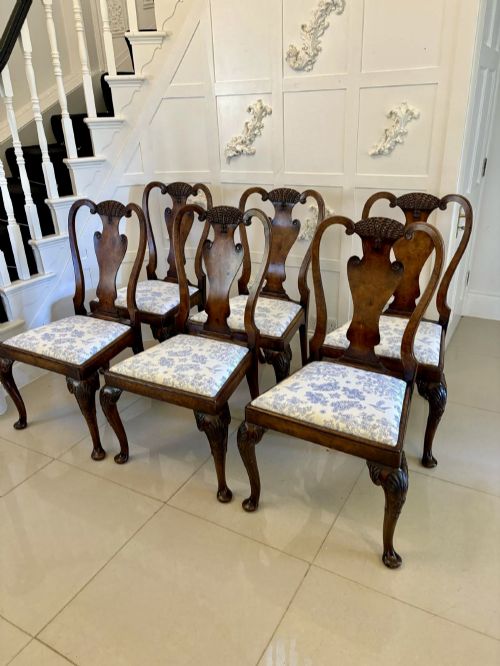
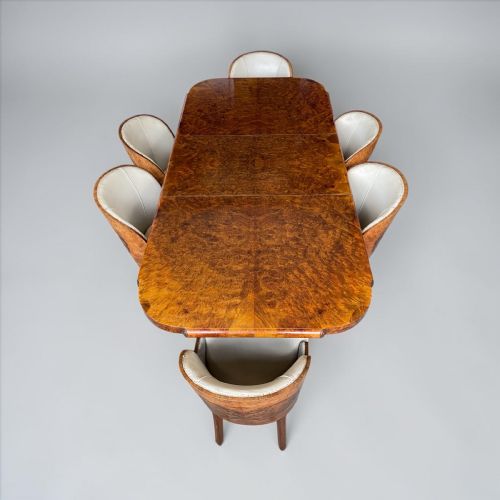
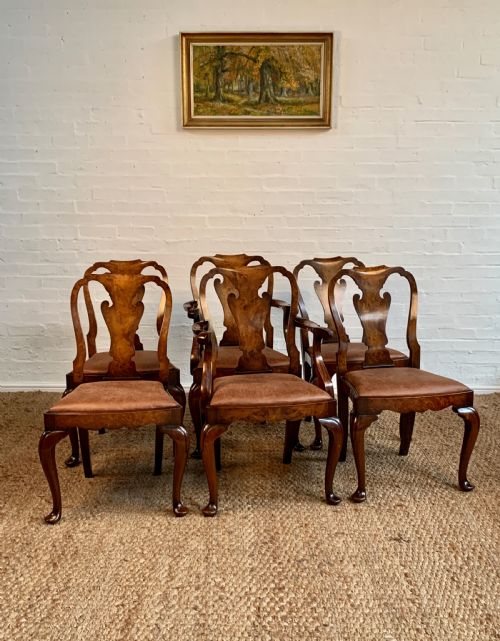
Buyers encountering this phrase on the page will frequently find Queen Anne style or revival suites featuring cabriole legs, alongside streamlined Art Deco suites and cloud back chairs from the early decades of the twentieth century. The groupings range from modest sets of four chairs up to extensive suites of twelve or sixteen matching chairs.
The materials used across these sets centre on walnut and burr walnut veneers, supported by hardwood frames and complemented by leather, fabric or modern upholstery. Sideboards and cutlery canteens often complete the larger dining room suites recorded in the archives.
How they were made
Cabinet makers constructed these dining sets by applying highly figured burr walnut veneers over solid hardwood and walnut carcasses, allowing the intricate swirling grain patterns to dominate large flat surfaces like table tops and sideboard doors. The underlying frames of chairs and tables utilised sturdy hardwoods to ensure structural integrity while supporting complex carved details.
Craftsmen shaped the chair frames and table legs using traditional joinery, often incorporating carved cabriole legs on Queen Anne style pieces or sleek, geometric curves on Art Deco designs. Brass hardware, silver plate and steel components frequently added functional and decorative accents to the associated sideboards and cutlery canteens.
Upholstery techniques varied by period, with Edwardian and Victorian pieces employing traditional webbing and stuffing, while later twentieth-century suites utilised contemporary fabric and leather coverings to finish the dining chairs.
Burr Walnut Dining Set Retail Price Guide 2026
Typical asking prices for burr walnut dining set among the pieces listed under this phrase on Sellingantiques today, from the lower quarter to the upper quarter. They describe what is for sale here now, not the wider market.
Listings feature burr walnut dining sets spanning the eighteenth century through to the 1930s Art Deco period.
What varies in quality
The quality of a dining set rests heavily on the selection and matching of the burr walnut veneer across the table tops and chair backs, where dense, lively figuring commands greater appreciation than sparse grain. Cabinet makers who carefully mirrored grain patterns created a cohesive visual harmony that distinguishes superior suites from ordinary production.
The crispness of the carving on cabriole legs and frame edges reveals the skill of the original workshop, separating finely detailed Victorian and Queen Anne revival pieces from simpler contemporary alternatives. Furthermore, the completeness of original matched sets, particularly those preserving identical chairs in counts of eight, twelve or sixteen, elevates the standing of the ensemble.
Maurice Adams·Harry and Lou Epstein·Hille London·Maple and Co
The Burr Walnut Dining Set Glossary
- Burr walnut
- A veneer sliced from the growth warts or burls of walnut trees. This timber produces highly prized, swirling patterns rich in texture and depth.
- Cabriole leg
- A furniture leg that curves out and down in an S-shape, terminating in a pad or claw foot. This design is characteristic of Queen Anne style dining chairs.
- Cloud back
- A rounded, upholstered chair back style popular during the Art Deco period. The smooth, sweeping contours resemble stylized clouds.
- Canteen
- A fitted box or cabinet designed to hold a set of cutlery. These often accompany larger dining room suites and sideboards.
- Revival
- A design style that imitates or adapts the aesthetics of an earlier historical period. Queen Anne revival pieces frequently date from the Edwardian era and the early twentieth century.
Burr Walnut Dining Set: Frequently Asked Questions
How do I date a burr walnut dining set?
Dating these sets involves examining the overarching style and construction methods present in the pieces. Victorian and Edwardian examples often display traditional carved motifs, whereas 1930s sets typically feature streamlined Art Deco geometry or cloud back chair designs.
Associated cabinet work and maker stamps provide additional chronological markers. Comparing the chair forms and leg styles against documented historical periods helps narrow down the decade of manufacture.
What is the difference between Queen Anne style and Art Deco sets?
Queen Anne style sets draw upon eighteenth-century aesthetics, featuring curved cabriole legs, fiddle-back chairs and classical wood tones. They emphasise traditional ornamentation and graceful, sweeping lines.
Art Deco sets, by contrast, embrace modernist design principles from the 1920s and 1930s. They favour geometric symmetry, bold wood veneers and upholstered cloud back configurations over historical carving.
How should I care for burr walnut veneer?
Burr walnut veneer requires careful placement away from direct sunlight and extreme temperature fluctuations to prevent the wood from drying or fading. Maintaining stable indoor humidity protects the delicate timber surface.
Routine dusting with a soft, dry cloth preserves the polished finish. Avoid using harsh chemical cleaners or excess moisture on antique veneered furniture.
Are larger dining sets harder to find?
Sets comprising eight, twelve or sixteen matching chairs are less common than standard sets of four or six. Larger dining suites were originally commissioned for substantial homes and institutional spaces.
Survival rates for extensive matching suites are lower due to chairs becoming separated or lost over decades of use. Consequently, complete large sets represent more substantial archival groupings.