


Golden Walnut Dining Table
A golden walnut dining table brings rich timber grain and warmth into a room, spanning nineteenth-century Victorian designs to twentieth-century Art Deco forms.
Golden Walnut Dining Table
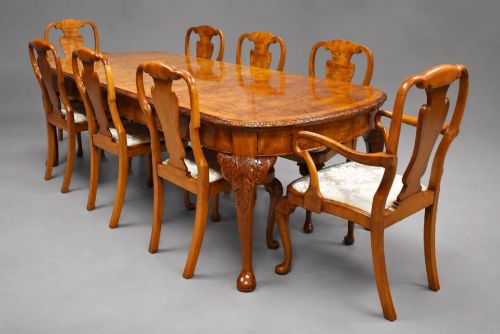
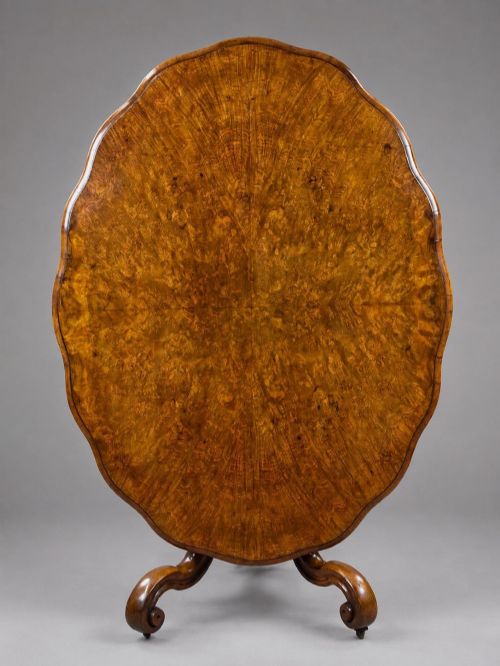
A golden walnut dining table encompasses a range of forms from nineteenth-century Victorian examples to twentieth-century Art Deco pieces. Buyers searching for a golden walnut dining table frequently encounter oval pedestal centre tables, tilt-top loo tables, and large extending dining sets.
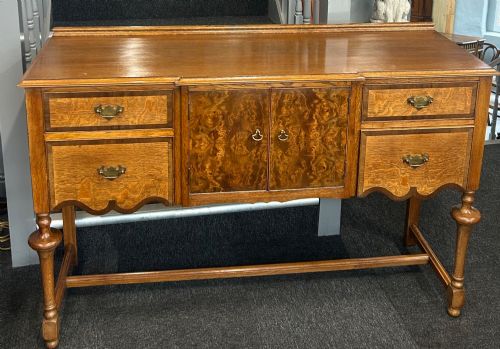
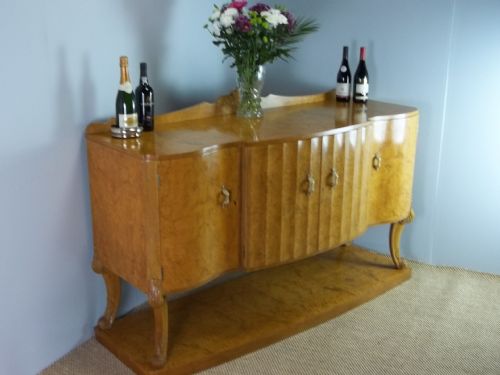
The selection ranges from mid-nineteenth-century items dated around eighteen-fifty to eighteen-seventy through to nineteen-thirties Art Deco suites. Alongside dining tables, related pieces such as sideboards and centre tables appear across these periods.
Victorian and Edwardian pieces sit alongside Art Deco designs from makers such as Epstein and Hille London. This mix offers traditional pedestal formats and twentieth-century extending configurations suited to various interior schemes.
Materials and construction methods
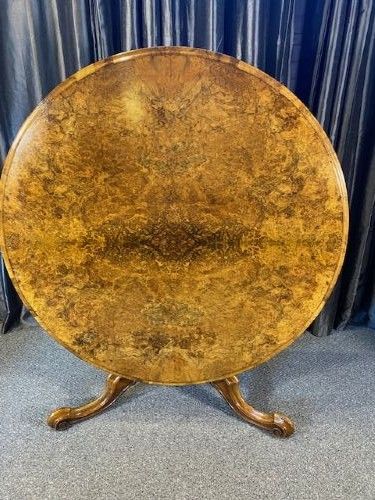
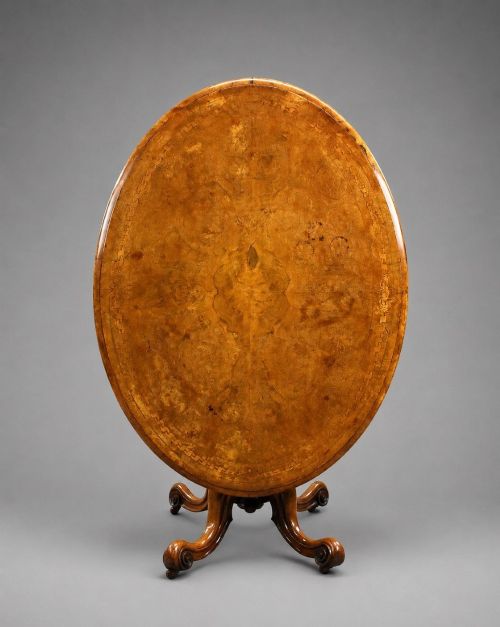
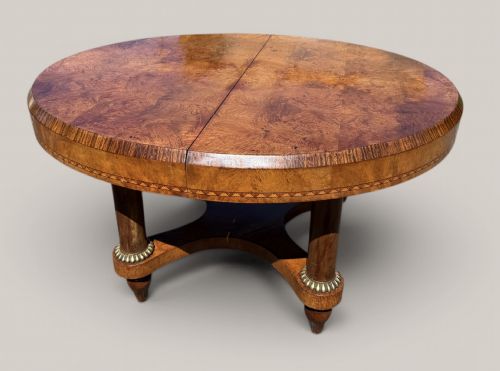
Construction relies heavily on walnut and burr walnut timber, often applied as fine veneers over solid timber carcases to display intricate figuring. Cabinetmakers enhanced these surfaces with contrasting boxwood inlay and supported heavier tops with substantial timber pedestals and brass fittings.
Twentieth-century production introduced extending mechanisms for larger dining suites, while nineteenth-century pieces frequently utilised tilt-top hinges and multi-legged pedestal bases. Artisans selected timber with distinctive grain patterns to create decorative table tops.
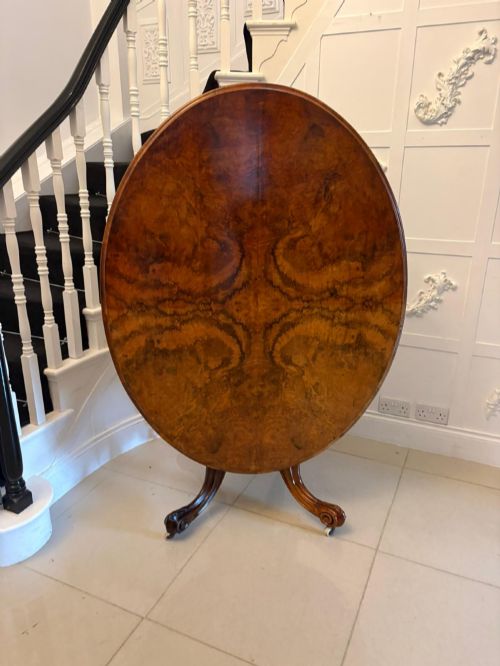
Some nineteenth-century tables tilt entirely vertical, allowing them to double as room dividers when the dining is done.
Factors influencing quality
Quality in these pieces depends upon the selection and matching of the burr walnut veneer across the table top. Finer examples display symmetrical grain patterns and careful integration of inlay work.
The stability of extending mechanisms and the execution of carved pedestals separate standard production from superior workshops. Original maker stamps and firm attributions further distinguish notable examples from anonymous workshop output.
Harry and Lou Epstein·Hille London·Holland and Sons
The Golden Walnut Dining Table Glossary
- Burr walnut
- A figured timber derived from the wart-like growths on walnut trees. It provides complex, swirling grain patterns highly prized for decorative table tops.
- Tilt top
- A mechanism allowing the table top to pivot into a vertical position when not in use. This design feature is common in nineteenth-century pedestal tables.
- Loo table
- A nineteenth-century round or oval game and parlour table. These pieces often feature tilt tops and heavy carved pedestals.
- Centre table
- A freestanding table designed to be viewed from all sides rather than placed against a wall. They appear frequently in Victorian interiors.
- Veneer
- A thin layer of superior timber applied to a secondary wood base. This technique allows cabinetmakers to utilise decorative grains efficiently.
Golden Walnut Dining Table: Frequently Asked Questions
What is a loo table?
A loo table is a nineteenth-century round or oval table originally used for card games. These pieces often feature a tilt-top mechanism and a central pedestal base.
They function well as centre tables in large rooms or as occasional dining surfaces when space permits.
How do I identify Art Deco tables?
Art Deco tables typically date from the nineteen-twenties and nineteen-thirties, displaying streamlined geometric forms and burr walnut veneers. They often form part of large dining suites with matching chairs.
These pieces favour clean architectural lines over traditional Victorian carving.
What is burr walnut?
Burr walnut is a specialised wood cut from tree growths that produce dense, swirling grain patterns. Cabinetmakers use these veneers to create highly decorative surfaces on table tops.
Each piece displays a unique natural pattern determined by the growth of the timber.
Are these tables suitable for daily use?
These tables accommodate daily dining when paired with appropriate seating and treated with standard care for antique timber. Extending versions provide flexibility for larger gatherings.
Regular maintenance helps preserve the polished veneer surfaces against daily wear.