





Victorian Circular Parlour Table
A Victorian circular parlour table is a sturdy domestic piece designed to anchor a room, offering a generous round surface for lamps, books and gatherings.
Victorian Circular Parlour Table
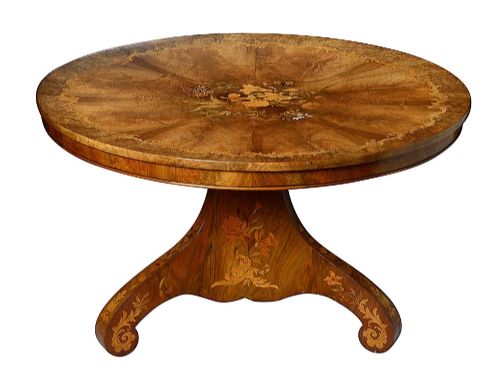
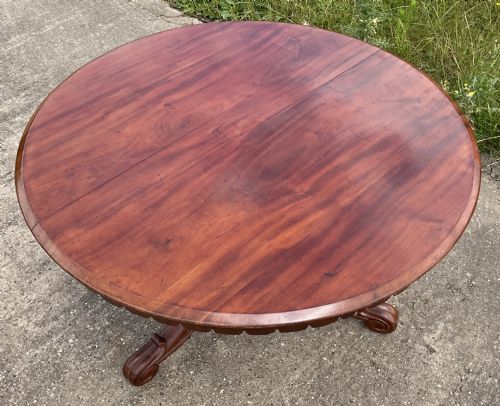
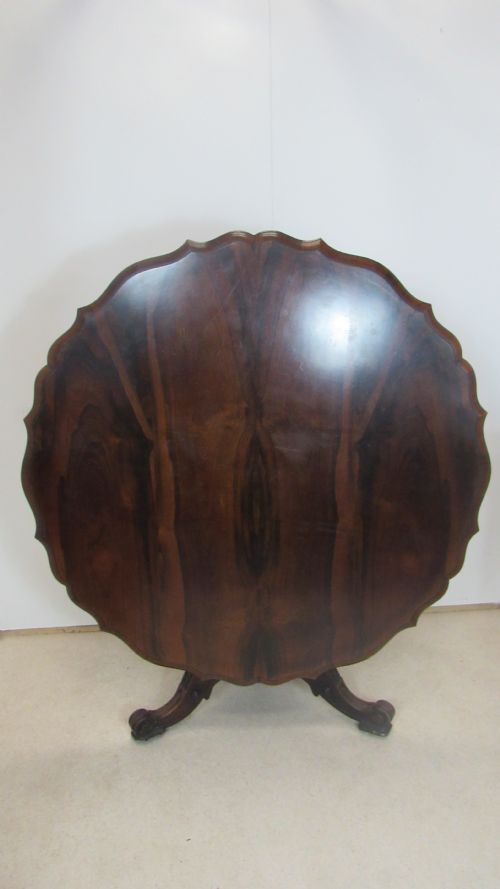
When you search for a victorian circular parlour table, you encounter centre tables, occasional tables and games tables spanning the nineteenth century and the Edwardian period. The forms range from simple mahogany and walnut designs to more elaborate marquetry inlaid pieces and shaped circular rosewood examples.
The versions most frequently met on this page date from the mid nineteenth century, typically around eighteen fifty to eighteen eighty, alongside occasional Edwardian pieces. These tables served multiple domestic functions in period homes, functioning as both functional centrepieces and decorative occasional furniture.
How they were made
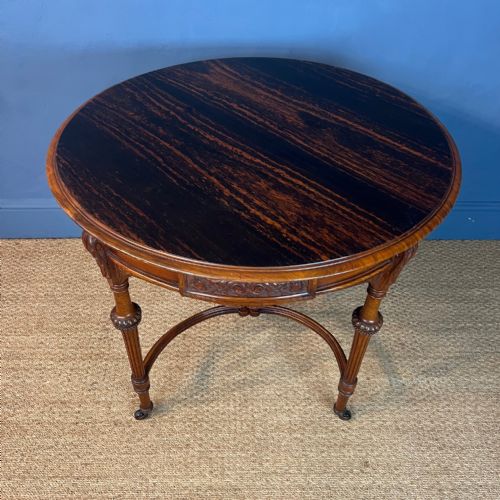
Cabinet makers utilised dense hardwoods such as mahogany, walnut, burr walnut and rosewood, frequently incorporating exotic timbers like coromandel for striking visual effect. Surface decoration relied heavily on intricate marquetry inlay and contrasting ebonised finishes.
Structural elements frequently integrated brass components, while some specialised examples incorporated ceramic elements or complex top configurations designed for specific pastimes like golf games.
Victorian Circular Parlour Table Retail Price Guide 2026
Typical asking prices for victorian circular parlour table among the pieces listed under this phrase on Sellingantiques today, from the lower quarter to the upper quarter. They describe what is for sale here now, not the wider market.
Among the stately mahogany and rosewood surfaces, one table boldly prepares for indoor putting by arriving configured specifically as a golf game table.
What varies in quality
The distinction between standard domestic production and exceptional execution lies in the selection of timber veneers, such as highly figured burr walnut or rich coromandel, and the precision of the marquetry inlay. Cabinet work that displays crisp carving, balanced proportions and seamless joins commands attention.
Stylistic ambition also separates simpler utilitarian tables from sophisticated examples representing the Aesthetic Movement, Anglo-Indian Regency influence or Victorian Rococo Revival.
The Victorian Circular Parlour Table Glossary
- Centre table
- A freestanding table designed to be viewed from all sides, traditionally placed in the middle of a room rather than against a wall. These pieces often feature circular tops and elaborate pedestal bases.
- Marquetry inlay
- The art of applying decorative pieces of veneer to a structure to form intricate patterns or pictures. Craftsmen used various contrasting timbers to create floral or geometric designs across the tabletop.
- Coromandel
- A dense, heavy cabinet wood imported from Asia, prized for its dark brown colour and striking contrasting streaks. It appears on higher-status nineteenth-century tables.
- Aesthetic Movement
- A late nineteenth-century design style that emphasised visual beauty and artistic craftsmanship over heavy historicism. Tables in this style often incorporate ebonised finishes and refined geometric details.
- Occasional table
- A small, versatile table intended for occasional use around the home, such as holding a lamp or decorative objects. They share the circular format common to larger parlour tables.
Victorian Circular Parlour Table: Frequently Asked Questions
Where did these tables sit in a Victorian home?
These pieces typically occupied the centre of the principal parlour or drawing room, functioning as a focal point for the space. They held lamps, books and decorative objects for family use.
In larger houses, similar tables also served in libraries and reception rooms where guests gathered for conversation and tea.
How do I identify a Victorian parlour table?
Look for characteristic timber selections such as mahogany, rosewood and walnut, combined with period construction methods. The presence of circular tops supported by substantial pedestals is typical.
Stylistic indicators such as marquetry inlay, ebonisation and influences from the Aesthetic Movement or Rococo Revival further confirm the period.
Can I use a games table for dining?
These tables were primarily designed for parlour gatherings, decorative display and specific pastimes rather than formal dining. The surface dimensions and internal mechanisms suit lighter domestic use.
Using them for daily meals risks damaging delicate polished timber surfaces and intricate marquetry details.
How should I care for the polished wood surface?
Maintain the timber by keeping the table away from direct heat sources and strong sunlight, which can fade rosewood and mahogany. Regular dusting with a soft, dry cloth preserves the finish.
Avoid using silicone-based polishes and excess moisture, applying traditional wax polish sparingly only when the wood appears dry.