

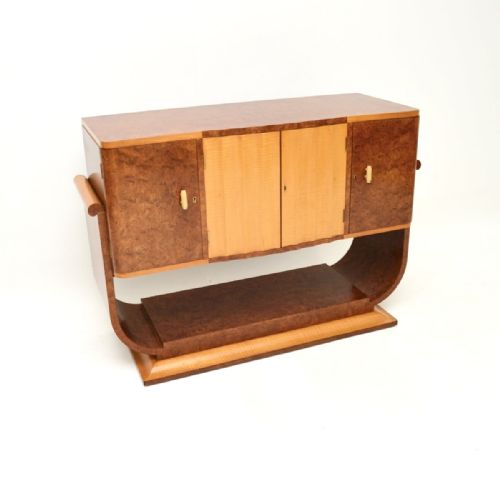
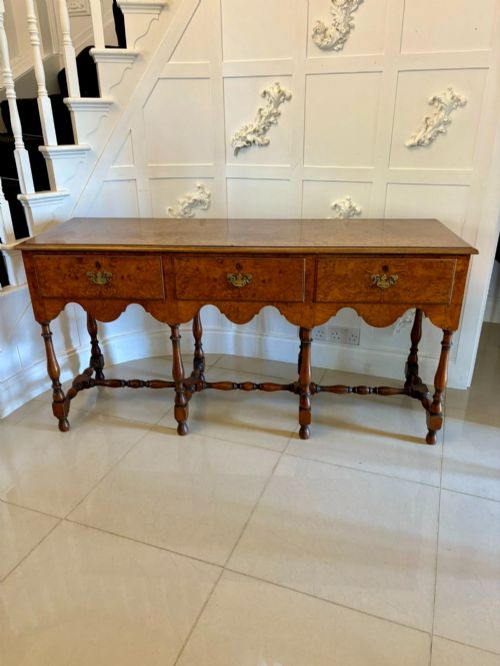
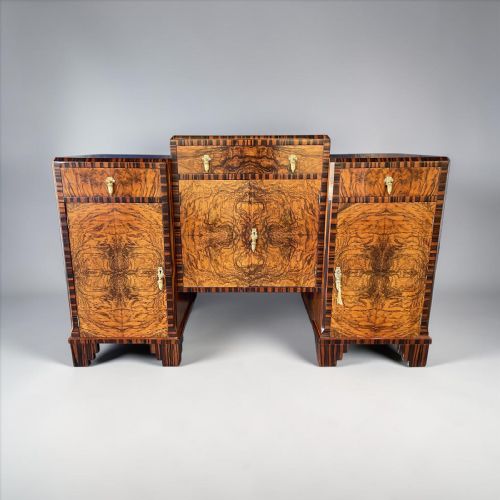
Burr Walnut Buffet Server
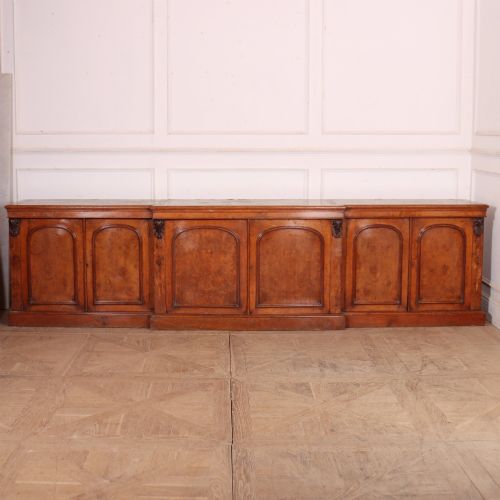
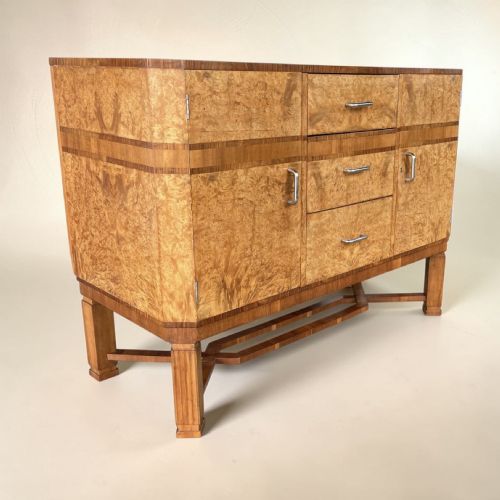
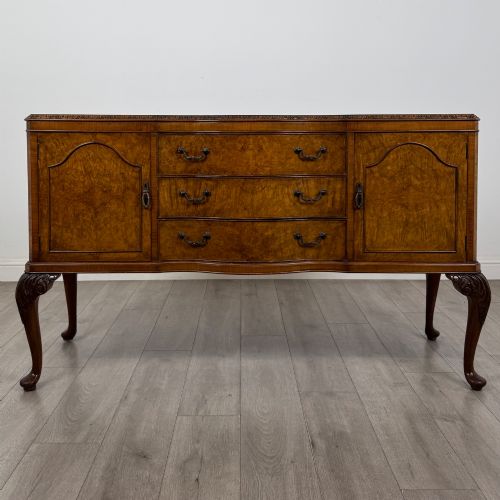
These burr walnut buffet server pieces bring figured timber and practical dining room storage together.
Burr Walnut Buffet Server
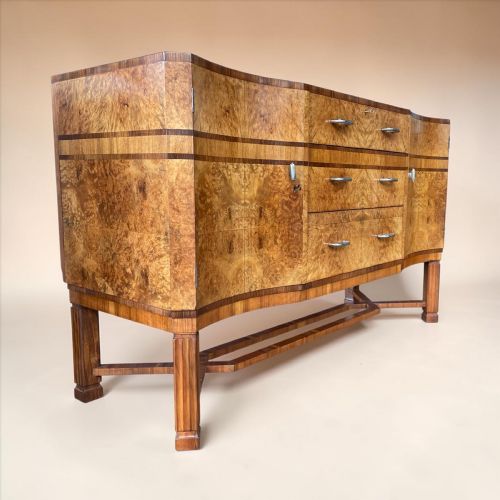
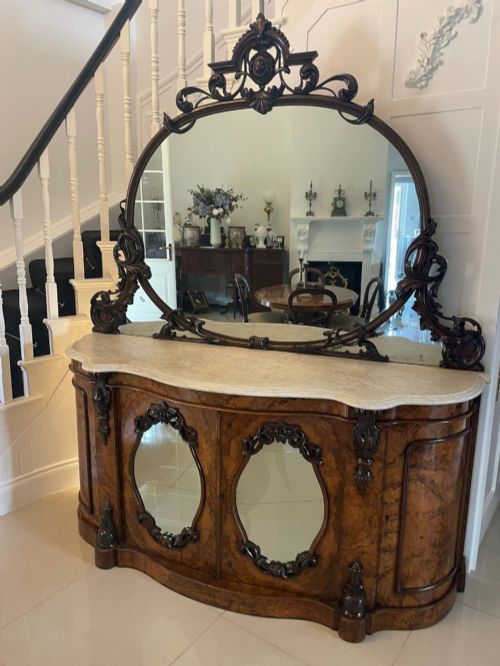
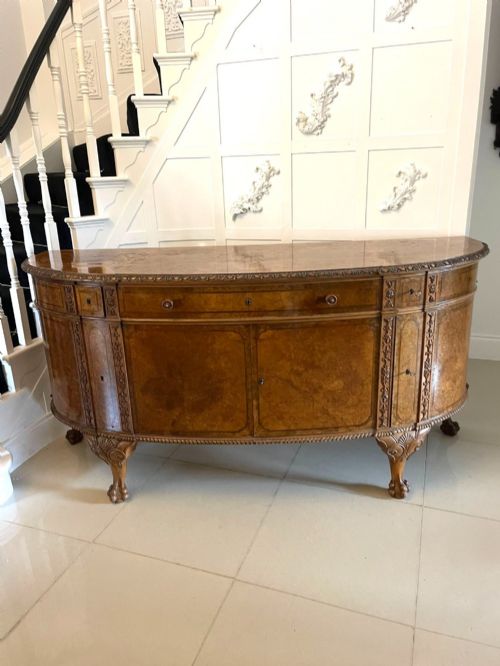
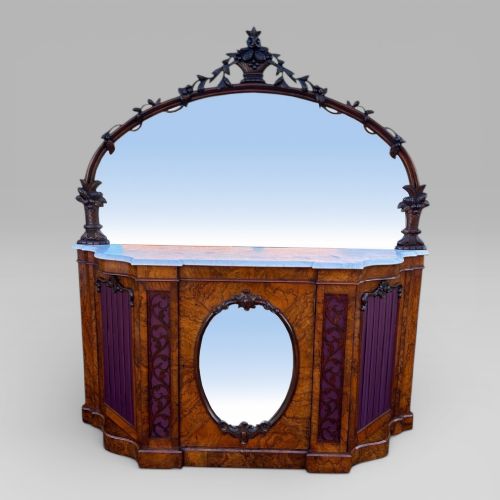
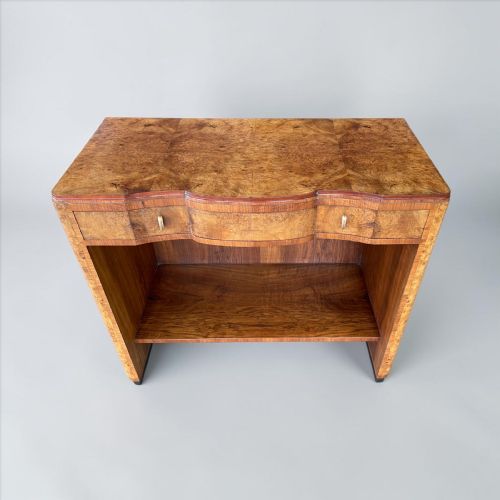
When searching for a burr walnut buffet server, collectors encounter a diverse group of dining room furniture including sideboards, credenzas, serving tables, and dumbwaiters. These pieces originate from various eras spanning the nineteenth and twentieth centuries, with a strong representation of Art Deco designs alongside Victorian and Edwardian examples.
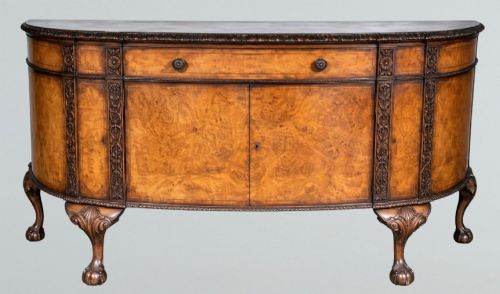
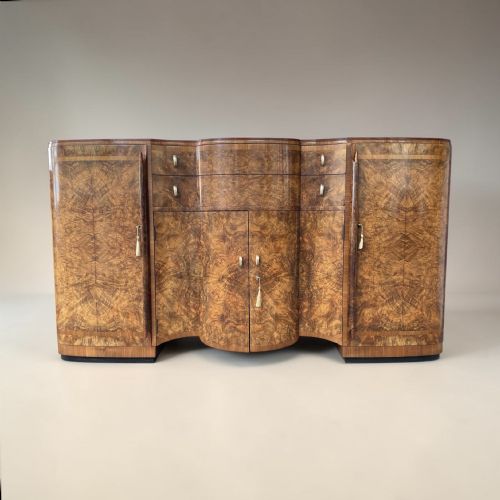
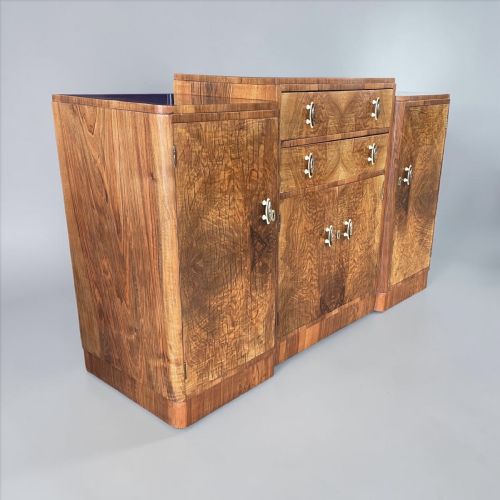
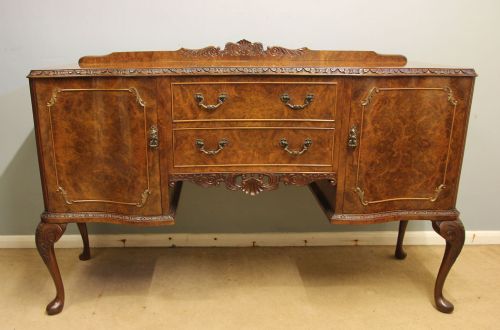
The most common formats on this page are sideboards and servers finished in burr walnut veneer, often featuring serpentine, bow-front, or breakfront shapes. Makers and manufacturers utilised the distinctive grain of the wood to create striking focal points for formal dining spaces.
Materials and Construction
Craftsmen applied figured burr walnut and walnut veneer over solid hardwood carcasses, frequently incorporating marquetry details or contrasting timbers like sycamore. This technique allowed cabinetmakers to showcase intricate swirling grain patterns across large flat surfaces and curved drawer fronts.
Many iterations incorporate functional elements such as marble tops, mirrored backs, brass hardware, and glass doors. Structural integrity relies on traditional joinery applied to heavy hardwood frames, supporting marble slabs and shelved interiors.
Materials documented across the inventory include solid hardwood, walnut veneer, marble slabs, brass fittings, and glass.
Distinctions in Quality
Quality in these servers depends primarily on the selection and bookmatching of the burr walnut veneer across the doors and drawers. Superior examples display symmetrical, highly figured grain patterns that flow seamlessly across the front elevation.
Construction depth and secondary detailing also separate standard production from masterwork pieces. Finer items feature heavy carved ornamentation, substantial marble tops, bespoke brass mounts, and robust internal fittings designed by notable cabinetmakers.
Maurice Adams·Epstein·Harry and Lou Epstein·Hille of London·Hamptons of Pall Mall London
The Burr Walnut Buffet Server Glossary
- Burr walnut
- A prized timber harvested from walnut tree growths that produces complex, swirling grain patterns. Cabinetmakers slice this wood into thin veneers for decorative furniture surfaces.
- Credenza
- A dining room storage unit or sideboard originally designed for displaying plate and serving food. These pieces often feature low profiles and decorative backing mirrors.
- Dumbwaiter
- A tiered serving table fitted with multiple rotating or stationary shelves used for holding dishes. Victorian examples often utilise telescopic mechanisms.
- Marquetry
- The art of applying decorative veneer pieces to a structure to create pictorial designs or geometric patterns. This technique frequently appears on Edwardian and early twentieth-century cabinet doors.
Burr Walnut Buffet Server: Frequently Asked Questions
What is a burr walnut buffet server used for?
These pieces provide storage for dining accessories, cutlery, and glassware while offering a surface for serving food.
Historically, they served as central furniture items in formal dining rooms for organising meals before service.
How do I identify Art Deco burr walnut servers?
Art Deco pieces typically date from the 1930s and feature clean architectural lines, streamlined curves, and bold veneer patterns.
They often lack heavy Victorian carving in favour of smooth, symmetrical surfaces that highlight the natural grain.
Can I place a marble topped server in a hallway?
Marble topped servers function well as console tables in entrance halls or drawing rooms due to their durable stone surfaces.
Their decorative fronts and compact depths suit narrow spaces while providing useful surface area.
How do I care for antique walnut veneer?
Keep walnut furniture away from direct sunlight and radiators to prevent the underlying veneer from drying and lifting.
Apply gentle, wax-based polish occasionally and dust with a soft, dry cloth to maintain the timber lustre.