
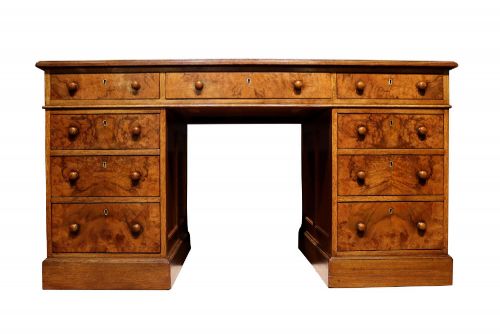


Burr Oak Writing Desk
A burr oak writing desk brings dense, swirling timber figures to a study, offering rich natural patterning that turns a working surface into a focal point.
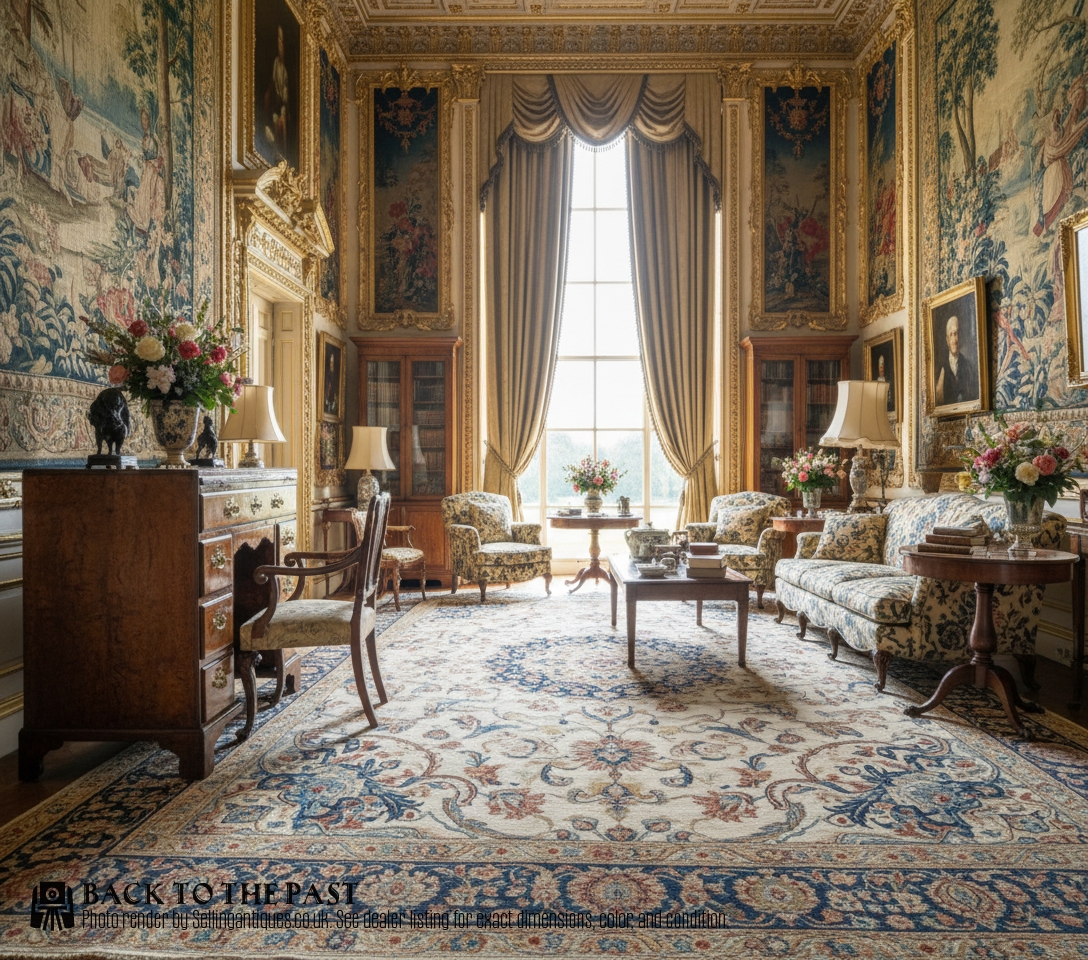
Burr Oak Writing Desk
A burr oak writing desk brings together heavy timber construction and the swirling, knotty growth patterns characteristic of burr wood. These pieces emerge primarily from the eighteenth and nineteenth centuries, spanning Georgian, Regency, and Victorian periods.
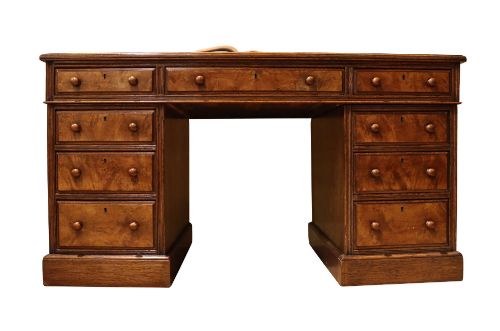
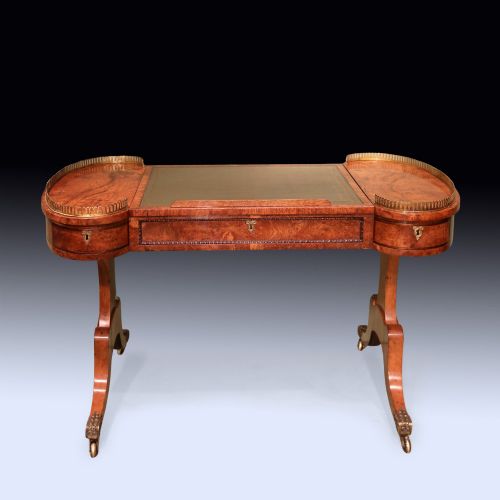
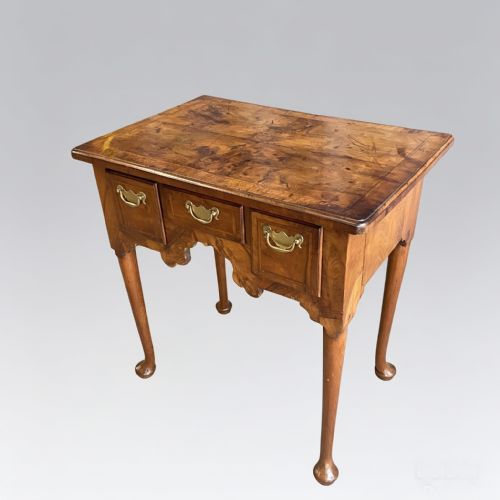
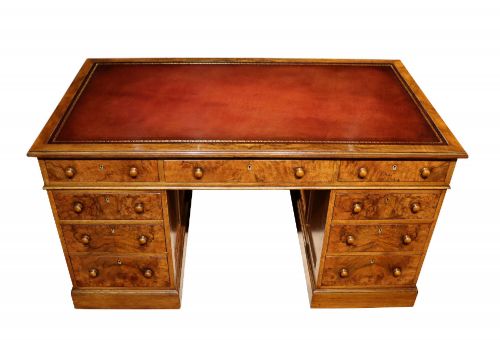
The selections available here range from compact side tables and lowboys to grand pedestal desks and partners desks. You are most likely to encounter nineteenth-century pedestal forms and library tables featuring rich oak carcasses paired with figured burr surfaces.
Beyond standard writing surfaces, the category includes specialised Davenport desks and kneehole formats. Each piece utilises the natural grain irregularities of the wood to create deep, mottled patterns across the top and drawer fronts.
Assessing quality
Quality rests upon the density and depth of the burr figuring across the timber, along with the crispness of the surrounding cabinetwork. Desks exhibiting well-matched veneer panels and undisturbed original surfaces stand apart from those with heavy restorations or mismatched grain.
The integrity of the internal drawer construction and the retention of original brass hardware heavily influence the character of each piece. Superior examples maintain balanced proportions and rich, unblemished colour throughout the timber.
Burr Oak Writing Desk Retail Price Guide 2026
Typical asking prices for burr oak writing desk among the pieces listed under this phrase on Sellingantiques today, from the lower quarter to the upper quarter. They describe what is for sale here now, not the wider market.
The listings span from 1700 through the Victorian period, utilising oak, burr oak, walnut, and leather.
James Winter and Sons·Williams and Gibton
The Burr Oak Writing Desk Glossary
- Burr oak
- A growth deformity on an oak tree that produces tightly clustered knots and swirling grain patterns. Cabinetmakers slice this timber into veneers to highlight the dramatic natural figures.
- Pedestal desk
- A large freestanding desk featuring two supporting columns of drawers beneath the main writing surface. These units often include a central kneehole and leather-lined tops.
- Lowboy
- A small seventeenth- or eighteenth-century table with one or more rows of drawers beneath the top. They function as compact writing surfaces or dressing tables.
- Partners desk
- A large double-sided pedestal desk designed for two people to work opposite one another. These pieces feature drawers and cupboards accessible from both sides.
- Davenport
- A compact Victorian desk featuring a sloping, hinged writing surface above a set of side drawers. The interior often contains small compartments and secondary wood linings.
Burr Oak Writing Desk: Frequently Asked Questions
How do I date a burr oak writing desk?
Dating relies on observing construction methods, drawer linings, and hardware styles across periods like the Georgian and Victorian eras.
Examining secondary timbers and carcass construction helps place the piece within a specific century or stylistic movement.
Are burr oak desks suitable for daily use?
These desks accommodate everyday writing and laptop use when treated with appropriate care for antique surfaces.
Using protective pads beneath writing instruments preserves the leather inserts and polished timber tops.
What is the difference between burr oak and pollard oak?
Burr oak comes from irregular knot growths that produce swirling, eye-like patterns in the timber. Pollard oak originates from trees pruned heavily at a high trunk level, creating dense, clustered growth rings.
How should I clean the leather top?
Cleaning requires a soft, dry cloth to remove dust without introducing moisture that could damage the surrounding wood veneer. Specialised leather balms help maintain suppleness on older desk inserts.