
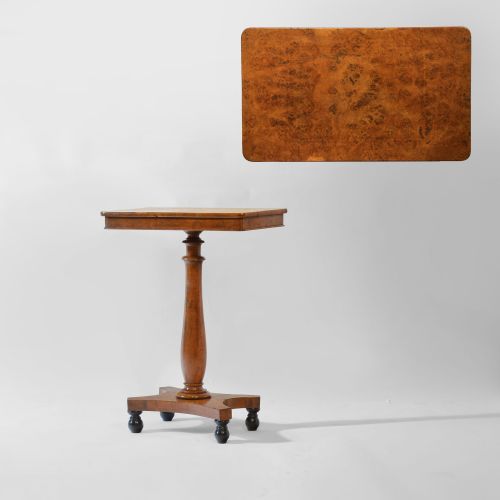


Victorian Burr Oak Table
These Victorian burr oak tables offer exceptional figure and warm tone, bringing character and practical surface space to any room.
Victorian Burr Oak Table
A Victorian burr oak table combines sturdy nineteenth-century construction with the highly figured grain characteristic of burr timber. Buyers seeking a Victorian burr oak table encounter diverse formats including centre tables, library tables, writing desks, and occasional tables dating from the middle to the late nineteenth century.
The selection ranges from compact side tables and stretcher tables to larger library tables and extending dining furniture. Most pieces originate from the Victorian period, with specific dates spanning from the mid-nineteenth century through to the 1880s and 1890s.
Makers and workshops of the period utilised these richly patterned timbers to create functional showpieces for domestic and professional interiors. Alongside burr oak, the listings and archive reveal related timber pairings including pollard oak, burr walnut, and burr maple.
Materials and construction
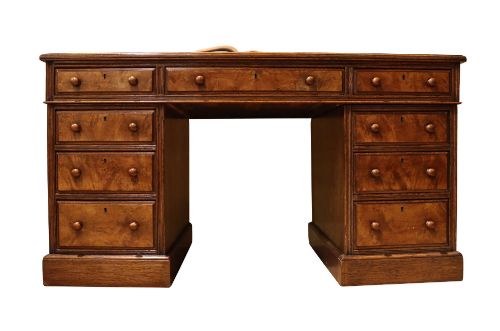
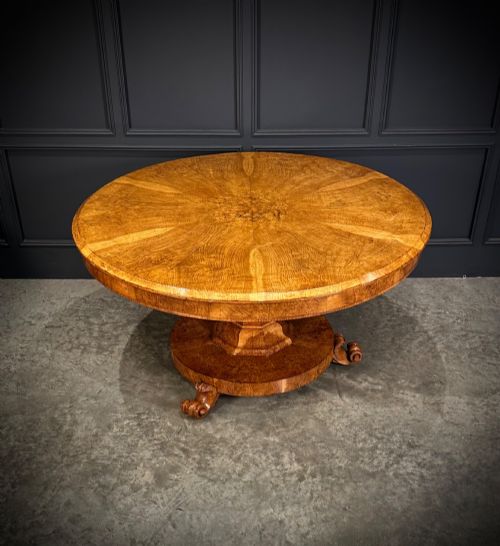
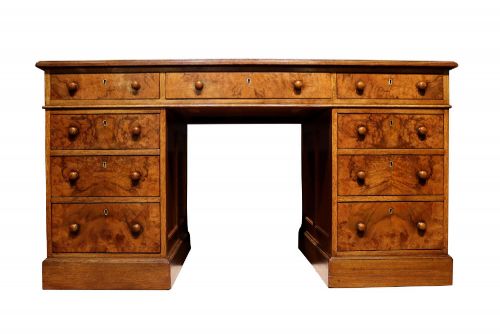
Cabinet makers constructed these tables using solid oak frameworks overlaid with richly figured burr oak, pollard oak, or walnut veneers. Segmented tops and wood inlay demonstrate the technical skill required to work with highly unstable burr timbers without splitting.
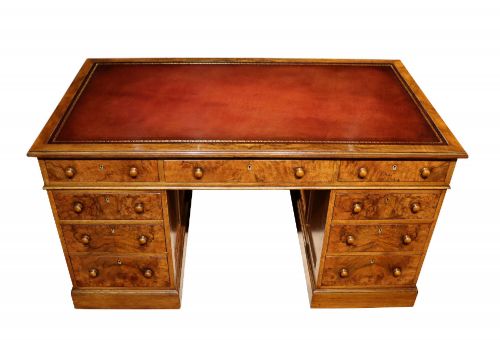
Secondary elements include fitted leather writing surfaces, brass hardware, and structural stretchers designed to support heavy timber tops. The integration of contrasting timbers like pollard oak and walnut highlights the decorative ambitions of nineteenth-century workshops.
Listings feature nineteenth-century forms including library tables, pedestal desks, and segmented top centre tables.
Defining quality
Quality rests upon the density, symmetry, and visual movement of the burr grain across the tabletop. A superior piece displays a carefully matched or segmented top where the natural patterning forms a coherent, balanced design.
The integrity of the underlying cabinetwork, the retention of original surface colour, and the finesse of any secondary woods or brass details distinguish standard production pieces from exceptional workshop outputs.
James Winter and Sons·Williams and Gibton
The Victorian Burr Oak Table Glossary
- Burr oak
- A growth deformity on an oak tree that produces tightly swirled, highly decorative grain patterns when sliced into veneer. Cabinet makers prized this timber for its complex visual texture.
- Pollard oak
- Timber taken from a tree that has been pruned at a height above livestock grazing, resulting in dense, clustered growth rings. It shares a similar speckled appearance with burr oak.
- Centre table
- A freestanding table designed to be viewed from all sides and placed in the middle of a room rather than against a wall. These often feature elaborate top veneers and finished undersides.
- Library table
- A large sturdy table utilised for reading and writing, frequently fitted with drawers and robust structural supports. They represent the heavier, utilitarian end of Victorian domestic furniture.
- Stretcher table
- A table featuring horizontal wooden rails connecting the legs near the base to improve structural rigidity. This construction method was particularly common on nineteenth-century work tables.
Victorian Burr Oak Table: Frequently Asked Questions
What is burr oak?
Burr oak is a specialised timber derived from a tree outgrowth, yielding a dense cluster of bud rings and knots. When polished, this grain creates a rich, highly variegated surface pattern.
Cabinet makers during the nineteenth century used this veneer selectively on prominent surfaces like tabletops and desk lids to catch the light.
How do I care for a burr oak table?
Keep the timber away from direct sunlight and strong heat sources to prevent the historic veneer from drying and lifting. Regular dusting with a dry, soft cloth preserves the polished surface.
Avoid using modern silicone sprays or harsh chemical cleaners, as these can damage nineteenth-century polish. Occasional application of appropriate wax maintains the natural lustre of the wood.
Where should I place a centre table?
A centre table is built to be seen from every angle, making it an ideal focal point in the middle of a spacious room or hallway. Because the design lacks a designated front or back, it allows unrestricted movement around the piece.
Ensure there is enough floor clearance to walk comfortably past the table while accessing any surrounding seating.
How do I distinguish 1880s pieces?
Tables from the 1880s often incorporate specific stylistic elements like Aesthetic Movement details or heavier pedestal bases with inset leather writing surfaces. Construction methods from this decade also show increasing standardisation in drawer linings and brass fittings.
Comparing the secondary timbers and joining techniques helps separate these later Victorian examples from mid-century items.