
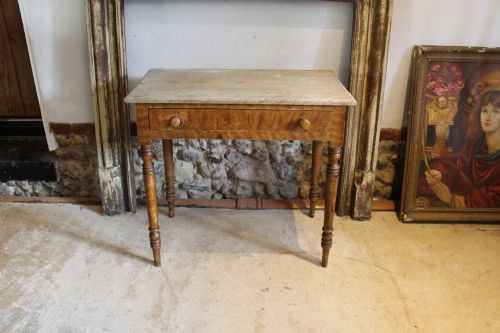
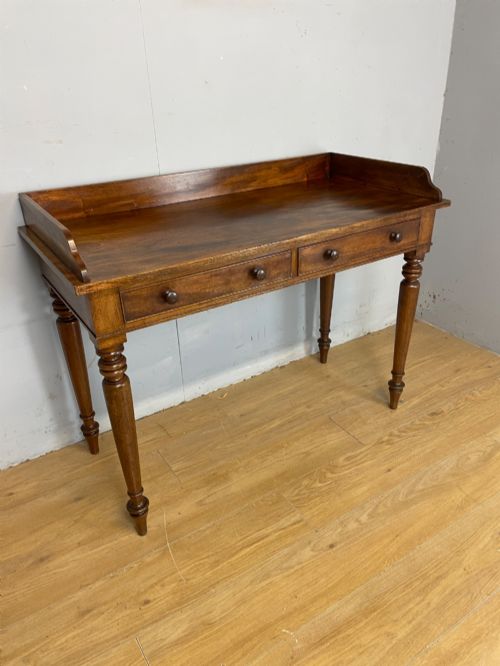
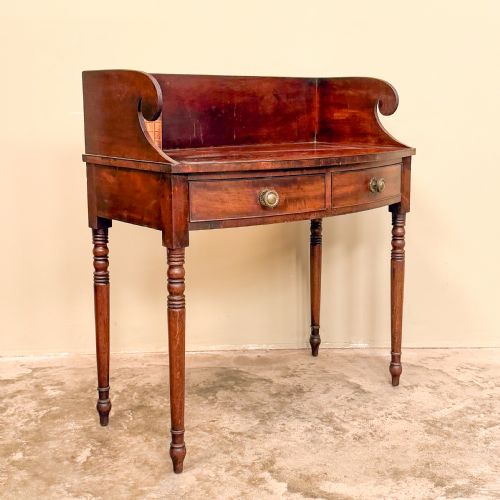
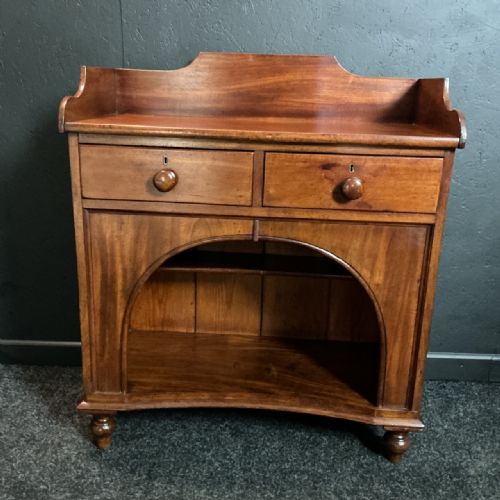
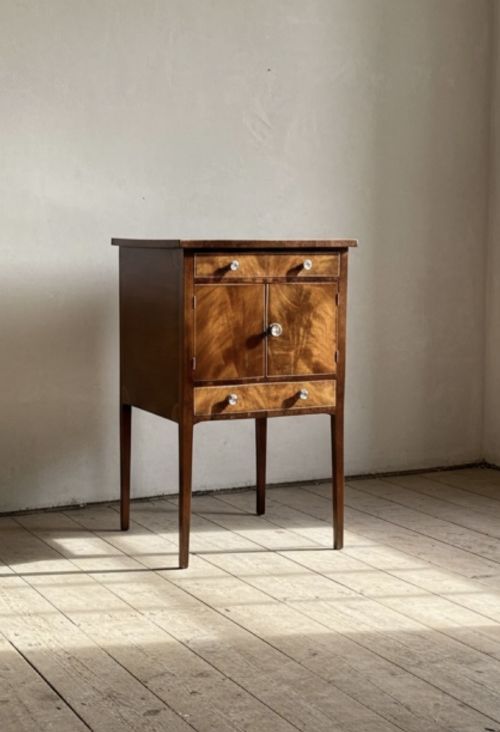
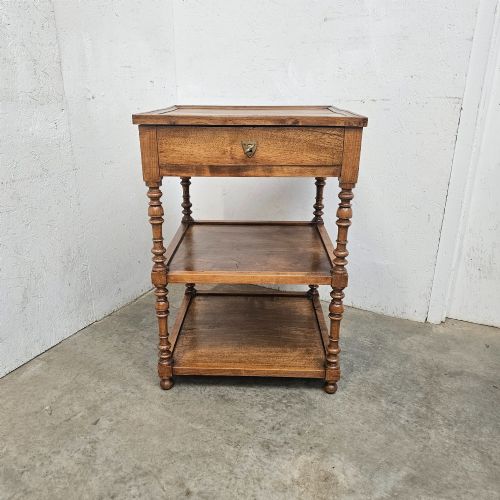
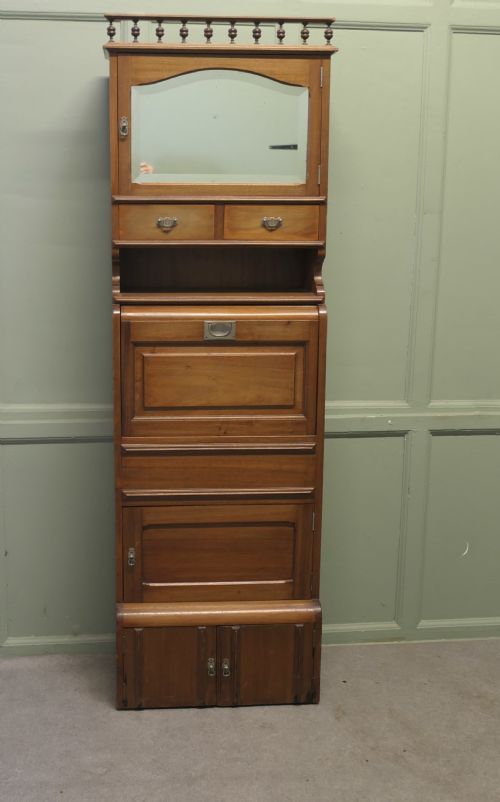
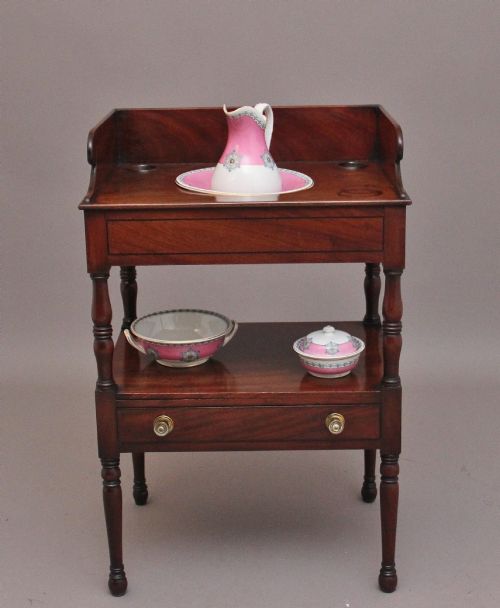
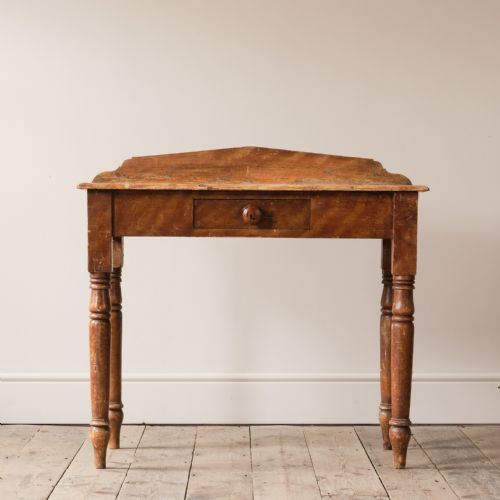
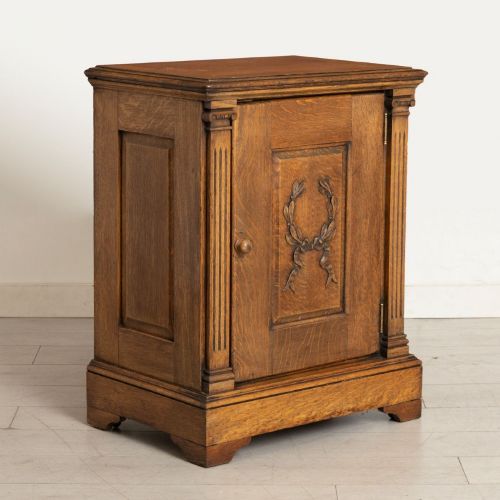


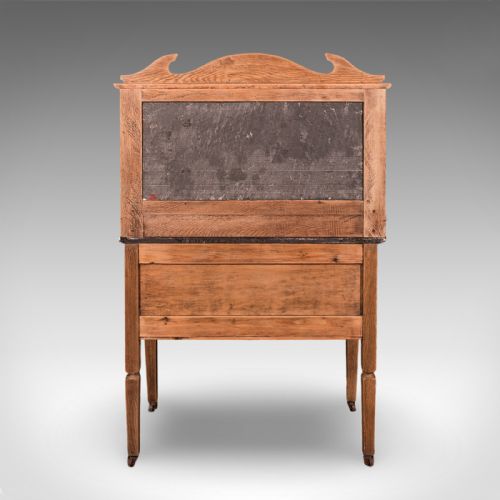


Brown Wooden Washstand
A brown wooden washstand brings practical nineteenth-century craftsmanship into a modern room, offering robust timber surfaces and period utility.
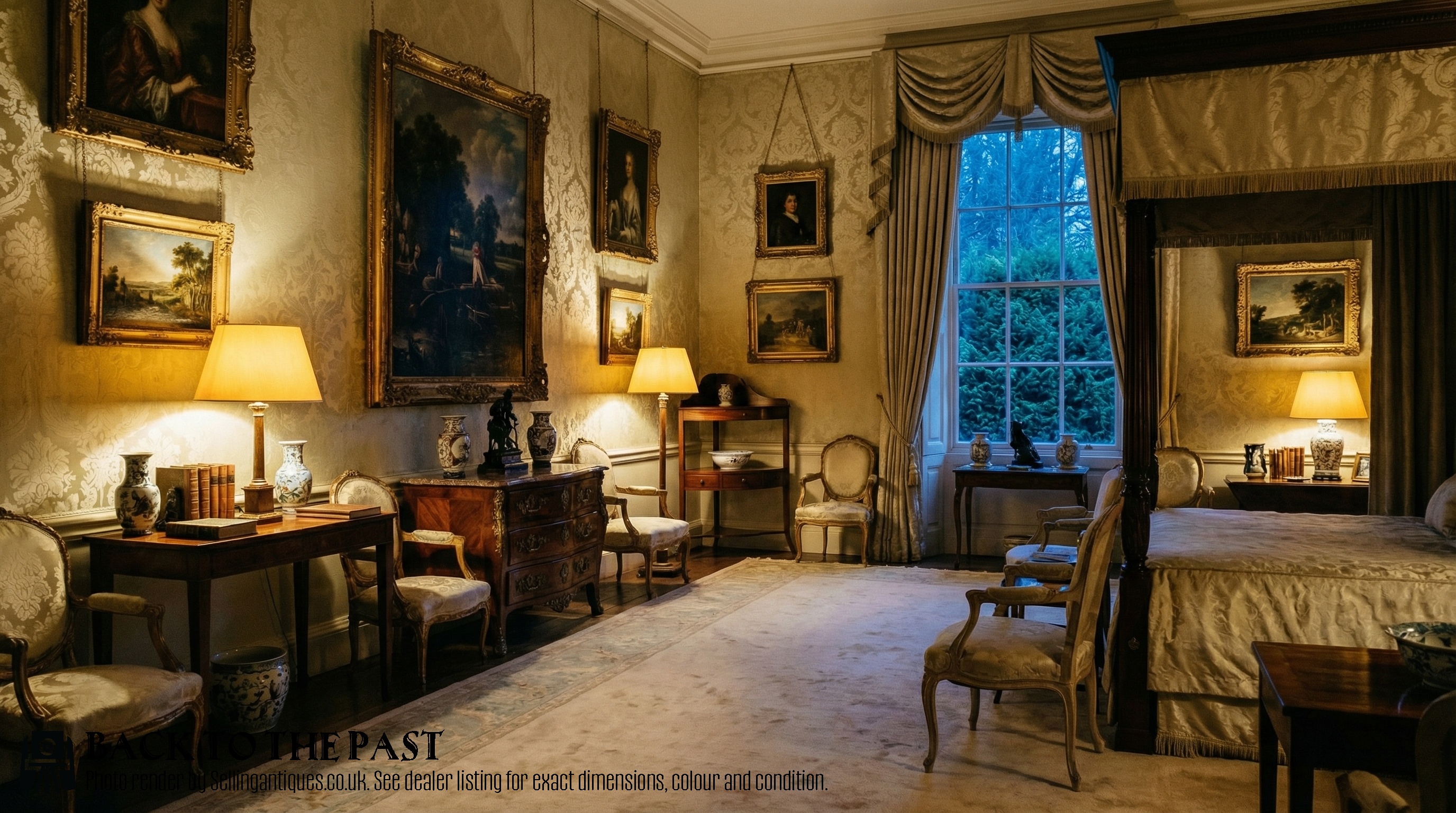
Brown Wooden Washstand
When you search for a brown wooden washstand, you encounter utilitarian furniture designed for personal hygiene before plumbed bathrooms became standard in homes. The examples gathered here span the Georgian, Victorian, Edwardian, and Regency periods, utilising timber frames built for daily chamber use.
Most pieces you meet on this page take the form of corner washstands, standing cupboards, or rectangular tables fitted with spaces for basins and jugs. Mahogany and pine dominate these configurations, sometimes paired with marble tops or original paint finishes to protect the wood from splashing water.
Beyond the standard washstand, the selections include related forms like bedside tables, pot cupboards, and dressing stands that share the same compact footprint and functional timber construction. These items reflect the domestic routines of country houses, town residences, and marine cabins from the eighteenth century into the early twentieth century.
How they were made
Cabinetmakers constructed these pieces primarily from solid mahogany, pine, and walnut, frequently employing flame mahogany veneers to figure the primary surfaces. Timber selection prioritized structural stability in damp environments, utilising dense grain patterns to resist warping near washbowls.
Secondary materials like marble slabs and brass fittings appear on select items, providing durable, waterproof surfaces for basins and supporting towel rails or swing mirrors. Original paint finishes, grain painting, and satinwood inlay also surface across the inventory, applied by period artisans to elevate the visual texture of the wood.
Listings feature items spanning the Georgian, Regency, Victorian, and Edwardian periods, constructed in mahogany, pine, walnut, and oak.
What varies in quality
The distinction between standard utility pieces and finer examples rests on the grade of timber and the sophistication of the joinery. Superior items employ dense, well-figured mahogany or intact marble tops, whereas simpler vernacular versions rely on painted pine.
Preservation of original surfaces dictates the standing of a piece within its type. Items retaining untouched grain finishes, period brass hardware, or maker stamps demonstrate higher integrity than those stripped or heavily altered over time.
James Shoolbred·Gillows
The Brown Wooden Washstand Glossary
- Washstand
- A piece of furniture designed to hold a washbasin, jug, and related washing accessories. These items often feature cutouts in the top surface or high splashbacks.
- Pot cupboard
- A small bedside cabinet or enclosed stand originally built to house a chamber pot. They typically feature a single door above a small enclosed compartment.
- Corner washstand
- A specialised form shaped to fit neatly into the corner of a room, saving floor space. They frequently appear in Georgian and Regency configurations with tiered shelves.
- Flame mahogany veneer
- A thin slice of mahogany timber cut from the fork of the tree where branches meet the trunk. This technique produces a dramatic, flickering grain pattern across drawer fronts and top surfaces.
- Etagere
- An open piece of furniture featuring multiple tiers or shelves for displaying small objects. In this selection, etageres appear alongside console tables and dressing stands.
Brown Wooden Washstand: Frequently Asked Questions
What is a brown wooden washstand used for today?
These pieces function well as compact side tables, bathroom vanity bases, or hallway stands. Their original storage compartments and shelves offer practical organisation for modern living spaces.
The flat timber tops accommodate lamps, plants, or daily accessories, while the enclosed cupboards provide discreet storage out of sight.
How do I date a wooden washstand?
Dating relies on observing structural characteristics, timber choices, and stylistic details associated with periods like the Georgian, Victorian, or Edwardian eras. Earlier pieces often feature simpler lines and solid mahogany framing, while later examples incorporate marble tops or decorative inlays.
Examining drawer construction, handle hardware, and secondary woods helps confirm the likely decade of manufacture.
Did all washstands originally have marble tops?
No, marble tops appear primarily on later nineteenth and early twentieth-century examples, particularly Edwardian and late Victorian pieces, to provide a water-resistant surface. Earlier Georgian and Regency washstands typically feature solid wood tops, sometimes with raised galleries to contain splashes.
Pined versions also utilised painted faux-marble finishes to imitate stone without the added weight.
Where were corner washstands placed?
Corner washstands were engineered specifically to utilise awkward angles and empty corners in period bedrooms. Their triangular footprint maximised floor space in smaller dressing rooms and guest chambers.
Many incorporate tiered upper shelves designed to hold small pitchers, glasses, or shaving equipment.