

Brown Wooden Umbrella Holder
A brown wooden umbrella holder brings orderly charm to a hallway, keeping wet sticks and walking canes neatly contained in solid oak or bentwood.
Brown Wooden Umbrella Holder
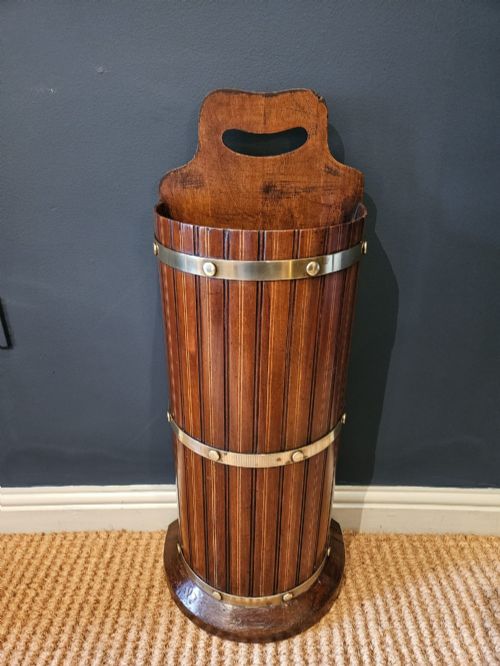
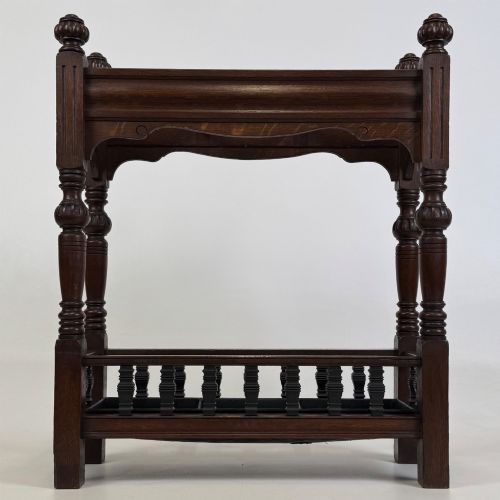
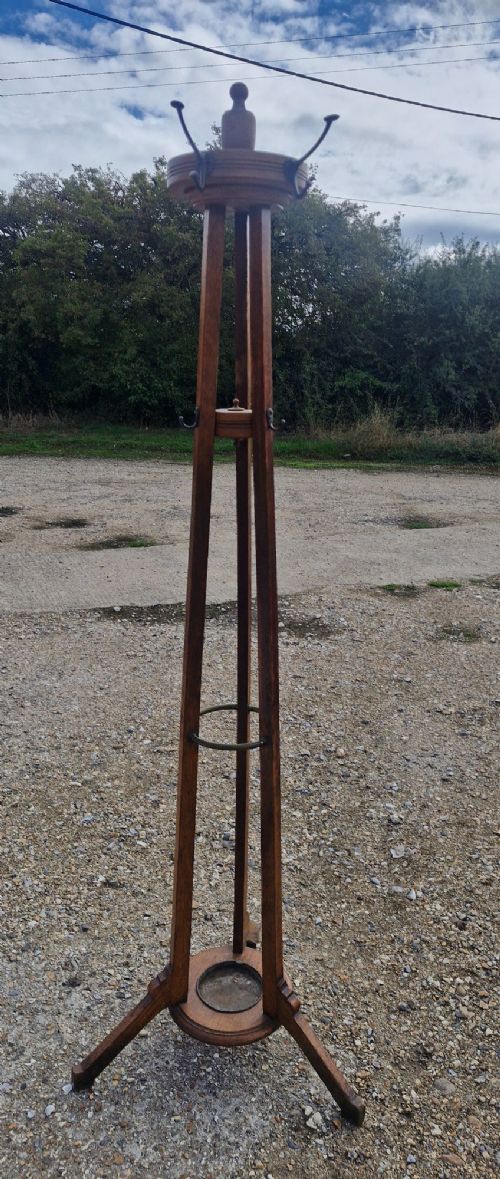
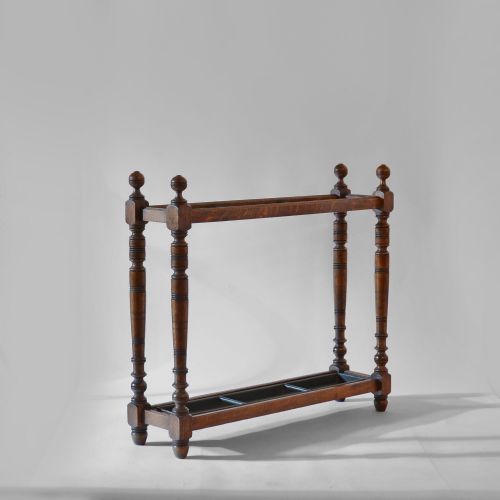
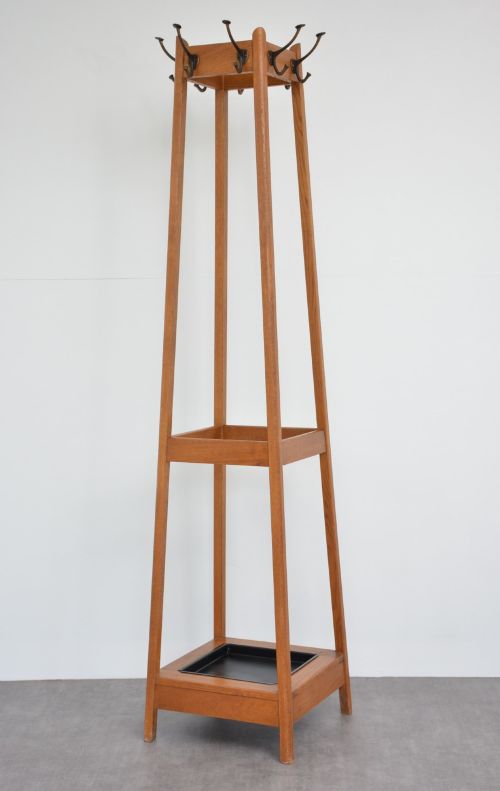
When searching for a brown wooden umbrella holder, you encounter practical hallway furnishings designed to hold wet walking sticks and wet umbrellas. These pieces range from compact barrels and coopered vessels to large hall stands incorporating coat hooks and mirrors. The selection relies heavily on oak construction, alongside bentwood and occasional walnut or mahogany examples.
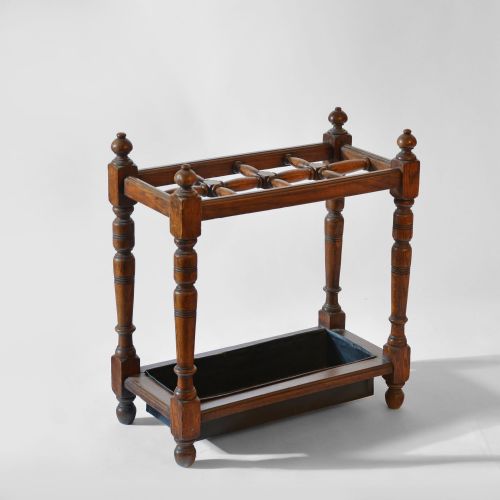
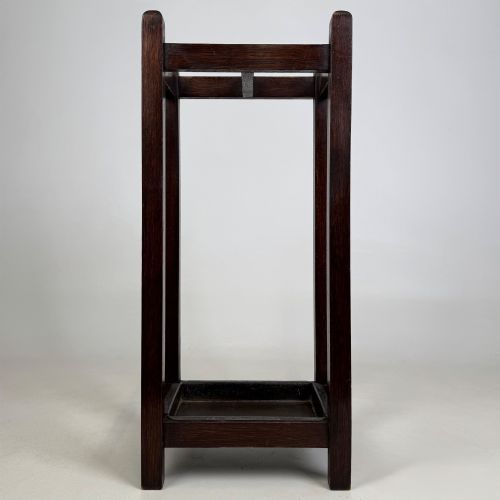
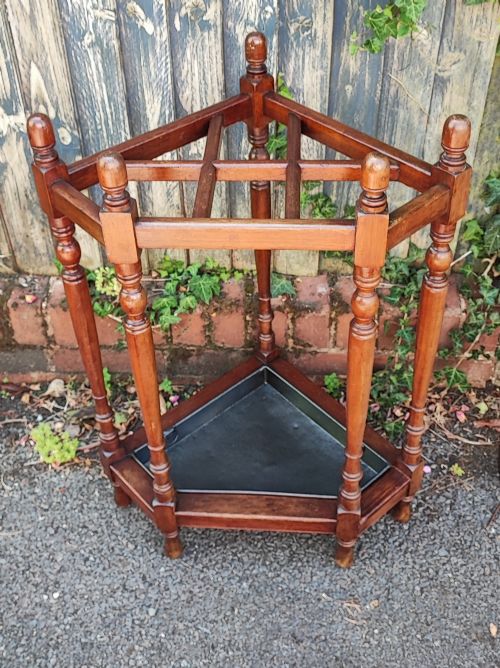
The most common formats on this page date from the Victorian and Edwardian periods, stretching into the early twentieth century. Many feature integrated metal or brass drip trays at the base to protect floorboards from moisture. You will find standalone square frames, barrel shapes with metal bands, and larger structural hall furniture pieces.
How they were made
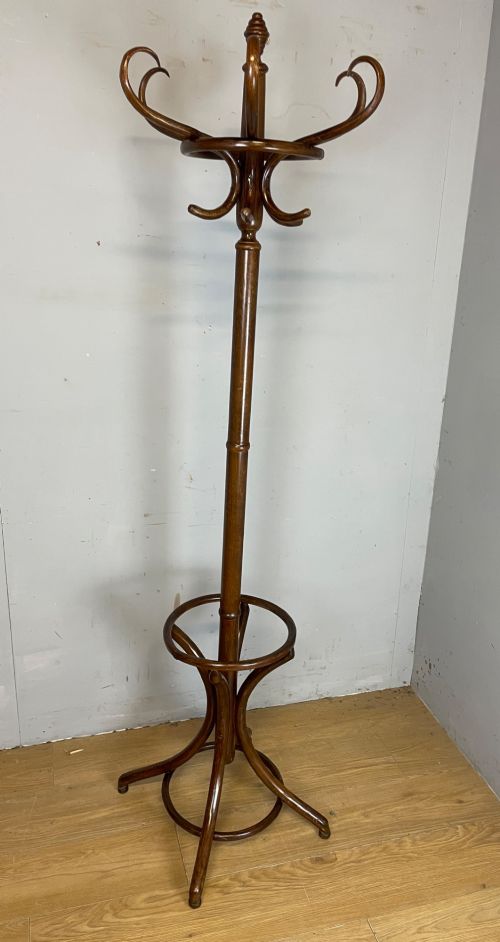
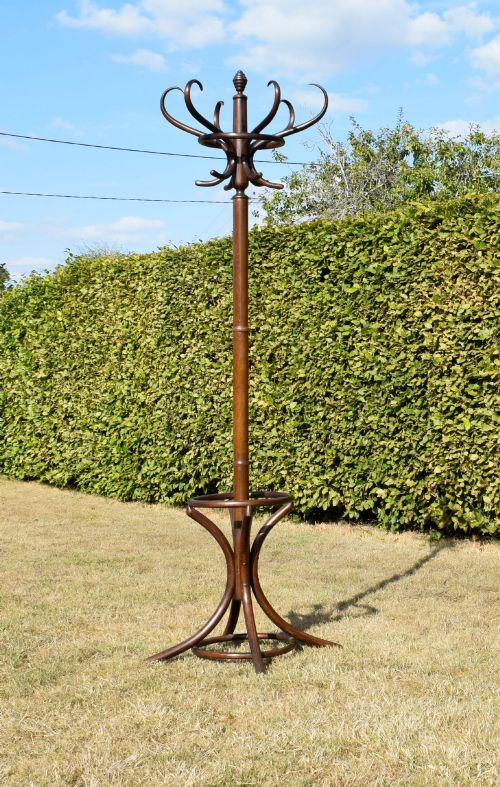
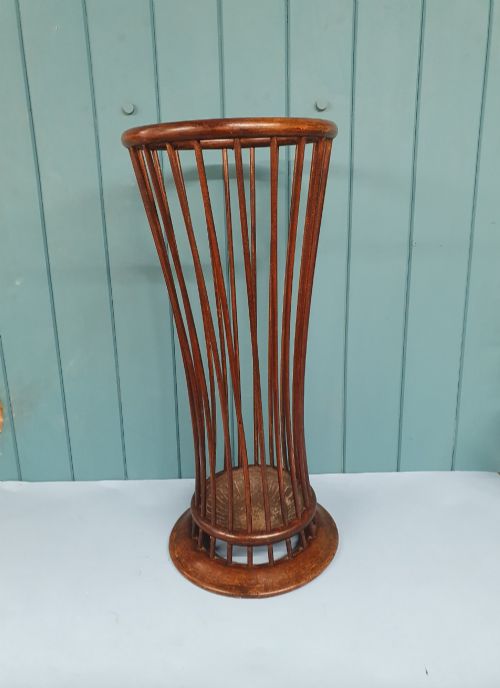
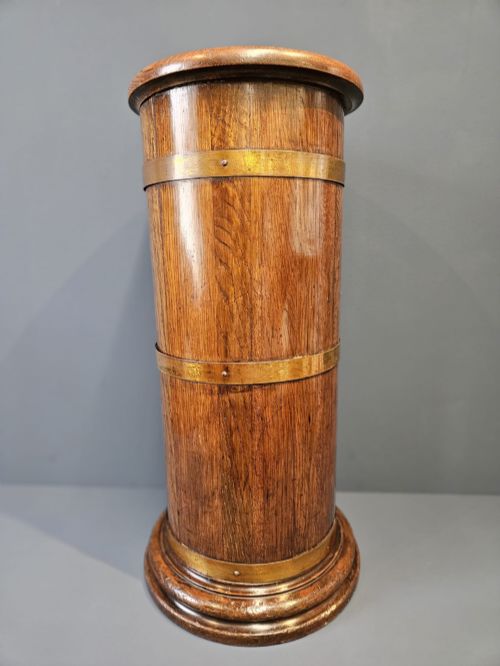
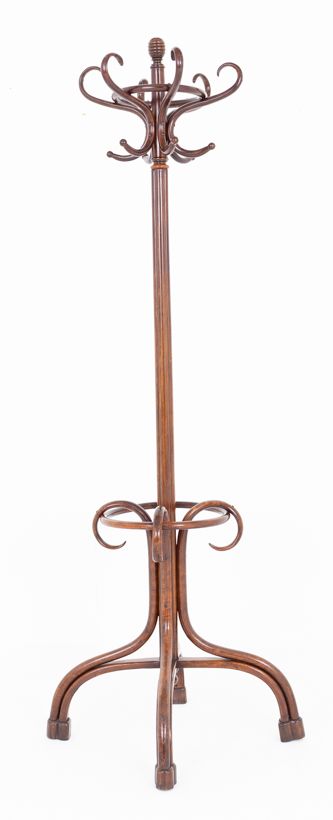
These items utilise solid timber construction, with oak forming the primary material across the nineteenth and early twentieth centuries. Coopered barrels employ narrow wooden staves bound with brass or iron hoops, while other forms utilise steam-bent beech or oak. Carved details, such as the distinctive Black Forest bear motifs or Gothic revival panels, demonstrate the hand-working methods of the period.
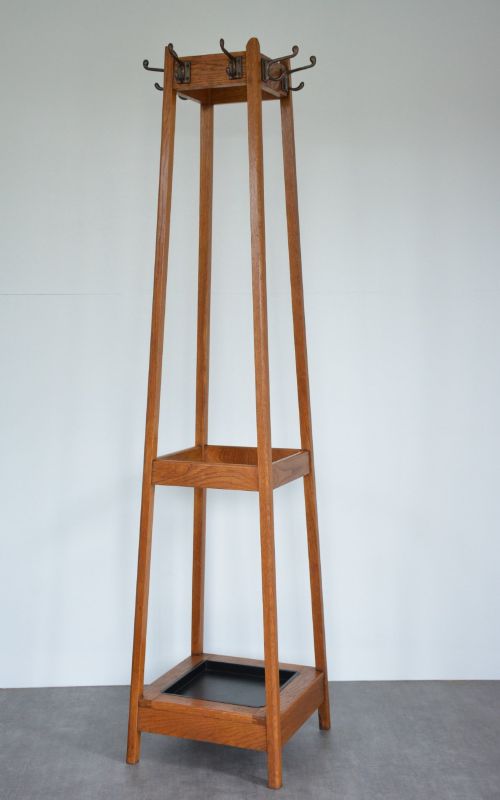
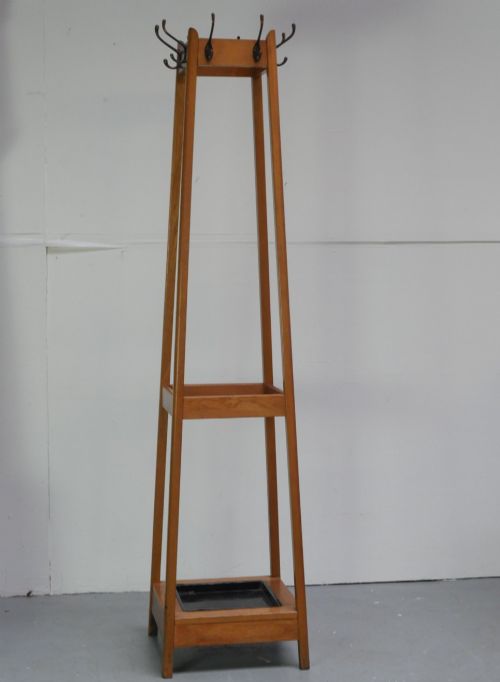
Metal components play an essential structural role, specifically in the inclusion of original removable drip trays made from zinc, brass, or iron. Joinery methods vary from traditional mortise and tenon joints in Arts and Crafts hall stands to steam bending for flowing bentwood curves.
Listings feature oak predominantly, alongside beech, walnut, and iron.
What varies in quality
The distinction between standard examples and finer pieces rests upon the integrity of the timber and the completeness of original fittings. Pieces retaining their matching metal drip trays and secure internal dividers hold greater authenticity than those altered over time. Finer examples display crisp carving, such as detailed foliage or figural work, executed by skilled hands rather than simple production methods.
Thonet·James Shoolbred
The Brown Wooden Umbrella Holder Glossary
- Coopered
- Constructed from curved wooden staves bound together with metal hoops, much like a traditional barrel. This technique provides natural water resistance and structural strength.
- Bentwood
- Wood softened by steam and bent into curved shapes under pressure, commonly utilised for lightweight frames and hat stands. This method creates flowing lines without traditional joinery.
- Drip tray
- A removable metal basin fitted into the base of the stand to catch water from wet umbrellas. Original trays are specific to the piece and prevent moisture damage to the timber floor.
- Hall stand
- A larger piece of hallway furniture combining an umbrella holder with coat hooks, a hat rack, and sometimes a mirror. These items anchor an entrance space by offering multiple domestic functions.
Brown Wooden Umbrella Holder: Frequently Asked Questions
Where should I place a wooden stick stand?
Position your brown wooden umbrella holder near the primary entrance of your home to catch wet walking sticks and umbrellas as you step inside.
Ensure adequate ventilation around the hallway space so that damp items dry naturally without holding moisture against the timber.
How do I protect the wood from wet umbrellas?
Check that your stand includes a functional metal drip tray at the base to catch water run-off before it reaches the wooden floor or baseboards.
Empty and dry the metal tray regularly to prevent rusting and maintain the surrounding wood in sound condition.
Are these stands suitable for modern hallways?
These historical pieces fit well into contemporary spaces by offering functional storage with natural wooden textures.
Their compact footprints make them practical for narrow corridors while providing a distinct focal point near the front door.
How do I identify a Victorian stick stand?
Victorian pieces frequently display heavier timber construction, darker oak tones, and decorative elements like brass binding or carved panels.
Examining the construction methods and the wear patterns on the base reveals the age and history of the piece.