



Brown Wooden Swing Mirror
A brown wooden swing mirror brings functional reflection and warm timber tones to a dressing table or chest.
Brown Wooden Swing Mirror
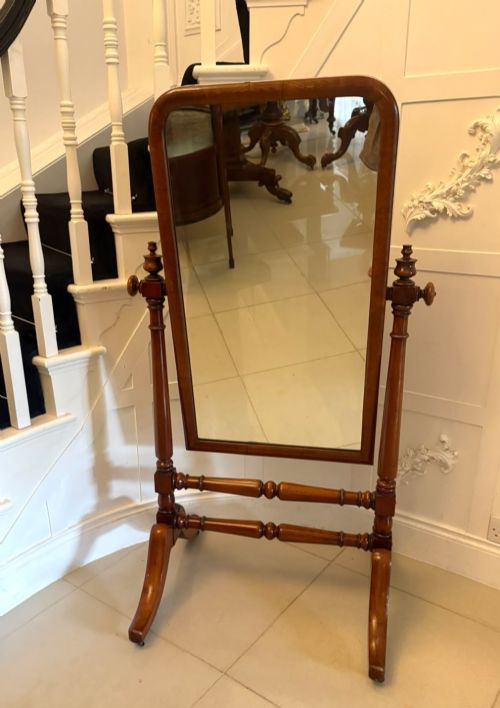
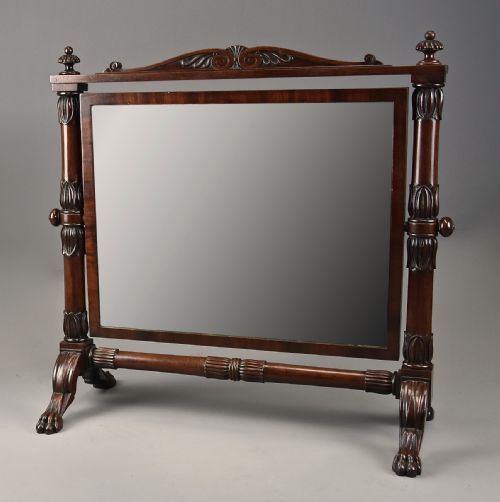
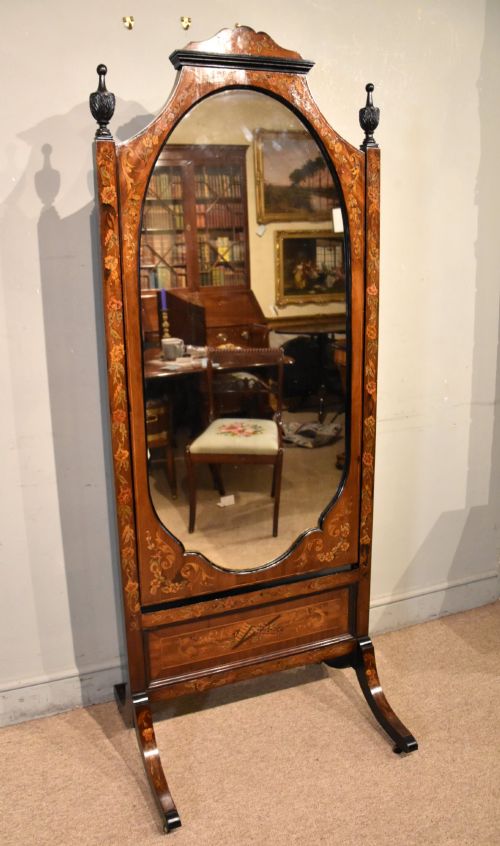
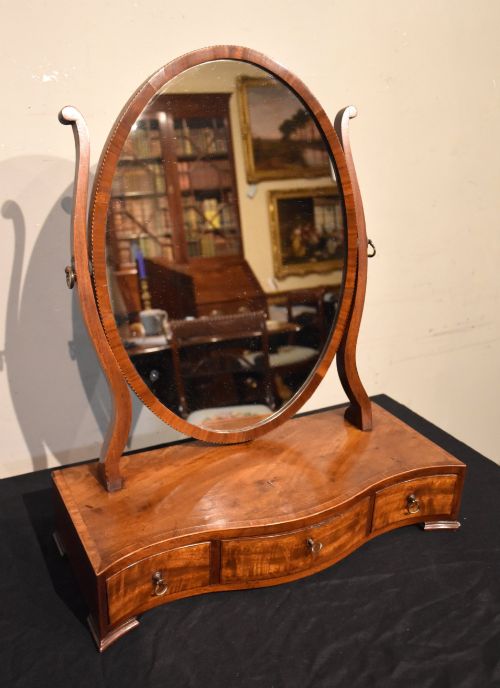
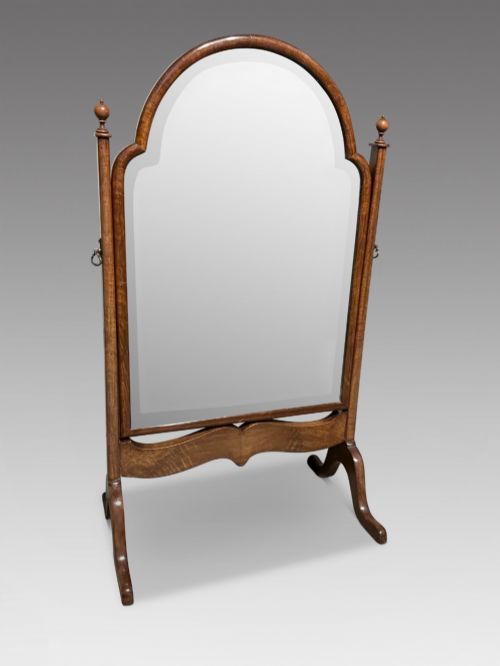
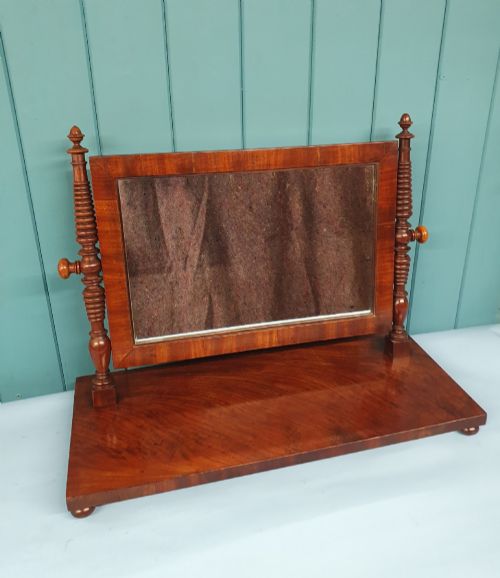
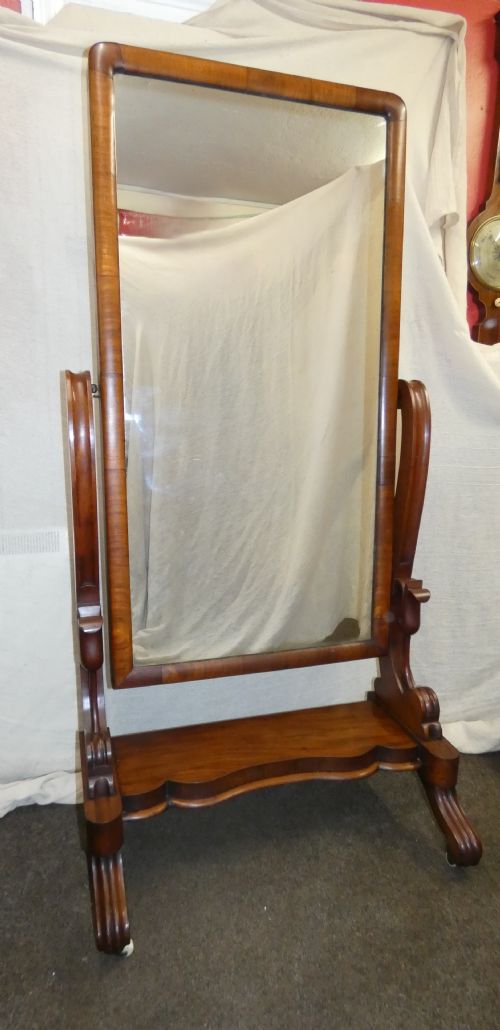
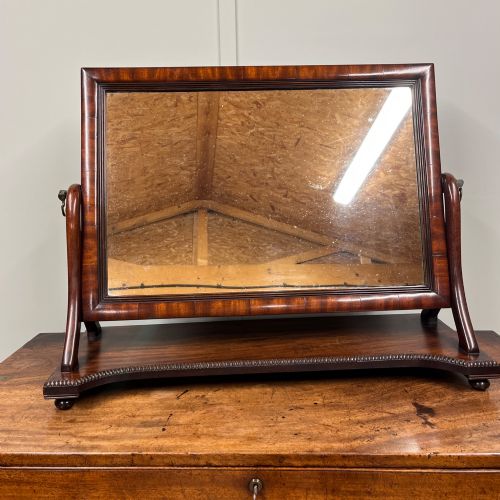
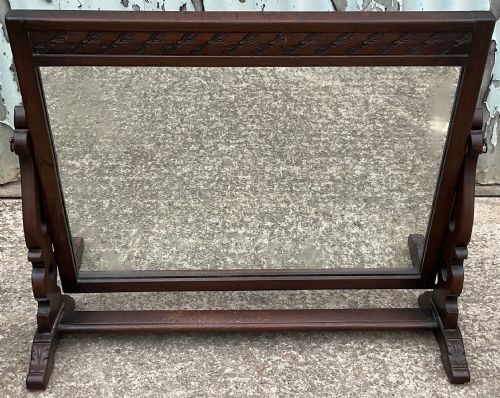
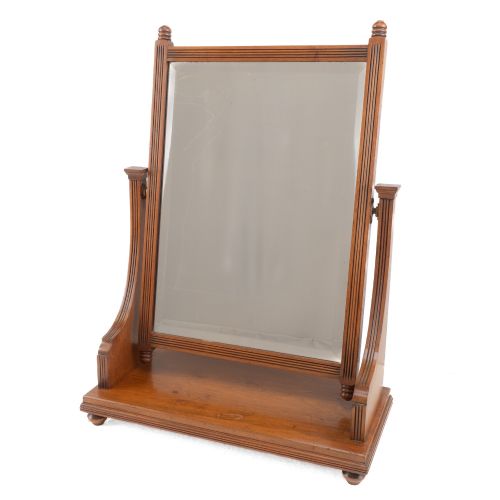
A brown wooden swing mirror is typically encountered as a toilet mirror, dressing mirror, or cheval mirror dating from the eighteenth century to the early twentieth century. These pieces encompass forms designed to sit upon tables or stand independently on the floor.
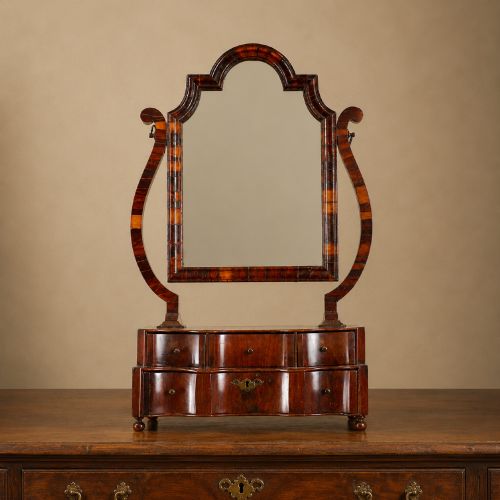
The selection ranges from compact walnut and laburnum toilet mirrors of the Georgian era to large Victorian mahogany cheval mirrors. Makers utilised timbers such as mahogany, walnut, and oak to build frames that pivot between upright supports.
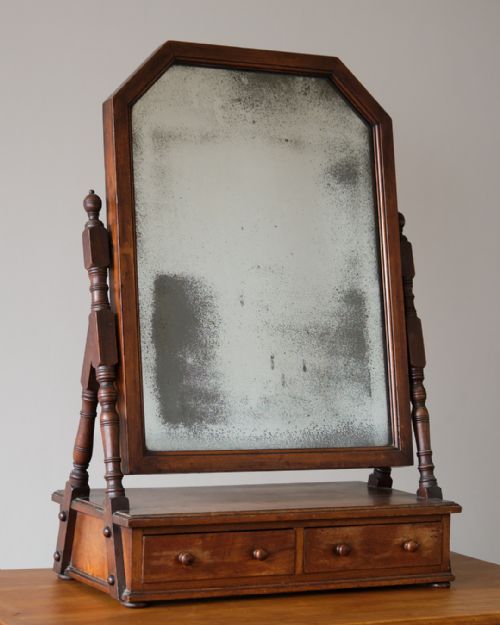
Smaller examples generally feature box bases fitted with small drawers for storage, while larger cheval versions rely on sturdy floor-standing frames. The glass itself is mounted on pivots, allowing the user to adjust the angle of reflection.
Materials and construction methods
Cabinet makers constructed these mirrors using solid and veneered hardwoods, predominantly mahogany and walnut, occasionally accented with inlay or contrasting timbers like laburnum and bone. Frames were joined using traditional woodworking techniques suited to supporting the weight of the glass plate.
The mirror plates themselves were historically silvered glass, held securely within rebated frames and supported by brass or wooden swing pivots. Bases often incorporated finely dovetailed miniature drawers, demonstrating the same standard of joinery found in larger case furniture.
One remarkably specialised survival in the records is an antique boot maker's mirror from the early Victorian era.
Assessing the grade and execution
Quality in a brown wooden swing mirror is determined by the selection of timber figures, such as Cuban mahogany or figured walnut, and the precision of the cabinet work. Superior examples display refined proportions, clean dovetailing on base drawers, and harmonious integration of brass hardware.
The treatment of the frame edges, the subtlety of any inlay, and the retention of original mirror glass and swing pins distinguish higher-grade pieces from plain utility items produced in later decades.
Heal & Sons·P & MA Nicholson
The Brown Wooden Swing Mirror Glossary
- Cheval mirror
- A large, freestanding floor mirror mounted in a frame that allows it to swing completely vertical. These tall mirrors enabled a person to view their entire outfit.
- Toilet mirror
- A smaller dressing mirror designed to sit on top of a table, chest, or dressing bureau. They usually incorporate a set of small drawers in the base.
- Serpentine front
- A furniture front characterised by a concave central section flanked by two convex curves, or vice versa. This undulating shape adds significant visual movement to mirror bases.
- Pivot
- The metal or wooden pin connecting the mirror frame to its upright supports. It allows the glass to tilt forward or backward.
Brown Wooden Swing Mirror: Frequently Asked Questions
What is the difference between a toilet mirror and a cheval mirror?
A toilet mirror is a tabletop piece, usually sitting on a box base with small drawers for storing personal items. It is designed to be placed on a dressing table or chest of drawers.
A cheval mirror is a tall, floor-standing piece that allows a full-length view. It is supported by a heavy frame with four legs or trestle feet.
How do I date an antique swing mirror?
Dating relies on observing timber choices, construction methods, and hardware styles. Eighteenth-century pieces frequently employ walnut or early mahogany with hand-cut dovetails, while Victorian examples often feature denser mahogany and heavier proportions.
Secondary woods, backboards, and the manufacturing technique of the mirror plate also offer clear indicators of age. Replacement glass is common and does not preclude an authentic antique frame.
Where should I place a swing mirror in my home?
These mirrors function effectively on dressing tables, chests of drawers, or sideboards in a bedroom or hallway. Tabletop versions require a sturdy surface proportionate to the weight of the mirror frame.
Floor-standing cheval mirrors suit corners or dressing areas where they can catch natural light and provide a full-length reflection.
Are the mirror plates usually original?
Many antique swing mirrors retain their original glass, which often exhibits minor foxing, spotting, or slight distortion due to age. Original silvering adds historic character to the piece.
Because glass is fragile, plates were frequently replaced over the centuries. A replaced mirror plate does not diminish the quality of the surrounding woodwork.