



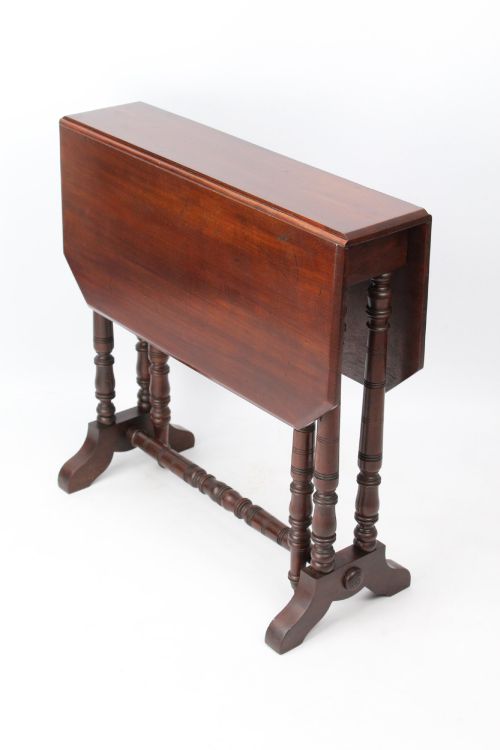
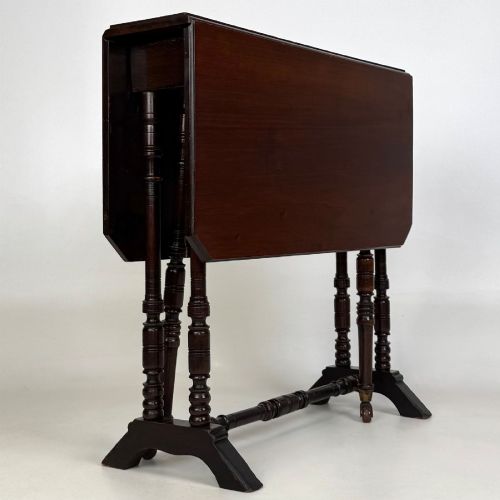
Brown Wooden Sofa Table
These brown wooden sofa table designs span Georgian elegance to Victorian practicality, offering drop leaves and rich grains for everyday living.
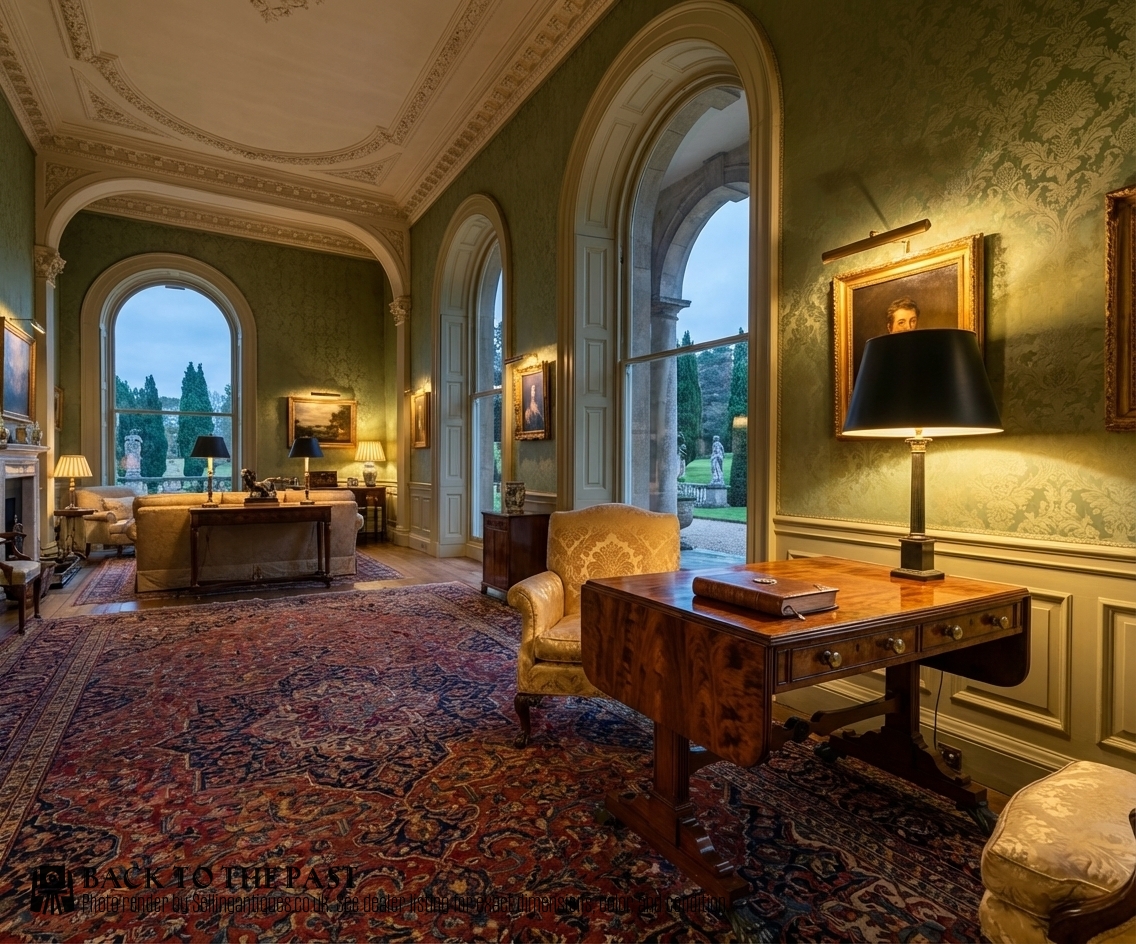
Brown Wooden Sofa Table
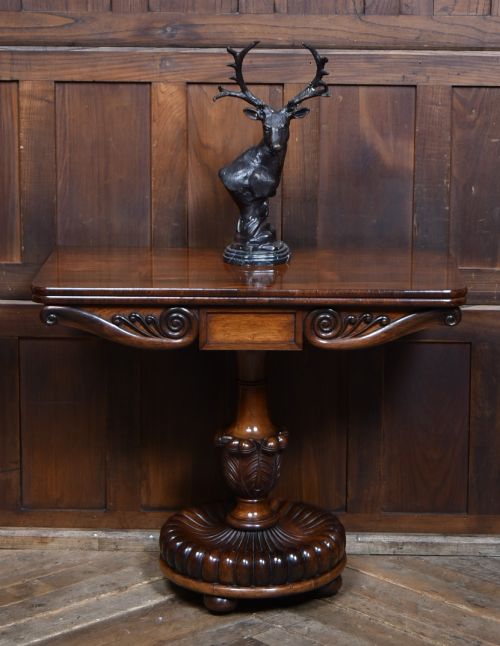
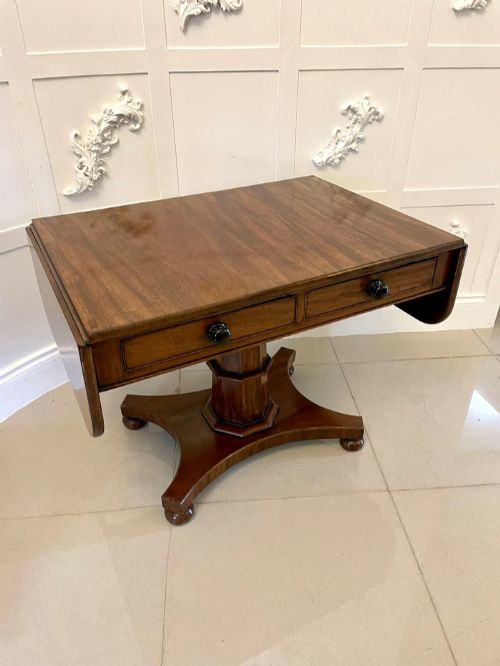
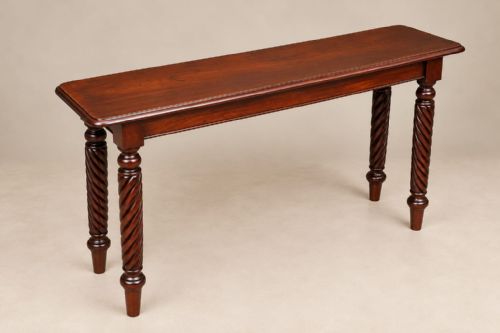
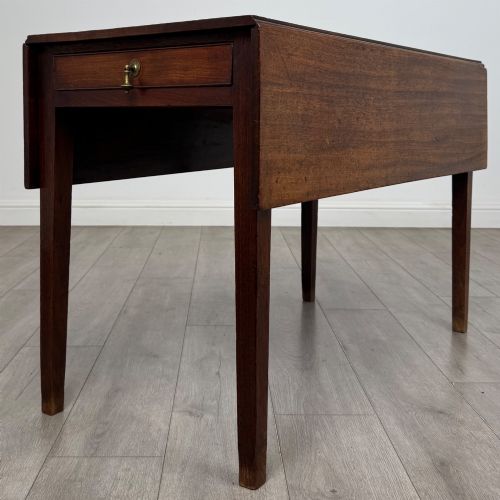
When you search for a brown wooden sofa table, you look at versatile drop-leaf pieces historically positioned in front of sofas for writing or needlework. The examples on this page span the 18th century, Regency, and Victorian eras, alongside Edwardian and later interpretations.
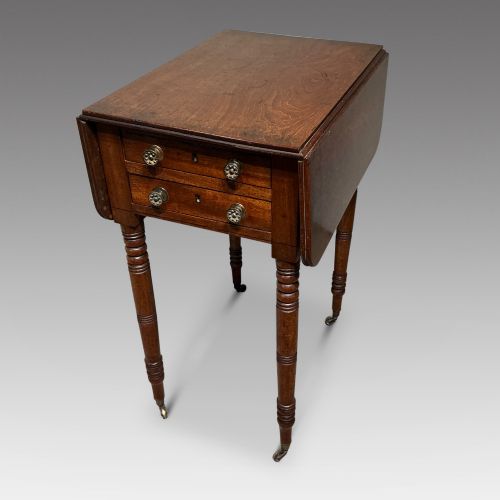
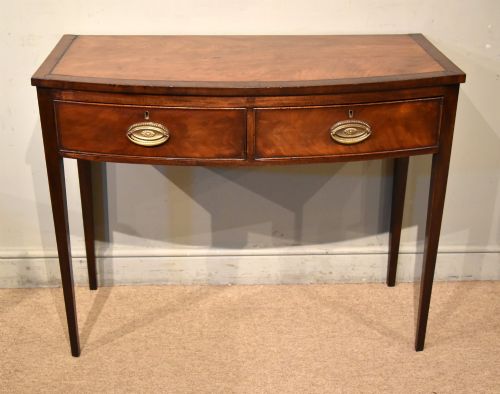
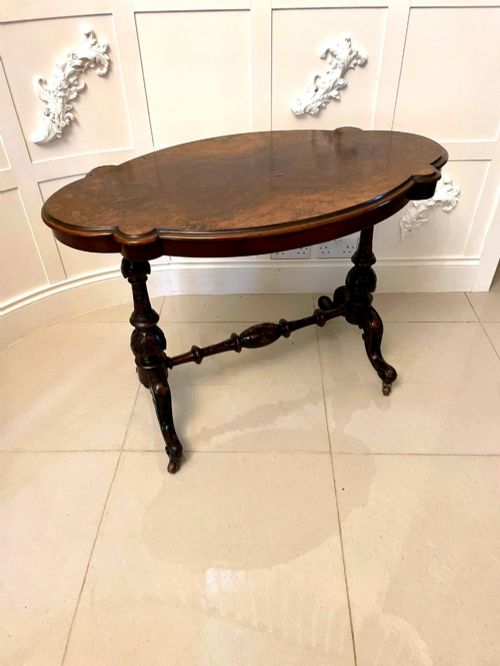
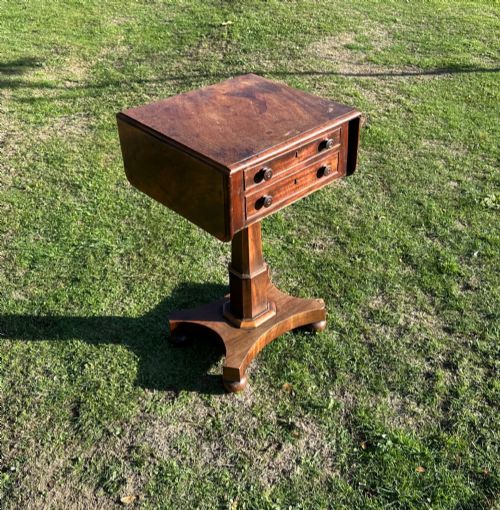
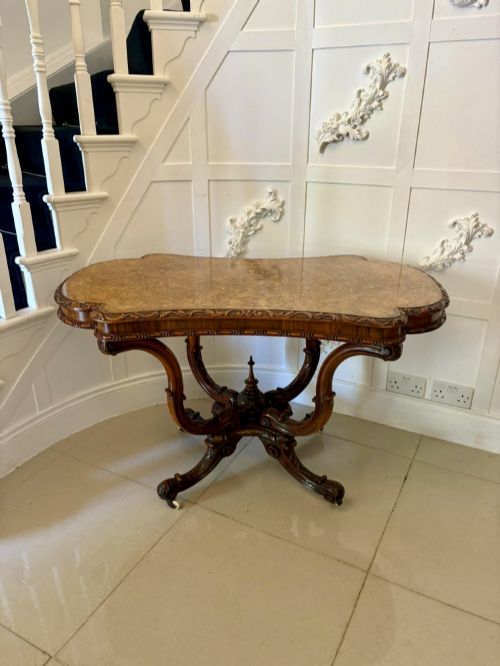
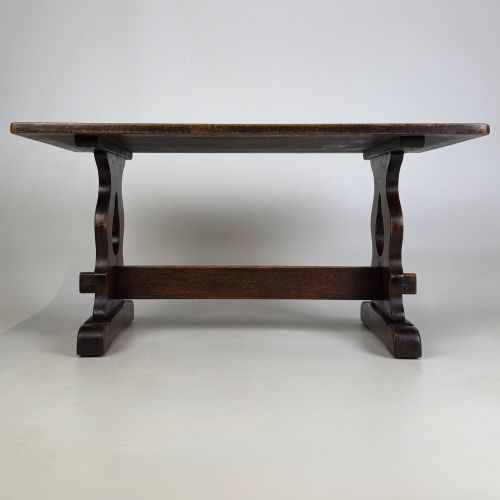
Mahogany and walnut dominate the selection, appearing across forms such as Pembroke tables, centre tables, and side tables. These brown wooden sofa table items provide rectangular tops with drop flaps and often include drawers.
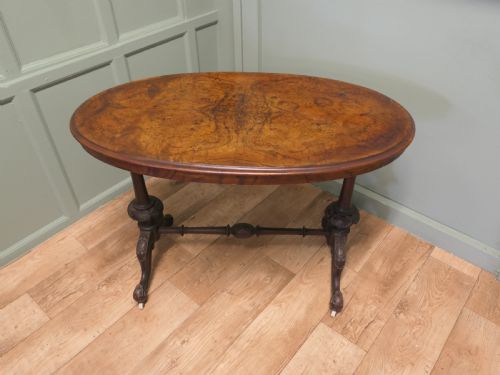
Victorian and Edwardian iterations frequently utilise figured veneers or inlay, while earlier Georgian examples rely on solid timber and clean architectural lines. This selection represents the core of traditional British brown wooden furniture craftsmanship.
How they were made
Cabinetmakers constructed these tables using dense hardwoods like mahogany, walnut, and rosewood, often applying fine veneers such as burr walnut or harewood to the primary surfaces. Timber frames were joined with traditional joinery methods to support the hinged drop leaves.
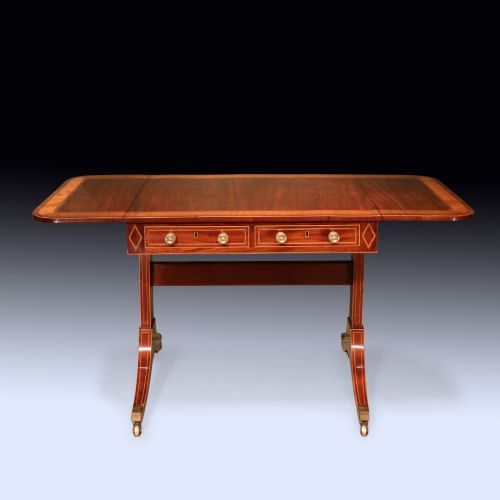
Surface ornamentation involved subtle wood inlay, stringing, and marquetry, particularly on Sheraton Revival and Edwardian pieces. Brass castors, handles, and paw feet frequently completed the lower sections of Regency and Victorian examples.
Brown Wooden Sofa Table Retail Price Guide 2026
Typical asking prices for brown wooden sofa table among the pieces listed under this phrase on Sellingantiques today, from the lower quarter to the upper quarter. They describe what is for sale here now, not the wider market.
Listings feature 19th-century, Victorian, and Edwardian periods, utilising mahogany, walnut, burr walnut, rosewood, oak, and satinwood.
What varies in quality
The selection of timber grain largely dictates the visual appeal of a piece, with figured mahogany and matched burr walnut sitting at the top of the range. Cabinetmakers who carefully aligned veneer patterns across drawers and leaves demonstrated superior skill.
Structural integrity depends on the precision of the drop-leaf hinges and the stability of the central pillars or leg assemblies. Tables with finely turned stretchers, crisp carving, and original brass hardware reflect higher workshop standards.
W. Turner Lord & Co
The Brown Wooden Sofa Table Glossary
- Sofa Table
- A rectangular table longer than it is wide, designed with drop leaves on opposite sides to stand in front of a sofa. These tables typically feature two small drawers and trestle or pedestal supports.
- Pembroke Table
- A small table with hinged drop leaves on two opposing sides, popular from the 18th century onwards. It often includes a single drawer and slender legs.
- Drop Leaf
- A hinged flap on the side of a table that folds down to save space or lifts up to extend the surface area. Supporting brackets or swing legs hold the flap steady when raised.
- Marquetry
- Decorative veneer work formed by fitting pieces of different woods, shell, or ivory into a background veneer to create pictorial or geometric designs. It requires high precision from the artisan.
- Harewood
- Sycamore timber stained greyish-brown to resemble maple or other exotic woods, frequently utilised in 18th-century cabinet making. It provides a pale, cool tone distinct from standard mahogany.
Brown Wooden Sofa Table: Frequently Asked Questions
What is a sofa table used for?
These pieces functioned historically as versatile work tables placed directly in front of sofas for writing, sewing, or holding tea.
Today, they serve well as compact console tables, hallway desks, or freestanding accent tables in living spaces.
How do I identify a Georgian sofa table?
Georgian examples usually display clean architectural lines, solid timber construction, and understated brass fittings. Look for well-proportioned stretcher bases and genuine period mahogany or walnut.
Later Victorian and Edwardian versions often incorporate heavier carvings, contrasting veneers, and more elaborate marquetry work.
Are drop leaves sturdy?
Original drop leaves rely on pivoting wooden brackets or swing legs that fold out from beneath the top. When properly aligned and maintained, these mechanisms provide stable support for everyday items.
Buyers should check that the hinge pins remain secure and the drop leaves sit level when fully extended.
How do I care for antique wood?
Protect antique timber surfaces by avoiding direct sunlight and maintaining consistent room humidity to prevent veneer splitting. Regular dusting with a soft, dry cloth preserves the polished finish.
Apply occasional traditional wax polish to nourish the grain without building up heavy chemical layers.