

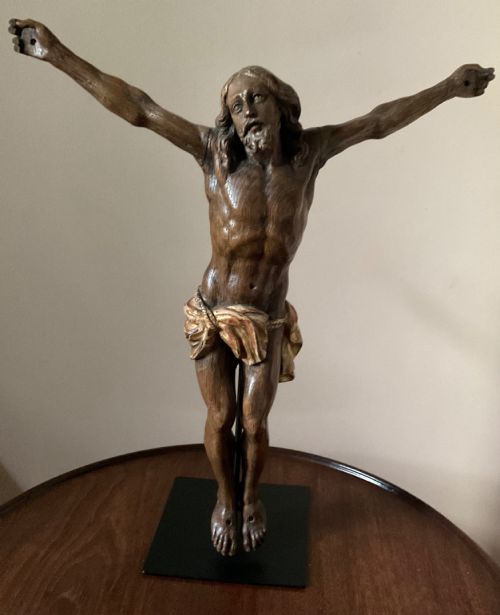


Brown Wooden Religious Sculpture
Brown wooden religious sculpture captures centuries of devotional carving, from medieval church figures to vernacular domestic saints.
Brown Wooden Religious Sculpture
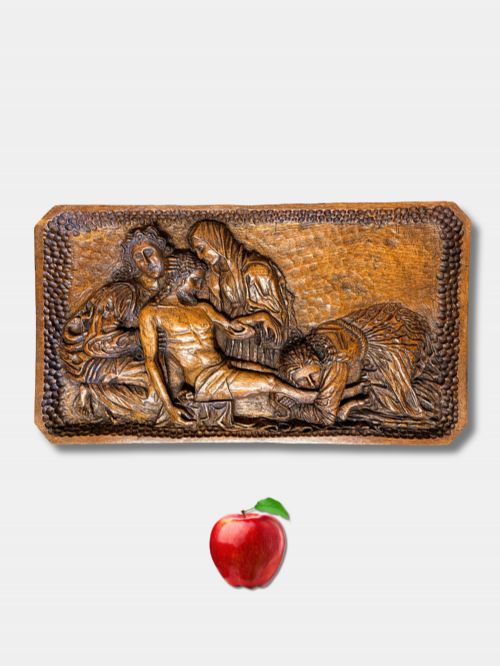
A brown wooden religious sculpture represents sacred figures, saints, and biblical narratives shaped by European carvers across multiple eras. These pieces range from monumental church statuary and architectural panels to intimate devotional objects intended for private prayer.
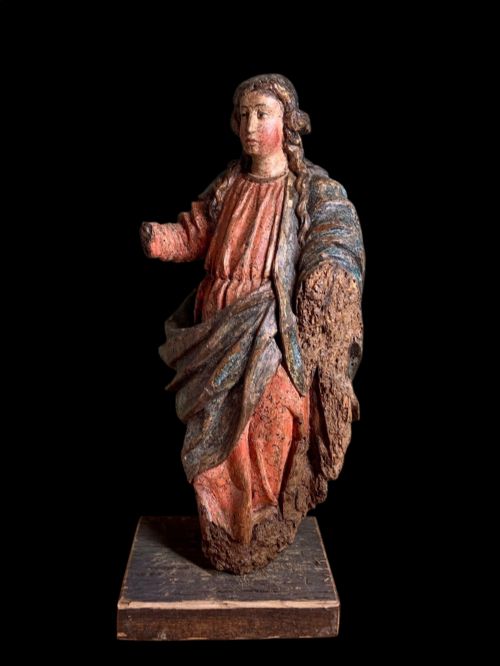
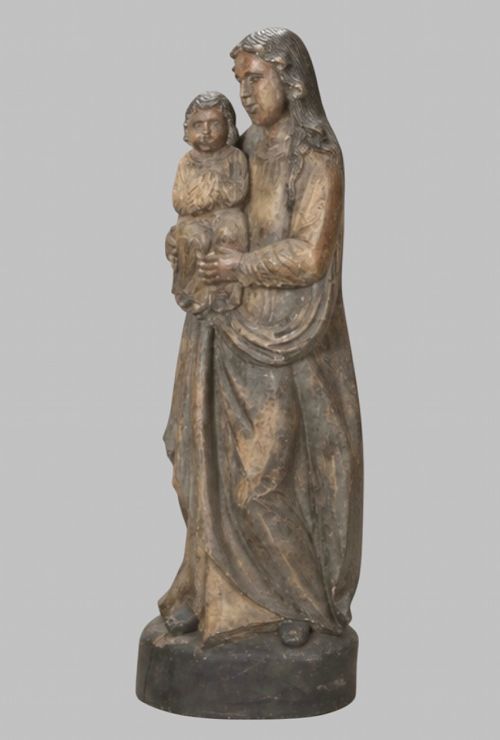
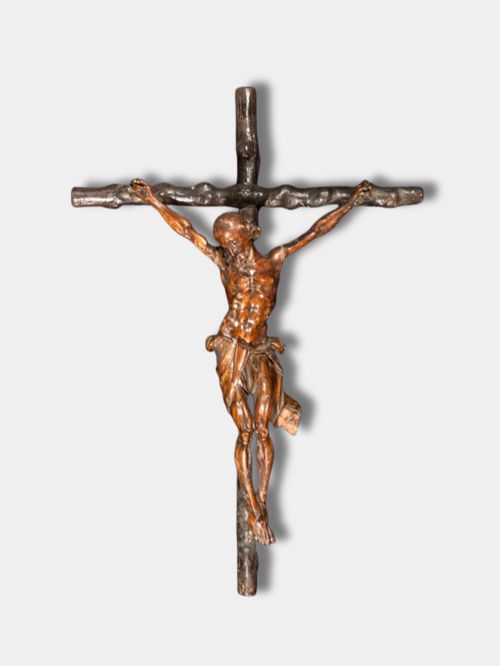
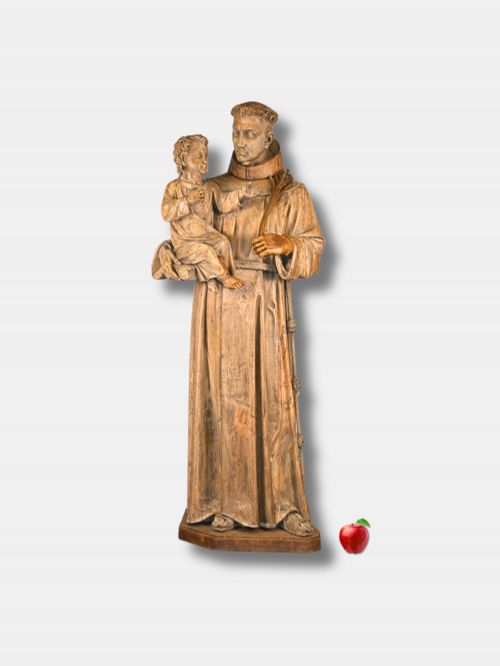
The selection on this page leans toward continental figures, featuring representations of the Madonna and Child, Corpus Christi crosses, and individual saints carved in oak, pine, and exotic hardwoods. Regional traditions from Italy, France, Spain, and Germany dominate the offerings, spanning the late medieval period through the nineteenth century.
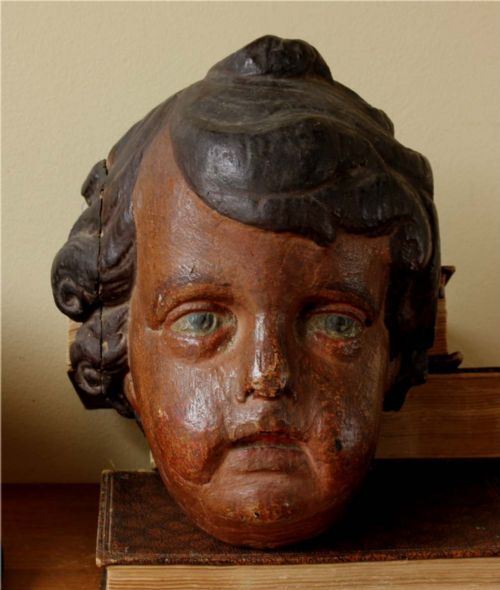
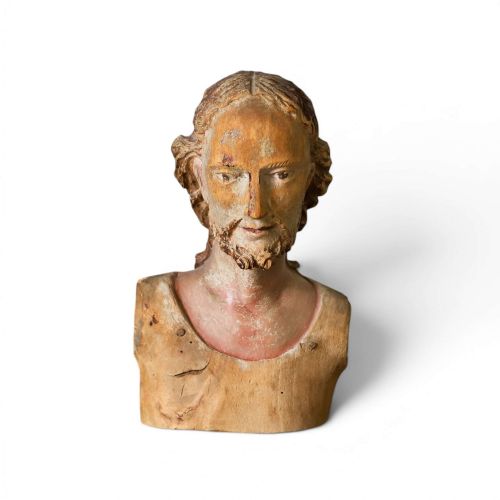
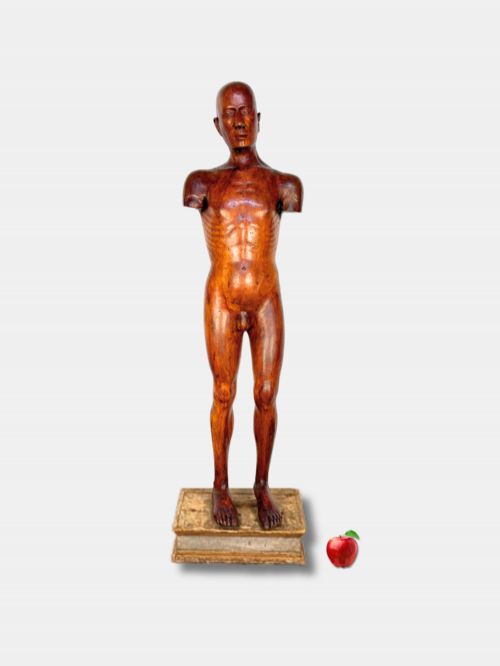
Buyers encounter diverse scales, from life-sized figures mounted on plinths down to miniature devotional busts and cherub heads. Some retain traces of their original polychrome paint and gesso surfaces, while others present the bare timber grain shaped by centuries of handling.
Materials and Carving Methods
Carvers utilised locally available hardwoods and softwoods such as oak, walnut, lime wood, pine, and olive wood depending on the regional source and the desired detail of the sculpture. Dense timbers permitted intricate facial expressions and flowing drapery folds, while coarser woods suited bolder, architectural forms.
Makers shaped these timbers with gouges and chisels directly from seasoned logs or joined blocks, frequently hollowing larger figures to prevent timber splitting. Surfaces were sometimes smoothed for gilding and polychrome painting, applying layers of gesso and pigment directly to the wood substrate.
Several listings include unexpected anatomical details such as carved skulls and cherub heads peering out from baroque church woodwork.
Distinctions in Execution
The hierarchy of quality rests primarily in the anatomical conviction and expressive power of the carving. Master carvers imbued wooden drapery with natural weight and tension, whereas lesser workshops produced stiff, formulaic folds and flat facial planes.
Preservation of original surface treatments also dictates distinction. Figures retaining undisturbed polychrome paint, historic gesso layers, or deep patination resulting from centuries of devotional contact hold greater material integrity than stripped or heavily restored surfaces.
Franz Keller
The Brown Wooden Religious Sculpture Glossary
- Polychrome
- Decorated in multiple colours. This surface treatment involved applying pigments over a gesso ground on the timber base.
- Gesso
- A plaster mixture used as a smooth base for paint or gilding on wooden sculptures. It was applied directly to the carved wood.
- Corpus Christi
- An image of Christ on the cross. These wooden figures focus on the anatomy of the crucifixion.
- Putti
- Representations of small winged infants or cherubs. They appear frequently in baroque ecclesiastical woodwork and decorative panels.
- Santos
- Devotional figures of saints used in religious processions and domestic shrines. They are frequently carved from wood and sometimes articulated.
Brown Wooden Religious Sculpture: Frequently Asked Questions
How do I date a wooden religious carving?
Dating relies on stylistic markers within the clothing, hair, and facial proportions, which shift from medieval gothic rigidity to baroque theatricality. Tool marks, timber shrinkage, and the nature of any surviving gesso or pigment layers further clarify the age of the piece.
Examining the construction method, such as pegging or panel joining, provides additional context for the period of manufacture.
Why do some figures have missing paint?
Centuries of cleaning, changing aesthetic tastes, or exposure to varying environments often caused original polychrome surfaces to flake or wear away. Many owners or dealers in past centuries stripped remnants to expose the raw timber grain beneath.
Surviving traces of pigment or gesso indicate how the sculpture originally appeared in its ecclesiastical or domestic setting.
Where were these sculptures originally displayed?
Earlier examples generally originated within churches, abbeys, and private chapels as altarpieces, rood screens, or devotional focal points. Smaller nineteenth-century and folk art pieces were more commonly produced for domestic shrines or personal contemplation.
Regional workshops supplied these objects to local parishes and private patrons across continental Europe.
How should I care for antique wood sculptures?
Maintain stable indoor humidity and temperature levels to prevent the timber from drying out, cracking, or warping over time. Keep sculptures away from direct sunlight and heat sources that could damage fragile wood fibres or remaining polychrome surfaces.
Dust gently with a dry, soft brush rather than applying modern polishes, waxes, or liquid cleaners.