

Brown Wooden Music Rack
A brown wooden music rack organises folios and scores, bringing period timber and functional design into a room.
Brown Wooden Music Rack
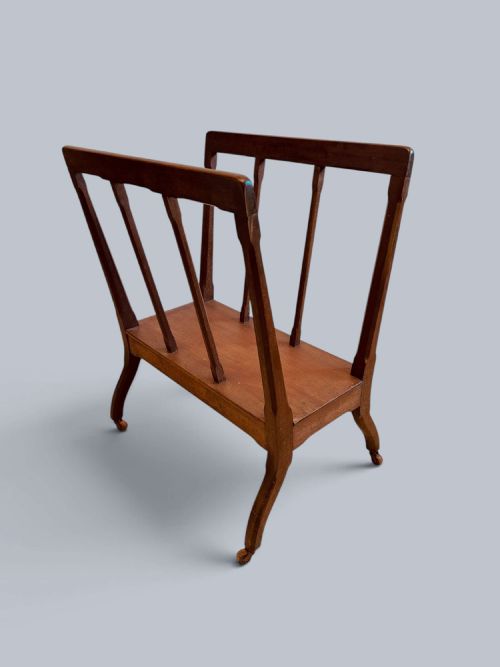
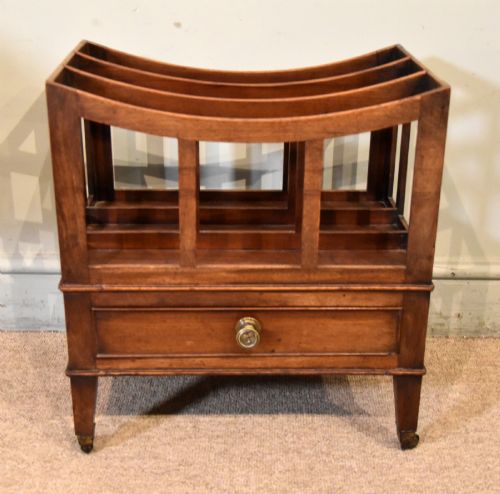
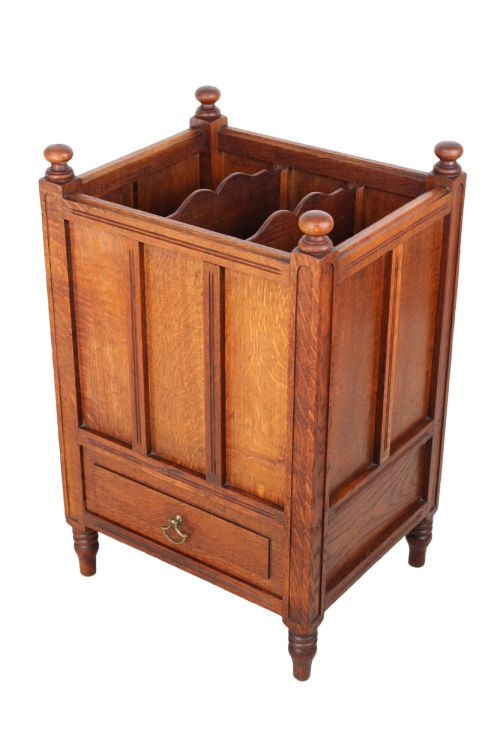
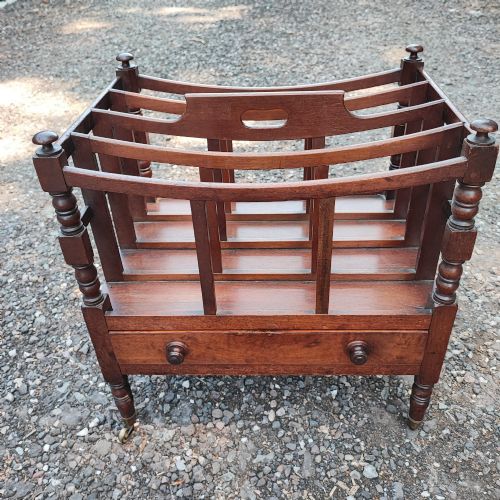
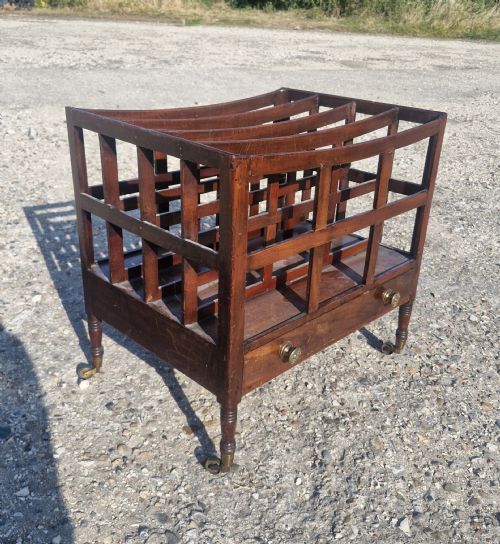
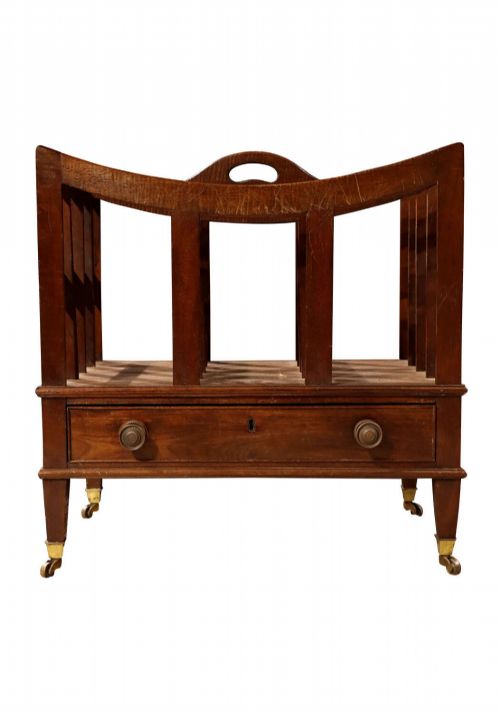
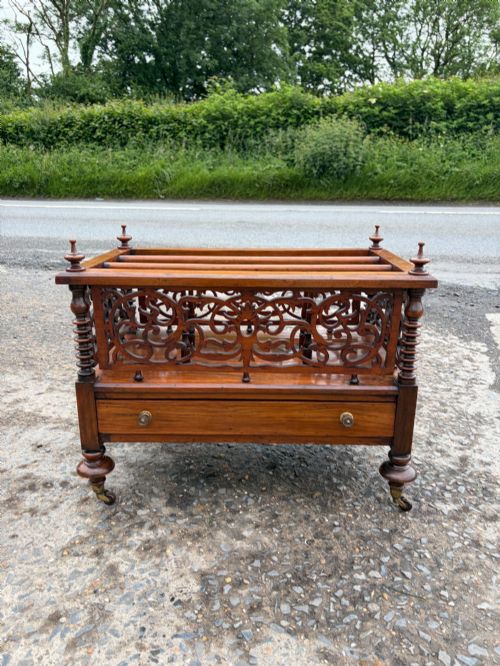
When you search for a brown wooden music rack, you encounter a variety of forms designed to hold sheets, folios and periodicals, with the Canterbury appearing most frequently among these listings. These pieces span periods from the Georgian and Regency eras through to the Victorian and Edwardian decades, reflecting shifting domestic tastes for organised music and reading material.
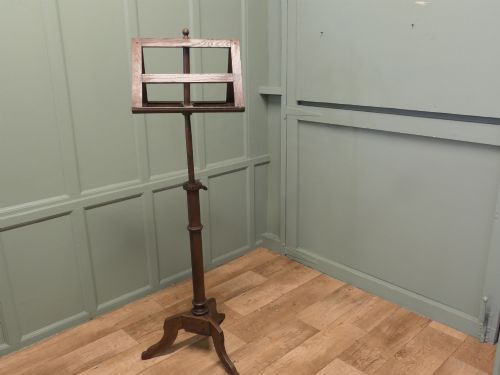
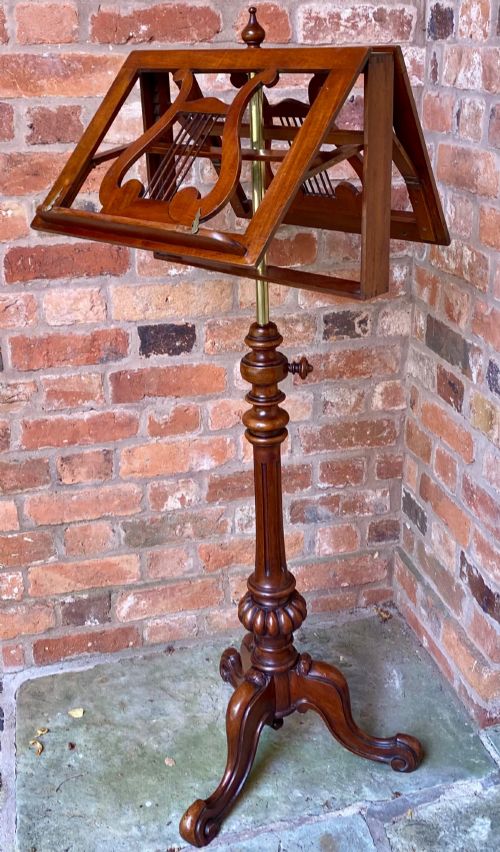
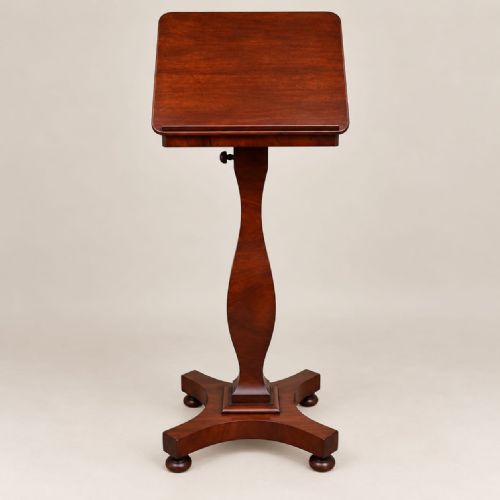
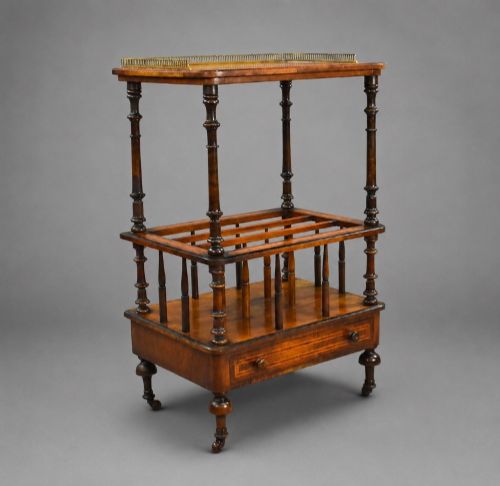
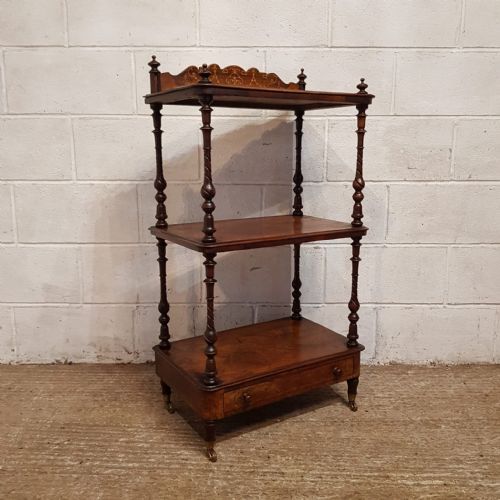
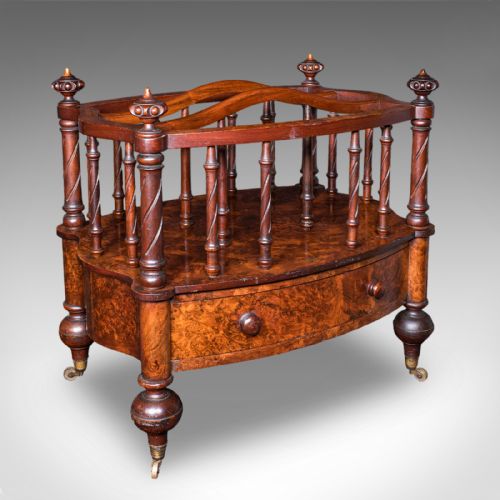
The assortment includes low compartmented stands, adjustable music stands and combined whatnots or etageres. Mahogany, walnut and rosewood dominate the forms, frequently accompanied by brass castors and turned supports suited to nineteenth-century parlours.
How they were made
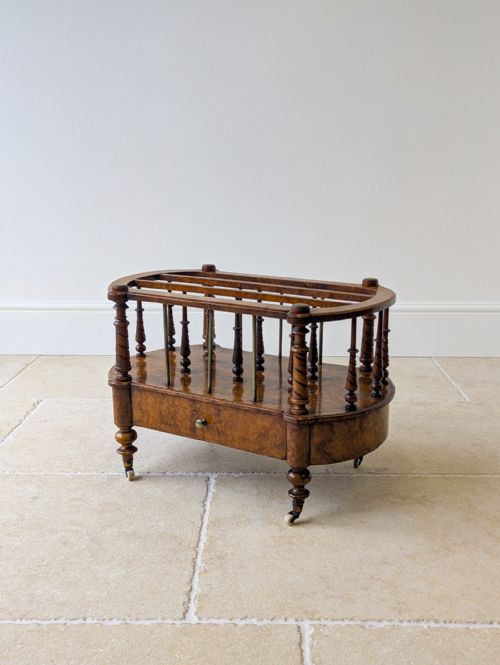
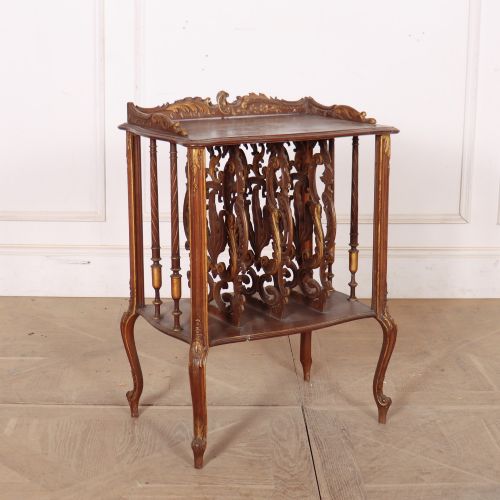
Cabinetmakers utilised solid timbers and veneers of mahogany, walnut and burr walnut, often framing compartments with slender spindle galleries or carved divisions. Boxwood stringing and ebony banding appear on select surfaces to define edges and panels.
Support elements incorporate turned wooden columns, brass castors for mobility, and adjustable ratchet mechanisms on music stands. Joinery relies on traditional methods to secure partitions and base drawers.
Brown Wooden Music Rack Retail Price Guide 2026
Typical asking prices for brown wooden music rack among the pieces listed under this phrase on Sellingantiques today, from the lower quarter to the upper quarter. They describe what is for sale here now, not the wider market.
Early nineteenth-century makers occasionally shaped the wooden partitions like lyres or draped them with carved wreaths to inspire practicing musicians.
What varies in quality
The selection of timber grain largely dictates the visual merit of a piece, with figured burr walnut and rich mahogany veneers commanding attention above plain surfaces. Crispness in carved details, such as wreath motifs or fretwork panels, also separates standard production from finer cabinetwork.
Structural integrity depends upon the tightness of the slatted divisions and the original quality of the brass castors or moving brackets. Refined examples maintain balanced proportions across multiple tiers or integrated drawers.
Howard and Sons of London·J.C.Loudon
The Brown Wooden Music Rack Glossary
- Canterbury
- A low stand with partitioned sections for holding sheet music, folios or periodicals, often featuring a base drawer and carrying handles.
- Etagere
- A set of open shelves for displaying small objects or books, sometimes combined with lower compartments in these selections.
- Whatnot
- A piece of furniture with multiple open shelves for ornaments or books, frequently incorporating music storage in Victorian examples.
- Lyre-shaped
- Designed in the form of an ancient Greek lyre, commonly utilised as a decorative motif on music stand supports and fretwork.
- Boat-shaped
- Describes the curved, cradled profile found on the upper partitions of specific nineteenth-century mahogany canterburys.
Brown Wooden Music Rack: Frequently Asked Questions
What is a Canterbury?
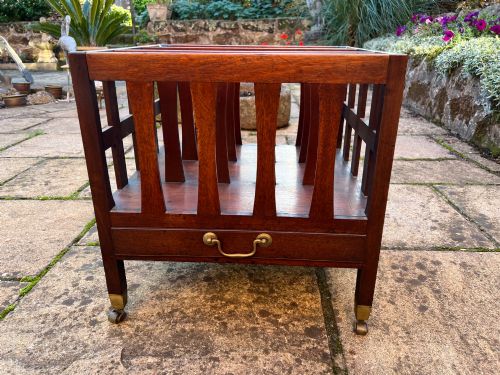
A Canterbury is a low stand with upright partitions designed specifically for storing sheet music, folios and periodicals near a piano or seating area.
Most versions include a small drawer beneath the compartments and rest on small castors for easy repositioning around a room.
How do I distinguish a Regency piece from a Victorian one?
Regency pieces generally exhibit cleaner classical lines, sometimes with ebony banding, rosewood or straight-grained mahogany.
Victorian examples frequently showcase heavier figured burr walnut, richer carving such as wreaths, or combined formats like whatnots and etageres.
Were these racks only used for music?
While originally built for scores and musical folios, many served simultaneously for newspapers and magazines in nineteenth-century country houses.
Their compartmented divisions proved equally practical for sorting everyday correspondence and reading material.
Can I adjust the height of a music stand?
Certain nineteenth-century music stands feature adjustable ratchets or screw mechanisms designed to alter the angle and elevation of the desk.
Simpler compartmented racks and cabinets remain fixed in height and serve primarily for horizontal or vertical storage.