



Vintage Music Rest
These vintage music rest items are adjustable reading tables and lecterns designed to hold sheets for musicians or readers.
Vintage Music Rest
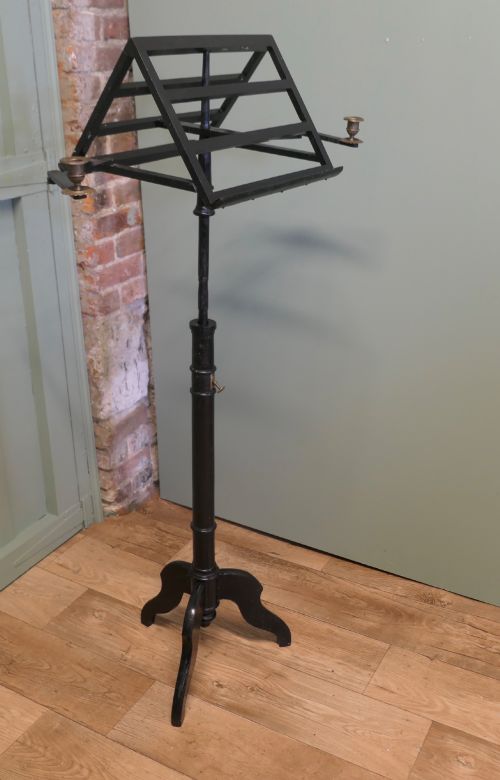
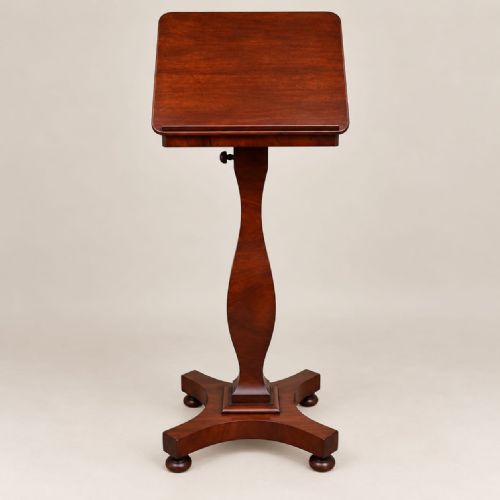
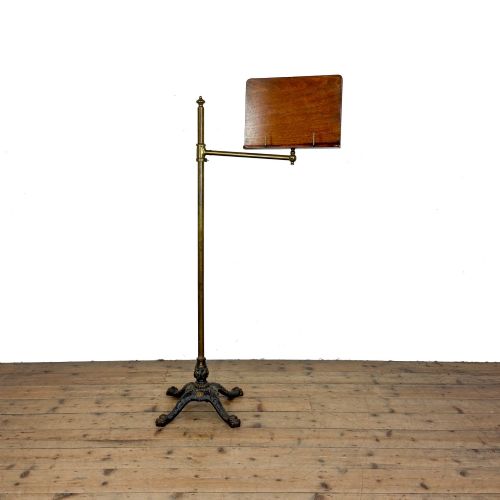
When you search for vintage music rest pieces, you encounter adjustable stands and lecterns intended for holding scores or books. The examples seen on this page span several periods, including Victorian, Regency, Georgian, and 1930.
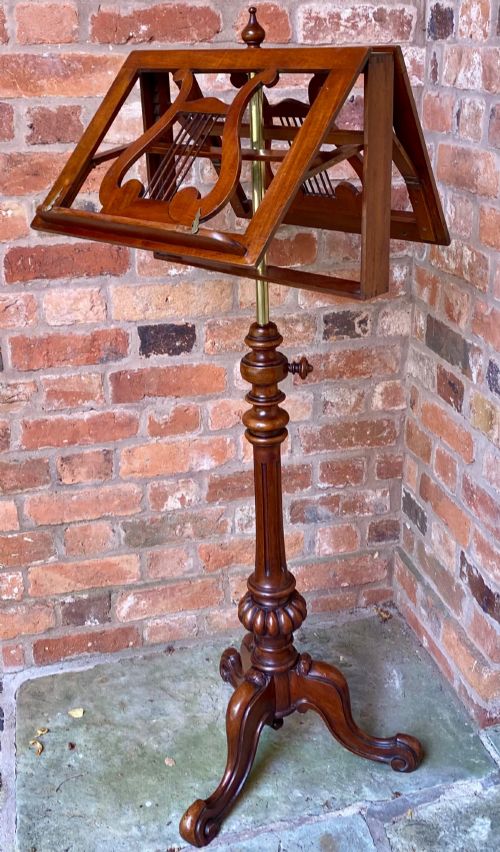
The forms range from duet music stands to reading tables and lyre-shaped designs. Mahogany, pine, walnut, and brass recur across the inventory alongside cast iron and satinwood inlay.
Victorian and nineteenth-century examples dominate the selection, often featuring mechanical adjustment mechanisms for height or angle. These objects served utilitarian functions in studies, drawing rooms, and parlours.
How they were made
Cabinetmakers utilised dense timbers like mahogany and walnut for structural stability, frequently incorporating satinwood inlay for decorative contrast. Pine served for simpler utility pieces, whilst cast iron and brass provided durable metal framing and adjustable joints.
Joinery techniques combined traditional framing with functional metal ratchets, screws, and sliders to permit height and angle alteration. Wood surfaces received hand-polished finishes that highlighted the grain and natural colour of the timber.
Vintage Music Rest Retail Price Guide 2026
Typical asking prices for vintage music rest among the pieces listed under this phrase on Sellingantiques today, from the lower quarter to the upper quarter. They describe what is for sale here now, not the wider market.
Lyre-shaped music stands bring a subtle string section silhouette into the room even when nobody is playing a note.
What varies in quality
The refinement of the mechanical adjustment mechanism separates standard utilitarian pieces from more sophisticated library or duet models. Smooth movement in brass screws, sliding stems, and folding desks indicates higher manufacturing standards.
Timber selection and decorative embellishment also define the grade of the piece, with figured mahogany and intricate satinwood inlay marking out superior examples. The integrity of the original joints and the weight of the cast iron or timber base dictate overall stability.
Harrods
The Vintage Music Rest Glossary
- Lectern
- A reading desk with a sloped top designed to hold a book or musical score at a comfortable viewing angle. These often feature adjustable height mechanisms.
- Duet stand
- A wider music stand designed to accommodate two musicians reading from a shared sheet. These frequently incorporate double-sided or extended reading ledges.
- Lyre-shaped
- A decorative motif shaped like an ancient musical instrument, commonly incorporated into the fretwork of music stand pillars. It references classical design idioms popular in the nineteenth century.
- Satinwood inlay
- Contrasting light-coloured wood veneers set flush into a darker primary timber such as mahogany. This technique creates geometric or botanical patterns on the reading surface.
Vintage Music Rest: Frequently Asked Questions
What are vintage music rests used for?
These pieces function primarily as adjustable stands for holding books, folios, and sheet music during practice or performance.
Historically, they sat beside pianos, in libraries, or on study desks to maintain an ergonomic reading angle.
How do I adjust the height?
Most examples utilise a sliding brass stem secured by a thumbscrew or a ratented mechanism behind the reading ledge.
Turning the screw releases the upright shaft, allowing you to slide the desk to the desired level before tightening it securely.
Are these stands sturdy enough for heavy books?
Solid timber frames made from mahogany or walnut, paired with heavy cast iron or wooden bases, provide substantial weight and balance.
Heavier reading tables and lecterns easily support large volumes, whilst lighter pine or brass models suit sheet music and moderate folios.
How do I date a Victorian stand?
Victorian pieces often display characteristic turning on the central pillar, heavier timber scantries, and robust brass adjustment hardware.
Comparing the construction methods, such as screw types and joint construction, helps narrow down the production era between eighteen-hundred and nineteen-hundred.