
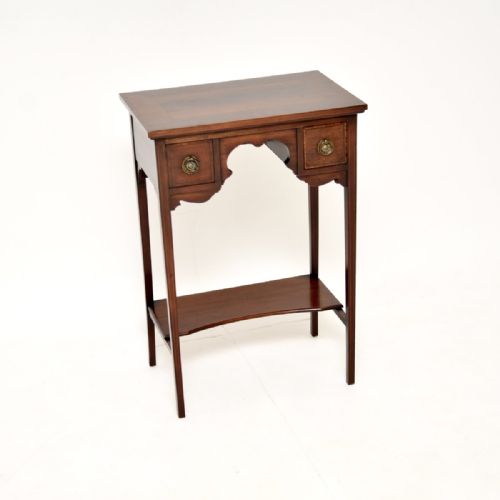



Brown Wooden Kneehole Desk
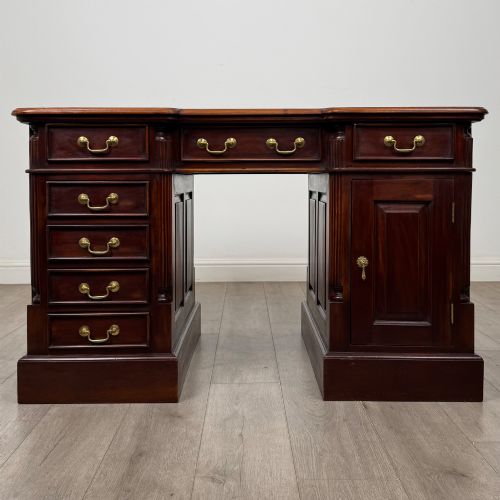
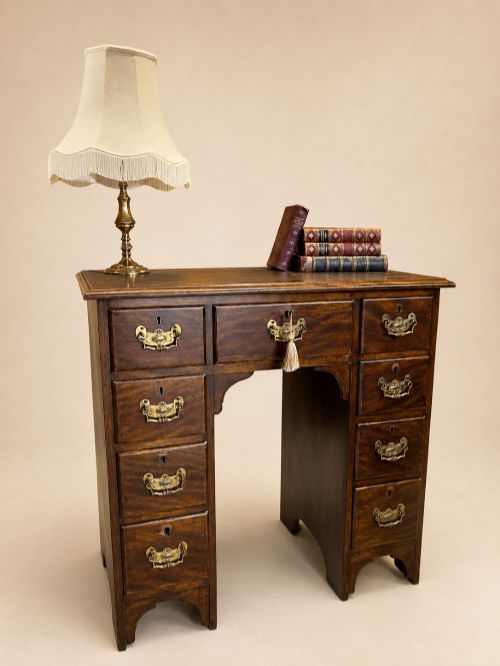
A brown wooden kneehole desk is a practical workspace built with banks of drawers flanking a central recess, offering timeless utility and sturdy construction.
Brown Wooden Kneehole Desk
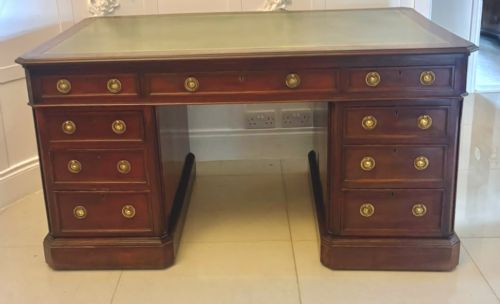
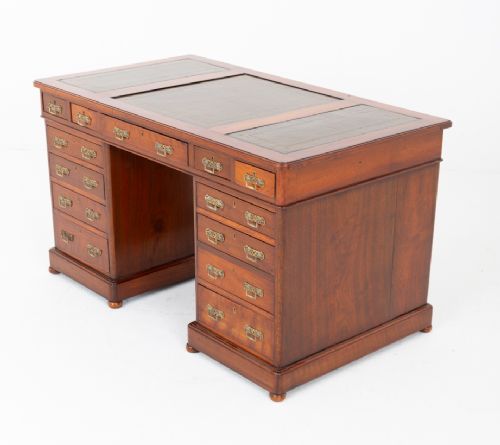
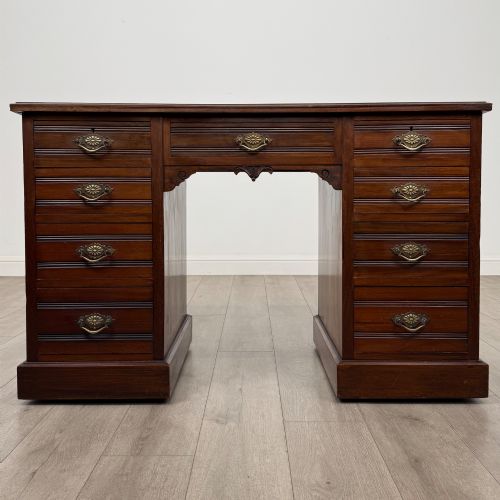
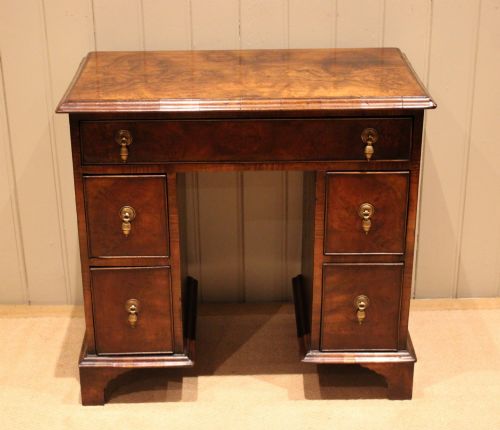
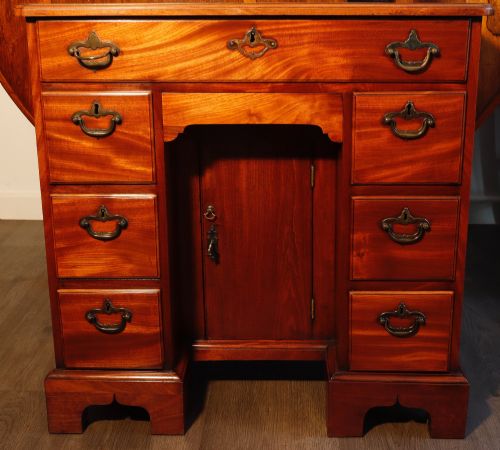
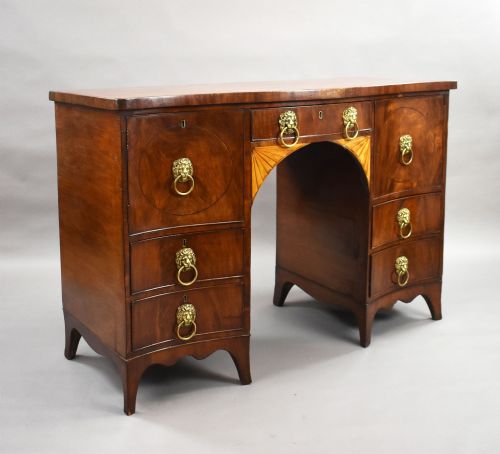
A brown wooden kneehole desk serves as a functional workspace that typically includes a central recessed opening beneath the desktop, flanked by smaller drawers. These pieces appear across Georgian, Victorian, and Edwardian periods, manifesting in forms such as pedestal desks and writing tables.
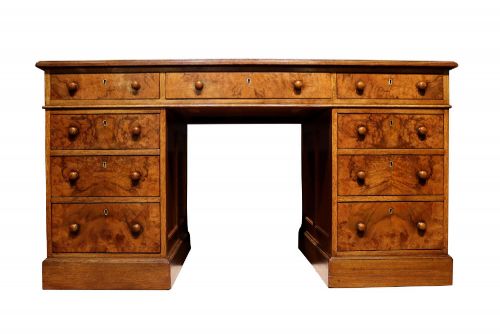
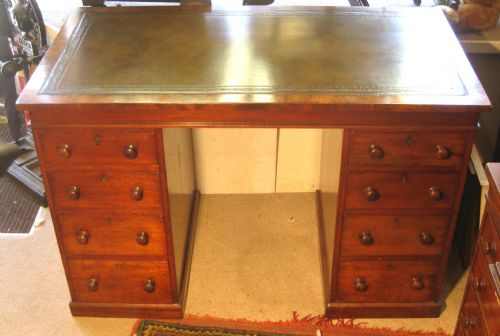
The most common versions met on this page are mahogany or walnut pedestal desks from the nineteenth and early twentieth centuries. They combine generous writing surfaces with structured storage, adapting well to modern studies and home offices.
Makers occasionally utilised timbers like oak, yew wood, and elm, yielding variations from grand architectural designs to compact proportions. Selecting the right piece involves weighing the timber grain against the scale of the room it will inhabit.
Assessing Quality
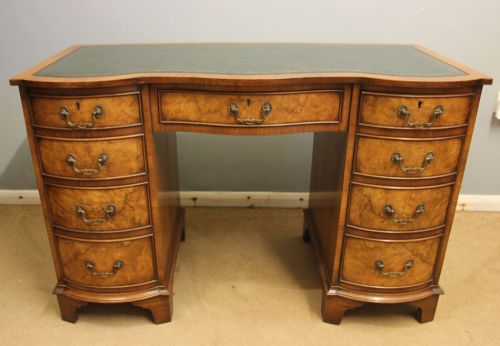
The refinement of timber figuring and the precision of the joinery distinguish higher grade examples from standard utility pieces. Richly grained mahogany or burr walnut paired with subtle inlay work commands greater appreciation.
Original brass hardware, well-fitted internal stationery drawers, and integrated leather inserts elevate a desk's standing. Proportion and balance across the pedestals and kneehole arch further separate master cabinetmaker output from simpler workshop builds.
Some desks hide secret stationery drawers and miniature compartments designed to keep private correspondence safe from wandering eyes.
Johnstone and Jeanes·John Gregory London·Druce and Co·Étienne Kohlmann
The Brown Wooden Kneehole Desk Glossary
- Kneehole desk
- A writing table featuring a central recessed space for the legs, positioned between two supporting banks of drawers. This configuration became popular in the eighteenth century and persisted through the Victorian period.
- Pedestal desk
- A heavy freestanding writing desk supported by two pedestals containing drawers down to the floor. They often feature inset leather writing surfaces on top.
- Burr walnut
- A prized timber harvested from walnut tree growths, displaying swirling, knotted grain patterns. Cabinetmakers utilised it for decorative drawer fronts and tabletops.
- Inlay
- A technique where pieces of contrasting wood, such as boxwood or satinwood, are inserted into the primary timber surface to create decorative patterns.
Brown Wooden Kneehole Desk: Frequently Asked Questions
What is a kneehole desk?
A kneehole desk is a specific form of writing furniture defined by a central open recess for the user's legs, flanked by one or two banks of drawers.
This layout allows the writer to sit comfortably close to the work surface while keeping papers and writing implements stored securely within arms reach.
How do I care for the leather top?
Leather writing surfaces benefit from regular dusting with a dry cloth and occasional treatment with specialist leather balms to prevent cracking.
Avoid placing hot cups directly on the leather and keep the desk away from direct sunlight to preserve the colour and supple texture of the hide.
Are these desks suitable for daily work?
Many antique desks offer sturdy writing surfaces and ample drawer space that adapt well to modern laptop use and paperwork storage.
Checking the writing height and kneehole clearance ensures the desk will remain comfortable during extended periods of sitting.
How do I distinguish Georgian from Victorian desks?
Georgian desks typically exhibit restrained classical proportions, elegant bracket feet, and understated mahogany or walnut construction without excessive ornamentation.
Victorian examples often display heavier proportions, richer burr walnut figuring, more elaborate hardware, and occasional use of secondary timbers like oak.