
Brown Wooden Hat Rack
A brown wooden hat rack brings instant character to an entrance hall while keeping coats and hats orderly.
Brown Wooden Hat Rack
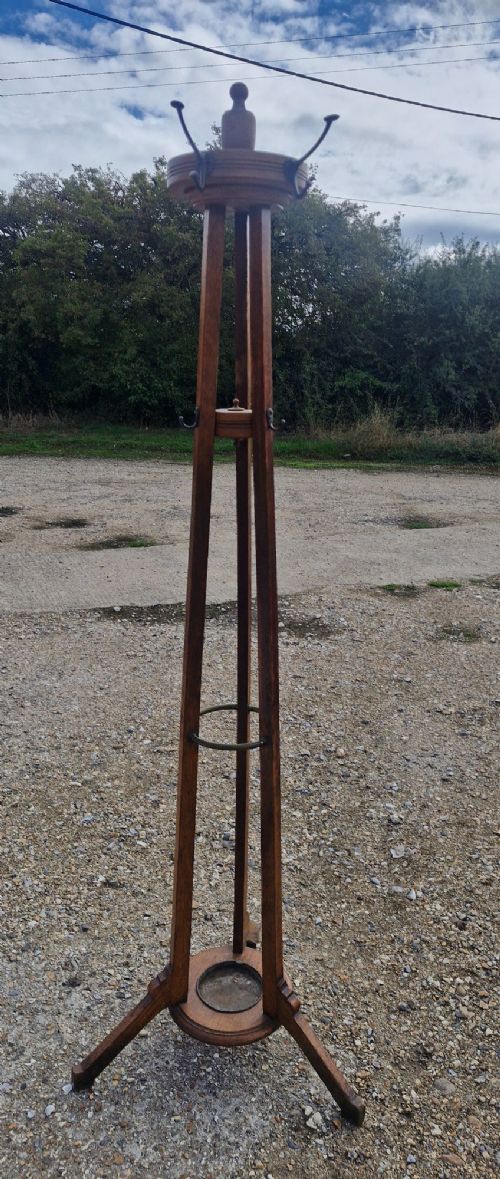
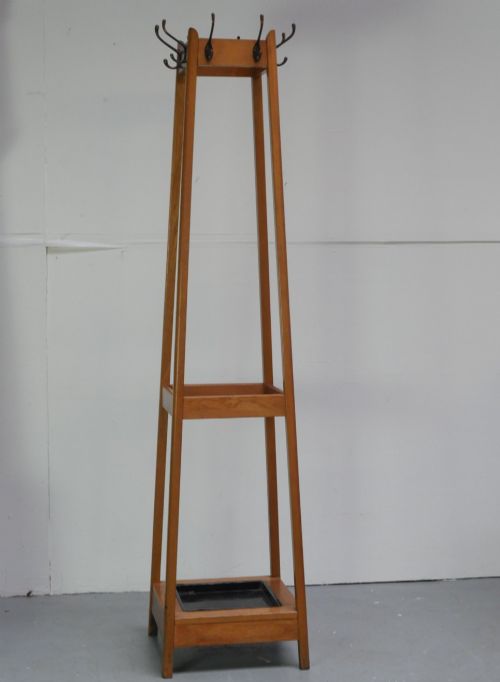
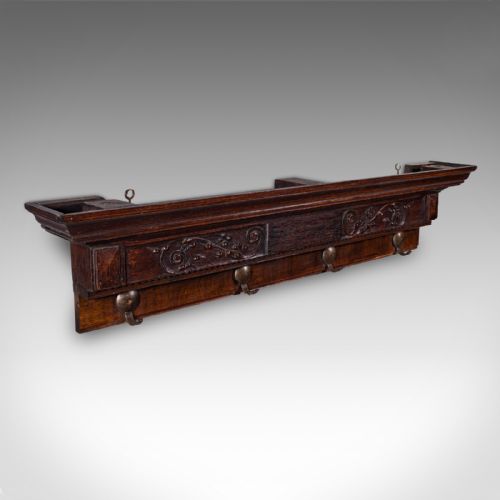
When you search for a brown wooden hat rack, you encounter a practical entrance furnishing designed to hold outdoor garments, hats, and umbrellas. The selections on this page range from freestanding hall stands to wall-mounted racks, reflecting domestic needs across different decades.
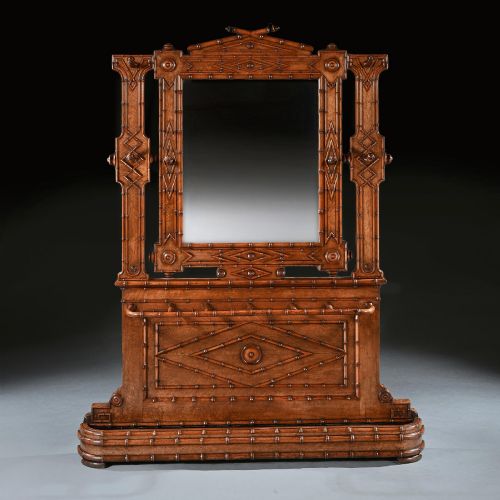
You are most likely to meet pieces originating from the Victorian and Edwardian periods, alongside early twentieth-century designs. Beech and oak form the backbone of these listings, often shaped into vertical coat stands or fitted with hooks and mirrors.
How they were made
Maker's workshops relied heavily on solid timbers such as oak, mahogany, and beech, selected for their structural strength. Timber was often turned on a lathe or carved to create decorative cornices and panels.
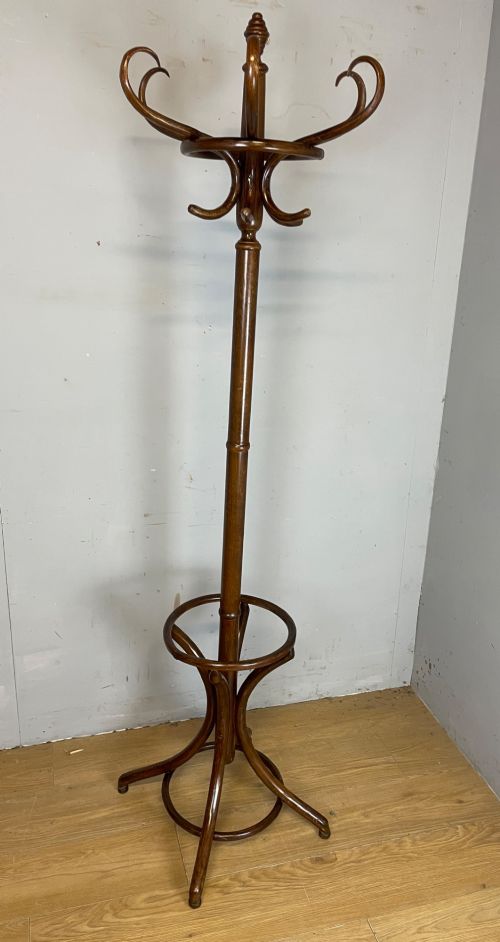
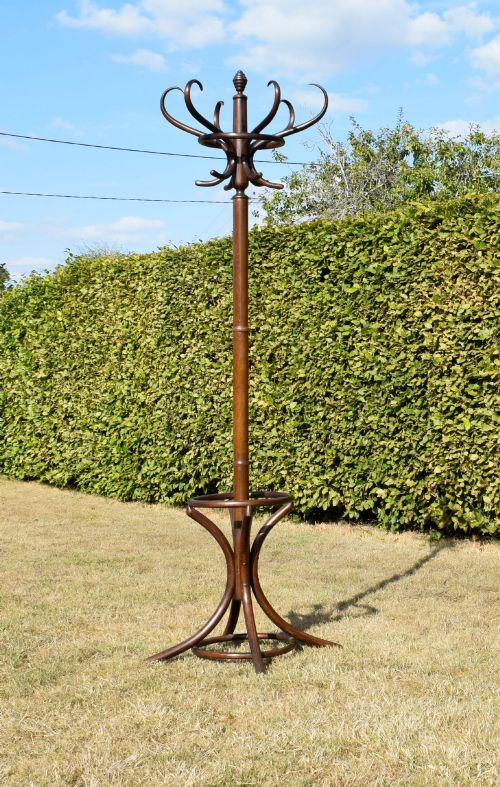
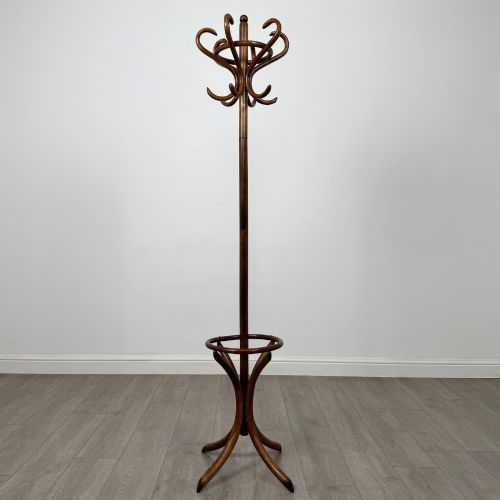
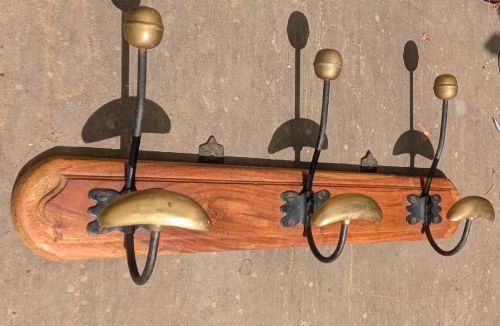
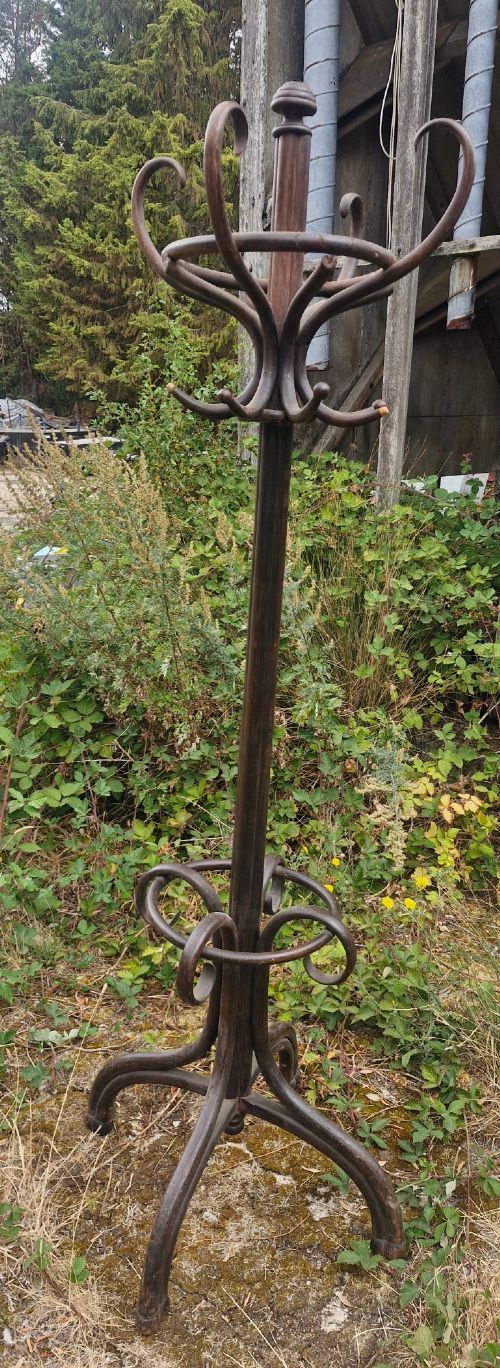
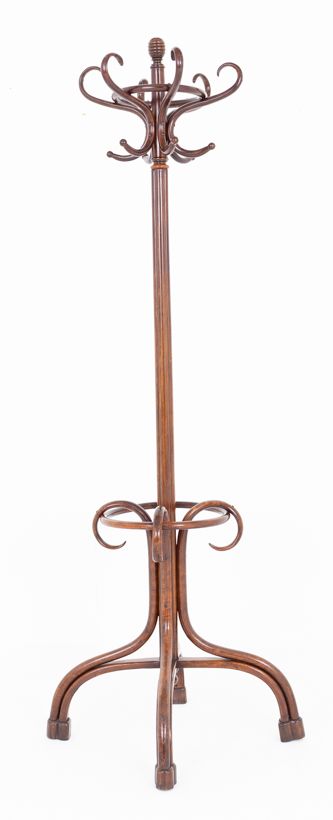
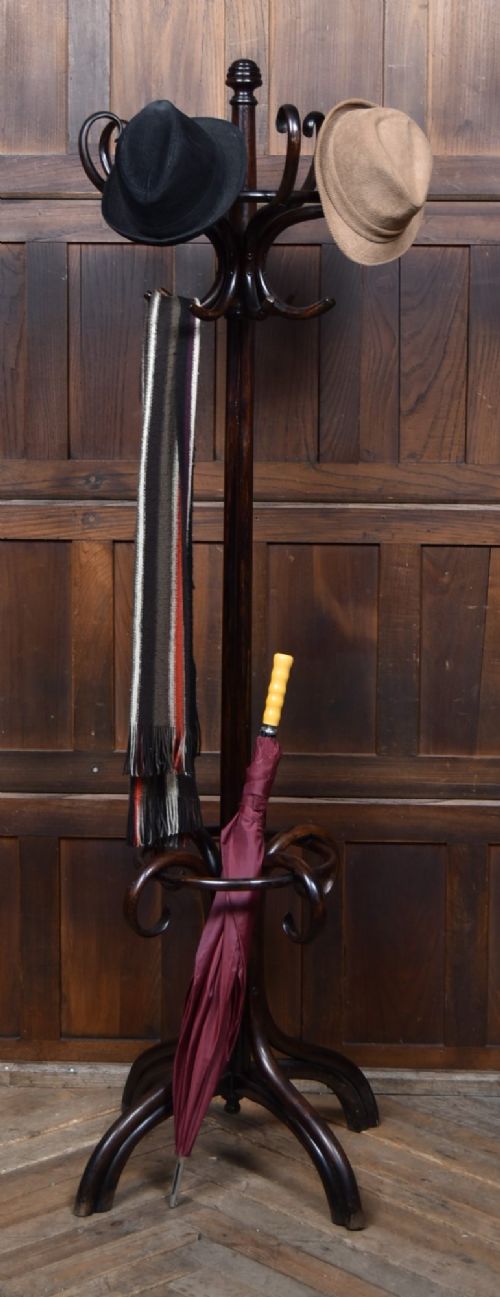
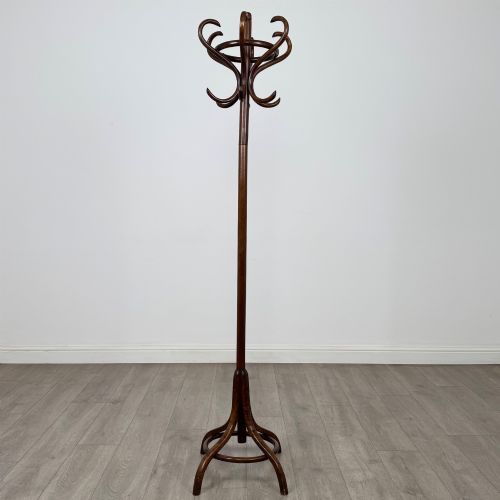
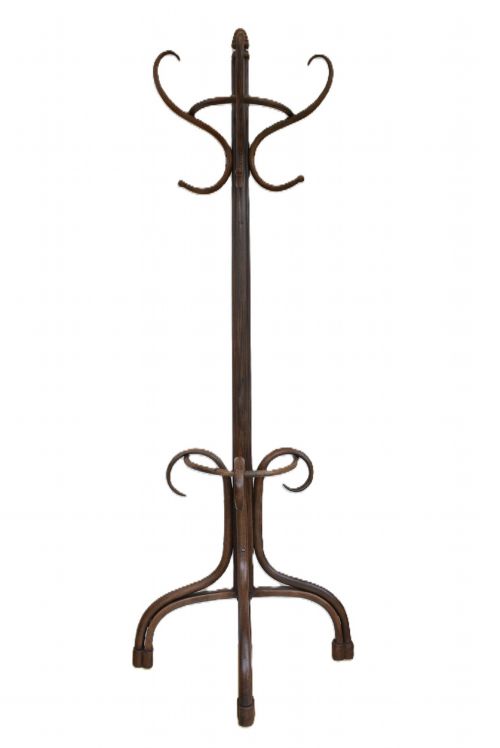
Bentwood techniques involved steaming beech until pliable, allowing craftsmen to curve the wood into graceful loops for hat rings and umbrella rings. Metal hooks in brass or iron were then securely fitted to hold heavy winter garments.
Listings feature oak, beech, mahogany, and walnut alongside bentwood and brass elements across the Victorian and Edwardian periods.
What varies in quality
Quality rests in the integrity of the timber framing and the original joinery, distinguishing sturdy hall furniture from lighter utility items. Pieces that retain their original drip trays, mirrors, and matched hooks demonstrate superior original craftsmanship.
The sophistication of the timber turning and the complexity of carved details mark the division between standard workshop production and finer commissions. Sturdy construction ensures these tall stands remain balanced under the weight of heavy coats.
Astrola·GW Evans
The Brown Wooden Hat Rack Glossary
- Bentwood
- Wood shaped by steaming and bending rather than carving. This technique produced lightweight yet resilient hat stands during the nineteenth and twentieth centuries.
- Hall Stand
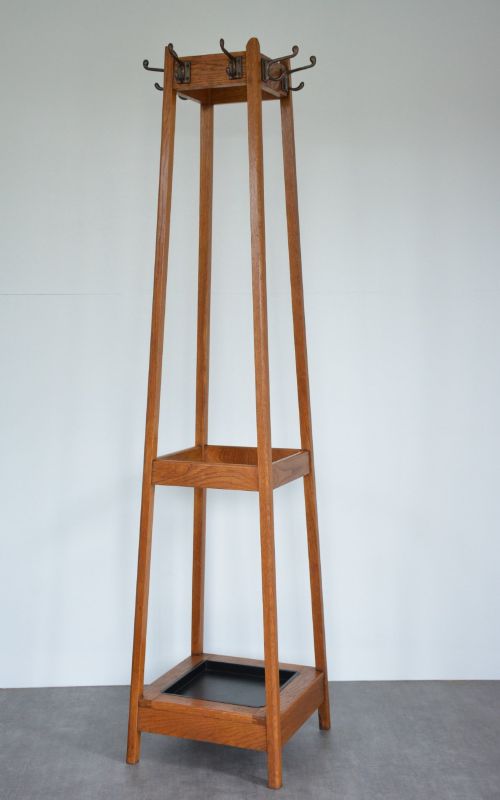
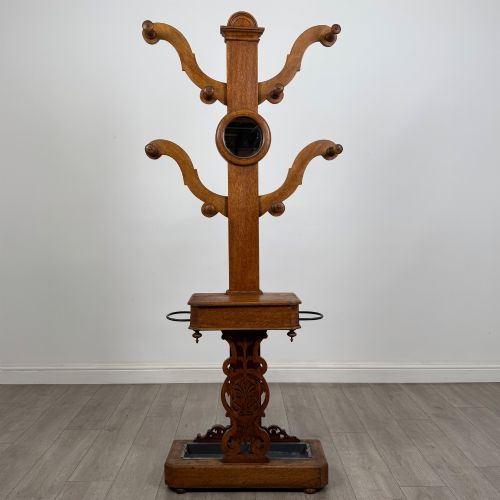
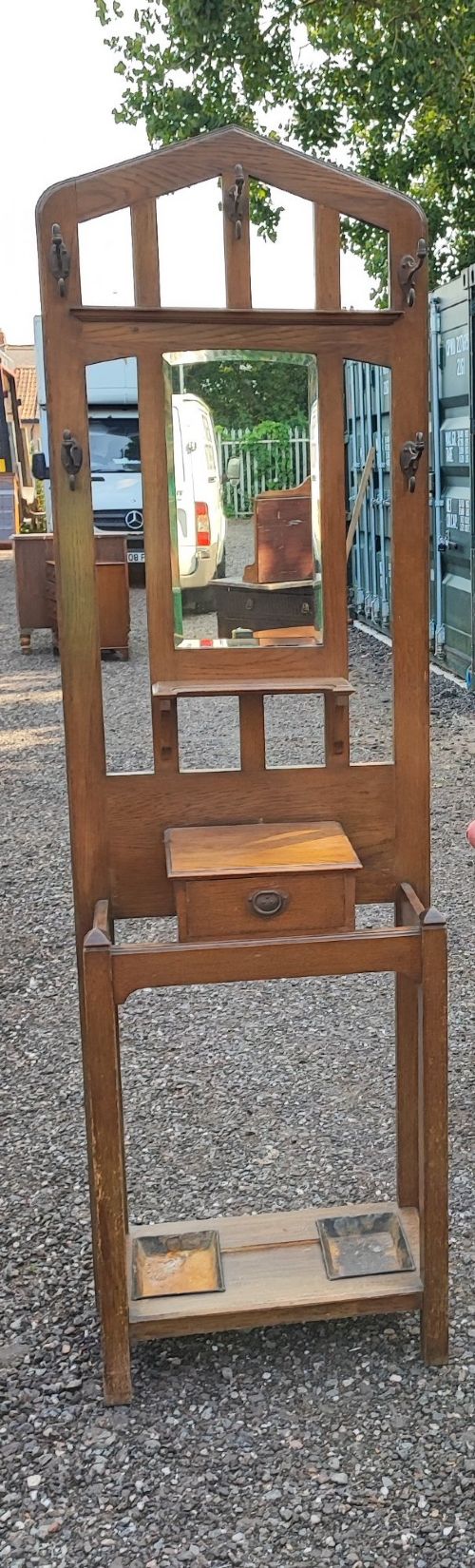
- A large piece of entrance furniture incorporating coat hooks, a mirror, and frequently an umbrella stand with a metal drip tray. They served as central fixtures in period hallway interiors.
- Demi Lune
- A half-moon shape used for wall-mounted or space-saving hall stands. This profile allowed furniture to sit flush against hallway walls.
- Japonisme
- A style influenced by Japanese art and design, seen in decorative details of some nineteenth-century pieces. It brought asymmetrical motifs and exotic wood finishes to European interiors.
- Turned
- Wood shaped on a lathe to create cylindrical, spindle, or column components. This traditional method added decorative profiling to upright posts and hat pegs.
Brown Wooden Hat Rack: Frequently Asked Questions
Where should a hall stand be placed?
These pieces belong in an entrance hall or boot room where guests arrive and coats are discarded. Their vertical profile makes them suitable for narrow corridors.
Ensure there is sufficient clearance around revolving models or umbrella holders for daily domestic use.
How do I care for wooden hall furniture?
Maintain the timber surfaces using natural beeswax and a soft cloth to preserve the grain and finish. Avoid placing pieces directly next to heat sources that could dry out the wood.
Check screw fixings on wall-mounted racks periodically to ensure they remain secure under heavy loads.
What is the difference between a hall stand and a coat rack?
A hall stand is a freestanding piece of furniture that often includes a mirror, umbrella wells, and multiple tiers for hats and coats. They acted as substantial architectural fixtures in period homes.
A coat rack is typically a compact wall-mounted board fitted with hooks for simpler garment storage.
How do I identify an Edwardian hat stand?
Edwardian examples often feature simpler lines than their Victorian predecessors, utilising light oak or steamed beech. They frequently incorporate bevelled mirrors and brass hooks within balanced, symmetrical frames.
Construction from this era around nineteen-ten prioritised everyday domestic utility alongside refined craftsmanship.