


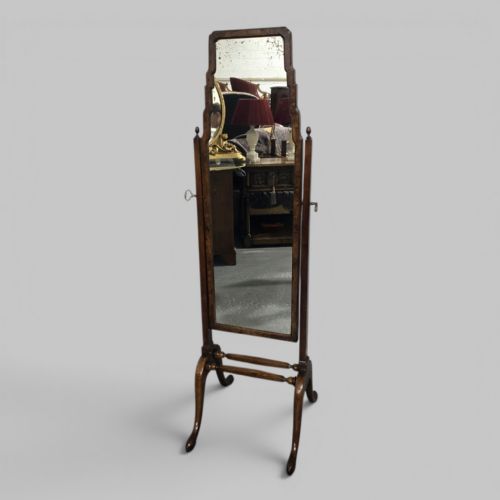
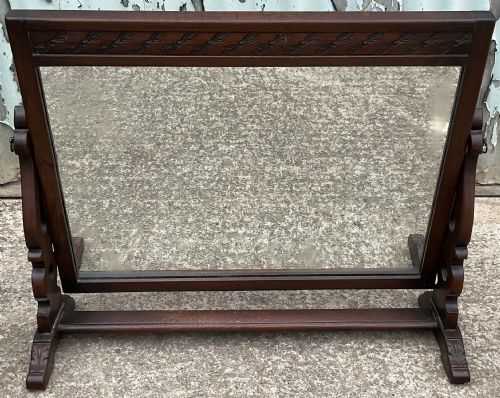


Brown Wooden Cheval Glass
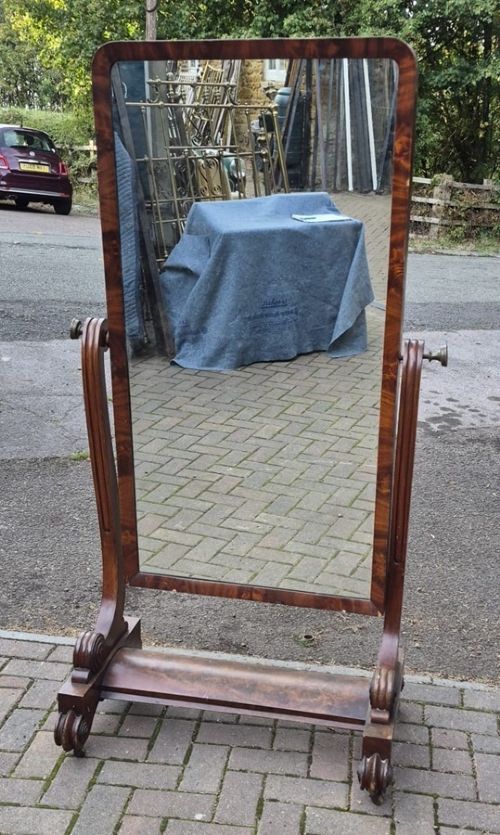
A brown wooden cheval glass brings full-length reflection and warmth to a room, offering adjustable mobility for dressing.
Brown Wooden Cheval Glass
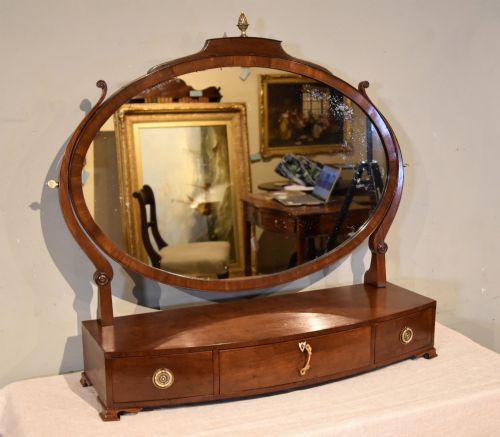
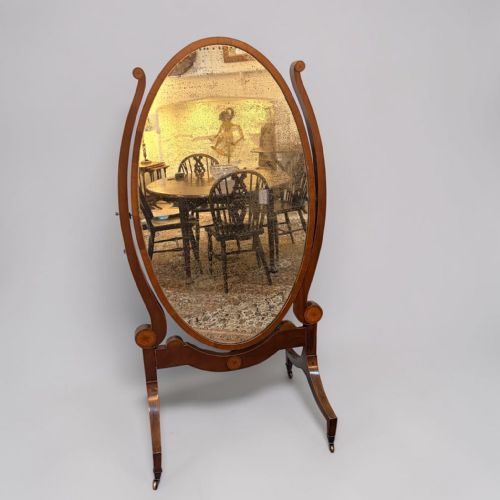
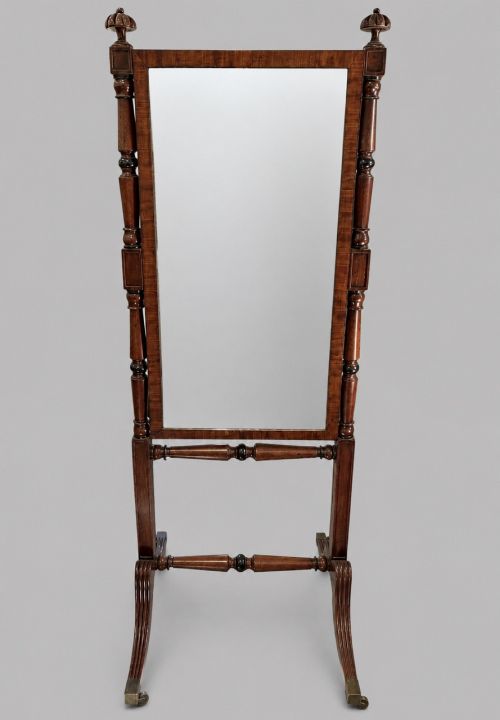
When you search for a brown wooden cheval glass, you encounter freestanding mirrors designed to tilt within a stable frame. These pieces span periods from the Georgian era through to the Edwardian period, appearing in forms such as cheval mirrors and dressing mirrors.
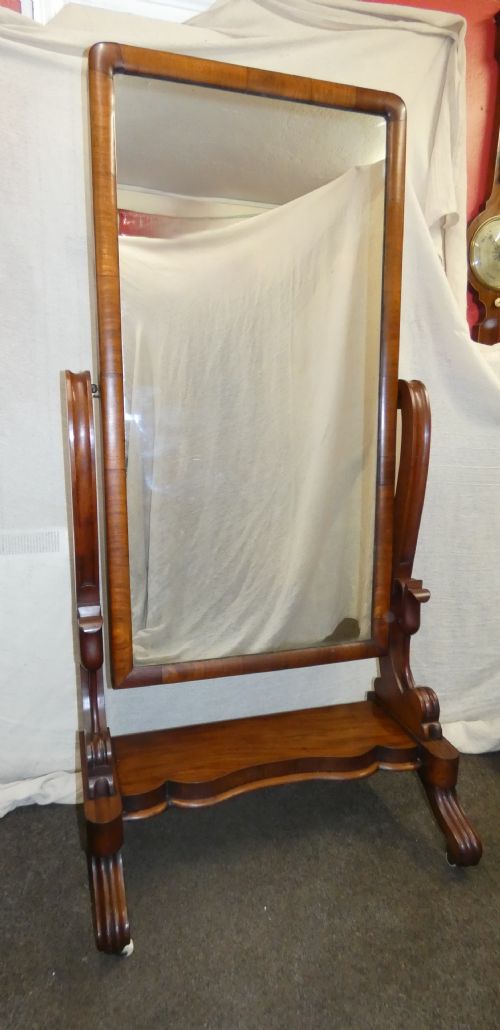
The versions most common on this page are mahogany and oak frames dating from Victorian times, alongside Regency and Georgian examples. They stand on supportive legs or trestle bases, providing a full-length view for the bedroom or dressing room.
How they were made
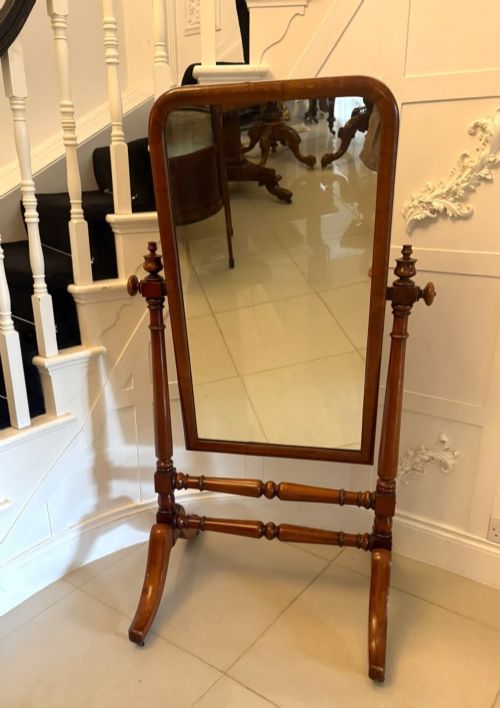
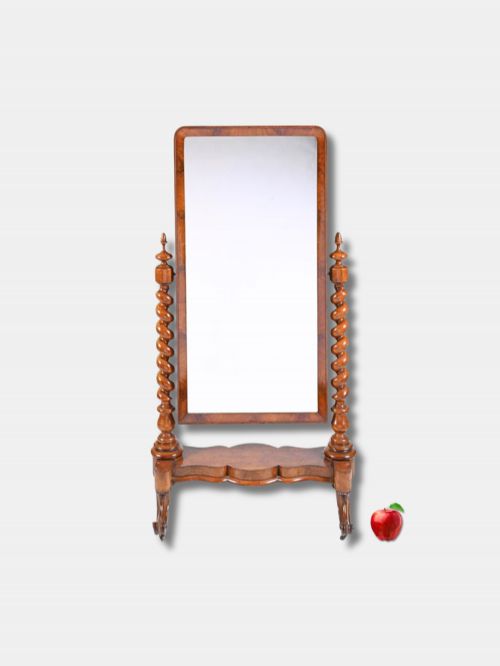
Cabinet makers utilised dense timbers like mahogany, walnut and oak to construct the freestanding frames and support structures. These woods were often shaped into turned uprights, barley twist supports, or serpentine fronts.
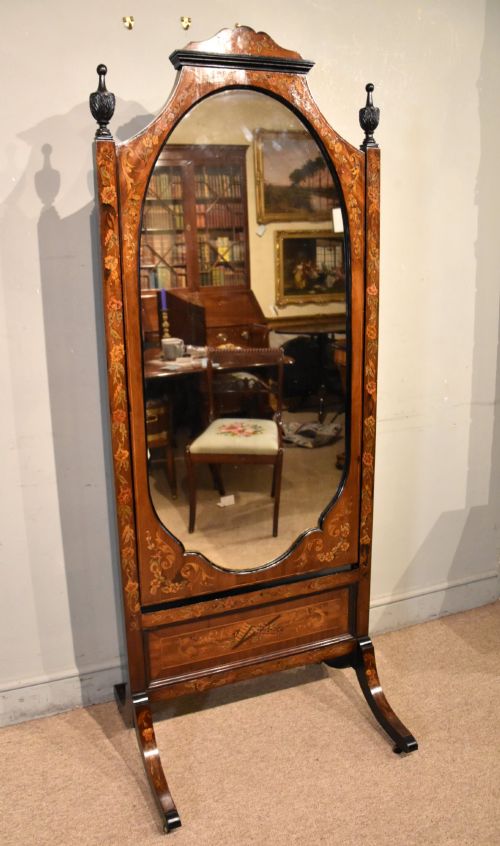
Mirrors incorporated glass plates held within pivoting frames, sometimes featuring bevelled edges and brass pivot hardware. Marquetry inlay and decorative stringing frequently adorned the mahogany surfaces during the Victorian and Edwardian eras.
Brown Wooden Cheval Glass Retail Price Guide 2026
Typical asking prices for brown wooden cheval glass among the pieces listed under this phrase on Sellingantiques today, from the lower quarter to the upper quarter. They describe what is for sale here now, not the wider market.
Listings feature mahogany, oak, walnut, and brass, spanning the Georgian, Regency, Victorian, and Edwardian periods.
What varies in quality
The standard of a brown wooden cheval glass depends on the choice of timber and the precision of the joinery within the frame. Heavier, well-figured mahogany or walnut displays a depth of grain that elevates the appearance.
Hardware execution also defines the work, with substantial brass pivots and carefully weighted bases allowing the mirror to hold its angle securely. Refined details like marquetry inlay or well-turned barley twist supports distinguish finer pieces from simpler utility mirrors.
The Brown Wooden Cheval Glass Glossary
- Cheval glass
- A freestanding full-length mirror mounted on a pivoting frame. This design allows the glass to tilt to various angles.
- Serpentine front
- A furniture front curved in a concave-convex-concave wave shape. It adds visual movement to dressing mirror bases.
- Barley twist
- A spiral turning resembling a twisted bar of barley sugar. Makers carved this decorative form into wooden support columns.
- Bevelled glass
- A mirror glass edge cut and polished at an oblique angle. This treatment catches the light and frames the reflection.
- Toilet mirror
- A smaller dressing mirror designed to sit atop a table or chest. These portable pieces match the woods of larger cheval glasses.
Brown Wooden Cheval Glass: Frequently Asked Questions
What is a cheval glass?
A cheval glass is a tall, freestanding mirror suspended on pivots within a wooden frame, allowing the entire assembly to tilt. The design permits a person to view their entire outfit from head to toe.
Originating in the eighteenth century, these mirrors became staple bedroom and dressing room furnishings throughout the Victorian and Edwardian periods.
How do I date a wooden mirror?
Dating relies upon observing the timber species, construction methods, and stylistic details present in the frame. For instance, Georgian and Regency pieces often show precise mahogany joinery, while Victorian examples introduce barley twist supports and heavy moulded bases.
Looking at the mirror glass itself and the metal pivot screws also helps establish the period of manufacture.
Where should I place a cheval mirror?
These mirrors function best in bedrooms, dressing rooms, or hallways where natural light can reflect across the space. Placing them near a window maximises illumination for daily dressing.
Ensure the floor is reasonably level so the freestanding frame remains stable when the mirror pivots.
What is the difference between a cheval mirror and a toilet mirror?
A cheval mirror stands directly on the floor on its own legs or frame, providing a full-length reflection. A toilet mirror is much smaller and sits upon a dressing table or chest of drawers.
Both types utilise similar woods like mahogany and oak, but serve different scales of reflection.