
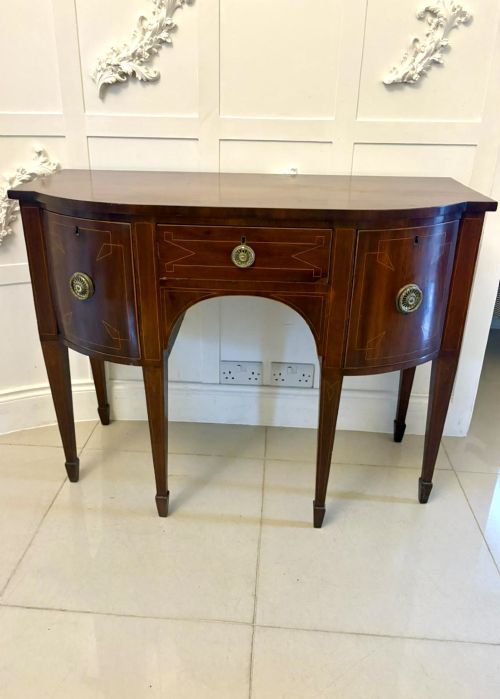
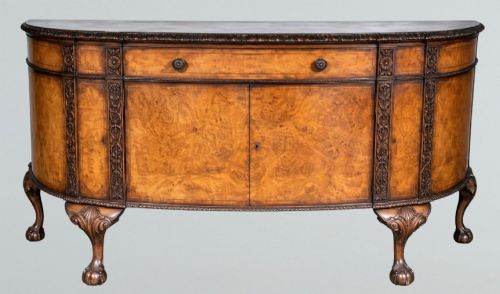
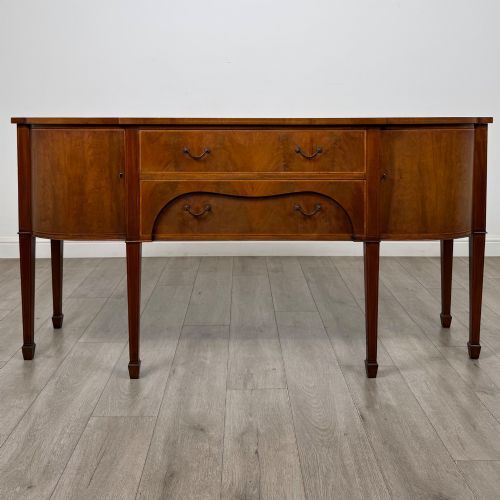
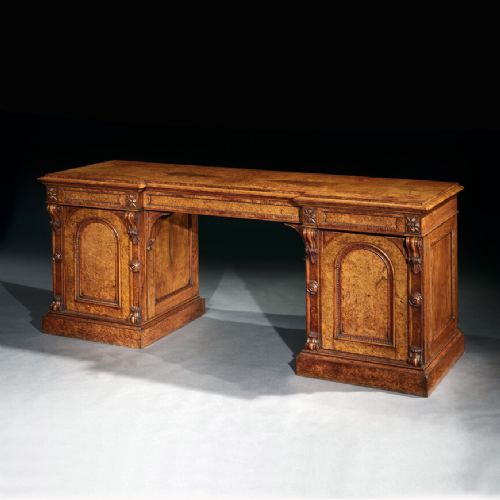
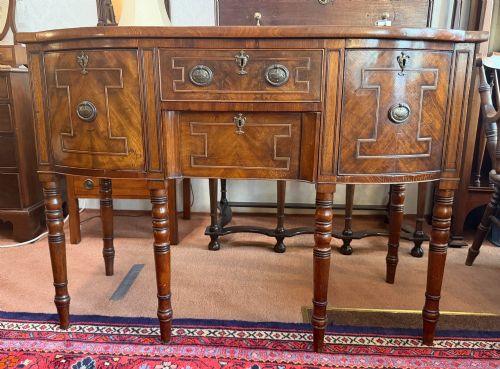
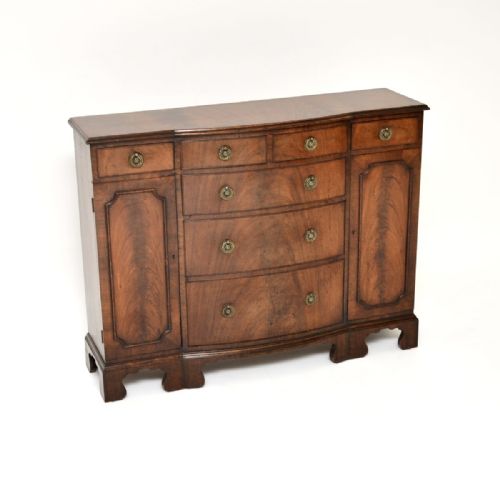
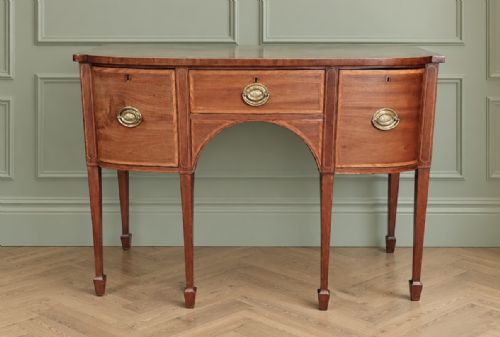
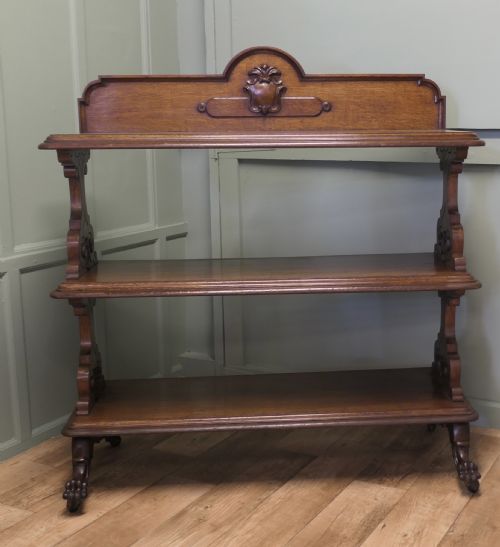
Brown Wooden Buffet Server
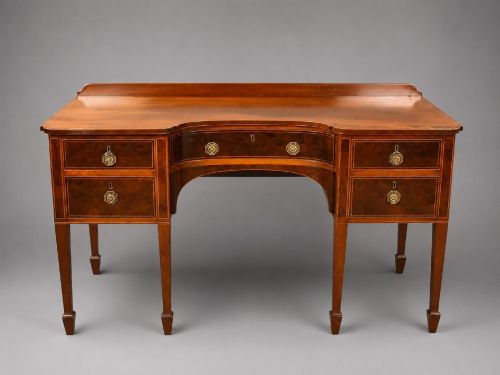
A brown wooden buffet server brings substantial timber presence to a dining room, offering serious surface space and storage for tableware.
Brown Wooden Buffet Server
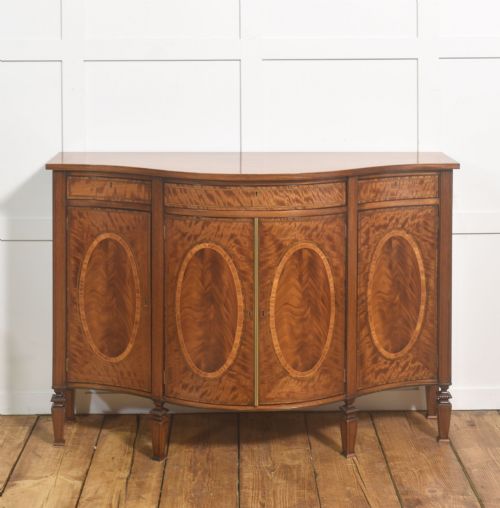
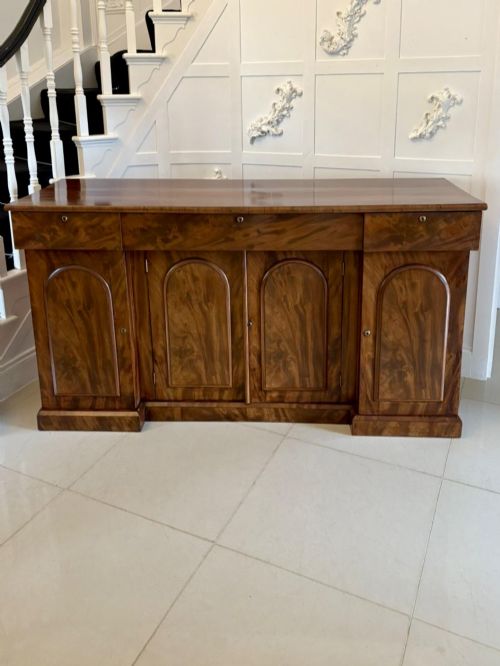
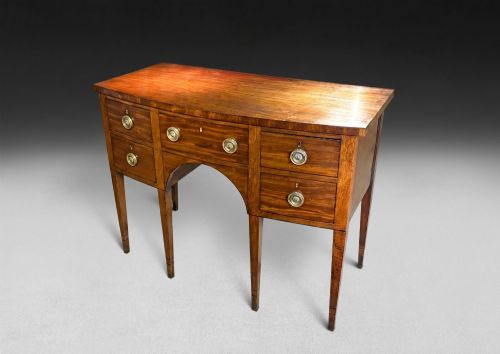
When you search for a brown wooden buffet server, you encounter a variety of forms including sideboards, servers, credenzas, and dresser bases. These items emerge from periods spanning the Georgian era, through the Regency and Victorian epochs, into the Edwardian years and the early twentieth century.
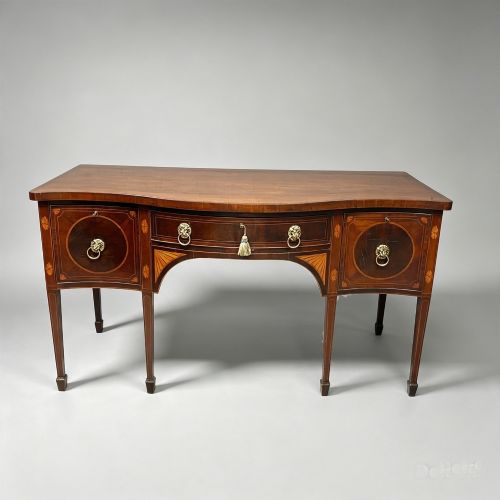
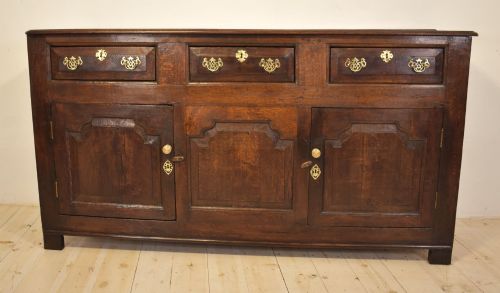
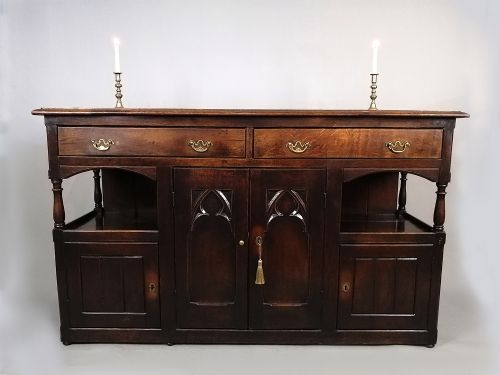
The most common version on this page is the mahogany sideboard, often featuring a bow-front or serpentine shape, alongside robust oak dresser bases and occasional burr walnut pieces. Makers from the listed inventory build these larger serving units to anchor dining spaces with functional timber architecture.
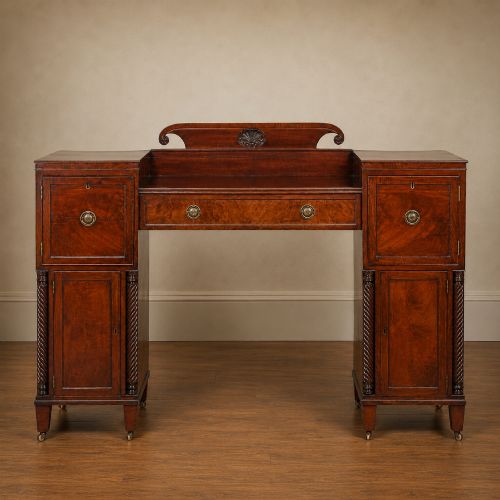
Geographical and stylistic variations appear across the selection, with Sheraton, George III, and Sheraton Revival designs sitting alongside Arts and Crafts and regional Scottish serving tables. Buyers find everything from compact small breakfront models to large pedestal sideboards.
Distinctions in construction and finish
Quality rests in the selection of timber veneers, where highly figured mahogany, pollard oak, or burr walnut display rich depth compared to plain surfaces. The crispness of inlaid crossbanding and the precision of boxwood stringing separate standard output from superior workshop production.
Structural integrity reveals itself in the weight and smooth movement of deep drawers, the thickness of solid secondary timbers inside the carcass, and the retention of original brass furniture. Well-executed carving and balanced proportions indicate an ambitious commission rather than routine workshop assembly.
One unexpected burr walnut sideboard arrives complete with a twelve-piece cutlery set, ready for immediate dinner party deployment.
Whytock and Reid·M. D. Miller and Sons
The Brown Wooden Buffet Server Glossary
- Bow-front
- A convex curved cabinet front that swells outward in the centre, common in late Georgian and Edwardian mahogany pieces.
- Crossbanding
- A strip of veneer applied perpendicularly to the grain of the main surface, often seen framing drawer fronts in contrasting lighter timber.
- Dresser base
- A low wooden storage unit with drawers or cupboards beneath a top surface, originating as a kitchen working and serving table.
- Serpentine
- A cabinet front featuring a double-convex curve flanking a central concave section, requiring advanced woodworking skill.
- Pedestal sideboard
- A heavy serving piece consisting of a central table flanked by two distinct pedestal cupboards, typical of the Regency period.
Brown Wooden Buffet Server: Frequently Asked Questions
How do I spot a Georgian sideboard?
Look for elegant tapering legs, subtle string inlay in boxwood, and straight or bow fronts constructed in dense, patinated mahogany.
Check for traditional hand-cut dovetails within the drawer construction and original brass hardware that matches the period style.
Where does a buffet server work best?
These pieces suit dining rooms and large hallways where their surface area accommodates serving dishes and their cupboards store linen or silver.
Ensure you measure the floor space and clearance for opening doors and pulling out deep cutlery drawers.
What is an oak dresser base?
An oak dresser base is a heavy, utilitarian serving and storage unit featuring wide planks, robust drawers, and often a pot board lower shelf.
These pieces originate mainly from eighteenth and nineteenth-century country workshops, displaying sturdy peg-joined construction.
How do I care for antique timber?
Keep wooden servers away from direct heat sources and dramatic humidity shifts to prevent the solid timber or veneers from splitting.
Feed the surface periodically with traditional beeswax to maintain the moisture and depth of the old polish.
What distinguishes Edwardian revival pieces?
Edwardian items frequently adopt eighteenth-century vocabulary, such as Sheraton Revival satinwood with elaborate marquetry and crossbanding.
These early twentieth-century interpretations combine lighter internal construction with sophisticated decorative veneers.