
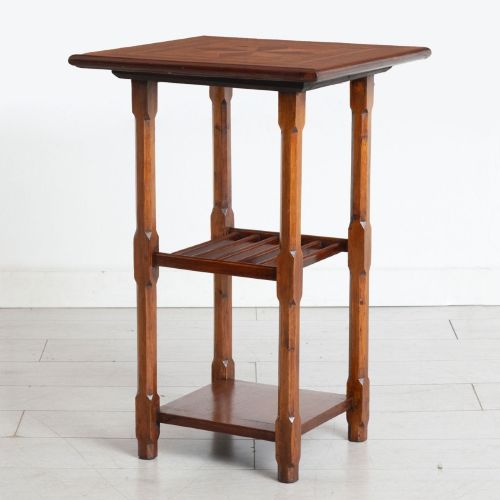
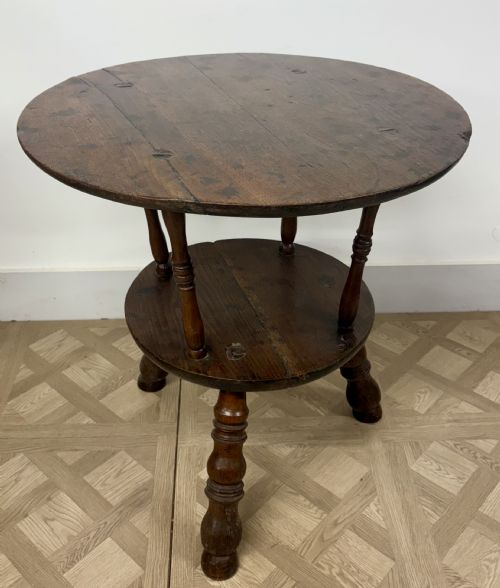
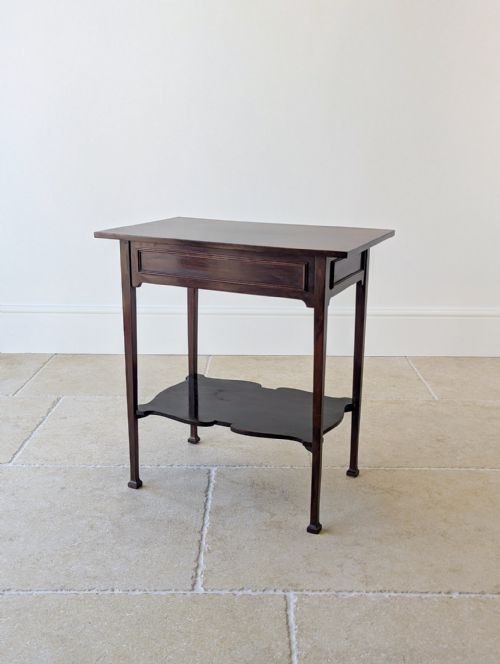
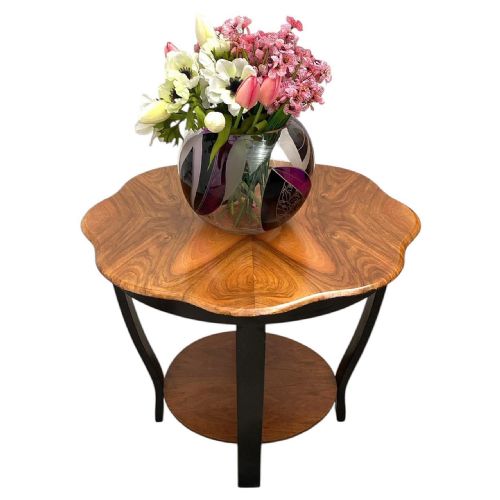
Brown Wood Tiered Table
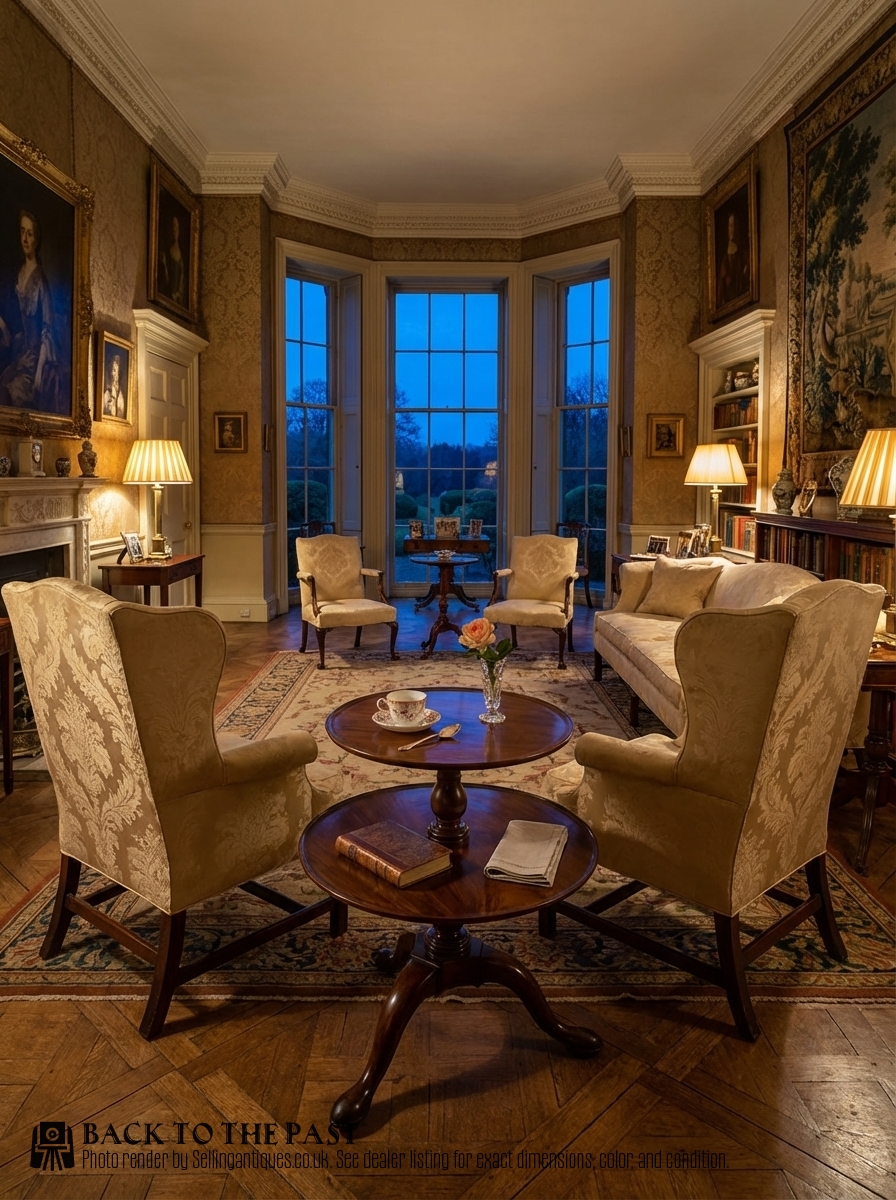
A brown wood tiered table brings useful surface space and architectural character to a room, ranging from Georgian dumb waiters to Edwardian occasional pieces.
Brown Wood Tiered Table
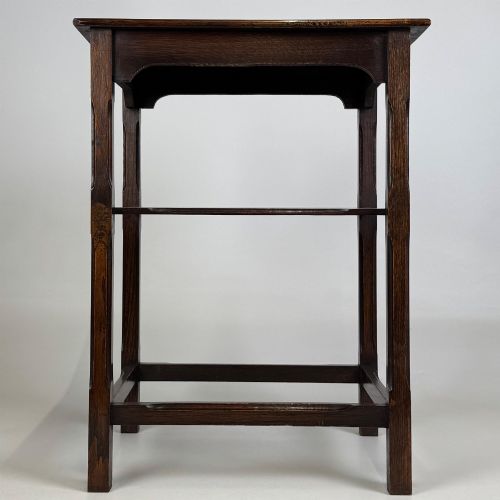
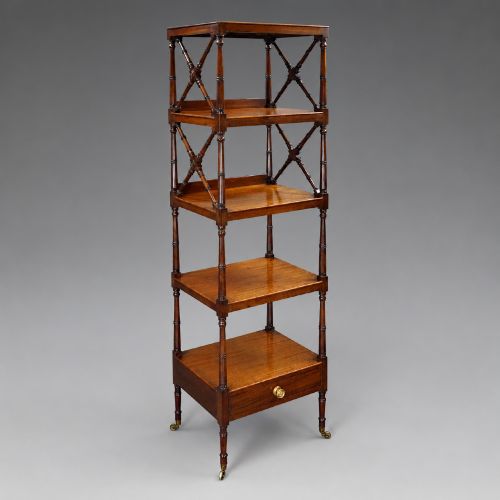
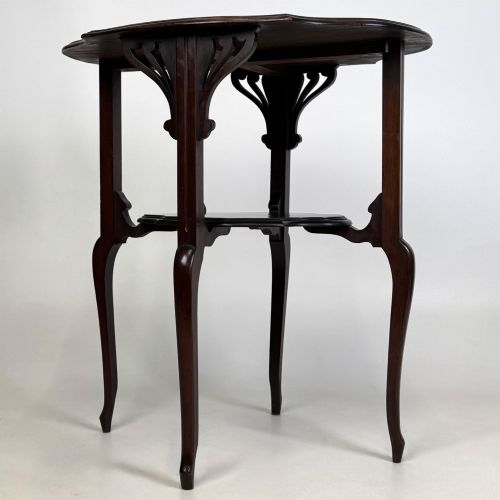
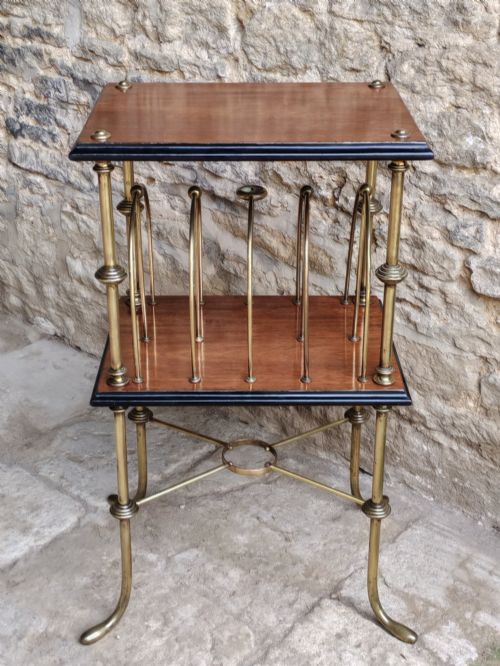
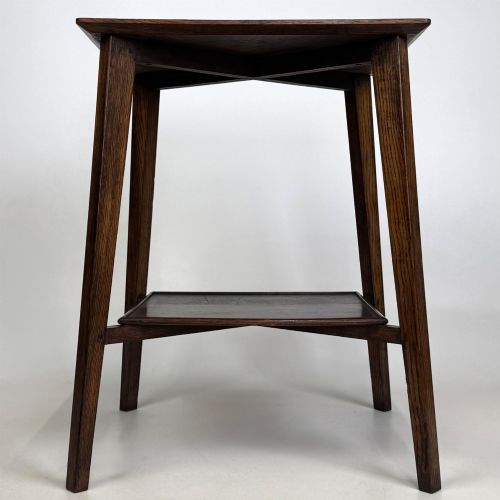
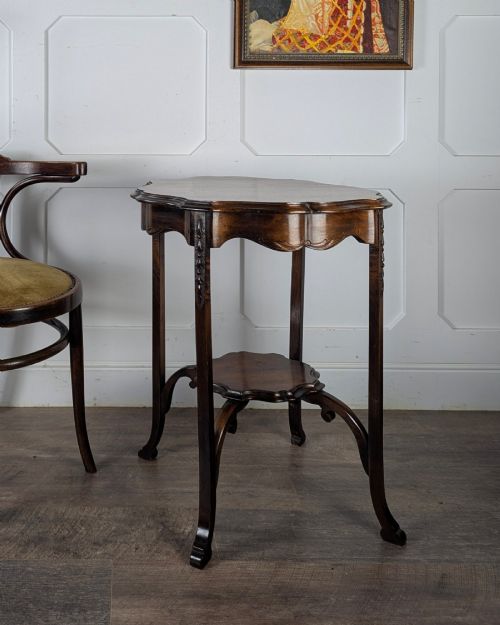
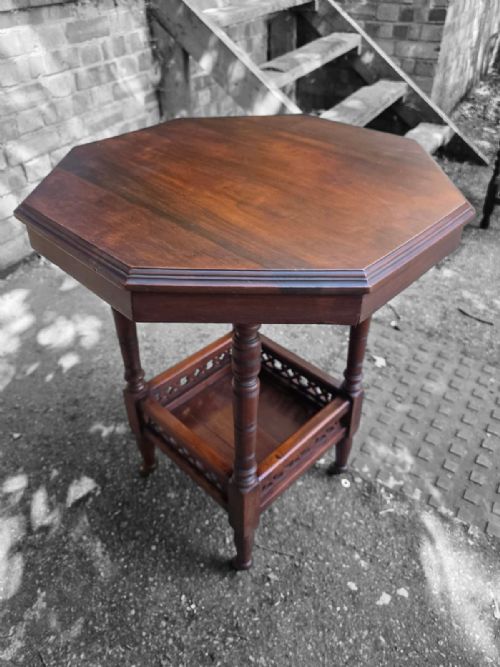
A brown wood tiered table provides multiple levels for display and daily use, taking the form of occasional tables, side tables, etageres, and dumb waiters. These pieces appear across several periods, including Georgian, Victorian, Edwardian, and the 1930s Art Deco era.
The selection here draws heavily on Edwardian and Victorian designs alongside earlier Georgian and later 1930s examples. Mahogany, walnut, and oak form the backbone of these multi-level surfaces, frequently constructed as lamp tables, plant stands, and small bookcases.
Buyers encounter French, English, and Italian interpretations, utilising woods like kingwood, burr walnut, and satinwood. Whether built as a simple cricket table or an ornate etagere with brass mounts, each piece offers graduated tiers designed for practical utility.
How they were made
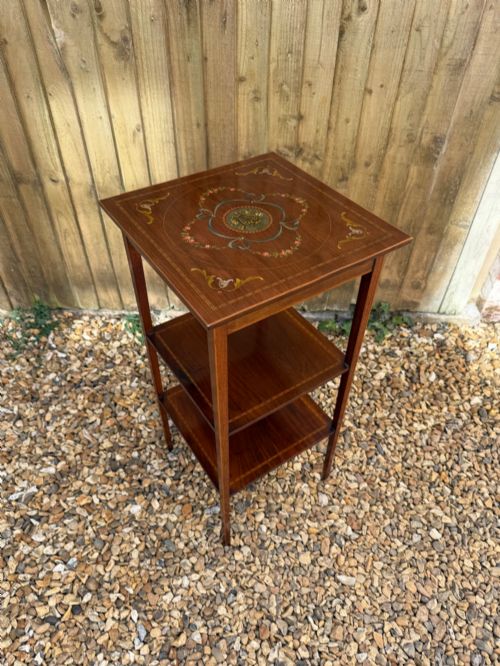
Cabinet makers utilised solid hardwoods and applied veneers over secondary timbers, selecting mahogany, oak, and walnut for their structural stability and rich grain patterns. Marquetry, inlay, and turning techniques added decorative contrast to the tiered surfaces.
Metal components such as brass galleries, castor wheels, and ormolu mounts were integrated into many etageres and dumb waiters to support the multi-tiered construction. Joinery methods relied on traditional mortise and tenon joints to bear the weight of stacked shelves.
Object types span occasional tables, side tables, coffee tables, dumb waiters, plant stands, bookcases, bedside tables, and etageres.
What varies in quality
The refinement of the timber grain and the precision of the cabinet work separate standard examples from finer productions. Figured mahogany, flame mahogany, and burr walnut indicate careful selection of materials by the maker.
The execution of fine details, such as hand-cut inlay, cast brass mounts, and well-turned legs, demonstrates the standard of workshop craftsmanship. Structural integrity across multiple tiers determines how securely each shelf joins the main supports.
Gillows·Liberty's
The Brown Wood Tiered Table Glossary
- Etagere
- A piece of furniture consisting of a set of open shelves for displaying small objects. This form became particularly popular during the nineteenth century in various European workshops.
- Dumb waiter
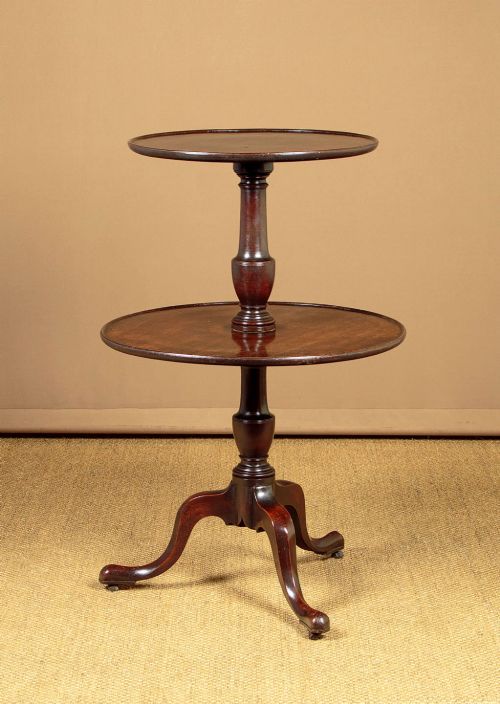
- A tiered stand traditionally placed near a dining table to hold serving dishes. Georgian examples often feature graduated circular trays on a central pillar.
- Whatnot
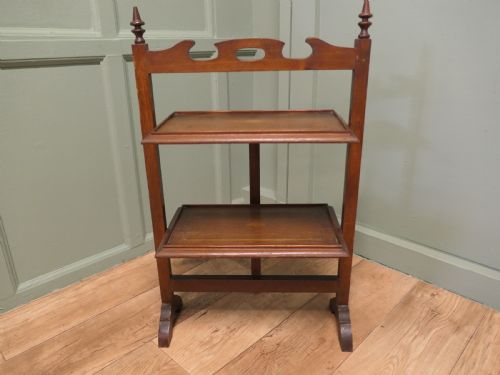
- An open set of shelves used for books or ornaments, standing on legs. These multi-tiered items date from the Georgian period onwards.
- Cricket table
- A small, lightweight wooden table with three legs and a circular top, often built with a lower tier for storage. The design derives from early English vernacular furniture.
- Marquetry
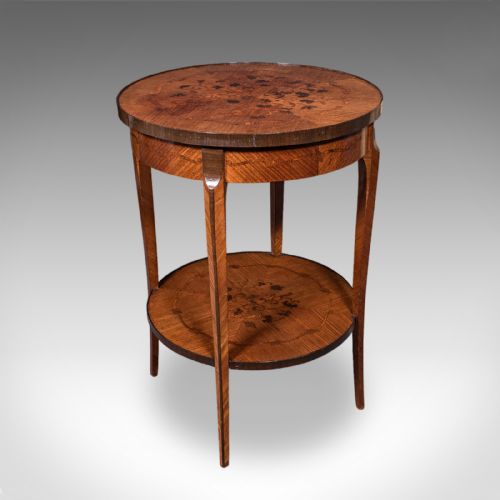
- Decorative woodwork in which delicate pieces of wood veneer are fitted into a background to form geometric or pictorial designs. This technique appears frequently on Edwardian and continental tables.
Brown Wood Tiered Table: Frequently Asked Questions
What is a tiered table used for?
Tiered tables serve multiple domestic functions, from holding bedside lamps and books to displaying decorative plants and porcelain objects. The additional shelves provide practical surface area without expanding the footprint of the furniture in a room.
Historically, specific forms like dumb waiters aided dining service, while etageres acted as focal points for curated displays in reception rooms. Today, they fit easily beside seating or in corners to organise daily items.
How do I identify an Edwardian tiered table?
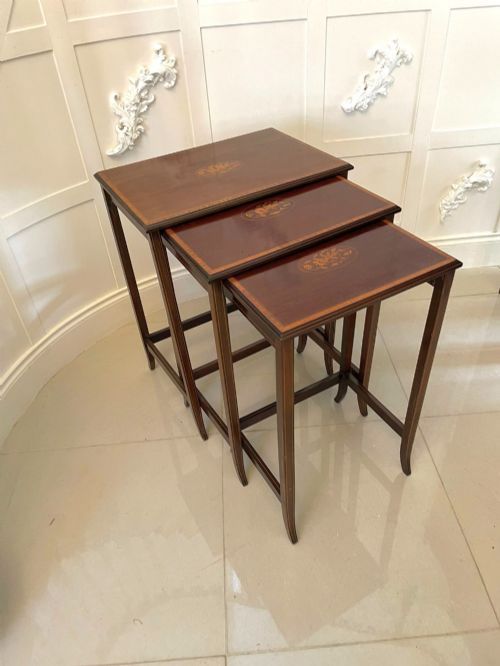
Edwardian tiered tables often feature light mahogany, satinwood inlay, or bobbin legs, reflecting the revival styles popular around nineteen hundred. They frequently take the form of small occasional tables, revolving bookcases, or lamp tables.
The construction tends to be lighter than heavy Victorian equivalents, with polished wood surfaces and restrained decorative carving suited to smaller domestic spaces.
Are these tables solid wood or veneer?
These tables utilise a combination of solid hardwoods and decorative veneers applied to stable base timbers. Woods like flame mahogany, burr walnut, and kingwood are typically cut as veneers to display complex grain patterns across the tabletops.
Secondary timbers such as oak or pine frequently form the internal framing and drawer linings. This method prevents warping while showcasing high-quality decorative surfaces.
How do I care for a wood tiered table?
Protect the wood surface by avoiding direct sunlight and excessive moisture, using coasters under glasses and saucers under plant pots. Regular dusting with a soft, dry cloth preserves the polish without building up wax residues.
Condition the timber periodically with appropriate furniture wax if the finish appears dry. Checking the stability of the tiered supports ensures the joints remain secure over time.