


Tripod Leg Dumbwaiter
A tripod leg dumbwaiter brings tier upon tier of polished mahogany to the dining room, offering clever service without crowding the floor.
Tripod Leg Dumbwaiter
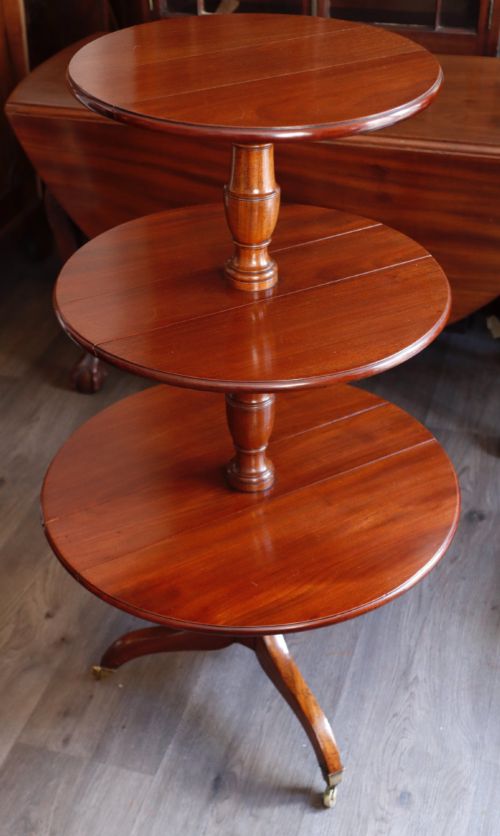
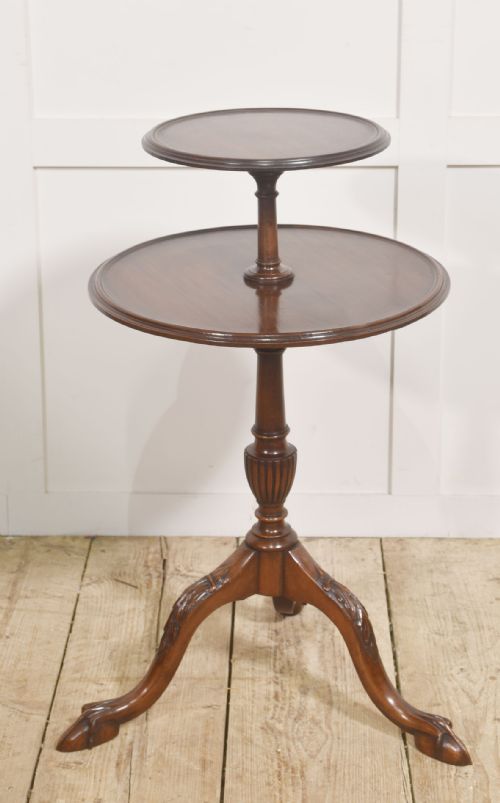
A tripod leg dumbwaiter is a tiered serving table designed to hold dishes and glasses near the dining table, saving space and reducing the need for constant servant attendance during meals. When you search for tripod leg dumbwaiter, you encounter multi-tiered stands supported by a central pillar and three splayed legs.
The pieces listed on this page span the Georgian period, the 18th century and the 19th century, alongside later revivals from 1910 and 1920 in George III style and Regency style. Most examples take the form of circular tiered tables, buffet server stands or occasional tables.
Folding mechanisms appear frequently across the selection, allowing the circular trays to tilt upright when not in use. This clever engineering makes these serving tables particularly practical for modern rooms where floor space remains at a premium.
How they were made
Cabinet makers relied primarily on rich, dense mahogany to construct the tiers, pillars and tripod bases of these serving stands. The timber takes a deep polish that highlights the natural grain of the wood across the circular surfaces.
Brass fittings frequently appear on the hardware, particularly where the folding mechanisms and column supports meet. This metalwork provides both structural strength and subtle contrast to the dark mahogany.
Mahogany is the dominant timber across the inventory, complemented by occasional brass hardware and folding tier mechanisms.
What varies in quality
The distinction between standard production and superior craftsmanship rests in the articulation of the tripod base and the precision of the turning on the central pillar. Stronger pieces exhibit graceful, well-proportioned legs that flow naturally from the central stem.
The ingenuity of the folding mechanism also separates the ordinary from the exceptional. A superior mechanism locks firmly into position when horizontal and folds smoothly without play in the joints.
Gillow
The Tripod Leg Dumbwaiter Glossary
- Dumbwaiter
- A multi-tiered serving table used for holding food and drink without the presence of servants. These stands feature stacked circular trays supported by a central column.
- Tripod base
- A support structure consisting of three splayed legs radiating from a central pillar. This design provides stability on uneven dining room floors.
- Tiered table
- Furniture built with multiple levels or trays arranged vertically on a single stem. It maximises display and surface area within a compact footprint.
- George III style
- A revival aesthetic reflecting the furniture designs of the mid-to-late 18th century. It emphasises classical proportions and quality mahogany construction.
Tripod Leg Dumbwaiter: Frequently Asked Questions
What is a tripod leg dumbwaiter?
A tripod leg dumbwaiter is a multi-tiered serving table featuring a central pillar supported by three splayed legs. It provides several circular surfaces for holding dishes and glasses during meals.
Such stands date primarily from the Georgian period and the 18th and 19th centuries, though later revivals also exist. They combine practical serving space with compact floor footprints.
How were dumbwaiters used?
These tables stood beside the dining table to hold extra courses, wine bottles and tableware. By keeping items close at hand, they reduced the need for servants during private meals.
The folding versions allowed hosts to tilt the circular trays upright against the central column, clearing space in the room when the meal ended.
What materials are used?
Mahogany serves as the primary timber for nearly every example, prized for its strength, rich colour and ability to take a high polish. Brass components appear in the mechanical joints and folding hardware.
Together, these materials provide both the structural durability needed for daily service and a refined appearance suitable for formal dining rooms.
How do I distinguish periods?
Early pieces from the 18th century rely on proportions, hand-turned mahogany columns and traditional joinery. Later pieces from the 19th century and early 20th century often adopt specific historical revivals like George III style or Regency style.
Examining the turning of the central pillar and the shaping of the tripod legs helps clarify the manufacturing era.