

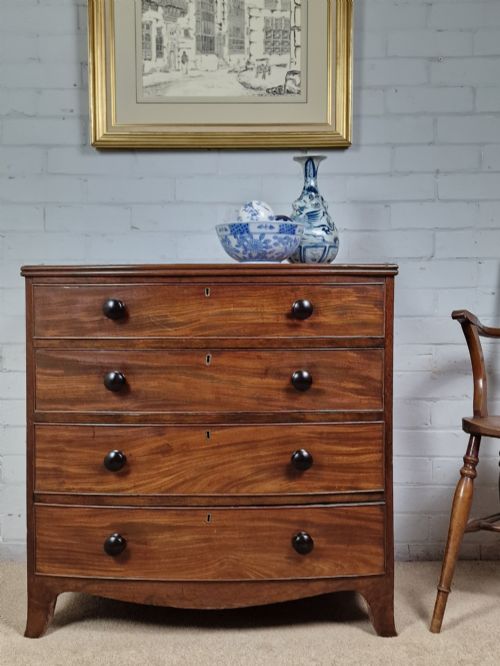
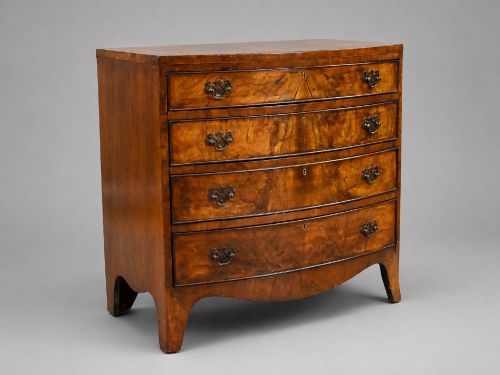
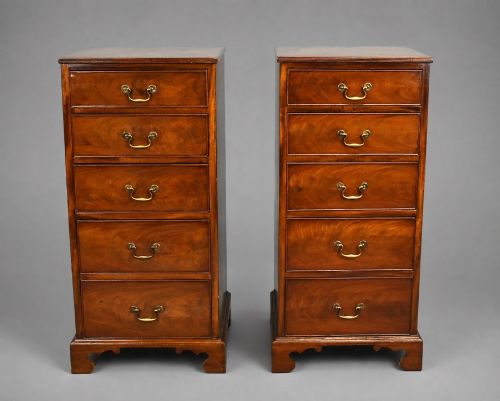
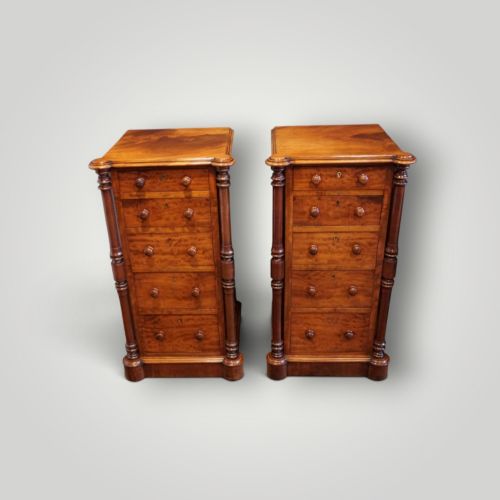
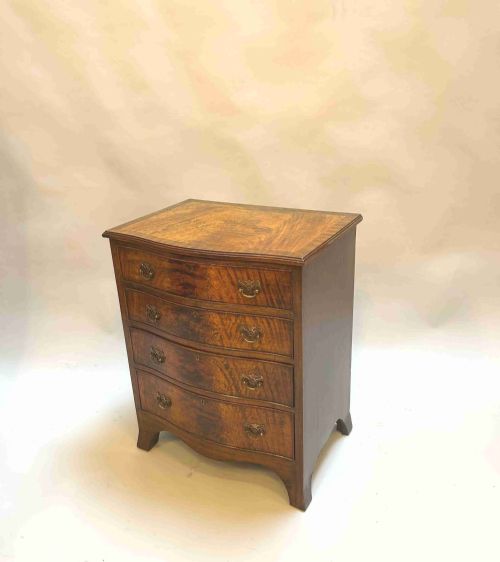
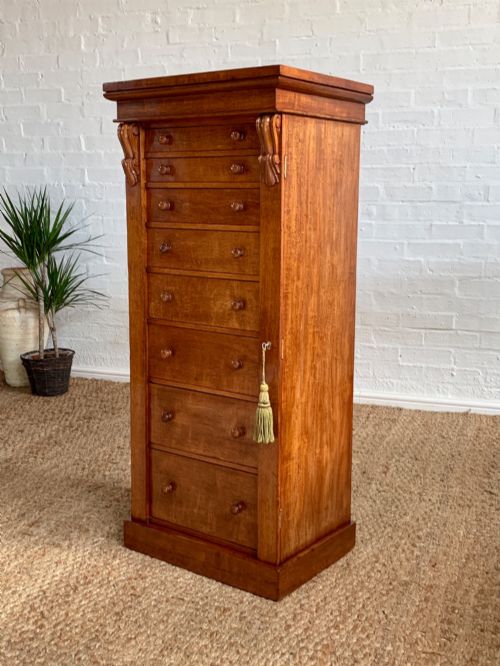
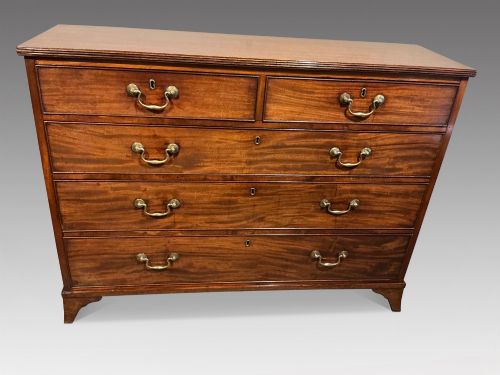
Brown Wood Tallboy Cabinet
A brown wood tallboy cabinet delivers practical storage with vertical presence, bringing timber grain and historic proportions to a bedroom.

Brown Wood Tallboy Cabinet
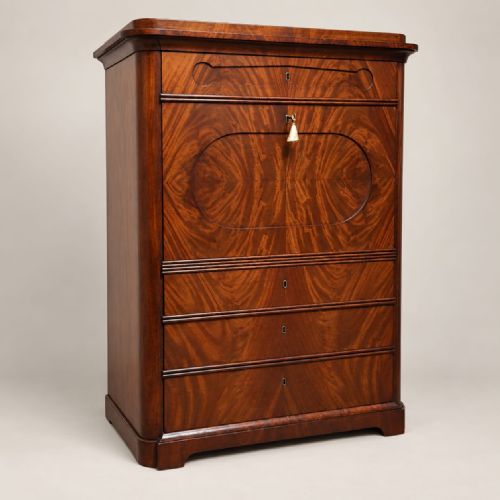
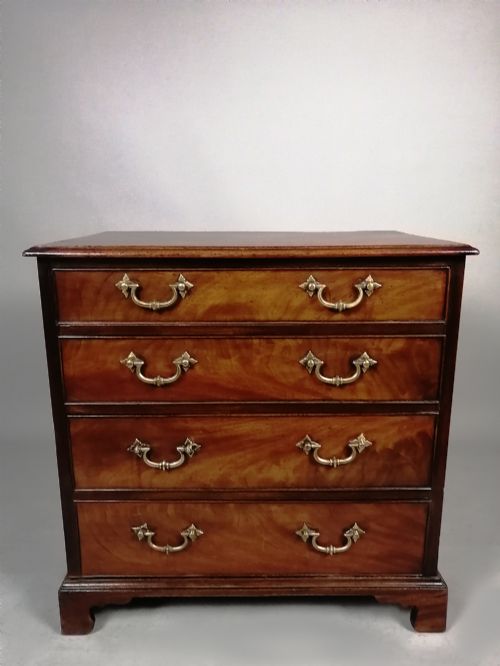
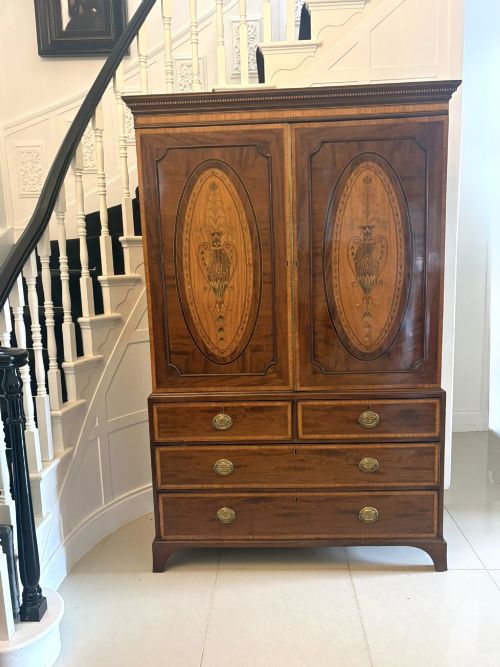
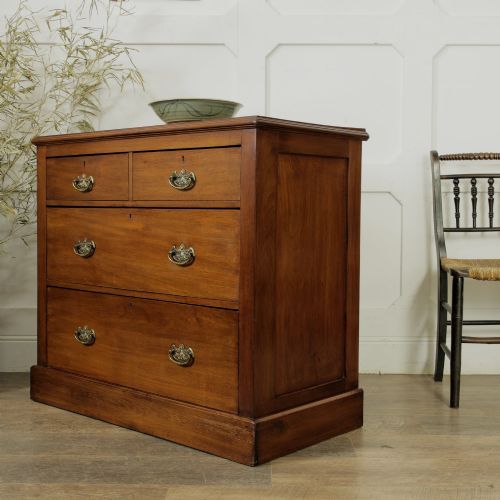
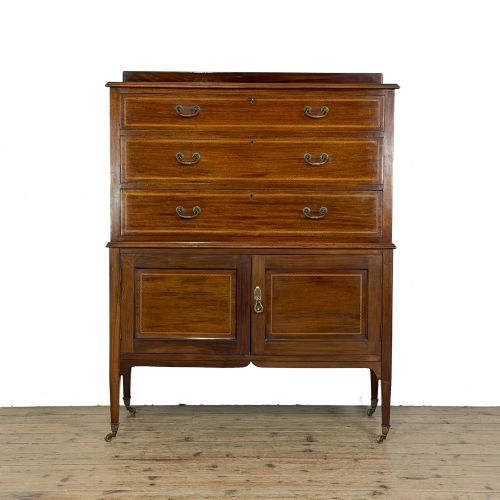
When searching for a brown wood tallboy cabinet, you encounter tall storage pieces primarily represented here by chests of drawers, linen presses, and Wellington chests dating from the eighteenth century through the Edwardian period. These items rise higher than standard drawer units, utilising vertical space to maximise storage whilst maintaining a relatively small floor footprint.
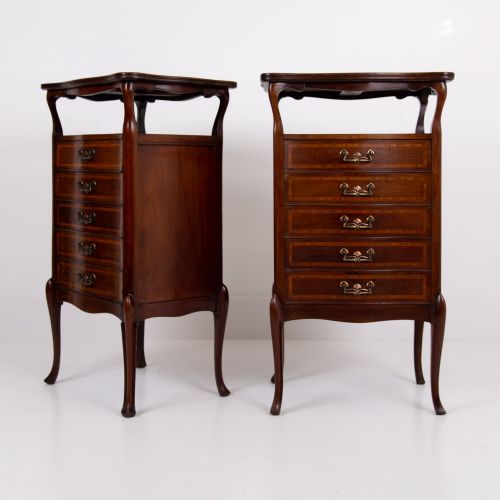
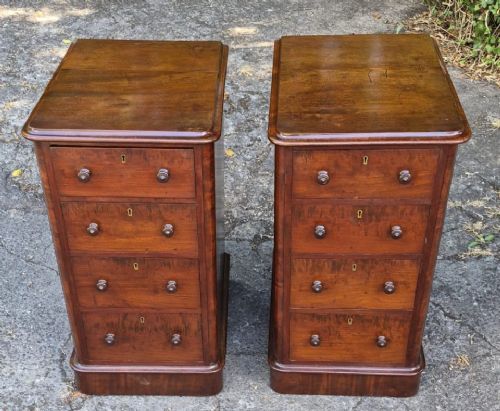
The pieces appearing on this page span Georgian, Victorian, and Edwardian eras, executed predominantly in mahogany alongside walnut, elm, and yew wood. Alongside traditional tall chests, the selection includes bedside chests, music cabinets, and secretaire bookcases that share the same dark timber vernacular.
Materials and Construction Methods
Cabinet makers relied heavily on solid mahogany and figured walnut, often incorporating secondary timbers and applying satinwood inlay to enrich the surface appearance. Timber selection dictated the character of each piece, with figured grains chosen for prominent drawer fronts and top panels.
Construction relied on traditional joinery techniques, featuring brass hardware, turned wooden knobs, and marquetry details. Workshop practices from the eighteenth to the early twentieth century ensured structural durability through dovetailed drawer construction and robust framing.
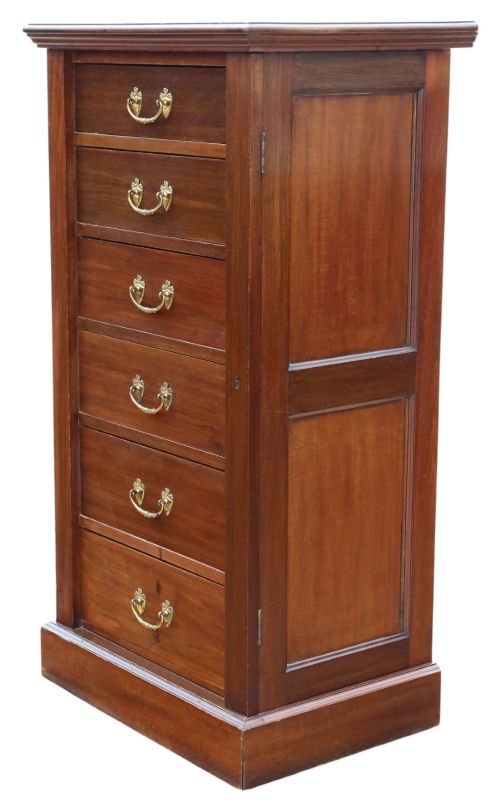
Wellington chests secured secret drawers behind a locking side stile, keeping family valuables safe from wandering fingers.
Markers of Distinction and Build Quality
Quality separates pieces through the crispness of the cabinet work, the symmetry of the timber grain on drawer fronts, and the survival of original brass handles and turned wooden knobs. Finer examples display meticulous attention to interior linings and seamless inlay work.
The integrity of the timber, the smoothness of the drawer action, and the depth of the polished finish determine the standing of an individual piece within its period. Original patination and untouched surfaces hold greater merit than heavily restored examples.
Warings Liverpool
The Brown Wood Tallboy Cabinet Glossary
- Wellington chest
- A tall, narrow chest of drawers secured by a hinged locking side flap that fastens over the drawer edges. This form originated in the nineteenth century and maximises vertical storage.
- Linen press
- A tall cabinet featuring upper doors enclosing sliding trays or shelves, positioned above a base of wider drawers. Originally designed to store household linens flat.
- Secretaire chest
- A chest of drawers incorporating a fitted writing drawer with a drop-front desk surface and internal pigeonholes. It combines storage with a practical writing station.
- Marquetry
- Decorative veneer work arranged in intricate floral or geometric patterns using various woods. Craftsmen applied this technique to enrich the exterior surfaces of chests and cabinets.
- Satinwood inlay
- Contrasting light timber insertions creating geometric lines or decorative motifs within darker cabinet surfaces. This decorative detail frequently defines Georgian and Edwardian pieces.
Brown Wood Tallboy Cabinet: Frequently Asked Questions
How do I date a brown wood tallboy cabinet?
Dating relies on observing construction methods, timber choices, and hardware styles across periods from the eighteenth century to the Edwardian era. Hand-dovetailed drawer joints and original brass pulls often point towards earlier Georgian craftsmanship.
Later Victorian and Edwardian examples introduce machine-sawn elements, different secondary woods, and standardised hardware while retaining traditional forms like the Wellington chest.
Where should I place a tall cabinet in my home?
These tall pieces suit bedrooms, dressing rooms, or hallways where floor space is limited but vertical storage is required. Their narrow footprint allows them to fit comfortably into alcoves without dominating the room.
Ensure the cabinet sits on a level floor to maintain structural stability, particularly with taller items housing heavy drawers of solid timber.
How do I care for antique mahogany and walnut timber?
Maintain timber surfaces by dusting regularly with a soft, dry cloth and avoiding placement near direct heat sources or strong sunlight. Excessive warmth causes wood to dry out and split over time.
Apply a quality wax polish sparingly when the wood appears dry to nourish the grain and preserve the historic finish. Avoid modern silicone sprays that build up and damage the polish.