
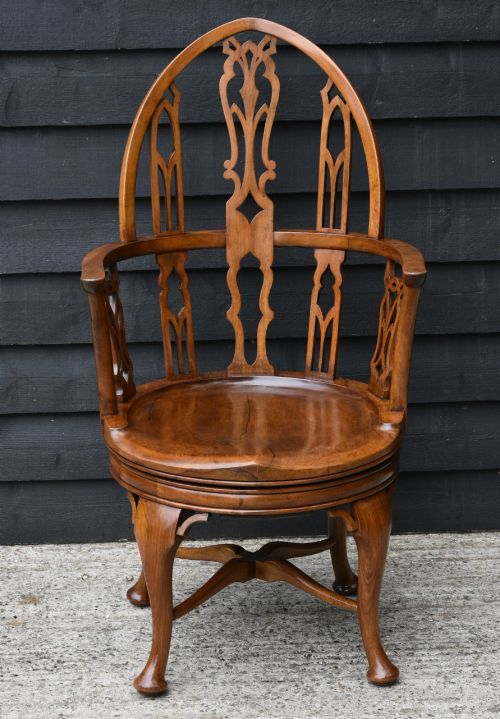
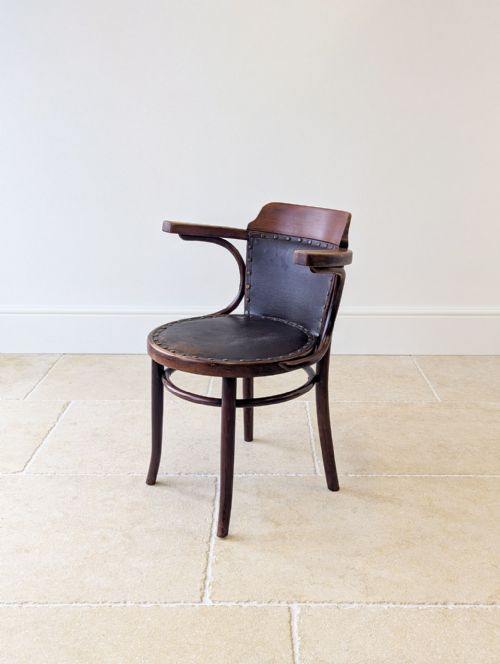
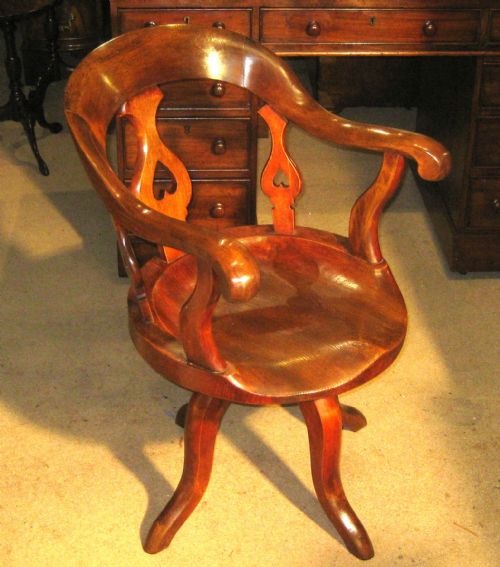
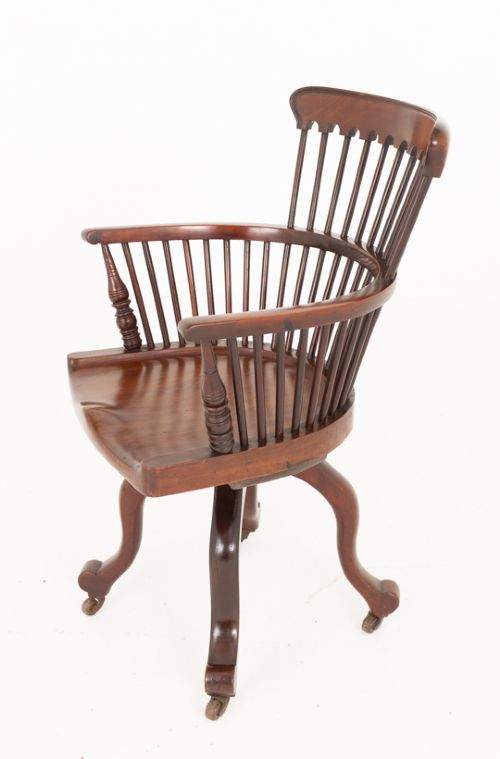
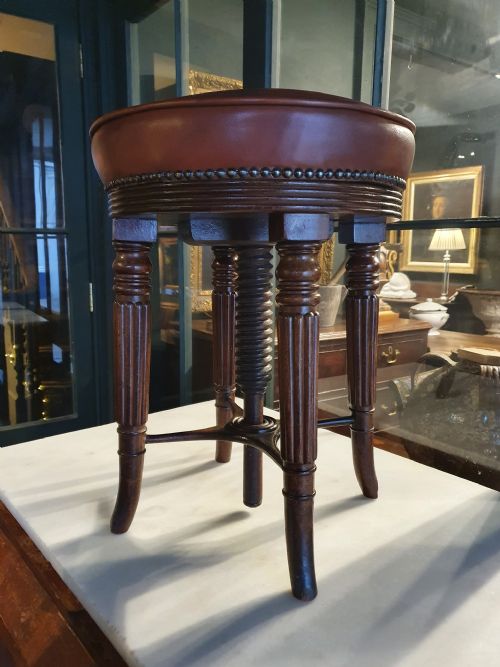
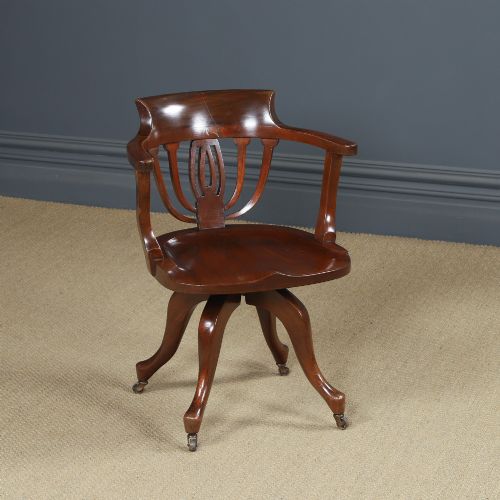
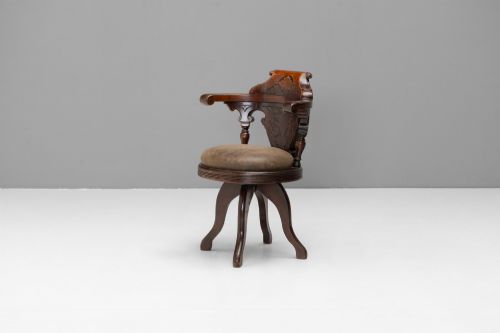


Brown Wood Swivel Chair
A brown wood swivel chair brings practical nineteenth and early twentieth-century engineering together with traditional timberwork for the home study.
Brown Wood Swivel Chair
A brown wood swivel chair bridges the gap between domestic comfort and functional workplace seating across several distinct historical periods.
The selections available here range from solid mahogany office armchairs and oak library seats to adjustable piano stools and revolving ships chairs.
Makers from the Victorian, Edwardian, and Georgian eras adapted timber frames to rotate and adjust in height for practical utility.
How they were made
Cabinet makers utilised dense hardwoods including mahogany, oak, walnut, and beech to construct durable frames capable of enduring constant rotation.
Mechanical actions integrated brass and cast iron ironmongery beneath wooden seats to permit height adjustment and smooth turning movements.
Upholstery departments incorporated stitched leather panels and cane bergere inserts to soften the wooden framework for prolonged sitting.
The inventory combines nineteenth-century mahogany desk chairs with early twentieth-century oak office seating and adjustable piano stools.
What varies in quality
The sophistication of the under-seat swivel mechanism distinguishes standard utility seating from finer workshop productions.
Timber selection and the depth of hand-carving define the visual presence of the finished frame, particularly on office and library models.
The preservation of original cast iron height adjusters and leather hides alters the historical integrity of each piece.
Shoolbred Arts & Craft·James Shoolbred·George Bartholomew & Co
The Brown Wood Swivel Chair Glossary
- Swivel
- A mechanical pivot assembly allowing the upper seat portion to rotate fully in a circle without moving the base. This engineering permits easy movement between desk surfaces.
- Bergere
- A type of upholstered seating featuring tight wicker or cane work woven into the wooden frame. It provides a lightweight yet supportive backrest.
- Bentwood
- Wood softened through steaming or boiling and then bent into curved shapes using moulds. Thonet famously utilised this technique for light commercial seating.
- Revolving
- An alternative descriptor for a rotating action found on office desks and music stools. It denotes the primary function of the central iron spindle.
Brown Wood Swivel Chair: Frequently Asked Questions
How do I adjust the height?
Many examples feature a threaded central iron spindle beneath the seat which raises or lowers the user when turned.
Other variants rely on simple pin or lever mechanisms hidden within the wooden column.
Were these used in offices?
Yes, heavy mahogany and oak armchairs were standard equipment in Victorian and Edwardian counting houses and administrative offices.
The revolving action allowed clerks to reach different ledgers without standing up.
Are piano stools the same?
Piano stools share the rotating and height-adjusting mechanism of office seating but feature smaller circular tops without arms.
They were designed specifically for musicians needing stability and reach at the keyboard.
How do I date an office chair?
Dating relies on the combination of timber species, turning styles on the legs, and the complexity of the iron swivel mechanism.
Victorian pieces often display heavier mahogany frames while Edwardian versions lean towards lighter oak.