

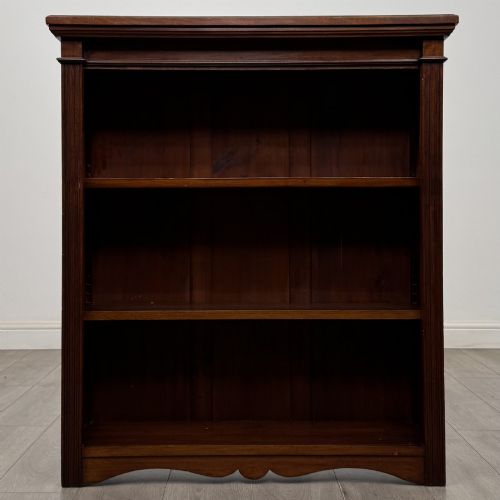
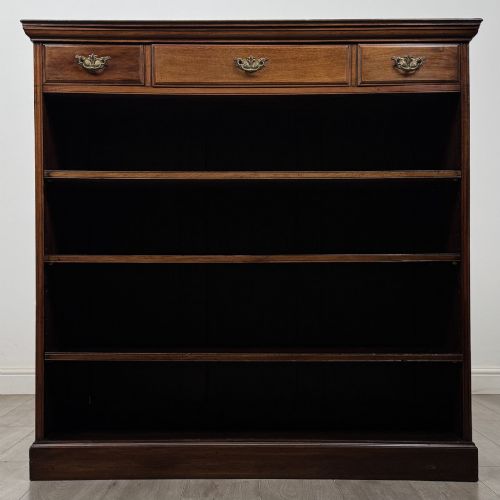
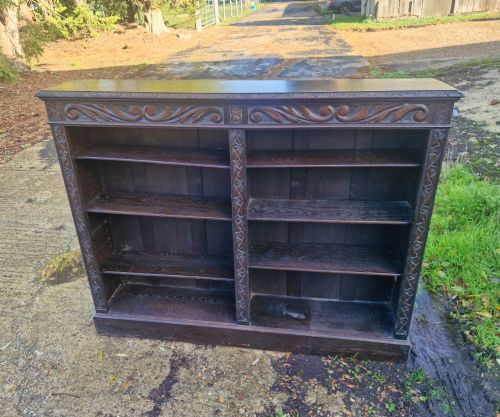
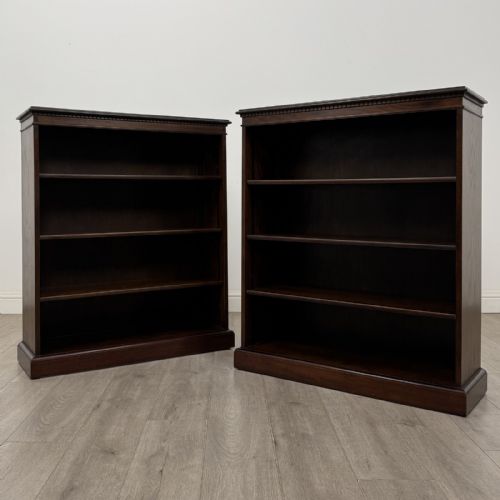
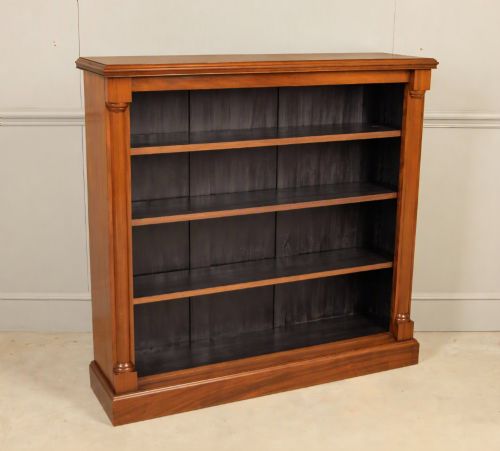
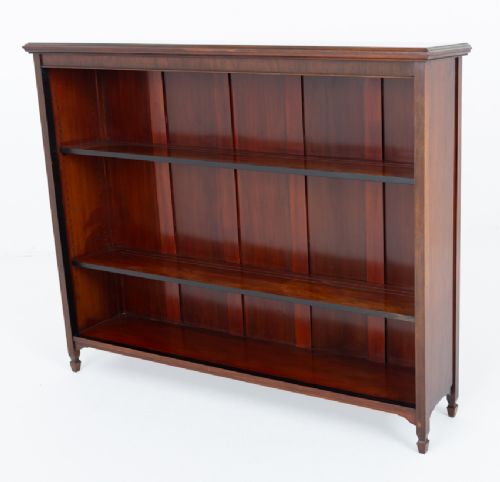
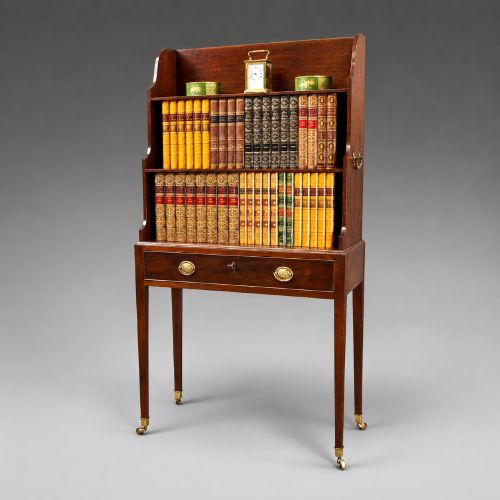
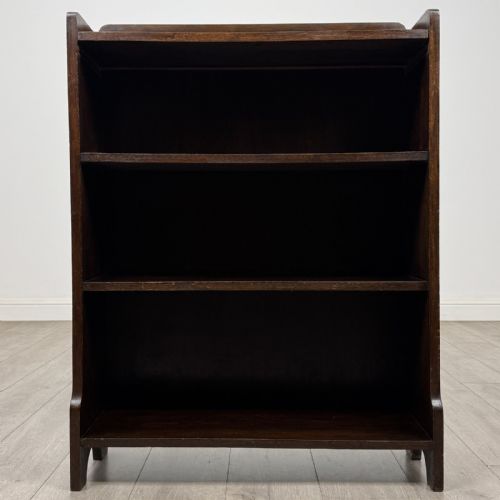

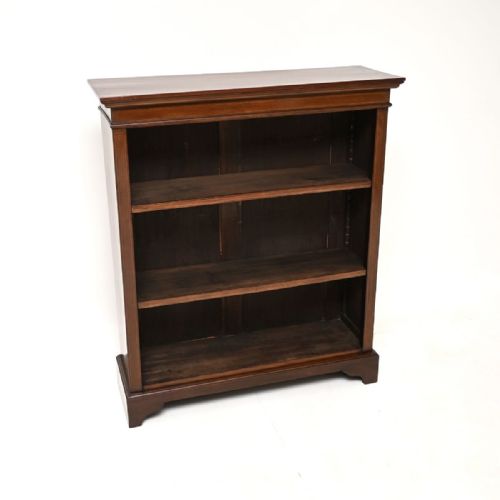

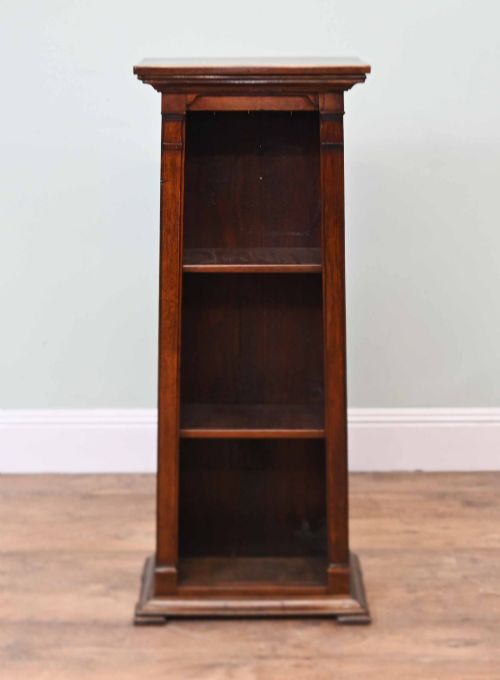
Brown Wood Shelving Unit
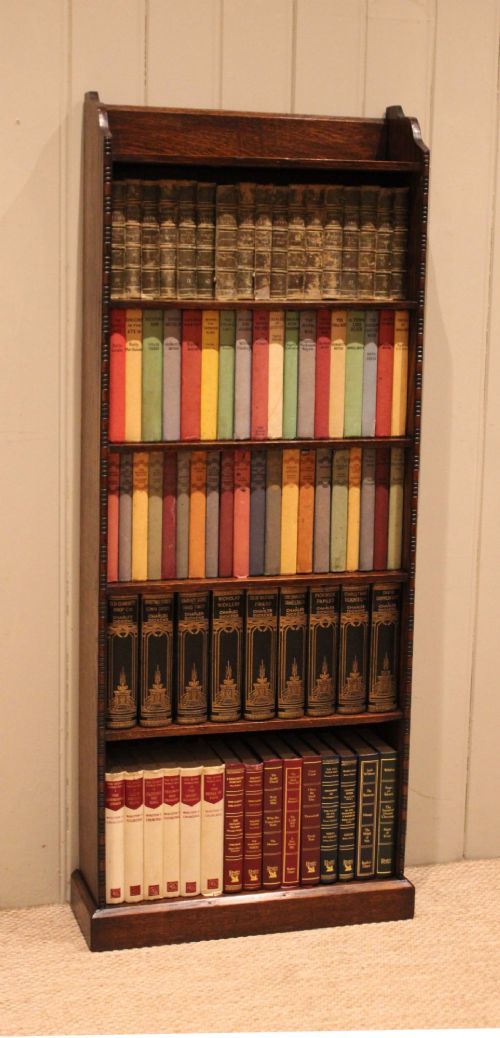
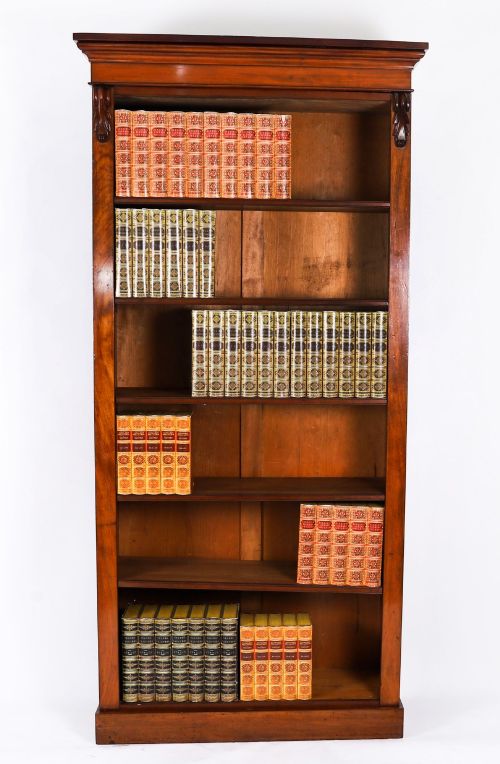
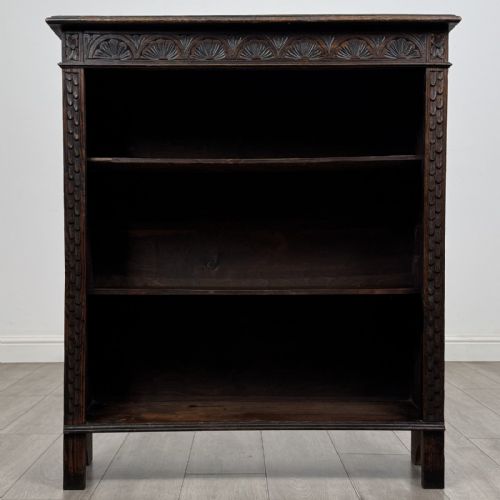
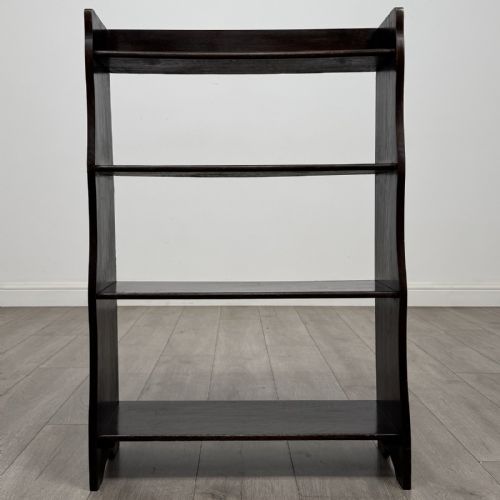
These brown wood shelving unit examples bring warmth and display space to a room, ranging from simple open bookcases to tiered whatnots.
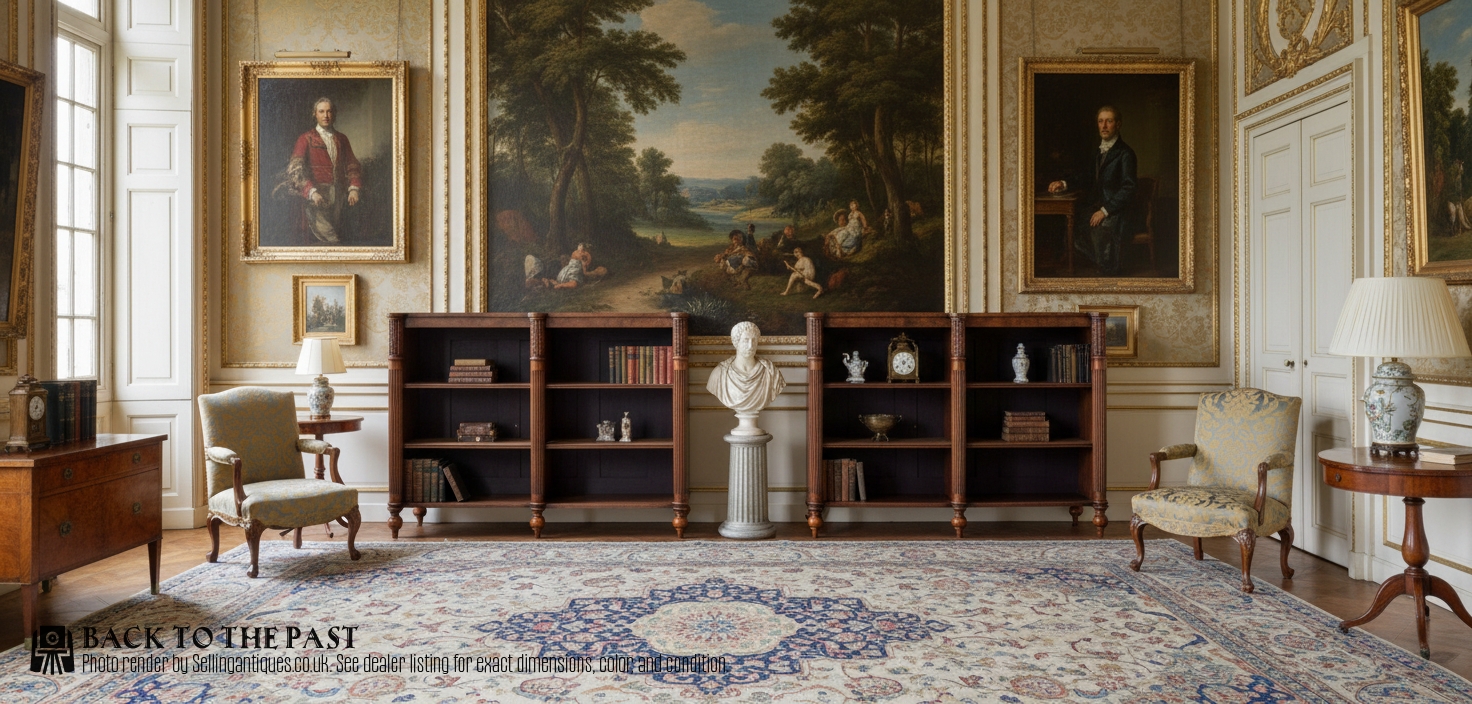
Brown Wood Shelving Unit
A brown wood shelving unit gathers books and ornaments across periods like the Victorian era, the Edwardian period, and the Regency years. Pieces include open bookcases, hanging shelves, wall shelves, and tiered whatnots designed for domestic display.
Buyers most frequently meet Victorian and Edwardian examples in mahogany, walnut, and oak. These range from small freestanding pieces to large library bookcases and multi-tiered etageres.
The selection includes specialised forms such as corner cabinets, waterfall bookcases, and display cabinets. These items reflect traditional craftsmanship across the nineteenth and early twentieth centuries.
How they were made
Cabinet makers utilised solid timbers and veneers including mahogany, walnut, burr walnut, oak, pine, and satinwood. Construction often involved fine joinery, carved details, and inlaid woodwork.
Decorative elements incorporate brass castors, ormolu mounts, and contrasting wood inlays. Surfaces received polished finishes that accentuated the natural grain of the timber.
Brown Wood Shelving Unit Retail Price Guide 2026
Typical asking prices for brown wood shelving unit among the pieces listed under this phrase on Sellingantiques today, from the lower quarter to the upper quarter. They describe what is for sale here now, not the wider market.
Some nineteenth-century shelves roll effortlessly across the floor on their original brass castors.
What varies in quality
Selection of timber grain and figure dictates visual impact, with burr walnut and figured mahogany sitting at the higher end. The crispness of carved ornamentation and the precision of inlaid work separate standard items from finer productions.
Structural refinement shows in adjustable shelving mechanisms, sturdy framing, and integrated brass hardware. Finer pieces display careful attention to proportion across tiered structures and corner units.
The Brown Wood Shelving Unit Glossary
- Whatnot
- A piece of furniture consisting of open shelves for displaying small objects or books. These tiered stands date from the Victorian period and earlier.
- Waterfall bookcase
- A set of open shelves where each tier steps back progressively from the one below. This form creates a cascading profile popular in nineteenth-century designs.
- Ormolu
- Gilt bronze mounts applied as decorative highlights on furniture cabinets. This technique appears on pieces influenced by continental styles.
- Barley twist
- A type of turned wooden column resembling a twisted rope. This decorative support is commonly found on Victorian furniture.
Brown Wood Shelving Unit: Frequently Asked Questions
What is a brown wood shelving unit used for?
These pieces provide accessible storage for books, ceramics, and decorative objects in living spaces and studies.
Open shelves and tiered etageres allow for both functional organisation and aesthetic display of collections.
How do I identify a Victorian bookcase?
Victorian examples often feature rich mahogany or walnut timbers, sometimes incorporating carved oak or barley twist supports.
They span the nineteenth century and typically display heavier proportions and deeper colour than earlier Regency pieces.
Are these shelves suitable for modern homes?
The compact footprints of small Edwardian and Victorian bookcases fit easily into contemporary room layouts.
Adjustable shelving found in many nineteenth-century pieces accommodates varied book heights and display needs.
What is the difference between a bookcase and a whatnot?
A bookcase is primarily built to hold volumes of books, often featuring enclosed cupboards or adjustable internal shelves.
A whatnot is a multi-tiered stand specifically designed for displaying ornaments, decorative plates, and smaller objects.