
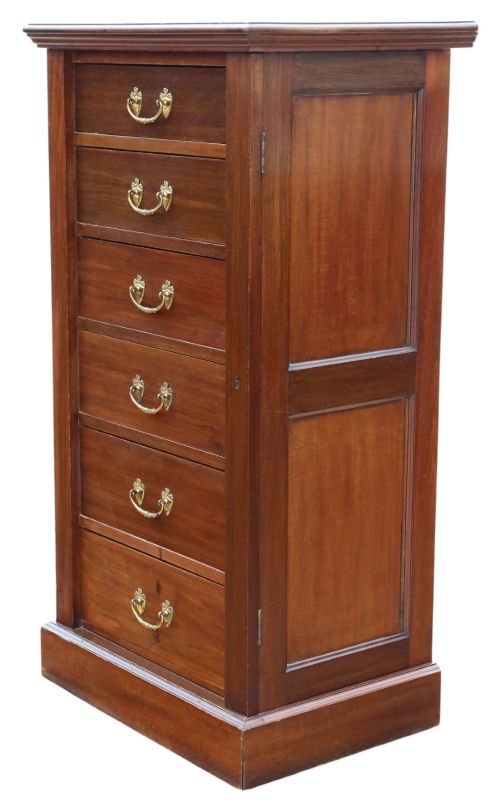

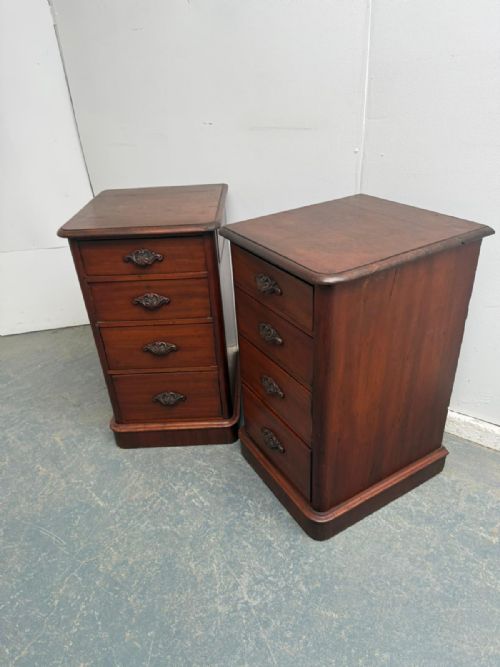
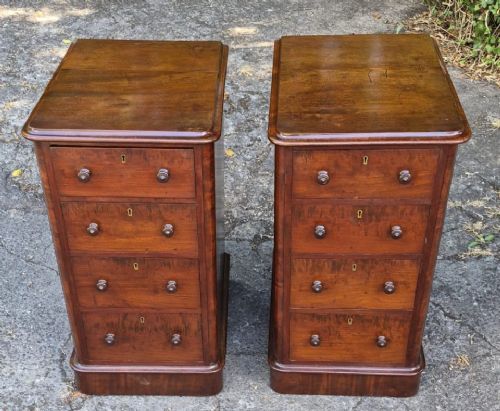
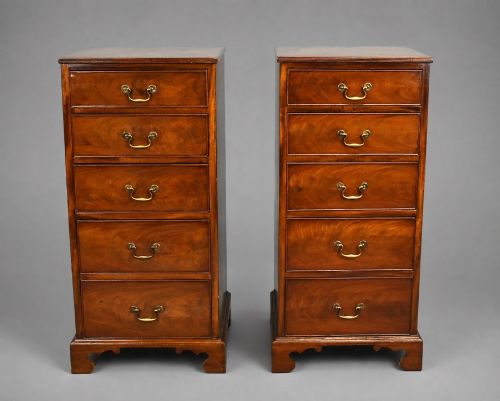


Brown Wood Narrow Chest
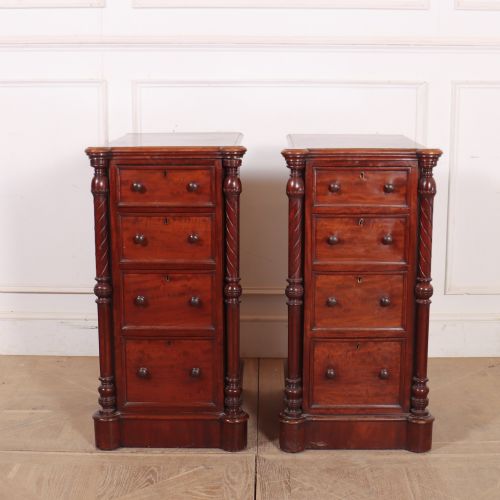
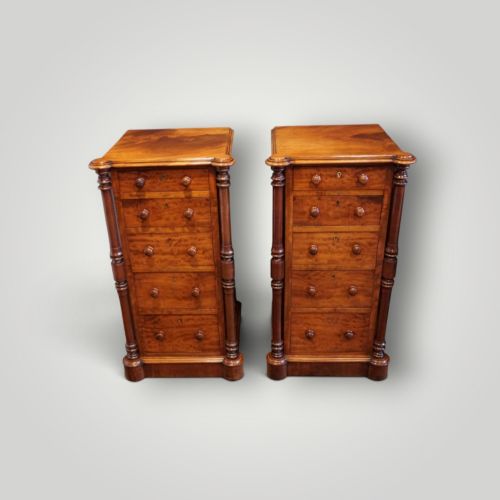
These brown wood narrow chest pieces are tall, slender storage units designed for tight spaces, offering timeless utility.
Brown Wood Narrow Chest
A brown wood narrow chest offers compact storage with a vertical footprint, making it ideal for restricted spaces in a bedroom or study. When searching for this phrase, a buyer encounters pieces primarily spanning the Georgian, Victorian, and Edwardian periods.
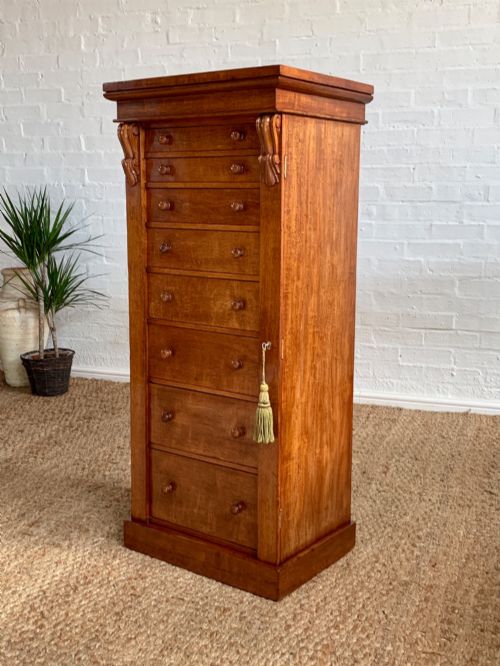
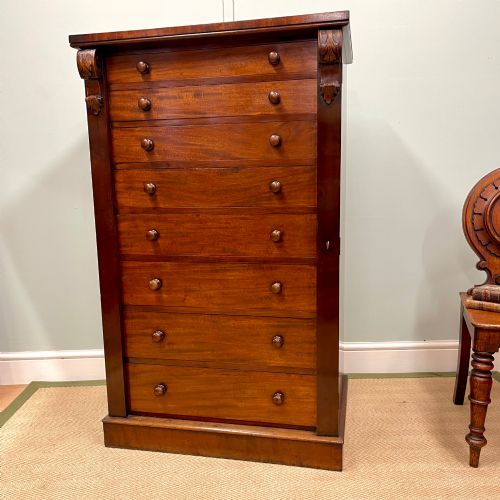
The selections on this page heavily feature Victorian and Edwardian examples, alongside Georgian pieces and specific forms like Wellington chests and bedside lockers. These items range from six-drawer Wellington chests to tall pair nightstands and narrow escritoires.
Makers and origins vary from English workshops to specific retailers, utilising timbers such as mahogany and walnut. The overarching characteristic is a constricted width combined with substantial vertical storage capacity.
Materials and construction methods
Makers relied predominantly on mahogany and walnut timbers, often employing flame mahogany veneer or burr walnut to create striking grain patterns on the drawer fronts. These woods provided both structural integrity and a rich natural colour that was frequently polished or waxed.
Additional hardware such as brass handles, metal fittings, and original turned knobs were integrated into the design. Construction techniques accommodated specialised locking mechanisms in forms like Wellington chests and secured cabinets.
The inventory spans the eighteenth century through to the Edwardian era, highlighting persistent demand for vertical, space-saving storage.
Distinguishing quality across pieces
Quality separates simple utility items from masterwork furniture through the selection of figured veneers and the precision of the drawer dovetails. Superior examples display consistent timber matching across all graduated drawers.
The presence of original hardware, such as turned knobs and functioning locking mechanisms, elevates a piece. Furthermore, refined proportions and delicate inlay work distinguish the finest workshops from standard production.
Warings Liverpool·S Mordan Co
The Brown Wood Narrow Chest Glossary
- Wellington chest
- A tall, narrow chest of drawers traditionally featuring a hinged locking side flap that secures all the drawers at once. This form originated in the nineteenth century and maximises vertical storage.
- Escritoire
- A writing cabinet or chest incorporating a fitted desk surface within its narrow framework. It combines drawer storage with a fold-down or pull-out writing flap.
- Flame mahogany veneer
- A thin slice of mahogany timber cut from the fork of the tree to produce a flickering, flame-like grain pattern. Cabinet makers applied this to drawer fronts for decorative impact.
- Burr walnut
- Timber harvested from the warted growths on walnut trees, yielding a complex and swirling grain texture. It was highly prized for luxury Victorian and Edwardian furniture.
- Bedside locker
- A compact cabinet or small chest designed to sit beside a bed for night-time storage. These pieces often match the taller chest forms in timber and style.
Brown Wood Narrow Chest: Frequently Asked Questions
What is a Wellington chest?
A Wellington chest is a tall, narrow set of drawers distinguished by a locking side pilaster that secures every drawer simultaneously.
This clever mechanism made them popular in the nineteenth century for keeping private papers or valuables secure in a compact footprint.
How do I style a narrow chest?
These slender chests fit effortlessly into awkward alcoves, hallways, or beside a bed where standard furniture proves too bulky.
Use the top surface for a small lamp or decorative object while keeping the deep vertical drawers for everyday organisation.
Are these pieces made of solid wood?
The listings comprise substantial timbers like mahogany and walnut, frequently enhanced with decorative veneers on the drawer fronts.
Cabinet makers utilised veneers such as flame mahogany and burr walnut to create dramatic visual patterns while maintaining a stable structural core.
How can I tell the period?
Stylistic cues such as Georgian proportions, Victorian turned knobs, or Edwardian string inlay help identify the era of manufacture.
Examining the construction methods and timber choices further clarifies whether a piece dates to the eighteenth, nineteenth, or early twentieth century.