



Brown Wood Miniature Chest
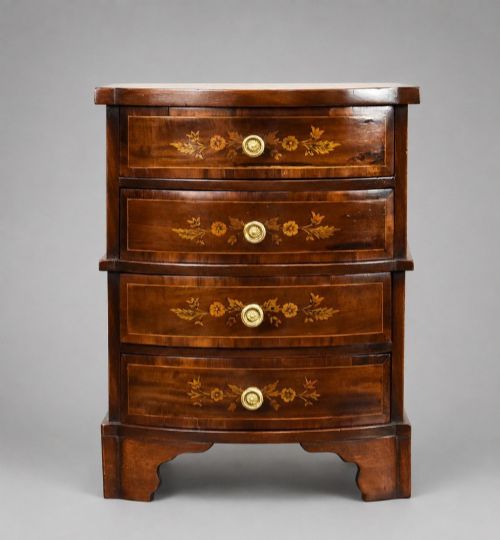
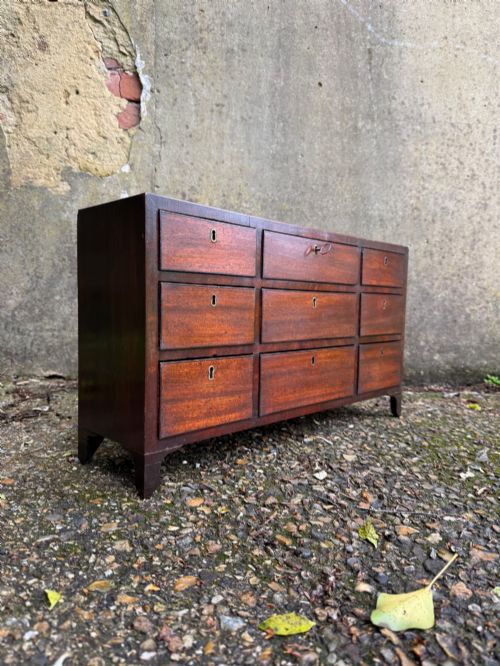
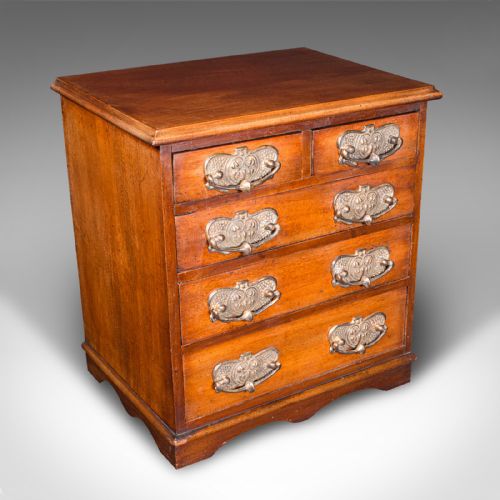
A brown wood miniature chest is a scaled-down masterwork of cabinet-making, prized by collectors for its dense proportion and intricate detailing.
Brown Wood Miniature Chest
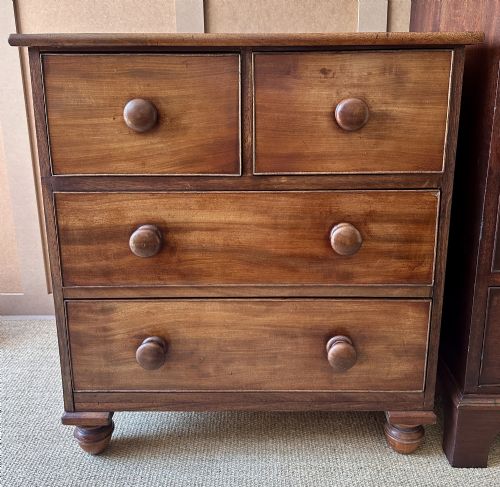
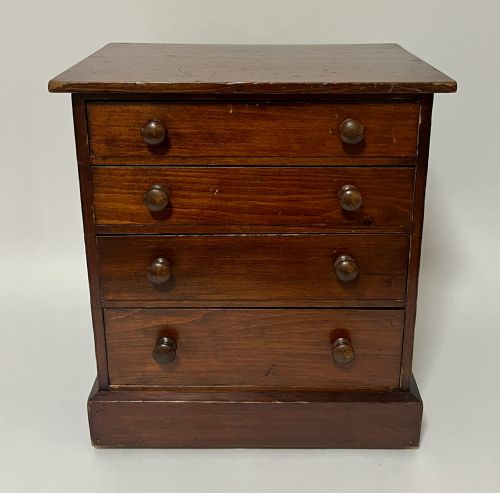
The most common examples on this page are mahogany, oak, and walnut chests of drawers, alongside specimen cases and tabletop cabinets. Makers utilised dense timbers to achieve crisp moulding and small-scale joinery that would test the limits of larger furniture.
Origins range from English workshops to Welsh vernacular pieces like the coffor bach, as well as continental examples in walnut and eastern elm. Each object demonstrates the practical skill of the cabinet-maker working in miniature format.
Materials and construction
Makers constructed these cabinets using dense hardwoods such as mahogany, walnut, satinwood, and yew, frequently enhanced with secondary timbers like pine and deal. Timber selection was vital for stability, ensuring that miniature drawers and small doors operated smoothly despite seasonal humidity shifts.
Construction techniques mirror full-scale cabinet-making, featuring dovetail joints on drawer carcases, applied mouldings, and finely turned brass or wooden pulls. Decorative elements like marquetry, mother of pearl inlay, and ebonised details reveal the same level of care given to full-size furniture.
Materials recorded across the inventory include mahogany, walnut, satinwood, oak, pine, and brass.
Distinctions in quality
Quality rests in the precision of the small-scale joinery and the selection of figured timbers, where tight grain and balanced veneers elevate a piece far above utilitarian workshop output. Superior examples display clean drawer linings, crisp mouldings, and original hardware without clumsy repairs or mismatched replacements.
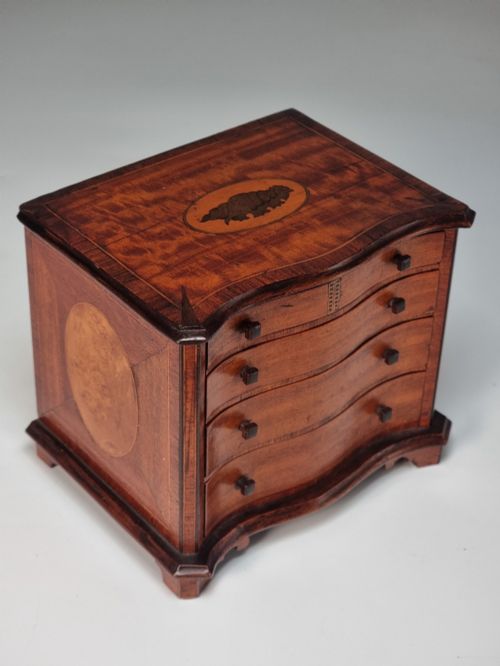
The sophistication of the design sets the finest items apart, distinguishing between a simple pine cabinet and a sophisticated satinwood serpentine chest with complex curves. Proportion and restraint define the upper tier, where every scaled-down detail mirrors grand architectural or domestic precedent.
A. F. Lloyd, Bideford
The Brown Wood Miniature Chest Glossary
- Apprentice piece
- A small item of furniture created by a craftsman to demonstrate skill for guild admission. These pieces replicate full-scale forms with meticulous attention to detail.
- Coffor bach
- A Welsh miniature coffer or chest, traditionally made of oak and dated to the eighteenth century. They often feature small drawers beneath a hinged lid.
- Serpentine chest
- A chest of drawers featuring a front with a concave centre flanked by convex curves. This undulating shape requires exceptional woodworking skill, especially at a small scale.
- Specimen case
- A tabletop cabinet fitted with multiple shallow drawers for housing natural history collections or small artefacts. They often include glass panels or secure locking mechanisms.
- Marquetry
- The art of applying decorative veneer pieces to a structure to form geometric or pictorial designs. Makers used contrasting timbers like satinwood and mahogany to create striking visual patterns.
Brown Wood Miniature Chest: Frequently Asked Questions
What were miniature chests used for?
These small chests served multiple purposes in period homes, functioning as salesmen's samples, apprentice demonstration pieces, or refined desktop storage for jewellery and documents.
Collectors cabinets and specimen cases were specifically built to house natural history specimens, coins, or small curiosities, keeping delicate items organised and protected.
How do I date a miniature chest?
Dating relies on examining timber species, construction methods, and secondary woods used inside drawer linings or drawer backs. Hand-cut dovetails, timber choice like early oak versus later Victorian pine, and surface patination provide reliable chronological markers.
Stylistic cues such as Georgian bracket feet, Regency brasses, or Edwardian satinwood inlay further narrow the period of manufacture.
Are apprentice pieces genuine antiques?
Many items described as apprentice pieces are indeed period miniatures dating from the eighteenth and nineteenth centuries, though the term was sometimes applied loosely by later dealers.
Authentic pieces show genuine age in the timber surface, honest wear around the drawer edges, and period-appropriate construction methods rather than modern adhesives.
How do I care for a wood miniature chest?
Keep wooden miniatures away from direct sunlight and strong heat sources to prevent the dry timber and delicate veneers from splitting or warping.
Maintain a stable indoor humidity and apply traditional beeswax sparingly to nourish the grain without building up heavy chemical residues.