

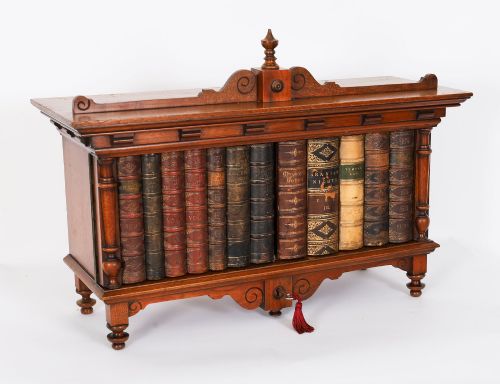
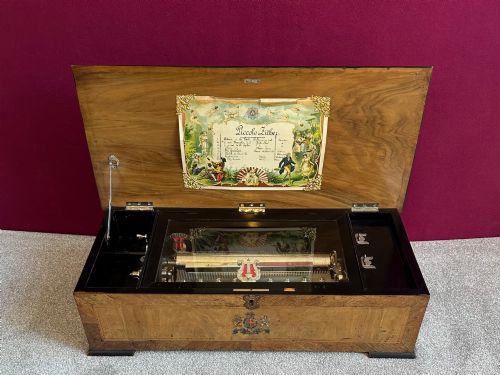
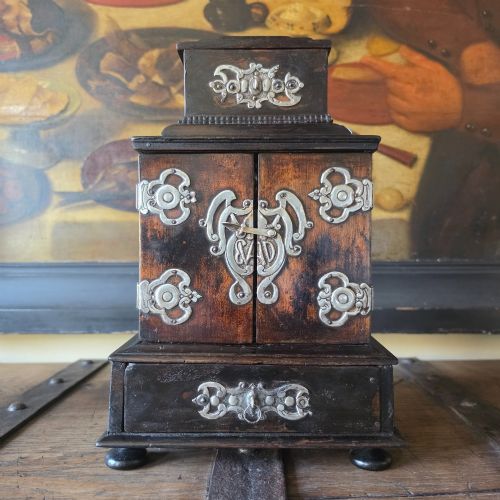


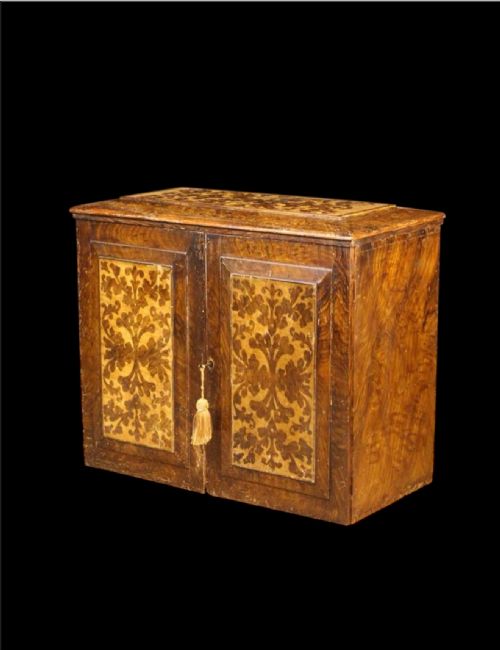


Walnut Tabletop Chest
A walnut tabletop chest is a compact piece of period furniture designed to hold precious items, offering fine timber grain and practical small-scale storage.
Walnut Tabletop Chest
A walnut tabletop chest provides small-scale storage in forms such as miniature chests of drawers, jewellery cabinets, and collectors' cabinets designed to sit upon furniture surfaces.
The selection ranges from Victorian miniature chests to 18th century continental examples and Dutch marquetry apprentice pieces, utilising rich burr walnut and solid timber veneers.
These items serve practical storage functions for small valuables, documents, or collections while displaying period woodworking styles spanning the seventeenth to early twentieth centuries.
Materials and Construction
Cabinet makers utilised solid walnut and decorative burr walnut veneers applied to secondary woods, often complemented by brass handles, locks, and hinges.
Construction techniques involve fine dovetail joints on small drawers, marquetry inlays, and surface polishing that highlights the natural figuring of the walnut grain.
Walnut Tabletop Chest Retail Price Guide 2026
Typical asking prices for walnut tabletop chest among the pieces listed under this phrase on Sellingantiques today, from the lower quarter to the upper quarter. They describe what is for sale here now, not the wider market.
Listings include materials such as burr walnut, ebonised wood, fruitwood, and brass hardware across pieces dated from the seventeenth to the twentieth century.
Assessing Craftsmanship and Condition
Quality rests in the crispness of the miniature proportions, the depth of figure in the walnut veneer, and the integration of period brass hardware.
Superior examples maintain original timber surfaces and intact internal fittings without heavy restoration, distinguishing workshop craftsmanship from later reproductions.
The Walnut Tabletop Chest Glossary
- Burr walnut
- A figured wood grain obtained from the wart-like growths on walnut trees, prized for decorative veneering. It creates swirling, organic patterns across the surface of small cabinets.
- Apprentice piece
- A miniature furniture item created by a craftsman to demonstrate skill for guild admission. These pieces display full-scale joinery techniques scaled down to tabletop dimensions.
- Marquetry
- The art of applying decorative veneer pieces in wood to form geometric or pictorial designs. Dutch examples frequently employ this technique on small chests.
- Collectors cabinet
- A specialised tabletop cabinet fitted with multiple small drawers for organising specimens, coins, or trinkets. These interiors are often lined with textile materials.
- Campaign style
- Furniture construction featuring brass corners, flush handles, and portable design elements originally intended for travel. This style appears on selected multi-drawer variants.
Walnut Tabletop Chest: Frequently Asked Questions
What fits inside a tabletop chest?
These small cabinets suit the storage of jewellery, letters, small trinkets, or specialised collections of coins and specimens.
The internal configuration of drawers and compartments dictates what items fit best within each specific cabinet.
How old is my walnut chest?
Dating relies on construction methods, timber choice, lock types, and overall stylistic characteristics matching known periods.
Examples span from seventeenth century continental work to nineteenth century Victorian pieces and early twentieth century miniatures.
Where should I place a tabletop chest?
Position these pieces on sturdy sideboards, desks, or tables away from direct sunlight and heat sources to protect the veneer.
Their compact footprints allow them to sit comfortably on most standard furniture surfaces while remaining accessible.
Are these chests solid walnut?
Many pieces feature decorative walnut or burr walnut veneers applied over secondary timber substrates for stability.
Solid walnut is also utilised on certain structural components, drawer linings, and specific period mouldings.