



Carved Walnut Table Chest
These carved walnut table chest pieces are timber storage forms designed to sit upon surfaces, combining figured grain with compact utility.
Carved Walnut Table Chest
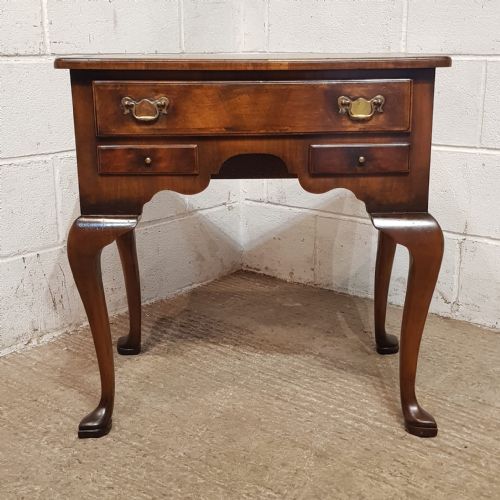
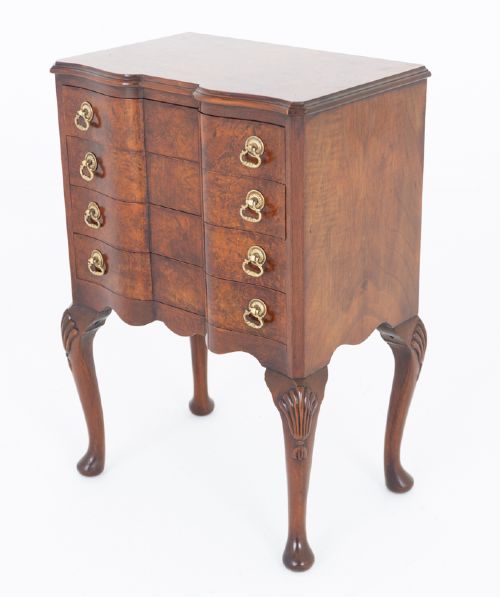
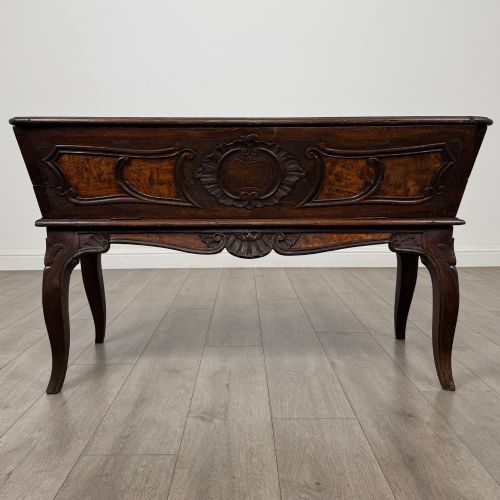
When you search for a carved walnut table chest, you encounter compact timber receptacles and small chests dating from the seventeenth century through to the Edwardian period and nineteen-twenty. The pieces recorded here span miniature chests, lowboys, and bedside cabinets fashioned from plain and burr walnut.
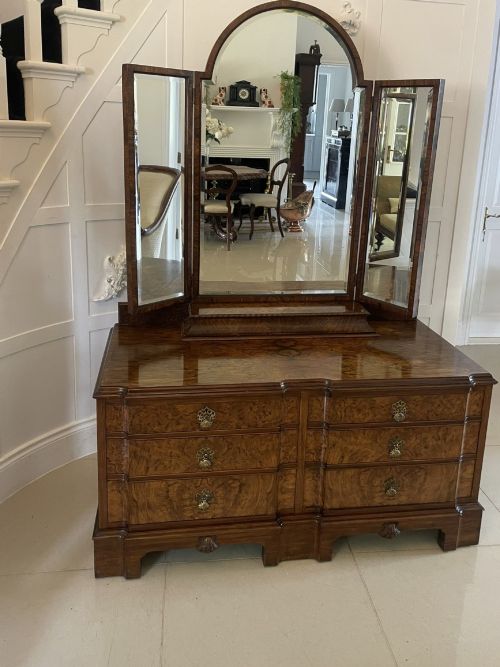
The most frequent examples on this page are lowboys, dressing tables, and small bedside chests utilising Queen Anne style revival motifs or Victorian proportions. These variations reflect domestic storage needs across the eighteenth, nineteenth, and early twentieth centuries.
Materials and construction methods
Carpenters utilised solid walnut and decorative burr walnut veneers applied to secondary timbers, frequently selecting burr sections for table and chest top surfaces to display rich figure. Brass handles, escutcheons, and hinges provide functional hardware across these cabinets and lowboys.
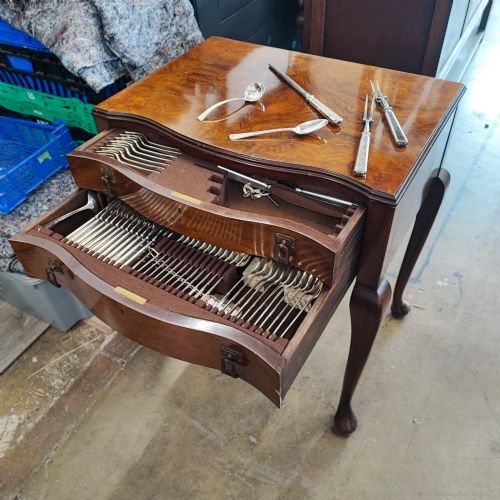
Makers shaped the timber using traditional joinery techniques, incorporating carved details such as cabriole legs on Queen Anne style lowboys and serpentine fronts on Edwardian side tables. Mirror glass and marble elements appear alongside steel fittings on specific dressing tables and canteens.
Tea poys invited guests to watch their hostess measure out precious leaves from lockable internal compartments.
Assessing quality in walnut furniture
Quality rests upon the selection and matching of the burr walnut veneer, where superior examples exhibit symmetrical grain patterns across drawer fronts and top panels. The crispness of the carved detail on legs and mouldings also separates standard production from finer work.
Construction integrity defines the upper tier, visible in closely fitted drawers, original brass hardware, and stable timber movement across panels. Pieces retaining their finished surface polish without excessive restoration maintain greater integrity.
Shoolbred and Co
The Carved Walnut Table Chest Glossary
- Lowboy
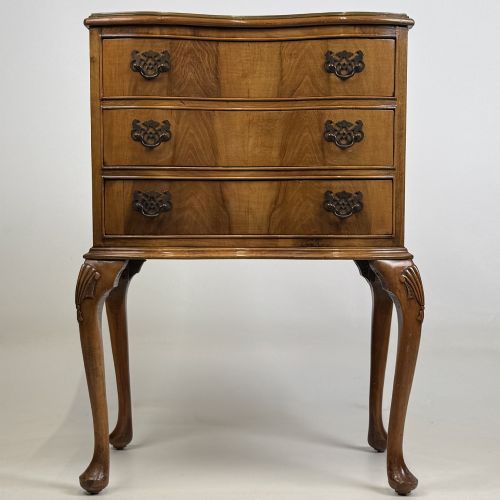
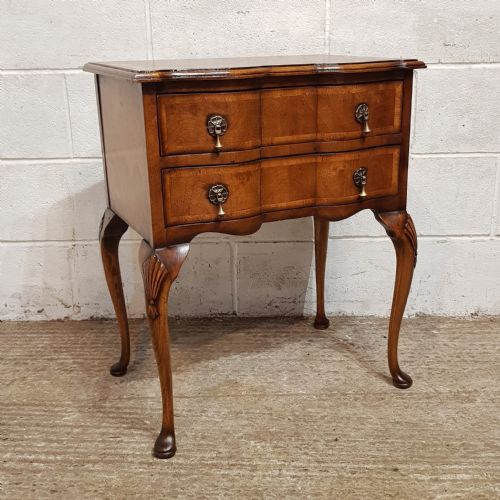
- A small table with one or more rows of drawers, commonly standing on four legs and functioning as a dressing or side table. Eighteenth century and revival examples appear frequently in walnut.
- Teapoy
- A small container or chest mounted on a pedestal or legs, originally designed to hold loose tea leaves. These pieces often incorporate internal compartments.
- Serpentine
- A curved line of furniture fronts or edges that bends outward at the centre and inward at the sides. Edwardian side tables utilise this contour.
- Dressing table
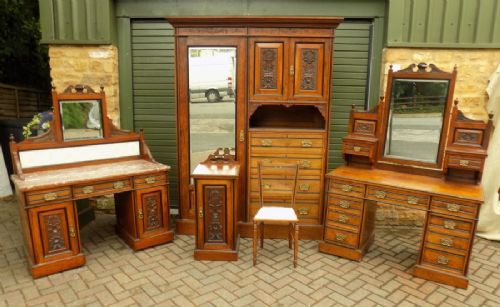
- A low table equipped with drawers and a mirror glass attachment for personal grooming. Victorian iterations in burr walnut form a significant portion of these listings.
Carved Walnut Table Chest: Frequently Asked Questions
What is a lowboy?
A lowboy is a small table with drawers, functioning as a dressing table or side table in domestic interiors. Eighteenth century and revival makers constructed them primarily in walnut.
They sit low to the ground and typically feature cabriole legs or straight supports with brass handles.
How do I date a walnut chest?
Dating relies upon structural characteristics, hardware, and timber choice, moving from seventeenth century miniatures to eighteenth century lowboys and nineteen-twenty bedside chests. Burr walnut veneers became particularly popular during Victorian and Edwardian revival periods.
Examine the drawer construction and secondary woods to distinguish older periods from twentieth century revival pieces.
Where were these pieces used?
These items served bedrooms, halls, and parlours as practical storage for personal items, documents, or tea. Bedside cabinets and tea poys fulfilled specific functional roles within domestic rooms.
Their compact scale allowed placement upon tables or beside sleeping quarters.
What is burr walnut?
Burr walnut is timber taken from a tree growth or knot, producing intricate, swirling grain patterns. Cabinet makers prized this veneer for surface decoration on table tops and drawer fronts.
It appears across Victorian bedroom suites and nineteen-twenty side tables.