

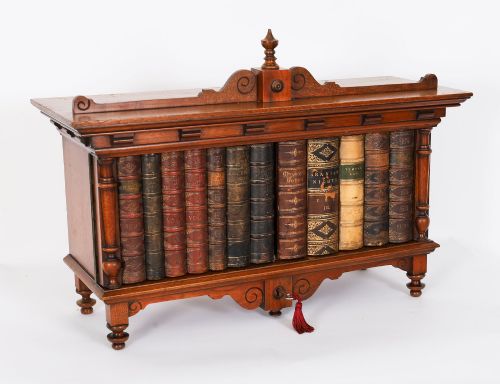
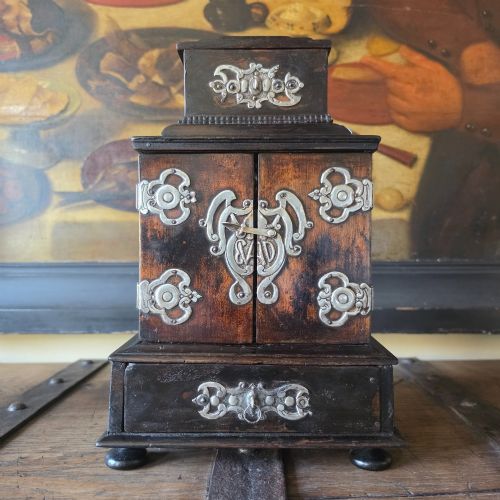
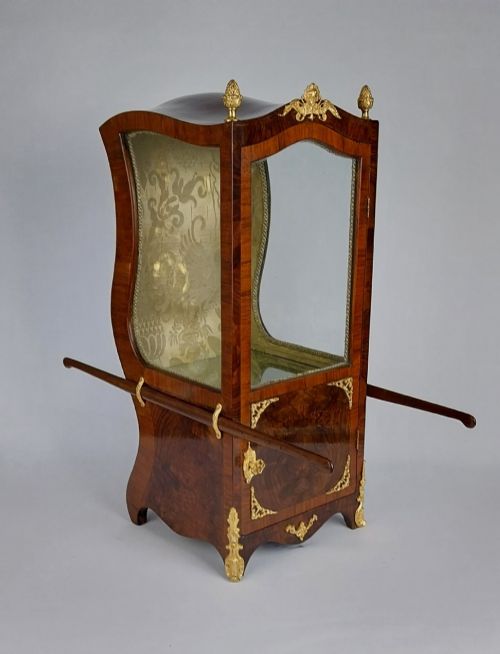
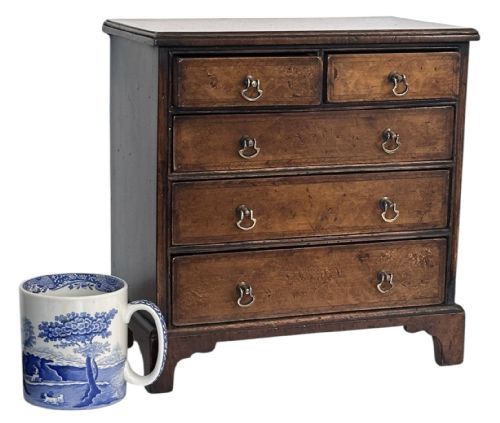
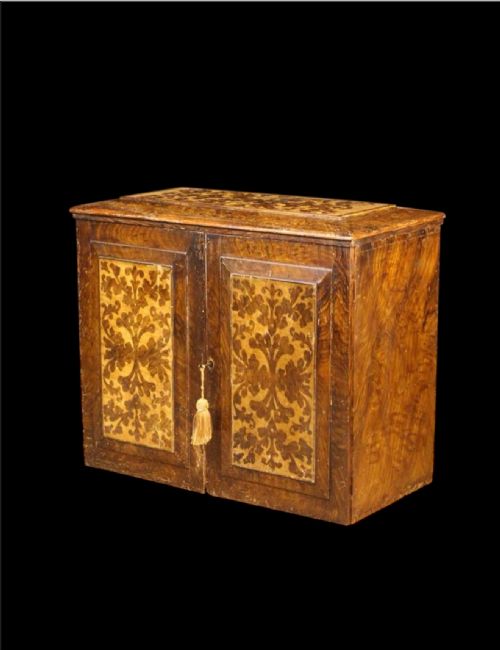


Walnut Miniature Cabinet
These walnut miniature cabinet pieces are compact tabletop containers and chests made by skilled cabinetmakers to display small treasures or store precious items.
Walnut Miniature Cabinet
A walnut miniature cabinet takes many tabletop forms across this selection, from small jewelery chests and miniature chests of drawers to tabletop collectors cabinets and vitrines. These smaller furniture items mirror full-scale period designs, serving practical storage needs on a reduced scale.
The pieces span several centuries, with 19th-century Victorian examples appearing alongside 17th-century and 18th-century continental works. Buyers frequently encounter apprentice pieces and tabletop cabinets featuring fitted drawers, glass doors, or locking mechanisms designed for private chambers.
Styles range from straightforward Victorian execution to elaborate Dutch Baroque and Louis XV style pieces, alongside regional variations such as German marquetry and Flemish designs. Each object demonstrates the ambition of historical makers to condense large architectural furniture into portable tabletop formats.
Materials and construction methods
Makers utilised solid walnut and decorative burr walnut veneers over secondary timbers such as oak, fruitwood, and mahogany to build these small structures. The patterned grain of burr walnut provides a distinct visual richness across drawer fronts and primary surfaces.
Construction frequently incorporates fine joinery techniques, wood inlay, and marquetry details that echo the prevailing styles of the period. Brass hardware, including hinges, locks, and escutcheons, provides both structural reinforcement and functional closure for doors and drawers.
Walnut Miniature Cabinet Retail Price Guide 2026
Typical asking prices for walnut miniature cabinet among the pieces listed under this phrase on Sellingantiques today, from the lower quarter to the upper quarter. They describe what is for sale here now, not the wider market.
Listings feature walnut, burr walnut, fruitwood, and mahogany materials across 17th-century, 18th-century, and Victorian periods.
Factors determining the quality of walnut miniature cabinet pieces
Quality rests upon the precision of the joinery and the selection of timber veneers, where matched burr walnut figures indicate higher ambition from the workshop. The crispness of inlaid details and the integration of original brass hardware elevate the standard of execution.
The sophistication of the internal layout, such as secret compartments, multiple small drawers, or glazed display sections, separates standard domestic storage from exceptional collector pieces. Original surfaces and patination demonstrate how well the timber has aged over the centuries.
The Walnut Miniature Cabinet Glossary
- Apprentice piece
- A small item of furniture created by a craftsman to demonstrate mastery of a trade. These pieces often replicate full-sized furniture forms.
- Burr walnut
- A timber harvested from the burls or growths of walnut trees, prized for its swirling grain patterns. It is typically sliced into thin veneers for decorative surfaces.
- Collectors cabinet
- A specialised piece designed to house and display small specimens, coins, or curiosities. It usually contains multiple shallow drawers.
- Marquetry
- The art of applying decorative pieces of veneer to a structure to form intricate pictures or geometric patterns. It appears frequently on continental cabinets.
- Escutcheon
- A protective plate surrounding a keyhole. On these cabinets, brass escutcheons often accent the locking doors and drawers.
Walnut Miniature Cabinet: Frequently Asked Questions
What were walnut miniature cabinets used for?
These small cabinets served to store valuable personal items, jewellery, documents, or specialised collections of natural curiosities and coins.
Their portable nature allowed owners to keep precious possessions secure and close at hand within private residential rooms.
How do I identify an apprentice piece?
Apprentice pieces are typically scaled-down versions of standard furniture forms, created to prove skill rather than for dollhouses.
They display the same complex construction methods, dovetail joints, and timber choices as full-sized furniture from the same era.
Where should I place a table cabinet?
Table cabinets suit secure surfaces such as sideboards, desks, or dedicated display tables where they remain stable and easily viewable.
Keep them away from direct sunlight and excessive heat sources to protect the walnut veneer and historic timber.
How do I distinguish 18th-century from Victorian pieces?
Earlier 18th-century pieces often feature distinct regional joinery, specific marquetry styles, and simpler hardware arrangements compared to later work.
Victorian examples frequently utilise figured burr walnut veneers, machine-sawn elements, and standardised brass locks typical of the 19th century.