
Brown Wood Dining Server
Brown wood dining server pieces combine practical surface area with period craftsmanship, bringing traditional storage and display directly into the modern dining room.
Brown Wood Dining Server
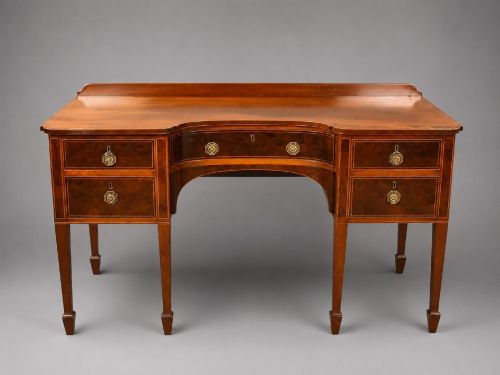
A brown wood dining server functions as a central hub for serving food and storing tableware during meals. When searching for a brown wood dining server, buyers encounter forms ranging from Georgian and Regency sideboards to Edwardian buffets and Victorian servers.
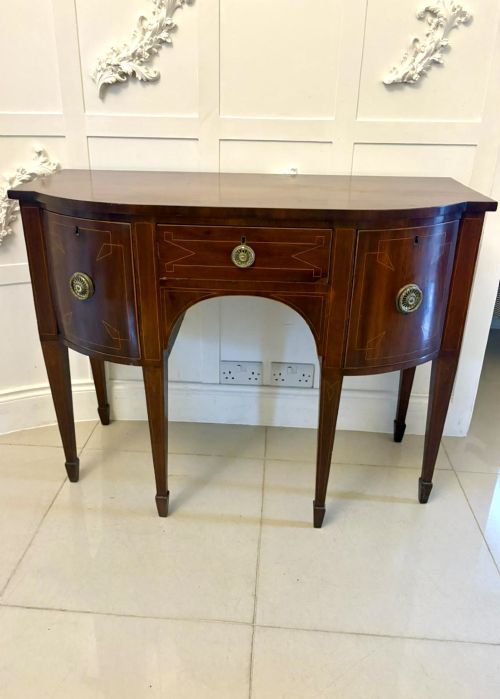
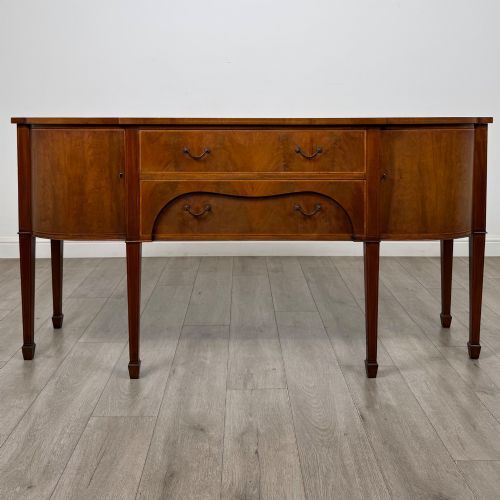
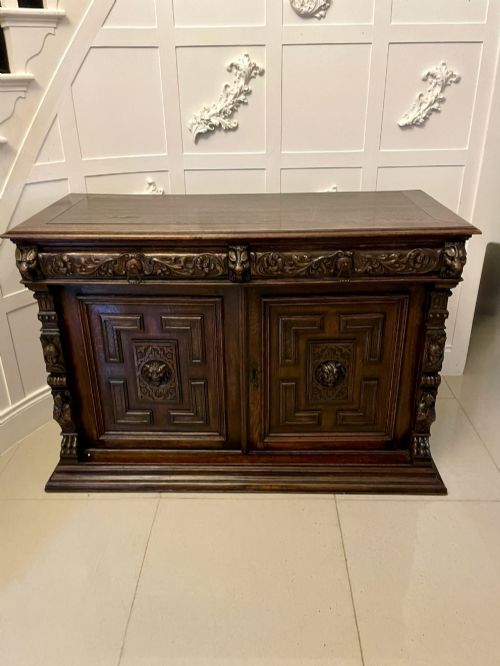
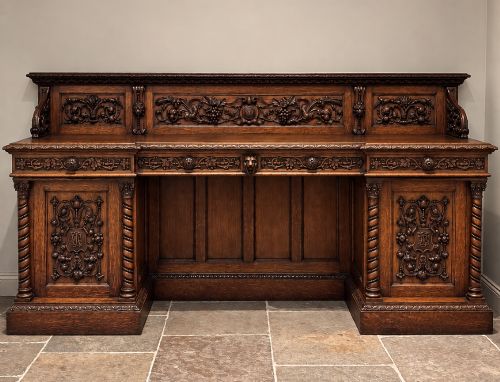
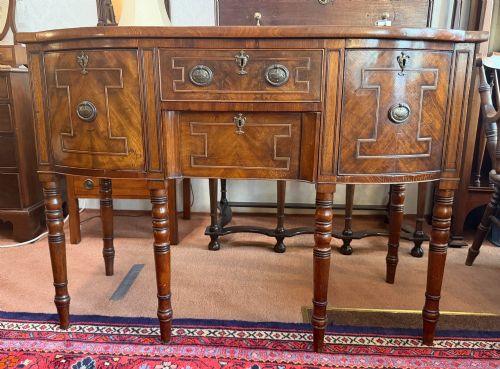
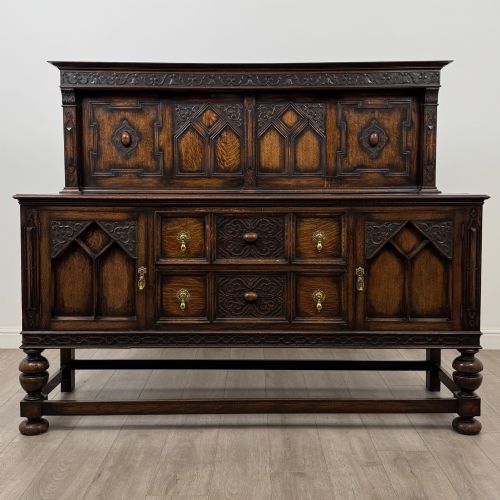
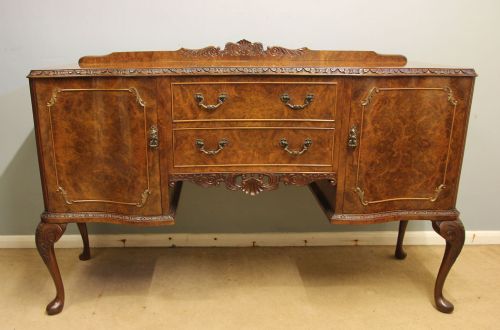
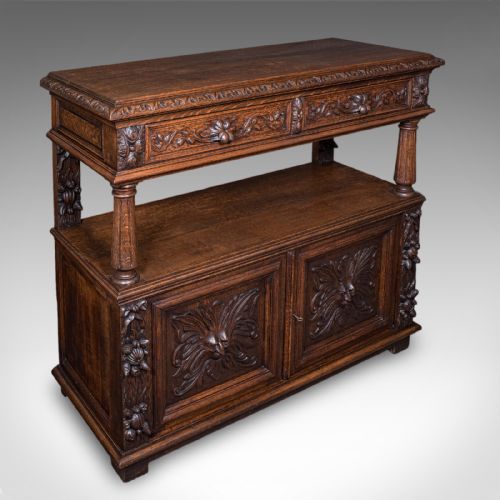
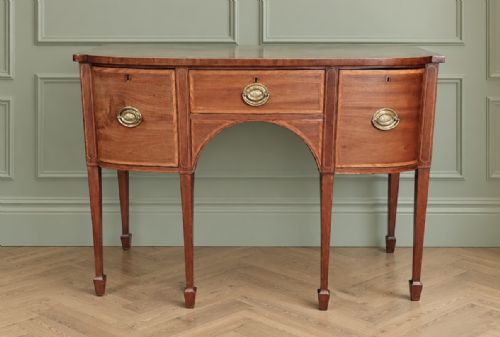
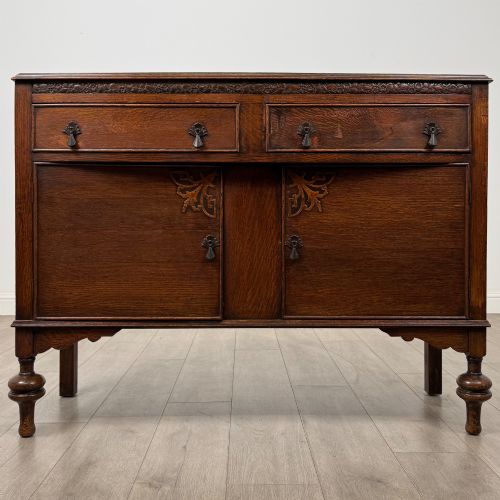
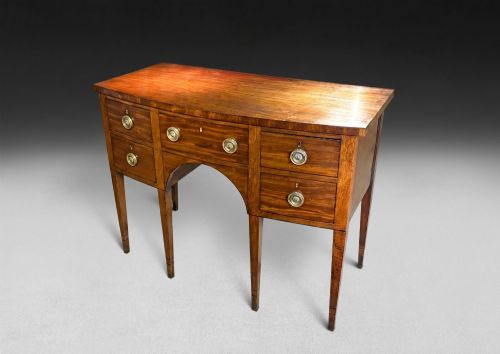
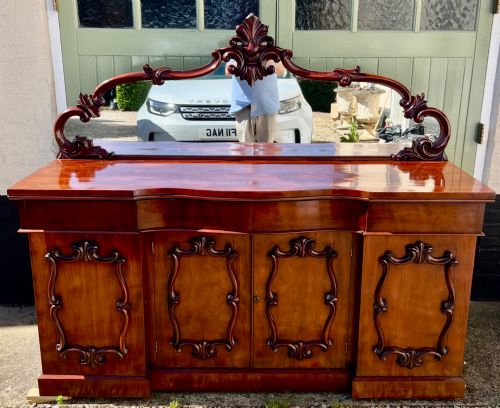
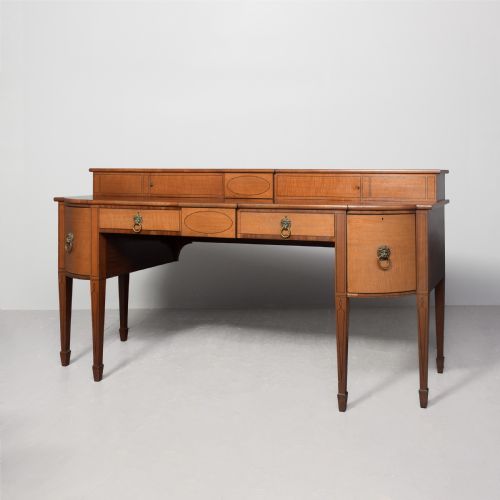
The pieces on this page span several centuries, with a strong representation of mahogany and oak constructions. Most examples adopt bow-front, serpentine, or straight-front configurations designed to fit dining spaces while offering cupboards and drawers.
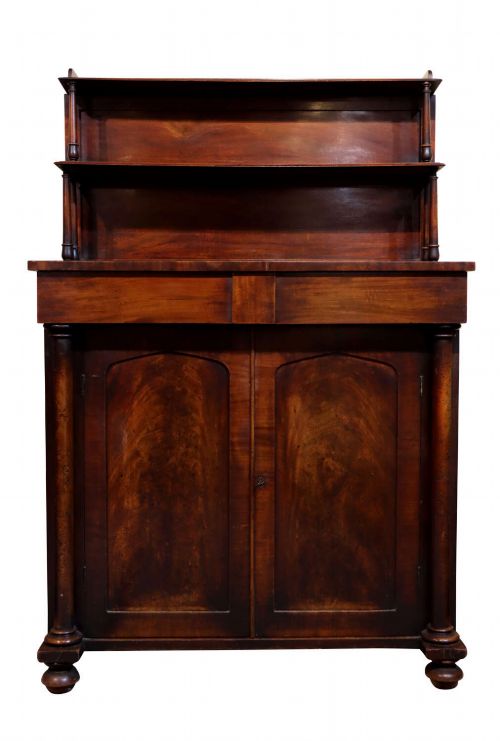
Originating primarily from British and European workshops, these items include specialised formats like dumb waiters alongside traditional sideboards and chiffoniers. The selection reflects formal dining traditions from the eighteenth, nineteenth, and early twentieth centuries.
How they were made
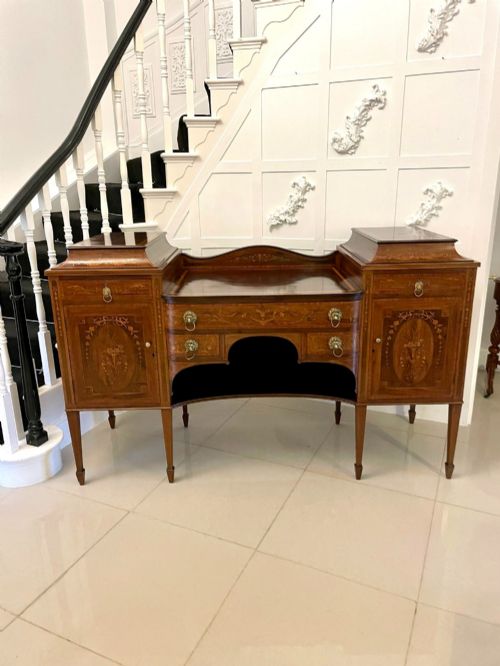
Cabinet makers relied heavily on solid mahogany and oak, frequently applying flame mahogany veneer to create rich grain patterns across drawer fronts and doors. Inlaid details utilised lighter timbers such as satinwood and boxwood to form contrasting borders and marquetry motifs.
Structural hardware typically incorporated brass for handles, key escutcheons, and gallery rails mounted atop the timber surfaces. Carving was executed directly into the solid wood, particularly on Victorian and Jacobean revival oak pieces, adding depth and texture to panels and legs.
Listings feature items from the Georgian, Victorian, and Edwardian eras, constructed primarily in mahogany and oak.
What varies in quality
The distinction between standard examples and finer works rests upon the selection of timber figures and the precision of the joinery. Superior pieces display carefully matched veneer grains and intricate inlay work that demands advanced carpentry skill.
Proportion and decorative restraint dictate the standing of an item within its period. Pieces that maintain harmonious lines, original brass fittings, and balanced carving achieve a greater cohesion than later or heavier reproductions.
Hewetsons London·George Hepplewhite
The Brown Wood Dining Server Glossary
- Bow front
- A convex curved cabinet front that projects outward in the centre, commonly seen on Georgian and Edwardian sideboards. This shape softens the corners of the furniture while increasing interior storage capacity.
- Serpentine front
- A cabinet front featuring an undulating line with a concave central section flanked by convex ends or vice versa. It represents a more complex form of woodworking than the standard bow front.
- Marquetry
- The art of applying decorative pieces of veneer to a structure to form intricate pictorial or geometric designs. Craftsmen utilised contrasting woods like satinwood and boxwood for these surface patterns.
- Brass gallery
- A low metal rail mounted along the rear top edge of a sideboard or server. It originally prevented serving dishes from sliding off the surface during busy dining occasions.
- Chiffonier
- A compact sideboard or low cabinet equipped with enclosed shelving and sometimes a small superstructure. It developed during the nineteenth century as a versatile dining room storage piece.
- Flame mahogany veneer
- Timber sliced from the fork of a mahogany tree where the branch meets the trunk, producing a flickering flame-like pattern. Cabinet makers reserved this wood for prominent door and drawer surfaces.
Brown Wood Dining Server: Frequently Asked Questions
What is a brown wood dining server used for?
A brown wood dining server provides a dedicated surface for plating meals and presenting dishes during dinner parties. It also offers interior storage for cutlery, linen, and glassware.
The top surface accommodates serving trays and platters, while lower cupboards and drawers keep dining accessories organised close to the table.
How do I identify a Georgian sideboard?
Georgian pieces typically feature solid mahogany or premium veneers, often decorated with delicate satinwood inlay and fine stringing. The legs usually take tapered spade or square forms characteristic of the eighteenth century.
Proportions remain elegant and balanced, avoiding the heavier carvings found in later Victorian revivals. Brass ring handles and keyplates are usually original to the period.
Where should I place a dining server?
A dining server works best against a main dining room wall where it remains easily accessible from the table. It anchors the room visually and provides a focal point opposite seating areas.
Ensure there is enough clearance around the piece to open cabinet doors and pull out drawers fully without obstruction from chairs.
What is the difference between a sideboard and a server?
Sideboards traditionally feature extensive storage, including multiple deep drawers and large cupboards designed for heavy tableware. They often incorporate stage-backs or brass galleries.
Servers generally offer a lighter profile with shorter legs and simpler cupboard configurations, focusing more on surface utility for meals than heavy storage.