
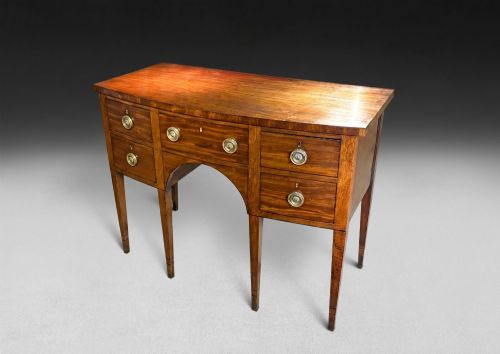
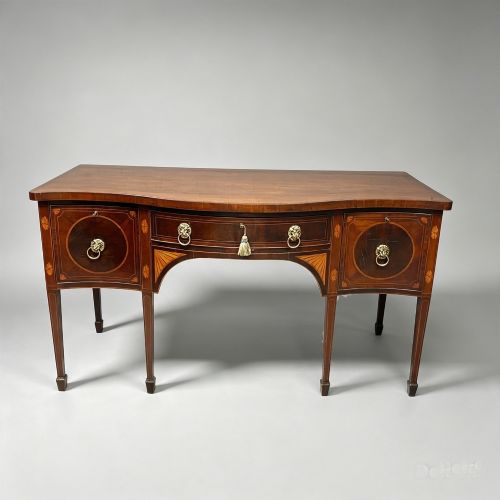
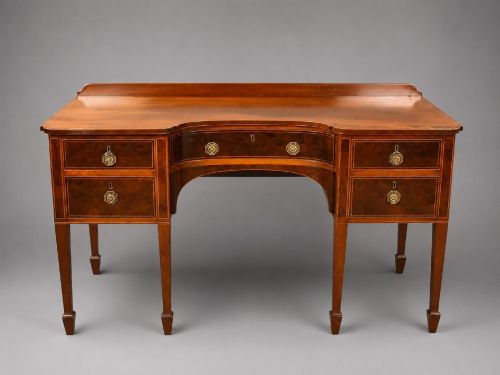
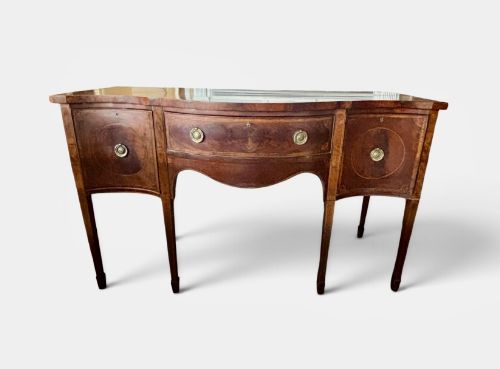
18th Century Dining Sideboard
An 18th century dining sideboard anchors a formal dining room with period proportion, substantial timber and disciplined storage.
18th Century Dining Sideboard
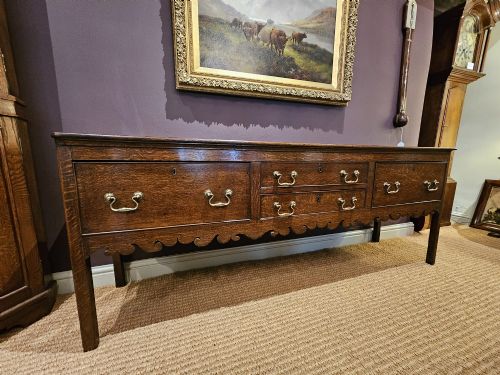
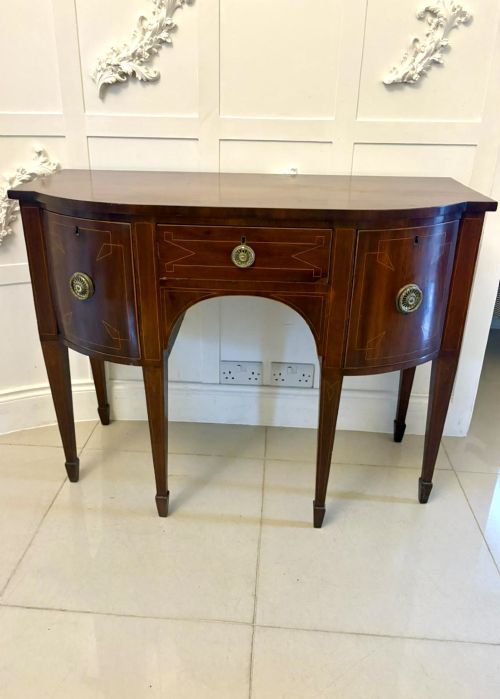
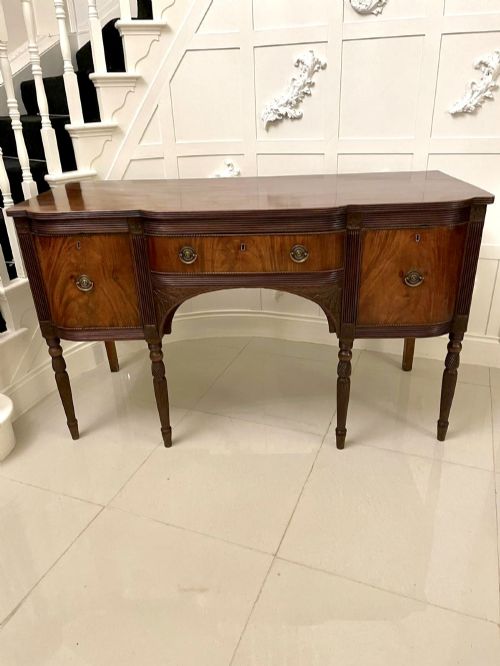
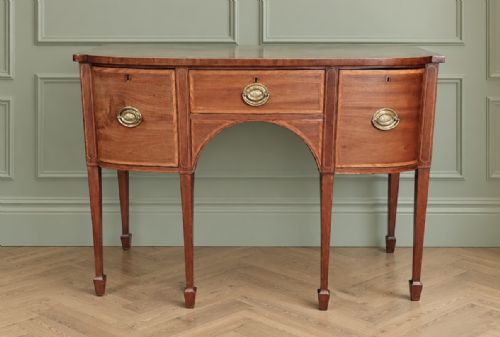
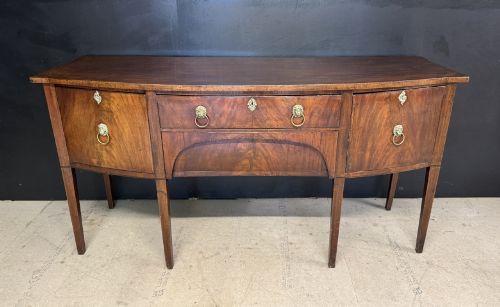
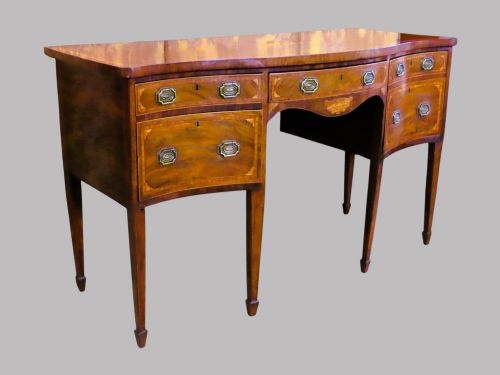
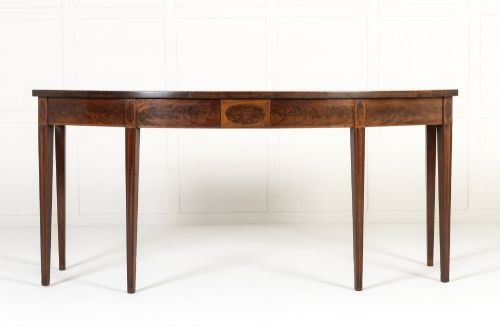
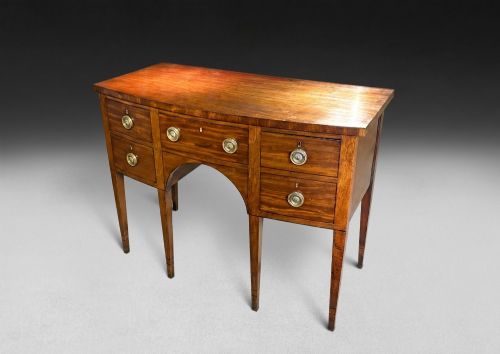
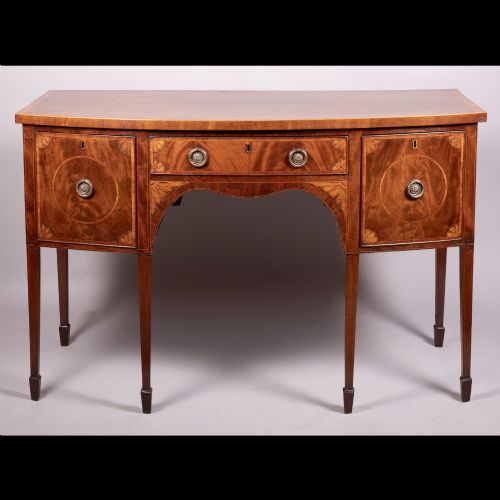
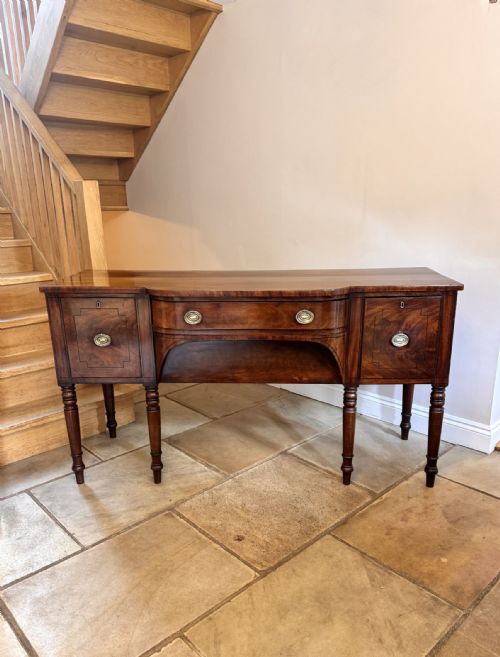
An 18th century dining sideboard encompasses formal Georgian and George III serving furniture, alongside country oak dresser bases and French provincial low buffets. The pieces you encounter most frequently on this page date from the Georgian period, rendered in mahogany with straight, bow front or serpentine facades.
Makers and cabinetmakers of the 18th century produced these servers to handle the practical demands of dining rooms, ranging from large breakfront and stage-back sideboards to compact servers and side tables. Alongside the primary serving tables appear complementary dining pieces such as cutlery urns, knife boxes, cheese coasters and plates.
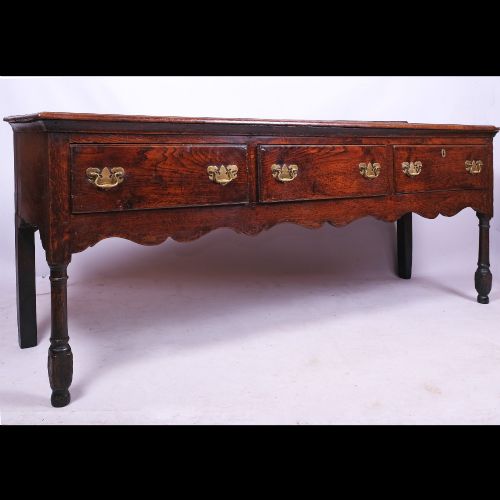
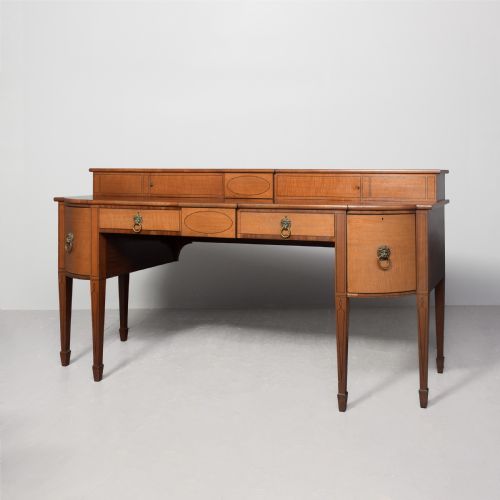
Country examples bridge the formal London styles and regional workshops, utilising native oak and fruitwoods in dresser bases and sacristy cabinets. Whether you examine a six-legged Georgian server or an inlaid Sheraton piece, the form remains rooted in the domestic architecture of the dining room.
Materials and construction
Cabinetmakers built these sideboards using solid mahogany and oak as primary carcasses, selecting figured grain for drawer fronts and top panels. Workshops utilised boxwood and satinwood inlay to trace borders, corner fans and geometric stringing across the mahogany surfaces.
Secondary construction relied on regional timbers for drawer linings and internal framing, jointed with hand-cut dovetails. Timber selection prioritized rich figure, flame mahogany and dense oak, finished with traditional friction-fit drawers and brass hardware.
Listings feature Georgian, George III and Sheraton periods alongside 18th century country oak and French provincial pieces.
Craftsmanship and proportion
Quality rests in the handling of timber figure, the crispness of inlaid stringing and the integrity of structural joins across the carcass. Superior examples display continuous flame mahogany or balanced satinwood details that follow the curve of bowfront and serpentine shapes without distortion.
Proportion and scale dictate the success of the piece, where fine cabinetmaking shows in the taper of legs, the depth of mouldings and the retention of original brass drawer pulls. Lesser pieces may show heavy alterations, mismatched timber patches or replaced backboards that disrupt the original silhouette.
Richard King·William Grundy
The 18th Century Dining Sideboard Glossary
- Serpentine
- A front profile curving outward in the centre and inward toward the ends, creating a flowing, undulating line. This shape demands considerable skill from the cabinetmaker.
- Bow front
- A convex, outwardly curved front elevation typical of late 18th century dining furniture. It softens the room and maximises internal drawer space.
- Breakfront
- A cabinet or sideboard whose central section projects forward from the flanking wings. This architectural arrangement creates shadow and depth.
- Dresser base
- A low wooden storage unit featuring drawers and cupboards, originating in country houses before formal sideboards evolved. Oak is the primary timber for these pieces.
- Stringing
- Thin bands of contrasting wood inlay, such as boxwood or satinwood, set flush into the primary timber to outline panels and borders.
18th Century Dining Sideboard: Frequently Asked Questions
How do I use an 18th century sideboard today?
These pieces function well in modern dining rooms or living spaces as serving surfaces and storage consoles for tableware, linen and glassware.
Their deep drawers and spacious tops accommodate modern entertaining while maintaining period character in your interior.
How do I tell Sheraton style from George III?
George III encompasses a broad reign of classical furniture styles, while Sheraton represents a specific late 18th century neoclassical movement.
Sheraton pieces often display lighter proportions, satinwood inlay, tapered legs and geometric stringing rather than heavy carving.
Are country oak dressers considered sideboards?
Country oak dresser bases served a similar practical purpose in provincial houses before formal dining sideboards became standard in fashionable homes.
They share the low rectangular format and storage function, though constructed from native oak rather than imported mahogany.