
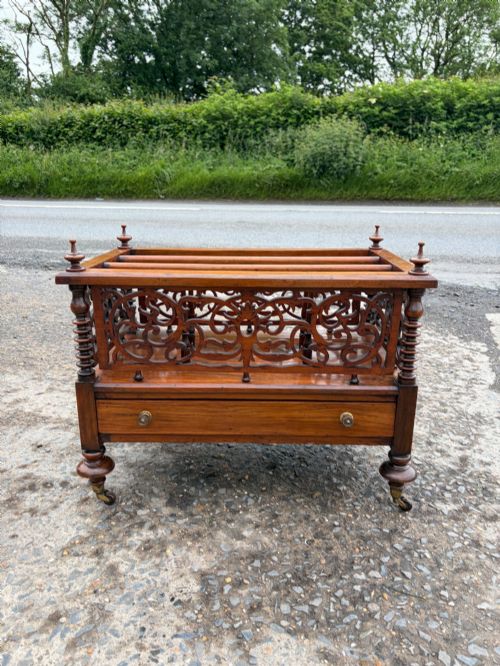
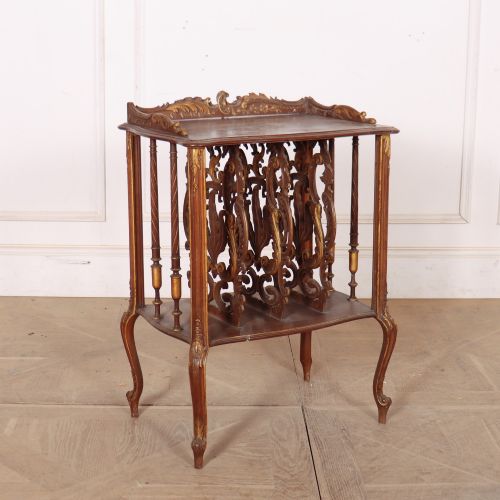


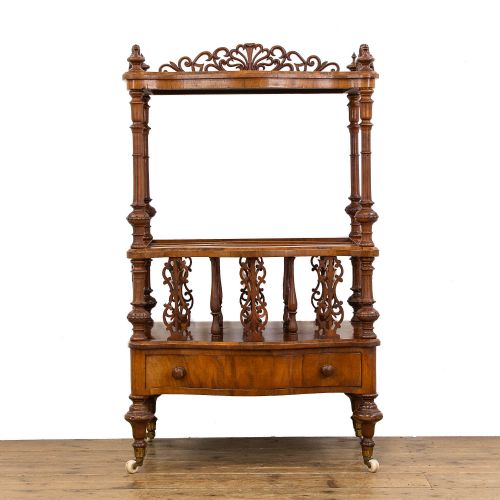

Brown Walnut Magazine Stand
These brown walnut magazine stands and canterburys bring rich timber grain and practical nineteenth-century division to modern rooms.
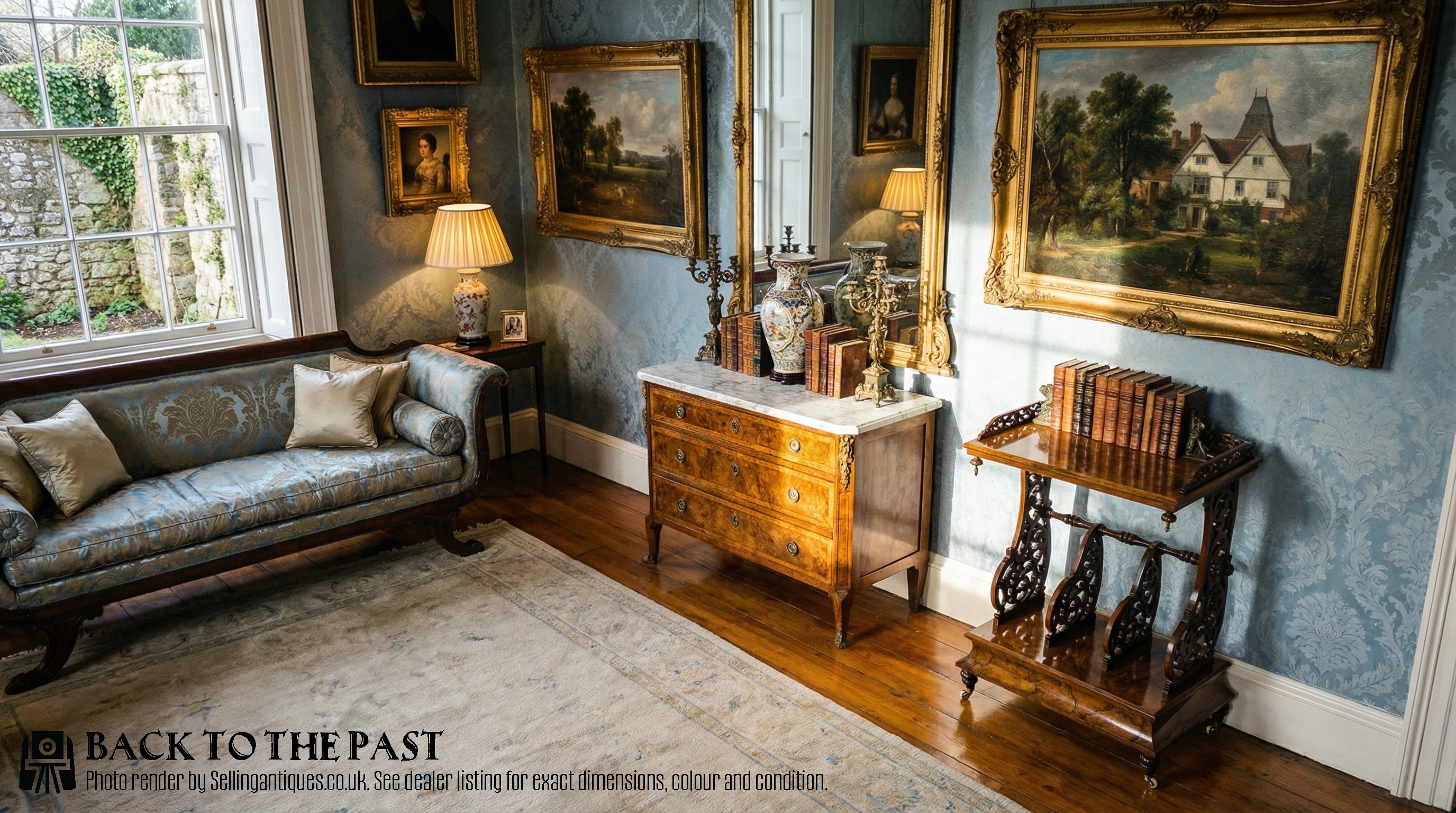
Brown Walnut Magazine Stand
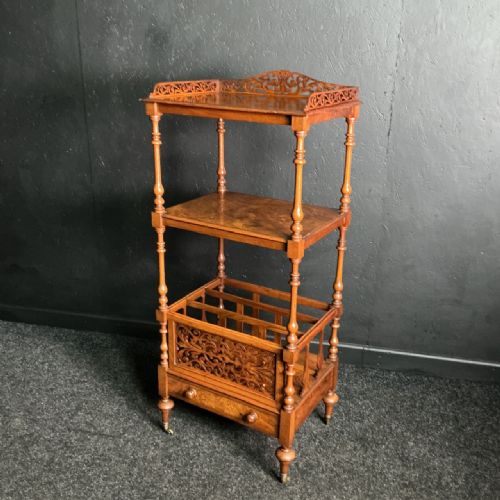
When you search for a brown walnut magazine stand, you find nineteenth-century furnishings designed to hold periodicals, sheets of music, and newspapers. The items on this page span the Victorian and Regency periods, appearing primarily as canterburys, whatnots, and dedicated magazine and music racks.
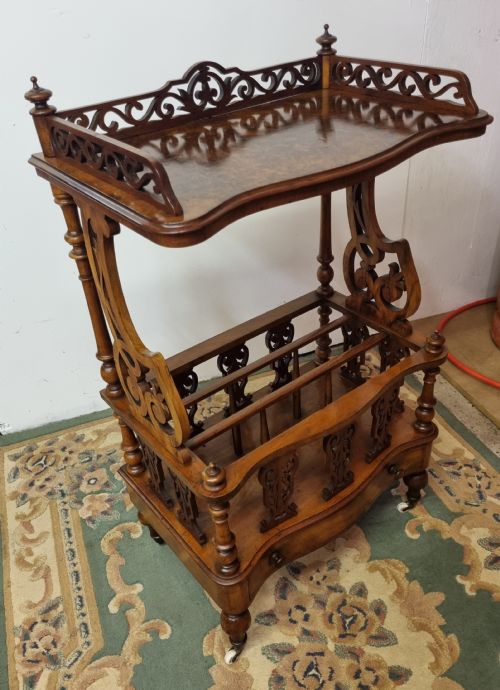
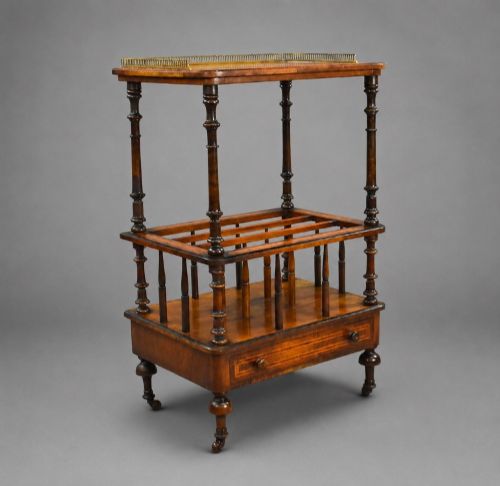
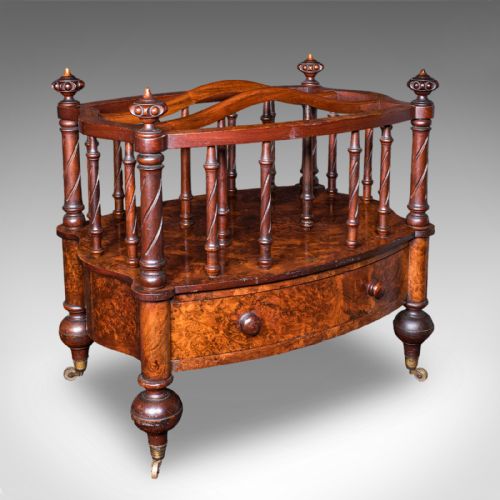
The version most commonly met here is the Victorian burr walnut canterbury, often combining slatted partitions for reading material with a low drawer or a fitted whatnot top. These pieces originated to serve domestic libraries and drawing rooms, keeping daily papers and folios organised off the floor.
Materials and construction
The makers of these stands relied heavily on walnut and burr walnut veneers, selected for their intense figuring and deep brown tones. Secondary woods provide the structural framework, while decorative surfaces frequently incorporate marquetry inlay, wood inlay, and brass details.
Structural variety comes through specialised forms such as fretwork panels, ceramic castors, and carved uprights. Joinery techniques from the nineteenth century support both open racks and multi-tiered whatnots with integrated drawers.
Listings span multiple decades of the nineteenth century, uniting walnut, brass, and ceramic materials within traditional Victorian and Regency forms.
Judging quality in walnut stands
Quality in these pieces rests on the choice of timber veneer and the crispness of any inlay work. Finer examples display symmetrical burr walnut figuring across the entire surface rather than plain grain, paired with precise marquetry and well-defined fretwork.
Construction robustness also divides standard items from superior ones, visible in the joinery of the partitions, the retention of original brass castors, and the smooth operation of any fitted drawer. The presence of integrated work tops or multi-tiered whatnot structures elevates the ambition of the piece.
Shoolbred
The Brown Walnut Magazine Stand Glossary
- Canterbury
- A low, open-framed piece of furniture featuring vertical partitions, originally designed to hold music folios and later adopted for magazines and newspapers. It often includes a single drawer beneath the main rack.
- Whatnot
- A set of open shelves supported by slender pillars, used for displaying ornaments or holding books and papers. In nineteenth-century examples, it is frequently combined with a canterbury base.
- Burr Walnut
- Timber taken from the warted growths of walnut trees, yielding highly decorative, swirling grain patterns. Cabinet makers prized this wood for veneering prominent surfaces.
- Marquetry Inlay
- The art of applying pieces of veneer to a structure to form decorative patterns and pictures. It appears on Victorian furniture to accent lid tops and panel fronts.
- Fretwork
- Ornamental design created by piercing patterns through thin wood panels using a scroll saw. This technique adds delicate texture to the sides and partitions of stands.
Brown Walnut Magazine Stand: Frequently Asked Questions
What is a canterbury stand?
A canterbury is a low compartmentalised stand built in the nineteenth century to hold sheets of music and periodicals off the floor.
Over time, these pieces adapted easily to serve as domestic magazine racks alongside chairs and sofas.
How do I date these stands?
Dating relies on stylistic markers such as the presence of burr walnut veneers, inlaid marquetry, and turned supports typical of the Victorian era.
Earlier Regency items show restraint in their lines, while late nineteenth-century pieces embrace fretwork and eclectic revival styles.
Can I use these for modern magazines?
The vertical wooden partitions accommodate contemporary periodicals, newspapers, and mail just as they once held Victorian journals.
Their narrow footprints make them practical beside modern seating without occupying excessive floor space.
What is a whatnot combination?
Some stands pair the traditional lower partitions of a canterbury with upper tiered shelving known as a whatnot.
This hybrid form provided dual utility for holding reading matter below and displaying small decorative objects above.