
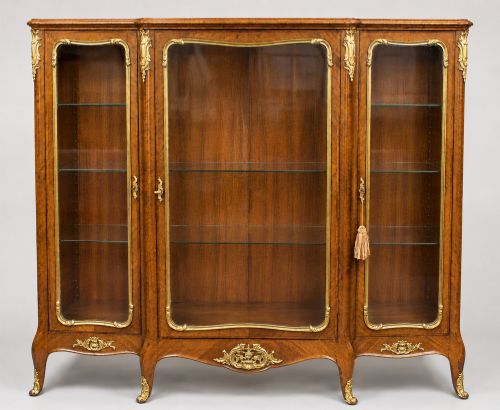
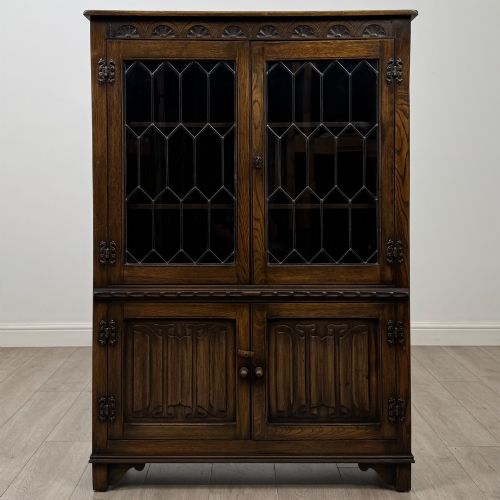
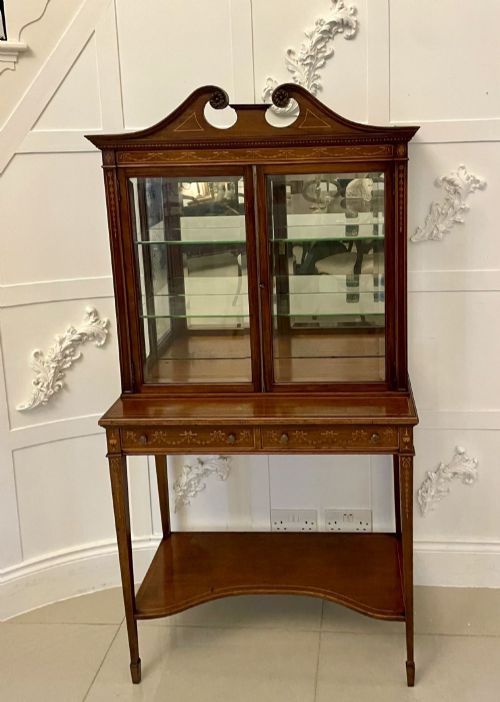
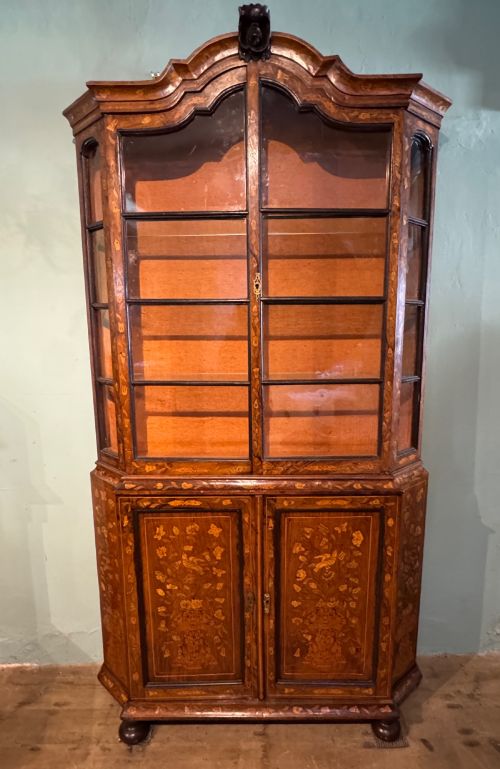
Brown Vitrine Cabinet
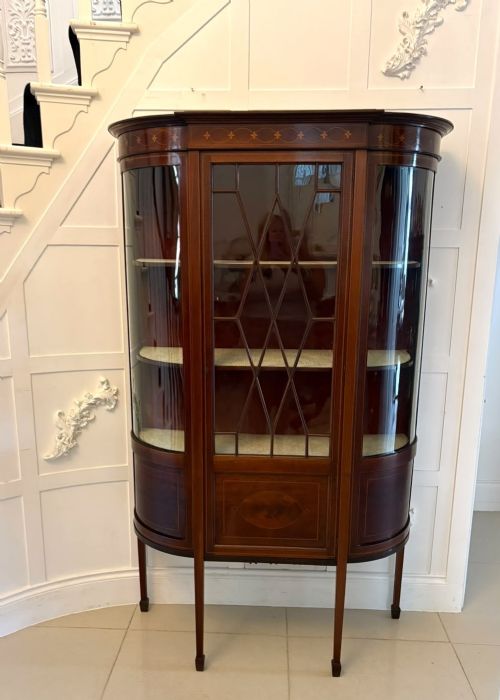
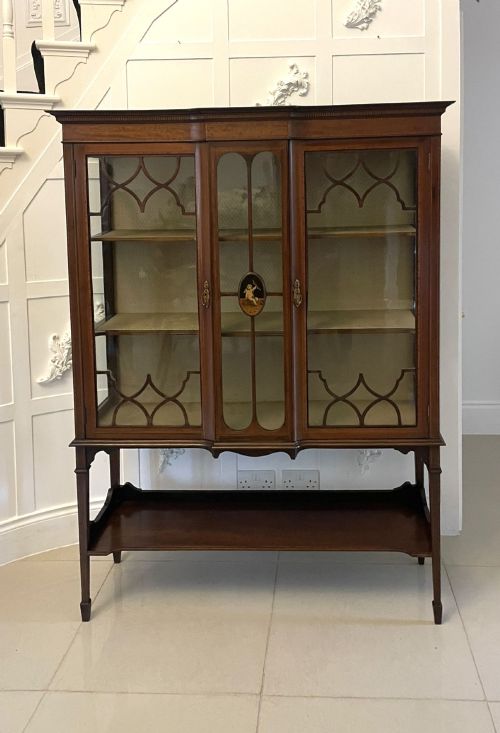
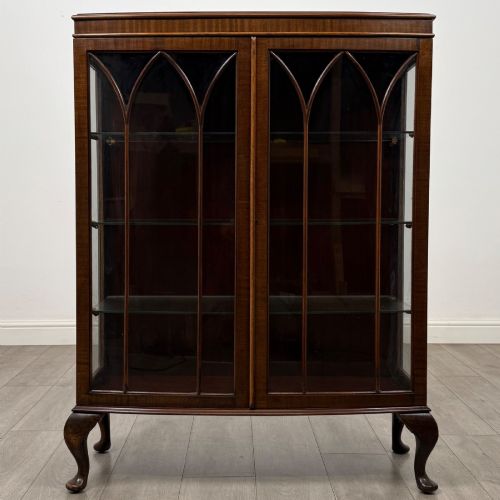
A brown vitrine cabinet brings glass panels and polished timber together to hold porcelain, silver and books.
Brown Vitrine Cabinet
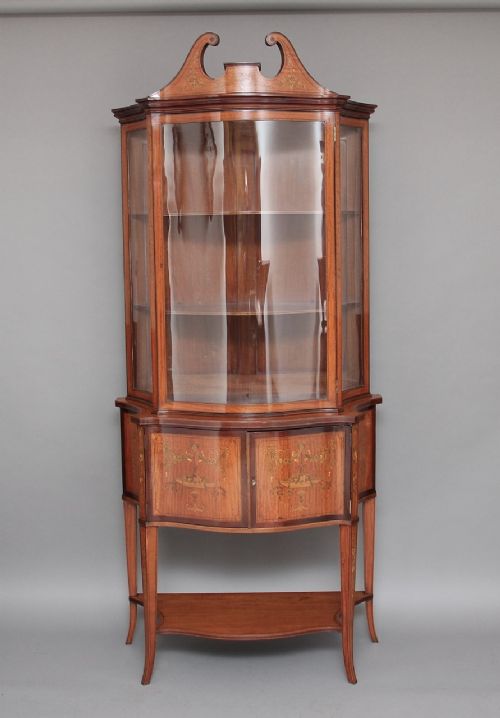
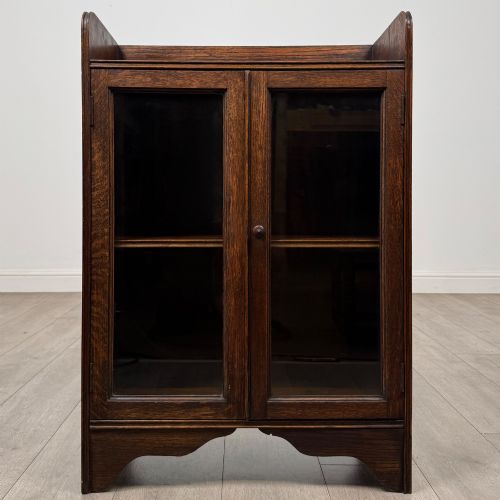
A brown vitrine cabinet serves to display and protect valued objects behind glazed doors or panels. The pieces seen on this page span several centuries, reaching from the Georgian and Victorian eras into the Edwardian period and the 1930s.
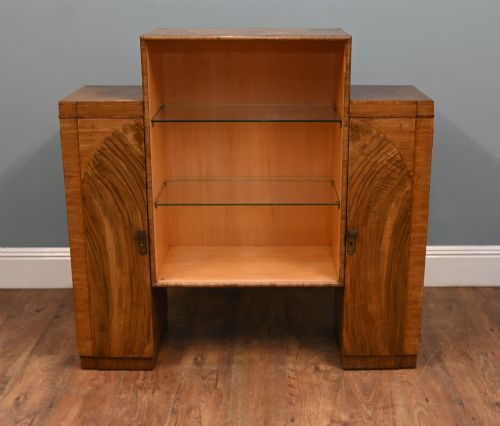
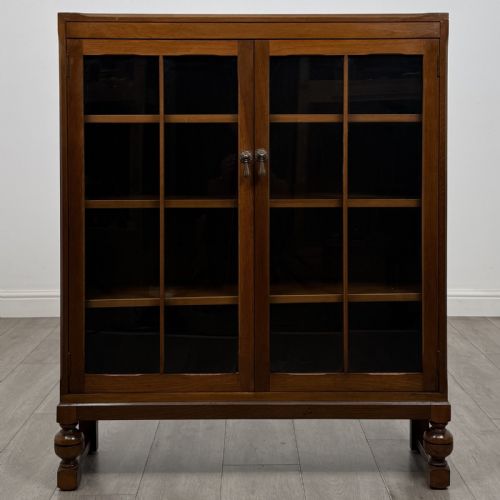
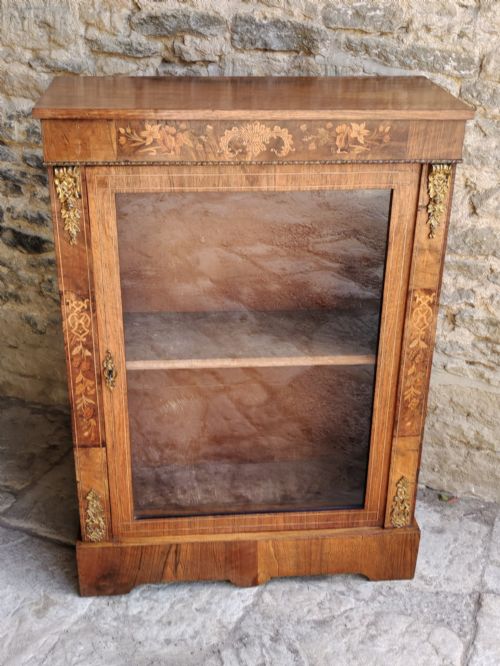
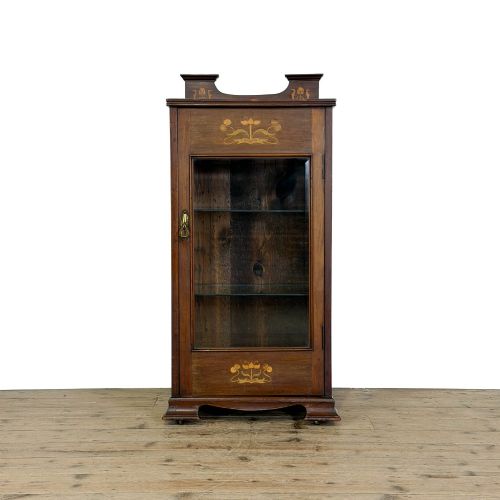
Makers utilised dark timbers such as mahogany, walnut and oak, often shaping them into freestanding display cabinets, corner units, wall cabinets and two-part bookcase combinations. Edwardian examples in mahogany appear frequently alongside Victorian and Art Deco variants.
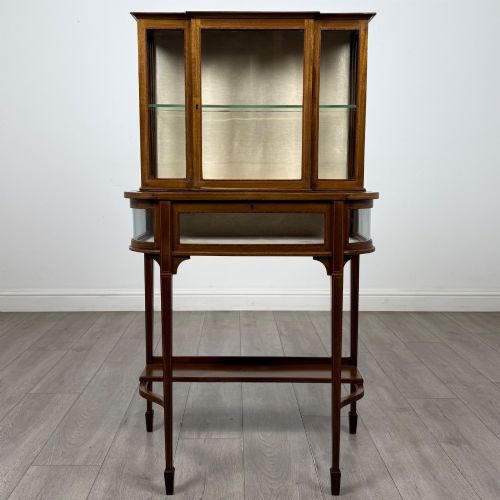
Forms range from tall upright vitrines to low side cabinets and specialised bijouterie tables with glass tops. Each iteration provides a clear view of its contents while enclosing them in timber frameworks.
How they were made
Cabinet makers built the primary carcass from solid or veneered timber such as mahogany, walnut, oak and satinwood. Glass panels were fitted into glazed doors and sides to let light reach the interior shelves.
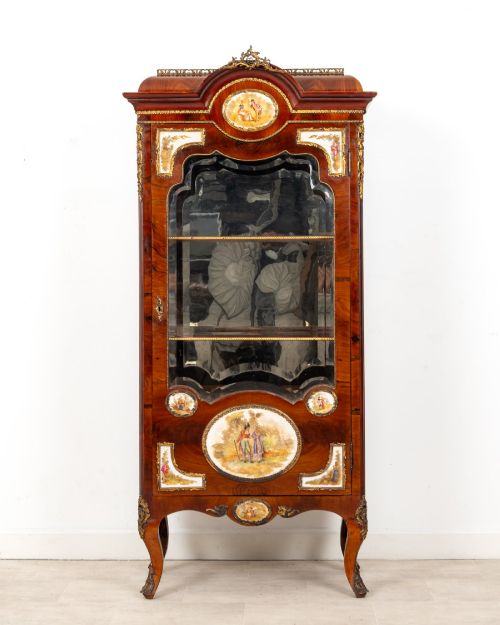
Decoration relied on marquetry inlay, painted details, carved woodwork and ormolu mounts. Interior surfaces were often lined with fabric or fitted with mirror glass to reflect light through displayed items.
Periods represented span from the 18th Century through the Victorian era to the 1930s.
What varies in quality
The refinement of the timber veneer and the precision of the marquetry inlay dictate much of the visual distinction. Well-executed carving, crisp astragal glazing bars and intact original mirror plates elevate a piece.
Structural stability depends on the joinery of the carcass and the original fitting of the doors and brass hardware. Cabinets that retain their original fabric linings and painted decorations show greater integrity.
Collinson & Lock·Edwards & Roberts·Maple & Co.
The Brown Vitrine Cabinet Glossary
- Vitrine
- A glass-fronted display cabinet used for showing porcelain, curiosities and fine objects. The term derives from the French word for glass.
- Astragal
- A moulding used to hold the glass panes within a glazed door or window. These thin timber bars divide the large window into smaller glazed sections.
- Marquetry
- Decorative veneer applied to furniture in patterned wood designs or pictures. Craftsmen cut contrasting pieces of timber and fitted them together precisely.
- Ormolu
- Gilded bronze mounts applied to furniture for decoration. This technique was common on French and revival pieces.
- Bijouterie table
- A glass-topped table designed specifically for displaying small valuable items and jewellery. They often feature hinged lids for easy access.
- Linenfold
- A style of wood carving that resembles folded parchment or linen. It appears frequently on oak panels.
Brown Vitrine Cabinet: Frequently Asked Questions
What is a vitrine cabinet?
A vitrine cabinet is a specialised piece of furniture featuring glass panels designed to exhibit decorative objects, porcelain and silver. It keeps delicate items free from dust while allowing full visibility.
These cabinets range from tall freestanding floor units to wall-mounted designs and smaller corner cupboards.
How were these cabinets used?
Owners used them in drawing rooms and parlours to showcase treasured possessions, collections and imported porcelain. The glazed doors kept dust away while putting curated items on open view.
Many designs also incorporated lower enclosed cupboards or drawers for storing items that needed to be kept out of sight.
How do I date a cabinet?
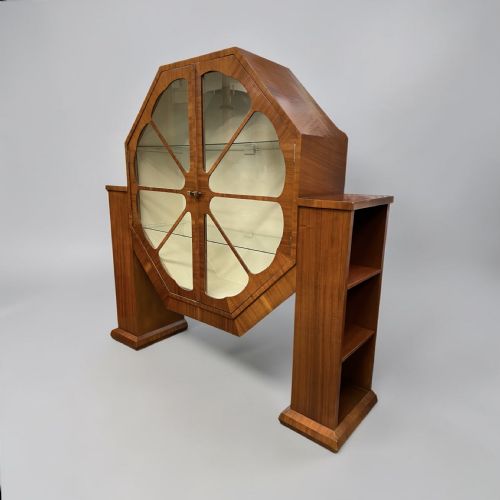
Dating relies on observing the timber species, construction methods, decorative styles and hardware used. For instance, Edwardian pieces often display delicate mahogany inlay, while Art Deco examples from the 1930s favour circular or geometric walnut forms.
Secondary woods inside drawers and the type of glass used also provide clues regarding the period of manufacture.
How do I clean the glass?
Cleaning requires a soft cloth and a gentle glass cleaner sprayed onto the cloth rather than directly onto the cabinet surface. This prevents moisture from damaging the surrounding timber, veneer or antique mirror plates.
Care should be taken around delicate wood finishes, marquetry and brass mounts during maintenance.