
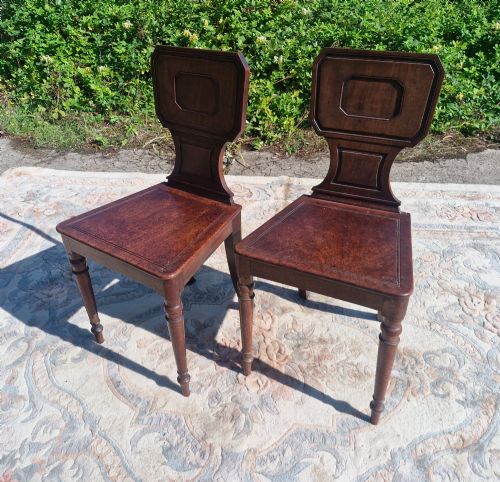
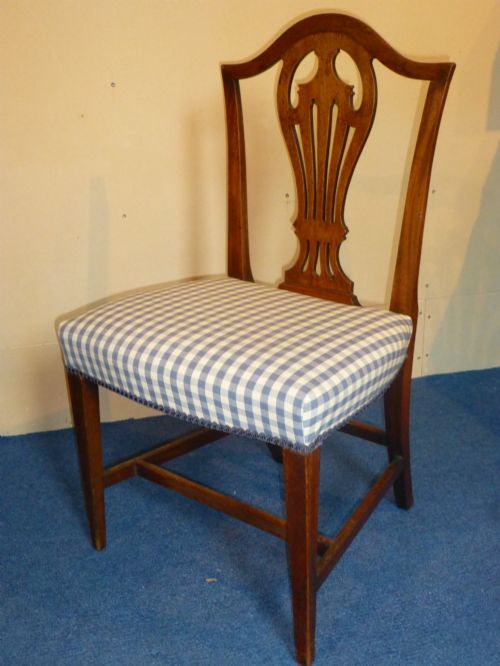
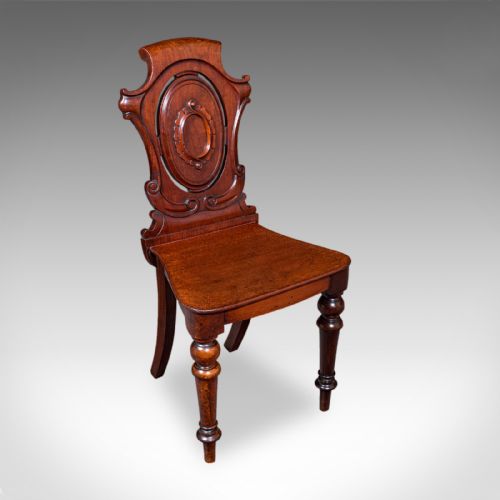
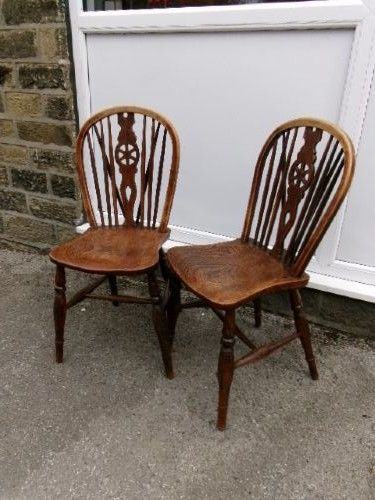
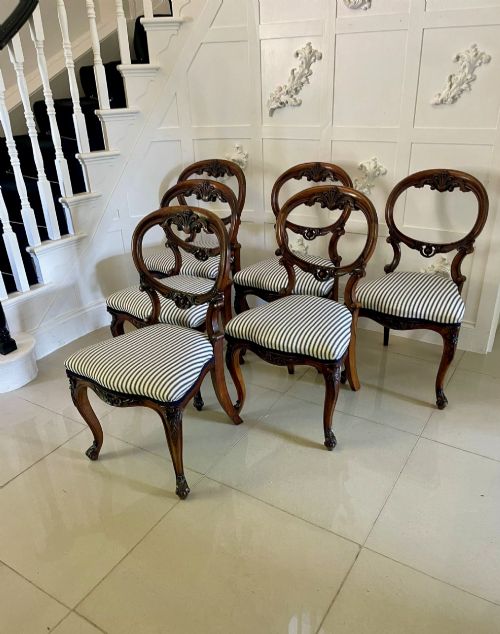
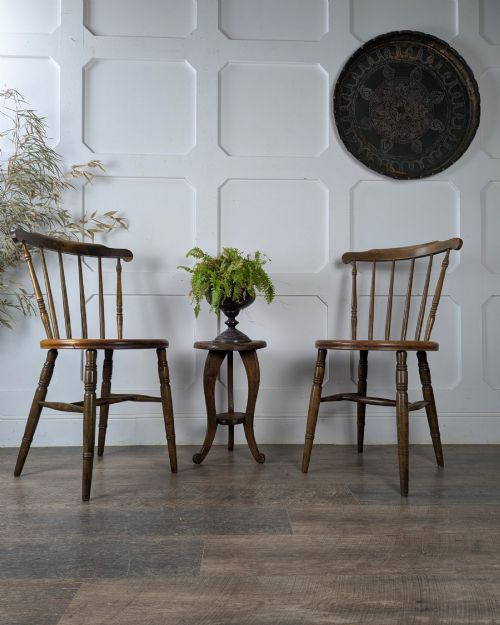
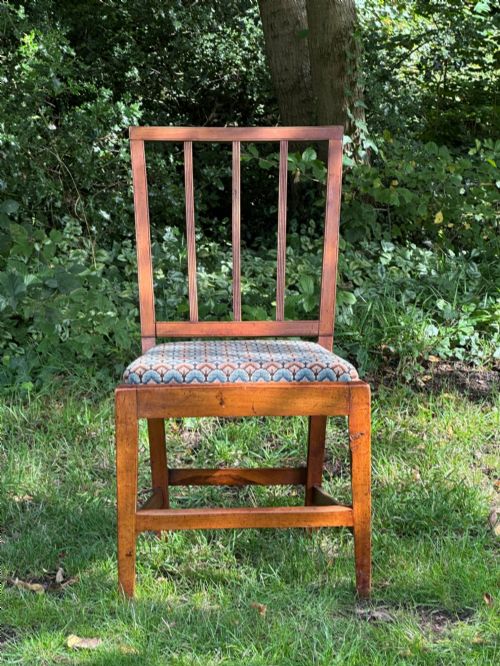
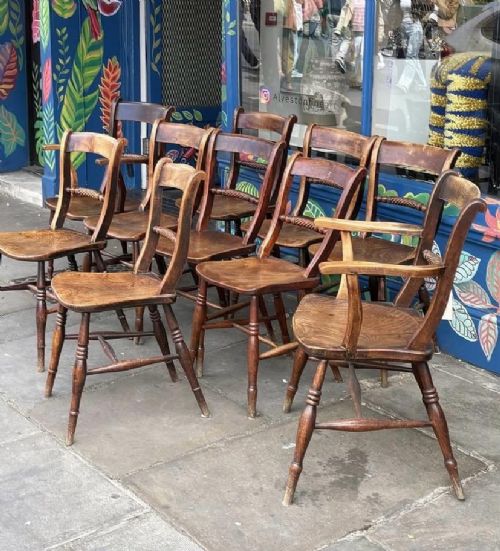
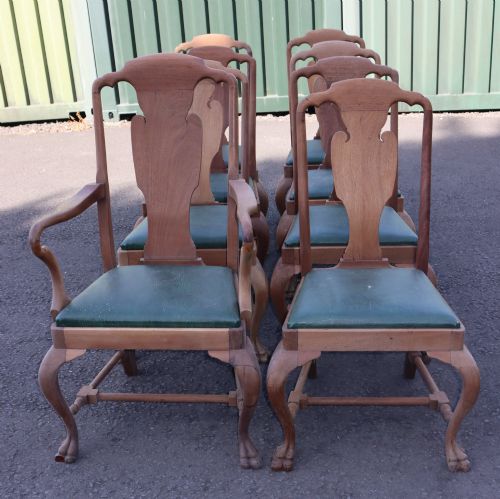
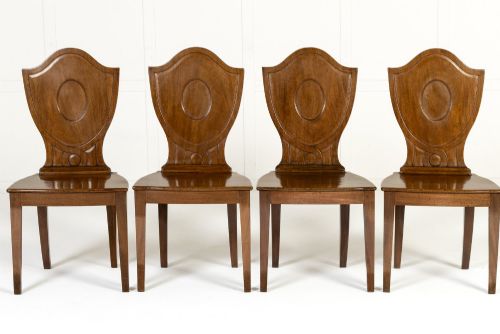
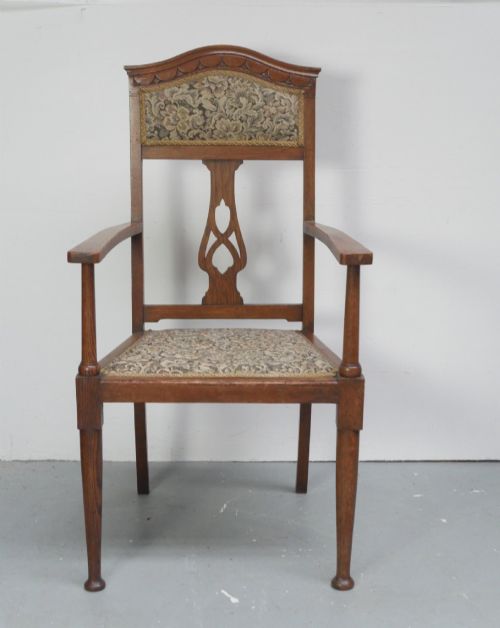
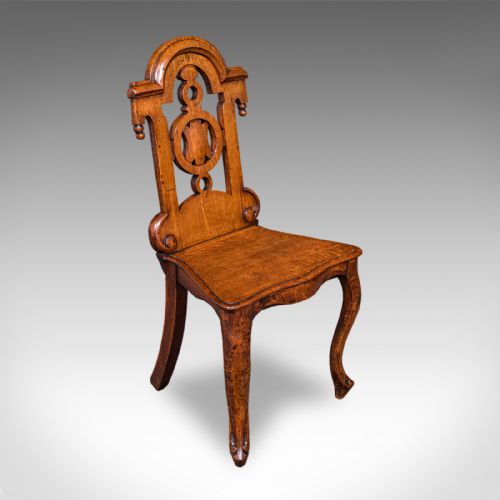

Brown Timber Side Chairs
Brown timber side chairs bring solid character and practical seating to a room, spanning formal dining sets and sturdy kitchen seating.
Materials and Construction
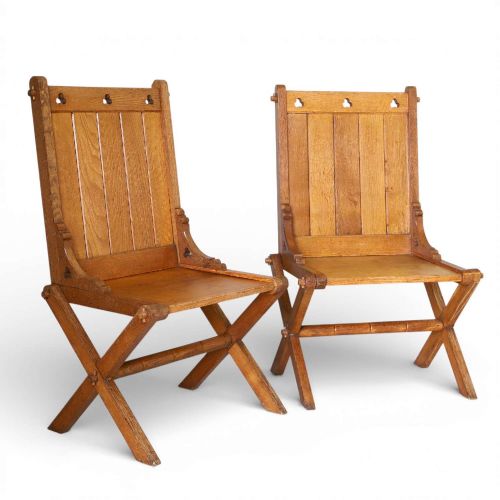
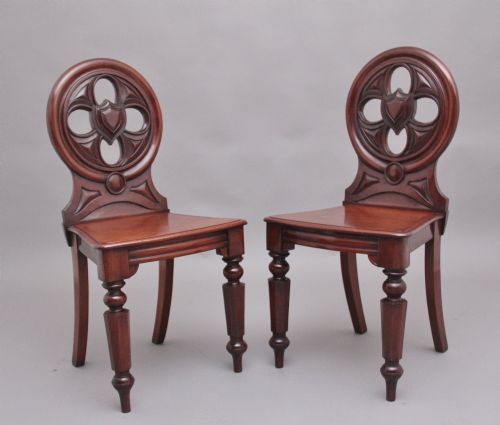
Carpenters and cabinetmakers utilised dense hardwoods such as mahogany, oak, walnut, fruitwood, and elm to build these chairs for longevity. Pieces frequently feature turned legs, carved backs, solid wood seats, and occasionally fabric upholstery.
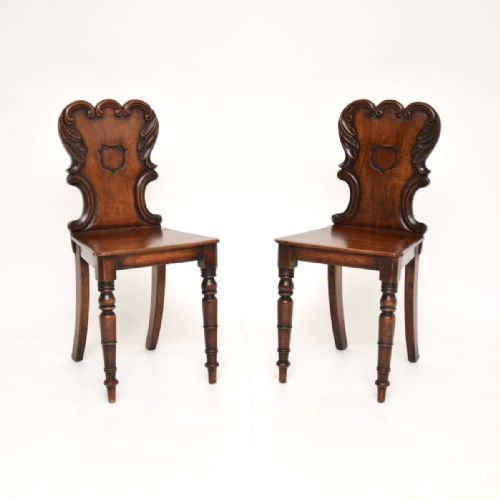
Joinery techniques ranged from traditional mortise and tenon frames in country workshop seating to steam-bent beech in later industrial production. Carved details, armorial shields, and pierced splats display the hand-tool methods of past centuries.
Distinctions in Quality
The distinction between ordinary utility seating and high-end pieces rests in the choice of timber figure, the crispness of hand-carving, and the integrity of the frame construction. Highly figured mahogany or finely grained walnut elevate a piece far above basic pine or elm kitchen seating.
Design ambition separates basic chairs from those attributed to notable makers or specific stylistic movements like Gothic Revival or the Aesthetic Design period. Proportion, harmonious proportion, and balanced weight distribution mark the finer examples in this category.
Listings feature woods including mahogany, oak, walnut, elm, fruitwood, and birch across Georgian, Regency, and Victorian periods.
Gillows·Thonet·J and J Kohn
The Brown Timber Side Chairs Glossary
- Hall chair
- A rigid wooden seat placed in an entrance hall, often featuring a carved or painted family crest on the back.
- Shield back
- A chair back shaped like a heraldic shield, popular during the Georgian and Regency periods.
- Windsor chair
- A wooden chair constructed with a solid elm or hardwood saddle seat into which turned legs and spindles are wedged.
- Splath
- The upright central slat of a chair back connecting the seat to the top rail.
- Padouk
- A heavy, durable tropical timber with a reddish-brown hue utilised in foreign trade pieces.
Brown Timber Side Chairs: Frequently Asked Questions
Where should I place a hall chair?
Hall chairs suit narrow corridors, entryways, or bedrooms where you need an occasional seat that occupies minimal floor space.
Their rigid wooden construction and lack of arms mean they slide flat against walls without crowding a room.
How do I identify a Regency chair?
Regency chairs typically exhibit classical influences inspired by ancient Rome, Greece, and Egypt, rendered in dark timbers like mahogany.
Look for sabre legs, brass inlay, reeded details, and carved crests on the back panels.
Are these chairs suitable for daily dining?
Many side chairs and dining chairs listed from the Georgian and Victorian eras are built from dense hardwoods designed for regular use.
Solid wood seats require little maintenance, while upholstered versions may need modern padding depending on personal comfort preferences.
What is the difference between an armchair and a side chair?
Side chairs lack armrests, allowing them to tuck neatly beneath tables or align closely in sets along a wall.
Armchairs feature structural arm supports that provide a more substantial presence for reception rooms or desks.