

Six Wooden Dining Chairs
Six wooden dining chairs bring domestic history to the table, offering matched seating built from enduring timbers like mahogany, oak, elm, and beech.
Six Wooden Dining Chairs
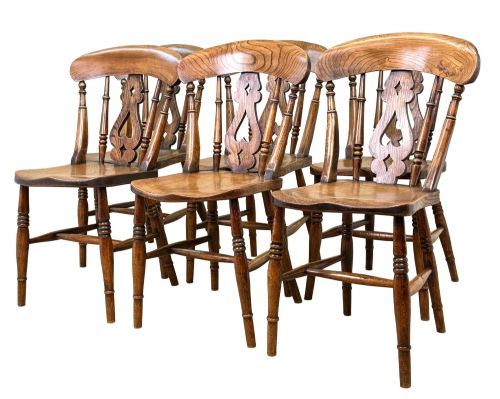
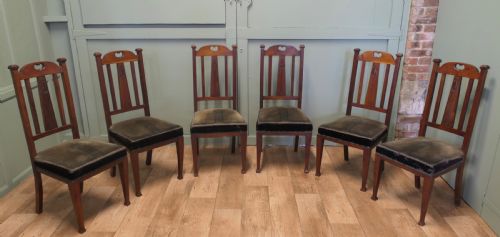
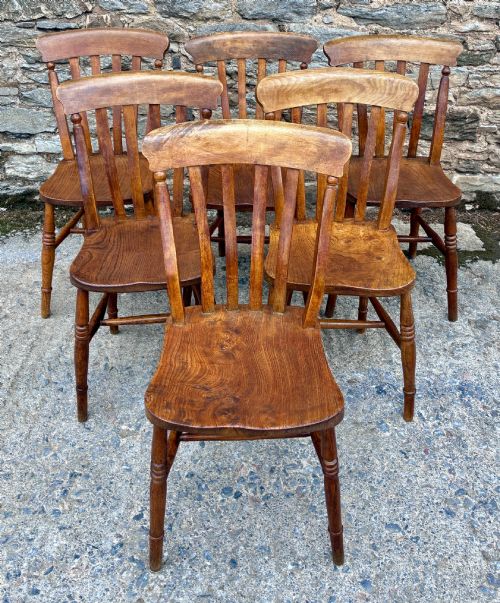
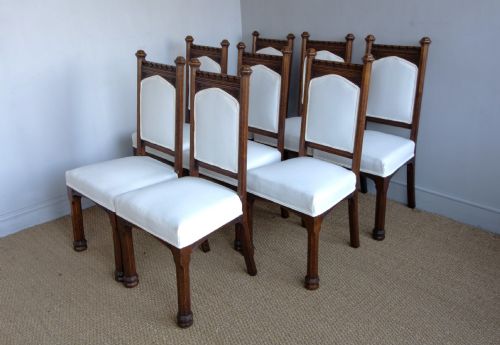
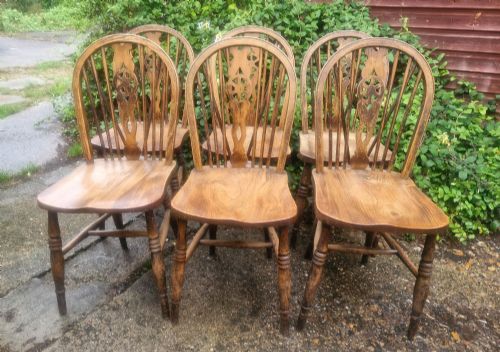
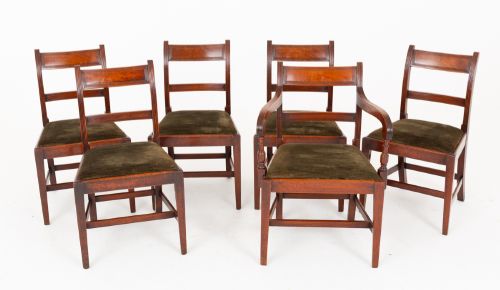
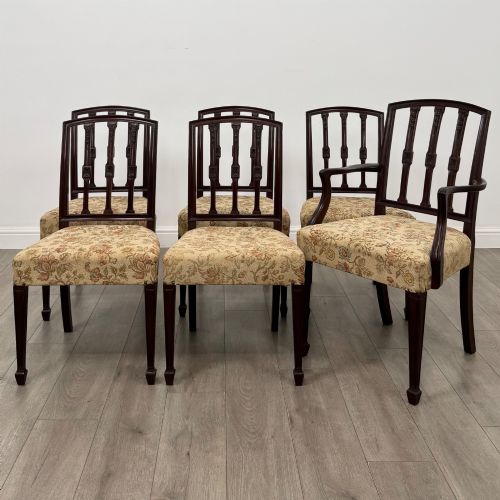
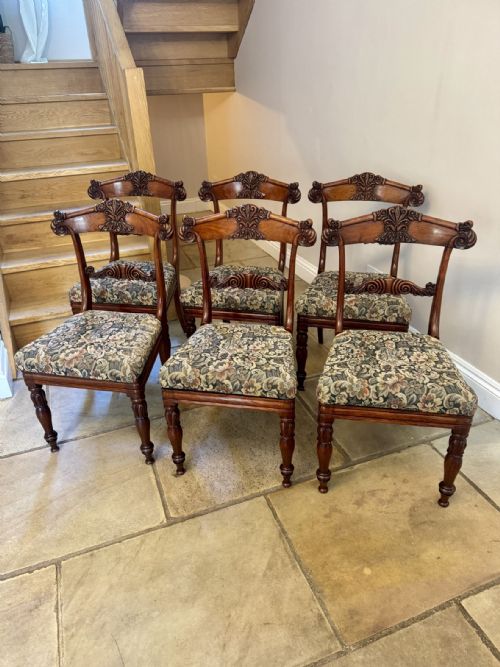
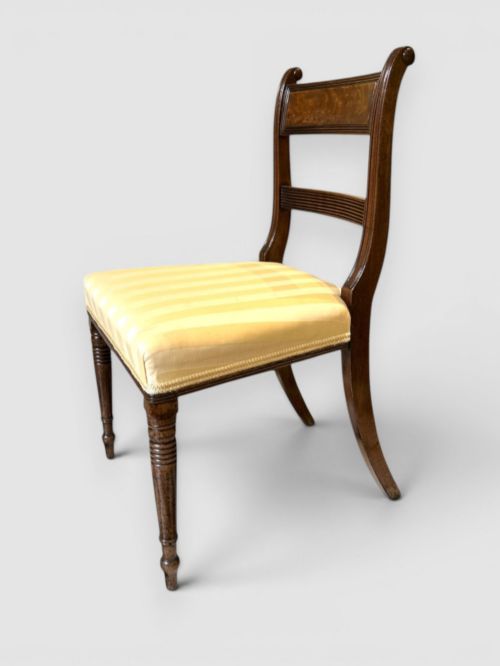
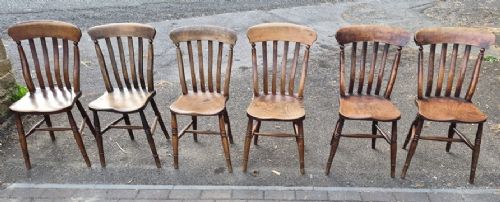
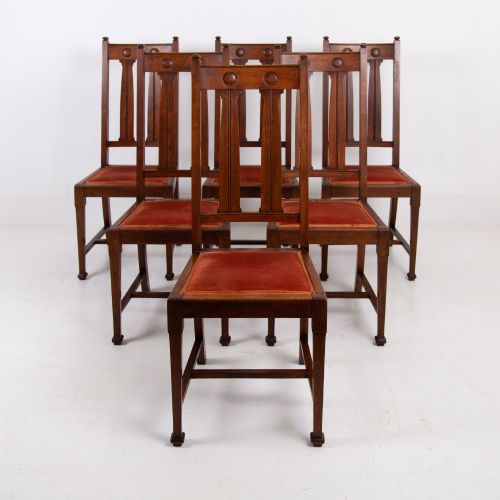
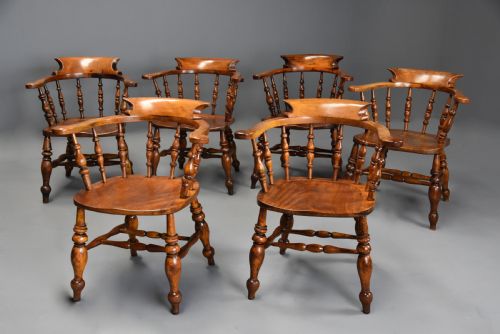
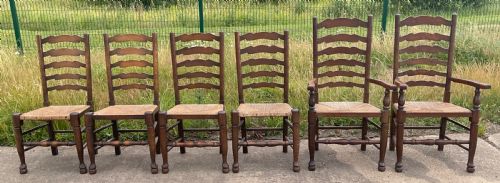
Six wooden dining chairs comprise matching or harmonised sets designed to seat a household around a dining table. When searching for six wooden dining chairs, buyers encounter everything from formal Regency rosewood and Georgian mahogany to rustic Victorian and Edwardian country kitchen Windsors, ladderbacks, and lathe backs.
The selections span multiple centuries, including the Georgian, Victorian, and Edwardian eras, alongside later pieces from the 1910s and 1930s. Formal dining rooms lean towards mahogany and walnut bar backs and bar-back designs, whereas farmhouse and country settings favour elm, ash, beech, and pine constructs.
Many listings present harlequin sets, where individual chairs share a period style or construction method rather than originating from a single workshop. True matched sets from the nineteenth century sit alongside assembled groups that achieve a cohesive aesthetic around the table.
How they were made
Cabinet makers and country joiners utilised solid hardwoods like mahogany, oak, walnut, and rosewood for formal dining seats, employing tight joinery and turned legs. Country and farmhouse examples relied on regional timbers such as elm, ash, beech, and yew, often combining bentwood hoops and stick backs.
Turned components, ladder backs, and crinoline stretchers provided structural integrity for windsor and ladderback chairs intended for daily domestic use. Upholstery materials included fabric, velvet, and various textiles fixed over padded seats where appropriate for the period.
Some Windsor chairs carry the subtle wear marks of nineteenth-century elbows leaning over breakfast porridge.
What varies in quality
Quality rests in the selection of timber and the precision of the joinery, distinguishing sturdy cabinet work from basic utility seating. Finer examples display thoughtful grain matching, well-turned spindles, and robust structural frames that survive centuries of daily use.
The integrity of the construction, whether through steam-bent hoops, dovetailed joints, or solid wood seats, determines how well a set maintains its stability. Original surfaces and honest timber patination separate superior examples from overly restored or mismatched substitutes.
The Six Wooden Dining Chairs Glossary
- Windsor chair
- A wooden chair built with a solid sculpted seat into which the legs and back sticks are wedged directly. These country classics frequently feature elm seats with ash or beech framing.
- Ladderback
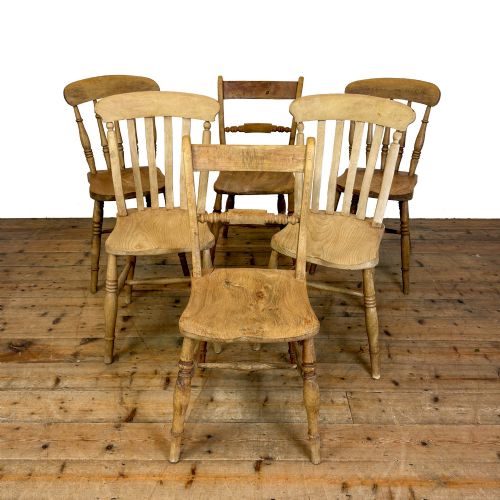
- A chair style featuring horizontal slats or bars between the upright rear posts. This traditional form appears widely in oak, beech, and ash across various rustic and country periods.
- Bar back
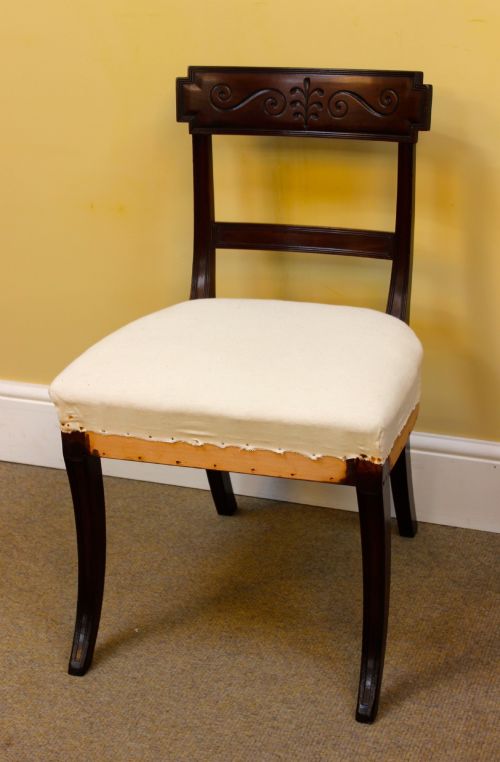
- A dining chair design featuring a horizontal wooden top rail or slat across the backrest, often shaped to support the spine. This form is common in nineteenth-century mahogany seating.
- Harlequin set
- A collection of chairs that match in style, period, or general appearance without originating from the exact same original workshop set. These assembled groups offer a traditional way to seat six people.
- Crinoline stretcher
- A curved under-framing brace found on certain Windsor armchairs to add rigidity between the legs. It takes its name from the wide hoop skirts fashionable in the nineteenth century.
Six Wooden Dining Chairs: Frequently Asked Questions
What is a harlequin set of chairs?
A harlequin set is a group of dining chairs that match in style, timber, and period rather than being produced as a single original workshop batch. They share common aesthetic traits that allow them to sit together harmoniously around a dining table.
This approach lets buyers secure six seats of a specific era when finding a completely untouched original set proves difficult. Each chair maintains its individual character while contributing to a unified room setting.
How do I tell a Windsor chair apart?
Windsor chairs are defined by a heavy solid wooden seat, usually elm, into which the legs and back spindles are bored and wedged. They lack a traditional enclosed wooden frame, relying instead on stick construction and often steam-bent hoops.
Country iterations include lathe backs, smokers bows, and captain's chairs. Their robust construction was engineered for practical domestic utility in kitchens and farmhouses.
Are these chairs suitable for daily use?
Most antique wooden dining chairs were built from dense hardwoods like oak, mahogany, elm, and beech specifically to endure generations of heavy domestic use. Their solid joinery and durable timbers make them practical for everyday dining when structurally sound.
Routine care involves checking leg joints and stretchers for stability. Historic timbers require simple maintenance to protect the wood surface from excessive moisture and heat.
What timber was used for country chairs?
Country chairs typically utilised accessible regional timbers suited to steam bending and heavy turning. Elm provided a split-resistant seat, while ash, beech, and yew offered flexible strength for spindles, hoops, and arms.
Formal dining rooms relied on imported or more expensive woods such as mahogany, walnut, and rosewood. Country workshops made practical use of native trees available locally.