
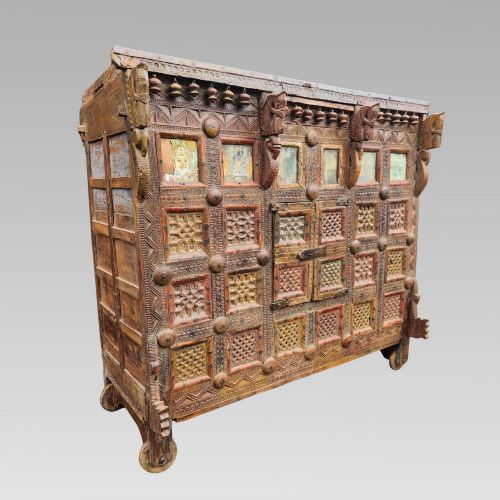


Brown Teak Coffer
These brown teak coffer examples range from campaign trunks to marriage chests, built for travel and storage.
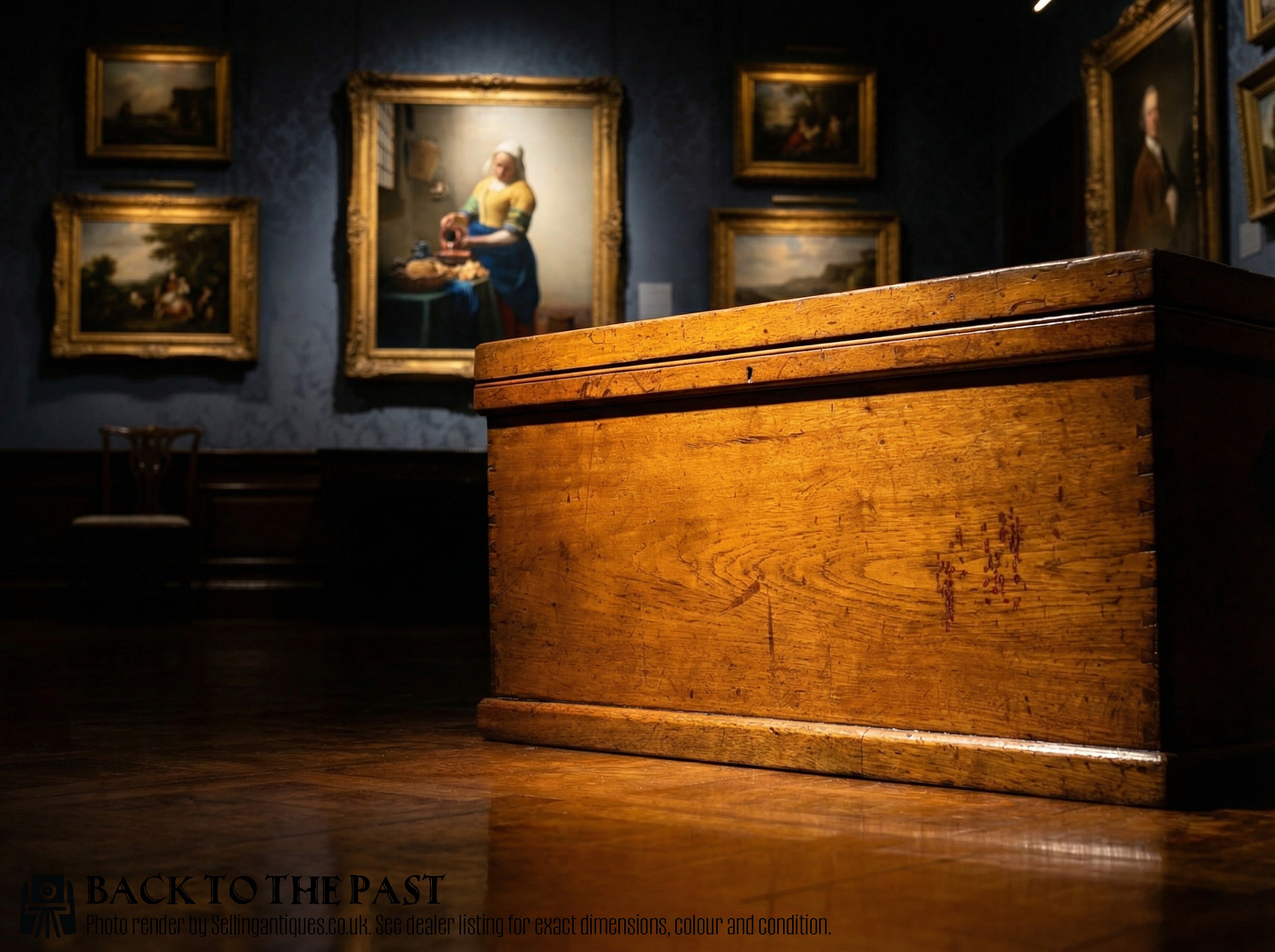
Brown Teak Coffer
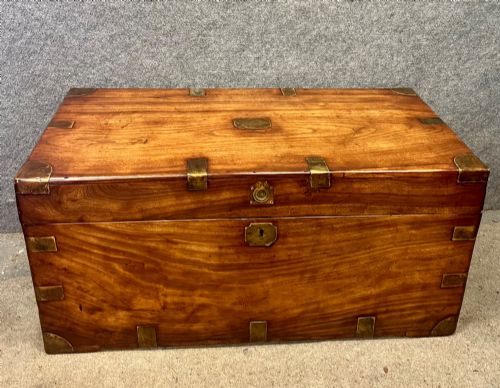
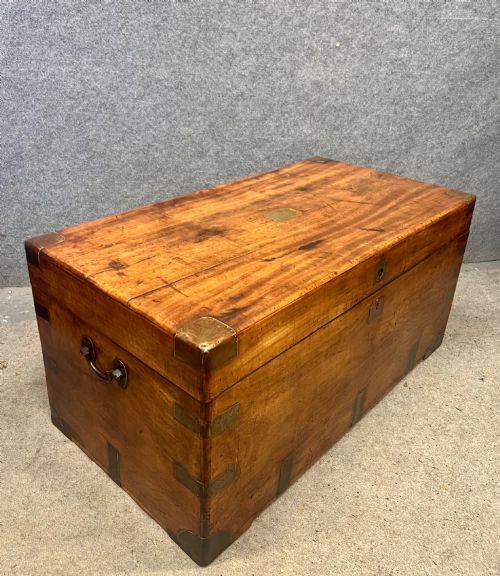
The brown teak coffer encompasses robust storage chests and trunks originating from nineteenth century colonial and military contexts. Buyers exploring this phrase encounter sturdy timber receptacles designed for transit, domestic storage, or dowries across distant regions.
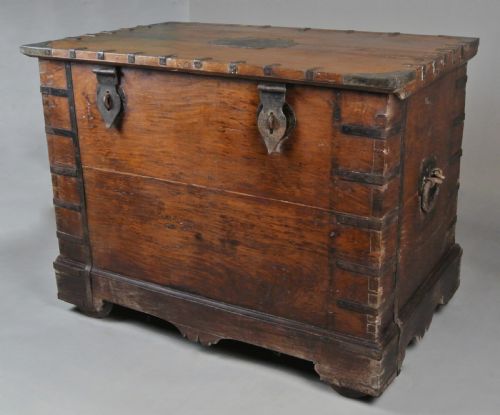
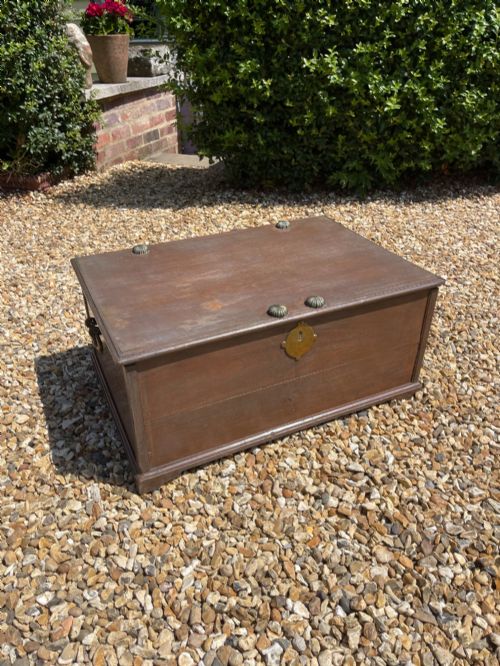
Pieces on this page span the nineteenth century, Victorian era, and early twentieth century. Common forms include brass bound military campaign trunks, heavy dowry chests, and smaller Zanzibar or Anglo-Indian storage boxes.
Assessing quality
Quality differences stem from the fineness of the brass or iron mountings and the complexity of the internal arrangements. Elaborate hand-carved details, intricate strapwork, and original campaign carrying handles elevate certain examples.
The density and figuring of the teak timber, alongside the preservation of original patination, determine the distinction between standard utilitarian storage boxes and high-status diplomatic or merchant chests.
Some marriage chests arrived fitted with wheels so they could roll swiftly out of harm's way during monsoons.
The Brown Teak Coffer Glossary
- Campaign trunk
- A sectional or portable chest made for military officers on active service, featuring recessed brass handles and reinforced corners. These boxes dismantle or transport easily.
- Dowry chest
- A large storage container commissioned or given upon a marriage to hold household linens and valuables. They often display deep carvings and heavy iron banding.
- Zanzibar chest
- A distinct form of trade trunk characterised by heavy brass studding, strapwork, and internal secret drawers. Teak construction is standard for these maritime pieces.
- Gerobog
- A traditional large marriage chest fitted with wheels for floor mobility. They provide substantial interior volume for domestic textiles.
Brown Teak Coffer: Frequently Asked Questions
What is a brown teak coffer used for?
These chests serve as practical living room storage solutions for blankets, books, and household items. Their flat tops also allow them to function effectively as coffee tables.
Historically, they protected uniforms, documents, and trade goods during long sea voyages and overland journeys. Today, they bring rustic utility and historical character into modern interiors.
How do I date a teak chest?
Dating relies on examining the construction methods, metal hardware, and overall style indicators. Nineteenth-century examples often feature hand-cut dovetails and forged iron straps.
Later Victorian and early twentieth-century pieces may incorporate machine-made screws or standardised brass fixtures. Comparing the patination of the wood helps confirm the age.
Are these chests waterproof?
While teak is naturally oily and highly resistant to moisture and decay, these trunks are not hermetically sealed. They protect contents from dust and light rain during transit.
Modern indoor placement keeps them safe from extreme humidity fluctuations. Lining the interior provides extra protection for delicate textiles.
How do I care for teak furniture?
Maintaining teak involves dusting regularly with a dry cloth and occasionally feeding the wood with suitable wax or oil. Avoid placing the chest near direct heat sources to prevent splitting.
Polishing the brass or iron hardware gently preserves the metallic contrast against the dark timber. Natural wear forms part of the historical appeal.