


Brown Rosewood Tilt Top Table
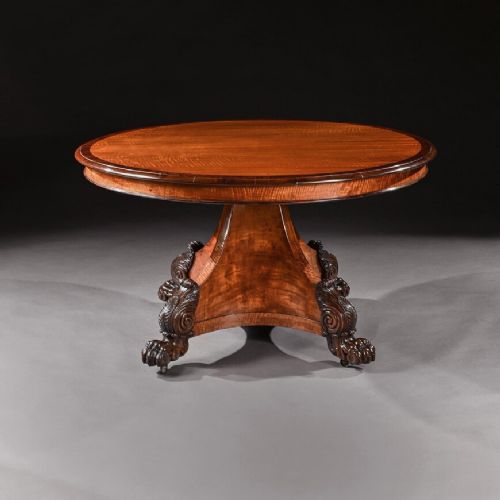
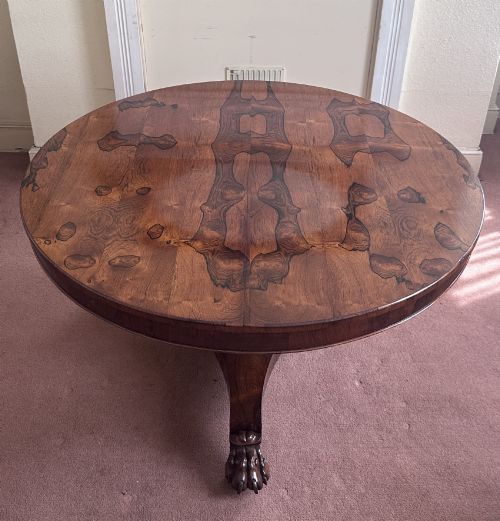
These brown rosewood tilt top table examples offer clever pivoting surfaces that save space when folded and display rich timber grain when upright.

Brown Rosewood Tilt Top Table
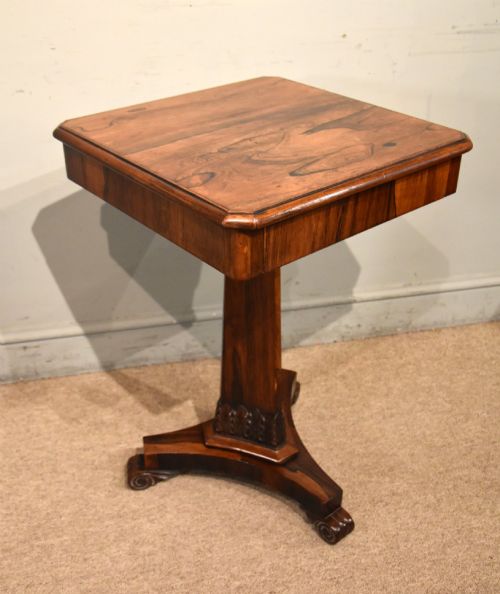
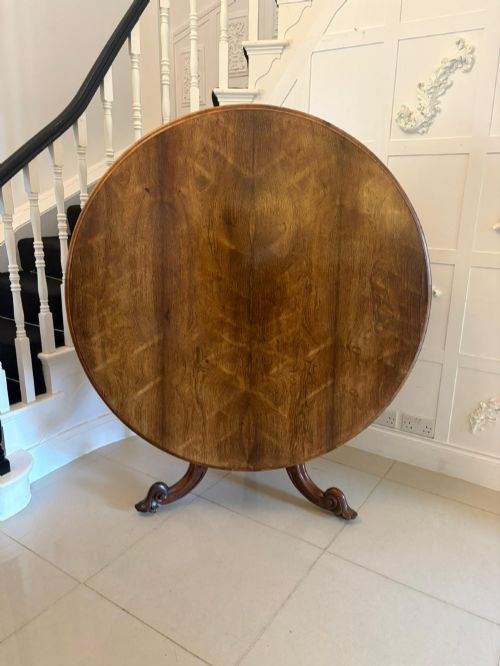
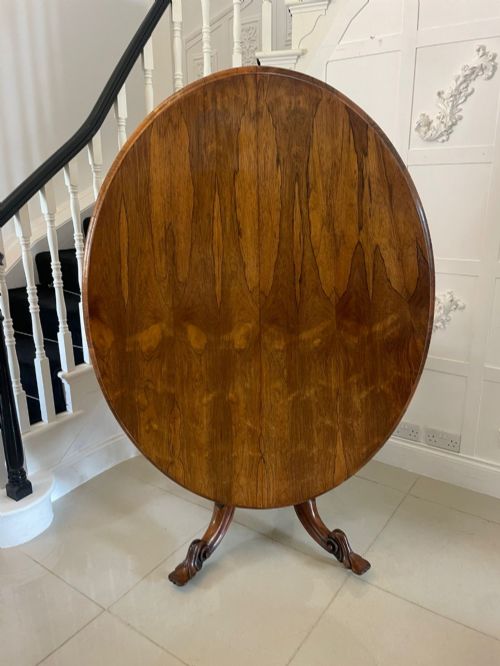
When you search for a brown rosewood tilt top table, you encounter circular, square, and breakfast formats designed for dining, supper, or occasional use in nineteenth-century interiors. The pieces span Georgian, Regency, William IV, and Victorian eras, taking the form of centre tables, loo tables, and pedestal tables.
Most specimens employ a pivoting mechanism that allows the top to snap or tilt vertically against the pillar when not in use. This clever space-saving function defines the practical character of these tables in period homes.
Materials and construction methods
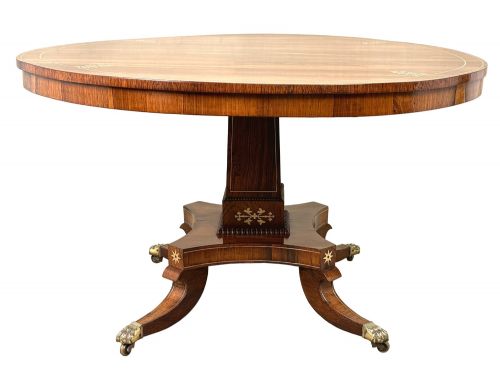
Cabinetmakers constructed these tables using solid and veneered rosewood, frequently incorporating contrasting timbers such as mahogany, satinwood, and goncalo alves. Brass inlay and mother-of-pearl embellishments appear across the surfaces, adding decorative contrast to the dark timber.
The tops rest upon central pillars supported by tripartite or quadrupartite bases, often featuring carved pedestals or brass castors for mobility. Joinery combines sturdy framing with finely figured veneers selected for deep colour and grain movement.
These clever tables tilt upright against the wall like polite guests making room for dancing after dinner.
Markers of construction and material quality
Quality rests upon the selection of timber veneers and the crispness of carved details on the pedestals. Tables featuring secondary woods like satinwood or goncalo alves, alongside precision brass inlay, demonstrate higher craftsmanship.
The mechanical action of the tilt-top mechanism dictates functional success, where tight joints and stable locking catches distinguish superior examples from ordinary production.
Peters of Genoa·James Winter of Wardour Street·George Smith
The Brown Rosewood Tilt Top Table Glossary
- Tilt top table
- A table with a hinged top that pivots to a vertical position for storage against a wall.
- Loo table
- A large round table intended for nineteenth-century card games such as loo, often functioning as a dining or centre table.
- Goncalo alves
- A dense exotic hardwood with striking contrasting grain, utilised alongside rosewood in select nineteenth-century furniture.
- Brass inlay
- The technique of embedding thin strips of brass into wood surfaces to form geometric or floral patterns.
- Snap top
- A spring-loaded mechanism that locks a tilting table top securely into the horizontal position.
Brown Rosewood Tilt Top Table: Frequently Asked Questions
How do I operate the tilt top mechanism?
Release the under-table catch or release pin to allow the top to pivot smoothly on its central axis. Ensure you support the weight of the timber top with both hands during the movement.
Once upright, the top rests securely against the pedestal, reducing the floor space the table occupies in a room.
Where were these tables placed originally?
These tables stood in the centre of principal reception rooms, drawing rooms, and libraries as focal points for conversation or dining. Their pivoting design allowed servants to clear floor space quickly after evening meals or card games.
When tilted, they occupied the perimeter of the room, functioning visually as decorative screens displaying figured wood grain.
How do I distinguish Regency from Victorian examples?
Regency and George IV tables typically display restrained classical proportions, architectural brass inlay, and crisp mouldings. William IV and Victorian pieces often introduce heavier pedestals, bolder carved scrollwork, and larger proportions.
Examining the secondary timbers and the style of the pedestal base helps clarify the exact period of manufacture.
Can these tables be used for daily dining?
Their sturdy pedestal construction and generous diameters make them suitable for regular use as dining or breakfast tables. The heavy rosewood tops provide a stable surface for everyday domestic activities.
Care should be taken to protect the polished wood finish from moisture and heat using appropriate mats.