
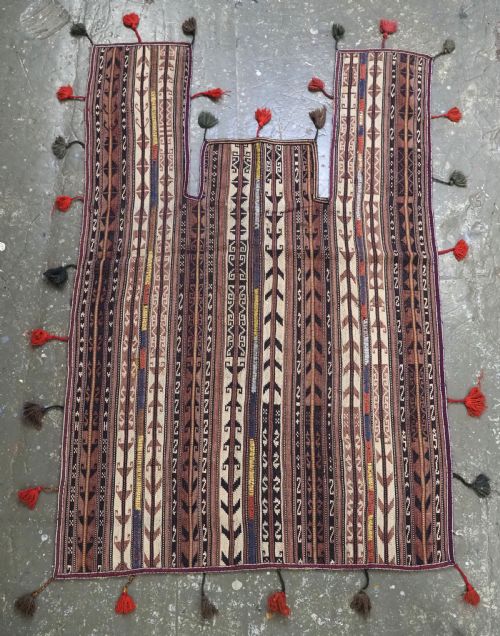
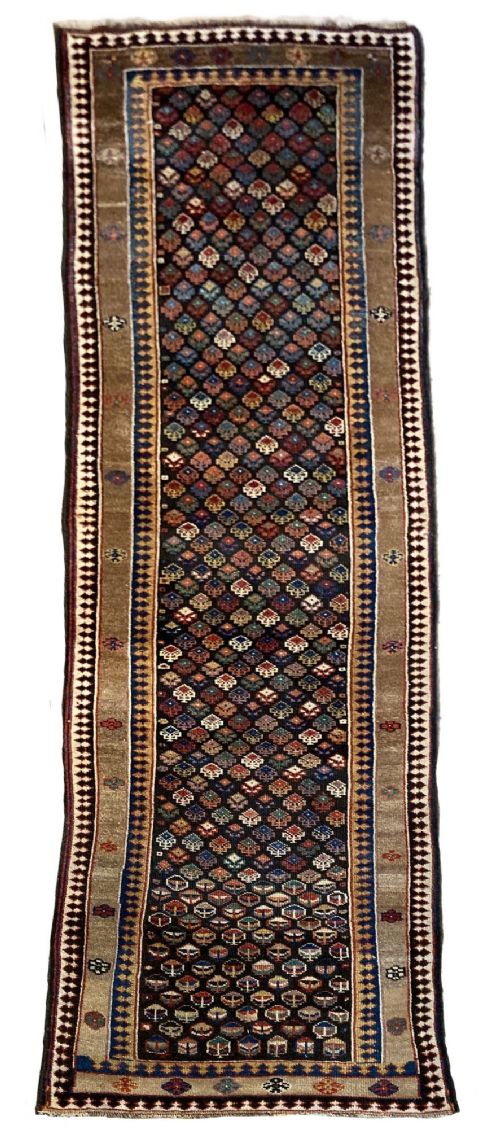


Brown Patterned Rug
A brown patterned rug brings earthy depth and tribal texture to a floor, offering rich wool and time-honoured motifs.
Brown Patterned Rug
When you search for a brown patterned rug, you encounter woven textiles originating from tribal and nomadic traditions across Central Asia, Persia, Turkey, and the Caucasus. These pieces span runner rugs, area rugs, kilims, and main carpets created from the late nineteenth century through to the mid-twentieth century.
You are most likely to meet tribal works featuring geometric guls, repeating lattice designs, and traditional motifs such as the boteh or shrub pattern. The palette relies heavily on natural dyes producing deep earthen tones alongside contrasting highlights of ivory, red, and blue.
Materials and construction methods
The pieces listed on this page utilise hand-spun wool and natural dyes as their primary components, supplemented occasionally by mercerised cotton, art silk, and angora wool. Weavers worked on upright or horizontal looms, employing hand-knotting techniques for piled carpets and flat-weaving methods for kilims and soumaks.
Nomadic and village workshops relied on local resources, preparing wool fleeces and applying botanical or mineral colourants. This combination of hand-spun materials and traditional dyeing creates the varied textures and organic irregularities characteristic of these antique textiles.
The inventory encompasses diverse regional forms, including Baluch pushtis, Afghan kilims, Turkmen main carpets, and Turkish runner rugs.
Assessing quality in antique tribal weavings
Quality rests upon the fineness of the weave, the clarity of the design motifs, and the depth achieved by natural colourants. Tighter knotting and precise geometric execution distinguish finer main carpets and runner rugs from coarser utilitarian pieces.
The integrity of the foundation materials and the preservation of the original borders and selvedges also dictate the standing of a textile. Expert handling of hand-spun wool and stable dye retention ensure durability and visual harmony across the surface.
The Brown Patterned Rug Glossary
- Gul
- A primary medallion motif frequently found in Central Asian and Turkmen tribal rugs. These octagonal or repeating designs define the structural layout of many nomadic carpets.
- Kilim
- A flat-woven carpet or rug produced without a pile. These textiles rely on interlocked or slit-tapestry weave techniques to form crisp geometric patterns.
- Boteh
- A stylised floral or almond-shaped motif representing a sprouting bush or cypress tree. This ancient symbol appears frequently in Persian and Caucasian runners.
- Soumak
- A flat-weaving technique involving wrap-faced weft-sewing that creates a textured, ribbed surface on the reverse. It adds structural stability and distinct pattern definition.
- Pushti
- A small nomadic mat or rug intended for fractional use or as a decorative furnishing. These compact pieces typically display dense central medallion or lattice arrangements.
Brown Patterned Rug: Frequently Asked Questions
How do I clean an antique rug?
Gentle surface vacuuming without a rotating brush helps remove embedded dust from the wool pile. Professional specialist cleaning remains essential for addressing deeper soiling without damaging natural dyes.
Water saturation and harsh chemical detergents must be avoided entirely. Allowing air circulation beneath the textile prevents moisture retention.
Where were these rugs made?
The pieces originate from nomadic and village workshops across Central Asia, Persia, Afghanistan, Turkey, and the Caucasus. Tribal groups such as the Yomut, Ersari, Baluch, and Qashqa'i produced these textiles for domestic use and local trade.
Each region developed distinct regional palettes and geometric repertoires. These local traditions allow specialists to trace the geographic roots of individual carpets.
Are flat-woven kilims durable?
Flat-woven kilims lack a raised pile, relying instead on tightly interlocked horizontal and vertical threads. This construction yields a lightweight textile suited to areas with moderate foot traffic.
Using a suitable underlay helps prevent slipping and cushions the weave against hard flooring. Regular rotation ensures even wear across the surface over time.
What is a runner rug used for?
Runner rugs provide narrow, elongated flooring coverage well-suited to hallways, corridors, and narrow passageways. They soften hard walkways while introducing distinct tribal patterns and rich earthen hues.
Positioning runners away from direct, harsh sunlight preserves the natural dye colours. Proper placement also enhances warmth and acoustic dampening in transitional spaces.
How can I tell the age of a rug?
Dating relies on examining structural characteristics, wool preparation methods, and dye chemistry. Hand-spun wool and organic colour palettes typically point towards nineteenth and early twentieth-century production.
Design motifs and regional weaving signatures offer further clues for chronological placement. Comparing structural knots and border wear helps narrow down the decade of creation.