
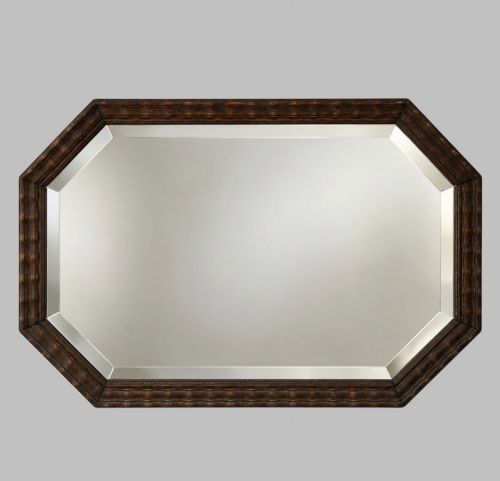
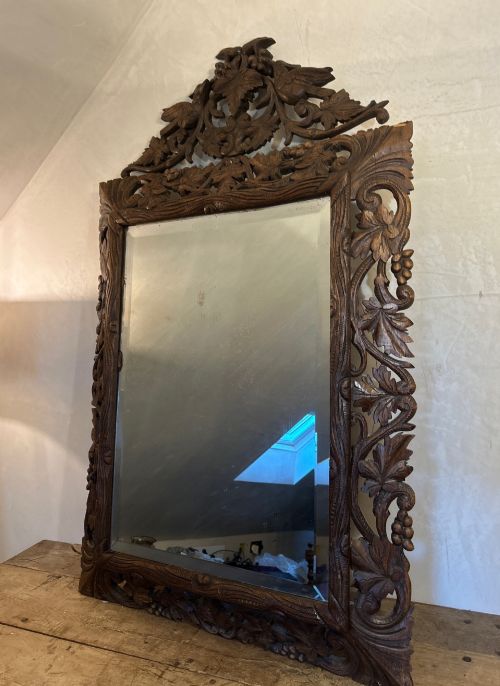
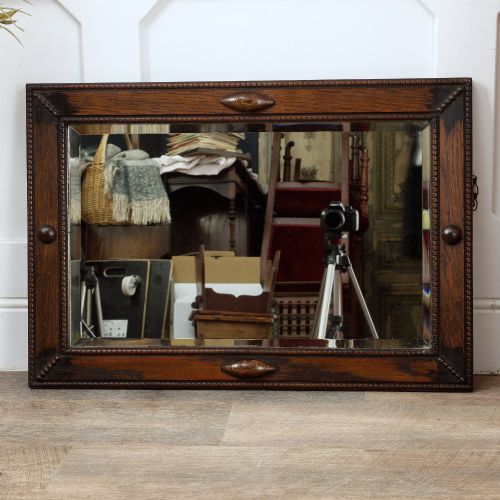
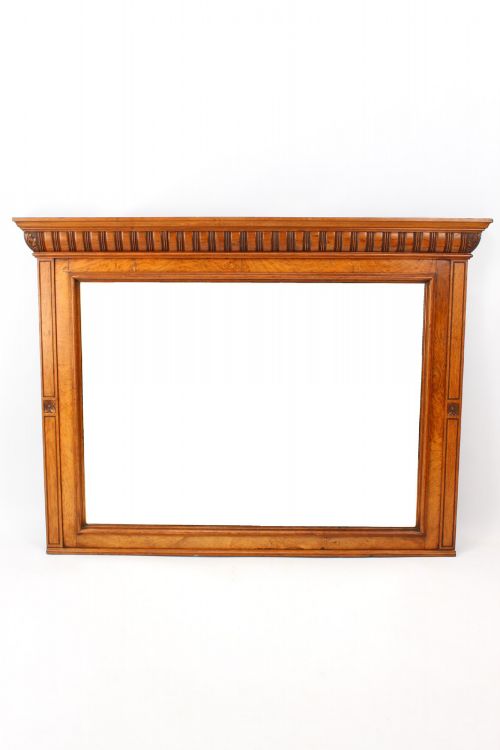


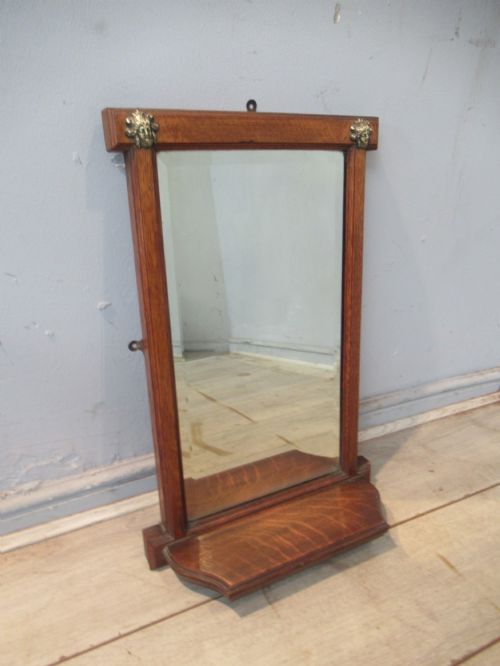
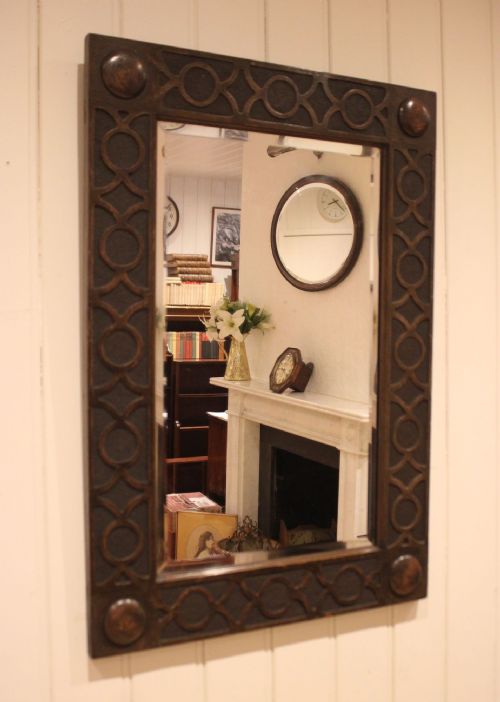


Brown Oak Wall Mirror
A brown oak wall mirror brings rich, figured timber into a room, offering both practical reflection and deep historical character.
Identifying the brown oak wall mirror
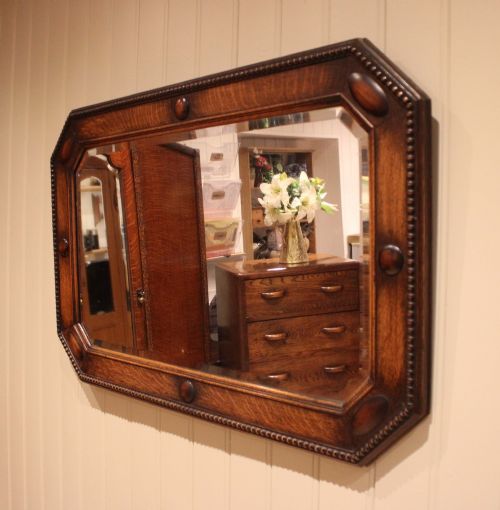
A brown oak wall mirror combines deep timber tones with functional glass, creating a strong focal point in a hallway or living space. When you search for a brown oak wall mirror, you encounter pieces that range from simple domestic framing to elaborate decorative carving. These items serve both everyday utility and decorative display.
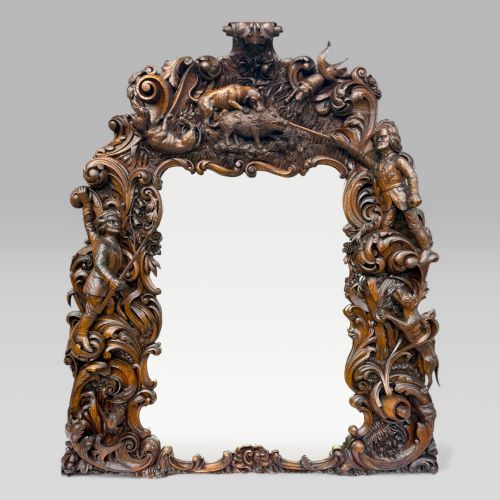
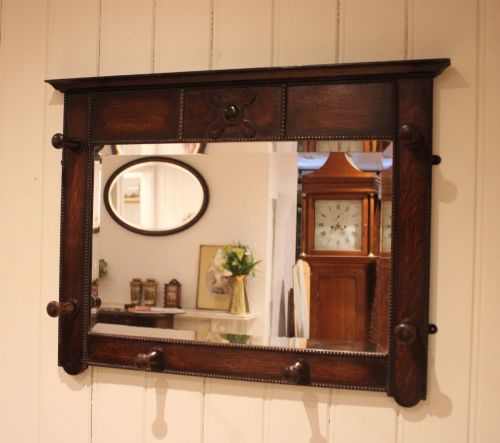
The selections available here span several distinct periods, including the eighteenth century, the Victorian era, the Edwardian period, and eighteen ninety. Forms vary from simple rectangular frames to a Victorian oak horseshoe hall mirror and French carved oak pieces. Each object reflects the prevailing design tastes of its specific era.
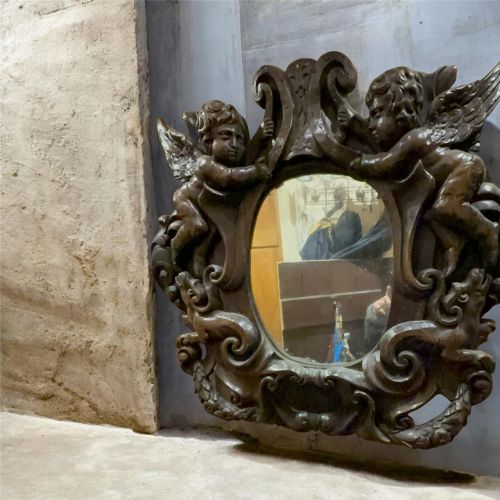
Origin and style influence the overall appearance, encompassing French provincial designs alongside late Victorian interpretations and baroque influences. The wood itself displays natural variations in tone and grain, giving every single frame a distinct visual identity. Buyers find that these mirrors integrate easily into both traditional and contemporary interiors.
Materials and construction
Construction relies heavily on solid oak, frequently enhanced by carved oak ornamentation that highlights the natural grain of the timber. Craftsmen shaped and joined the wood using traditional woodworking techniques suited to each respective period. The choice of oak ensures a robust structure designed to endure decades of hanging.
Mirrors incorporate glass plates set securely within the wooden frames, often supported by secondary materials such as brass and metal for fixings and structural reinforcement. Carved elements demonstrate the skill of period artisans who worked the dense timber by hand. These combined materials result in heavy, stable wall hangings.
Retail Price Guide 2026
Typical UK retail prices for brown oak wall mirror, calculated from the Sellingantiques database of over a million retail prices indexed since 2003. This retail price guide relies exclusively on Sellingantiques data; no external sources or auction records are used, so the figures do not describe the wider market.
Listings feature items spanning the eighteenth century through to the Edwardian period, utilising oak, glass, brass, and metal.
Assessing craftsmanship and design
Quality in these pieces is dictated by the depth and precision of the carved oak work and the overall integrity of the timber framing. Finer examples display crisp detail in styles such as baroque or French provincial, whereas simpler pieces rely on plain, unadorned grain. The choice of hardware, including brass components, further distinguishes standard domestic items from more ambitious commissions.
The condition and clarity of the glass plate relative to the age of the frame contribute significantly to the overall desirability of the piece. Superior construction ensures that joints remain tight and the heavy oak securely supports the mirror plate without sagging. Proportion and balance within the frame design separate utilitarian items from exceptional decorative examples.
The Brown Oak Wall Mirror Glossary
- Brown oak
- Timber derived from English oak trees that have contracted a fungus, turning the heartwood a rich, deep brown colour. This natural process enhances the decorative appeal of the grain.
- Horseshoe hall mirror
- A wall-mounted looking glass incorporating a horseshoe motif within the wooden frame, popular during the Victorian period for entrance spaces. Such items often included hooks for hanging coats or hats.
- Baroque
- An ornate design style characterised by dramatic curves, scrollwork, and rich ornamentation. In these mirrors, it manifests through deeply sculpted wooden surrounds.
- French provincial
- A rustic yet refined style originating from French regional workshops, translated here into carved oak framing with characteristic provincial charm.
- Bevelled glass
- A mirror plate with edges cut and polished at an angle, creating a thinner border that catches the light. This technique adds depth to the overall appearance of the glass.
Frequently Asked Questions
Where should I hang a brown oak wall mirror?
These mirrors suit entrance halls, living rooms, and dining spaces where the rich timber tones can complement existing wooden furniture. Positioning them opposite a window helps to maximise natural light within smaller or darker rooms.
Ensure the wall structure is sufficiently robust to support the weight of solid oak and glass. Hallways benefit particularly from designs that incorporate functional elements like horseshoe motifs or hanging hooks.
How do I date an oak wall mirror?
Dating relies on identifying stylistic markers, such as the exuberant carving of an eighteenth-century piece versus the clean lines of an Edwardian frame. Examining the construction techniques at the back of the frame provides further clues to its period of origin.
Materials used for fixings, including brass and metal components, also align with specific manufacturing eras. Comparing the overall design against known styles like late Victorian or French provincial helps narrow down the decade.
How do I care for the oak frame?
Maintenance involves dusting the carved oak regularly with a soft, dry cloth to prevent the buildup of dirt in the recesses. Avoiding direct sunlight and excessive moisture protects the timber from fading or warping.
Occasionally applying a suitable beeswax polish helps nourish the brown oak and preserves its natural lustre. Glass cleaner applied to a cloth, rather than sprayed directly onto the glass, prevents moisture from seeping into the wooden frame.