
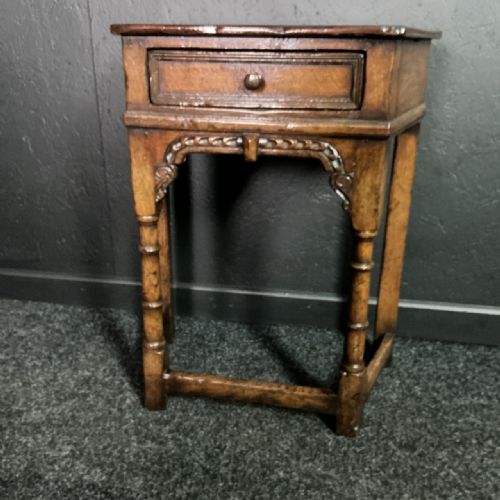
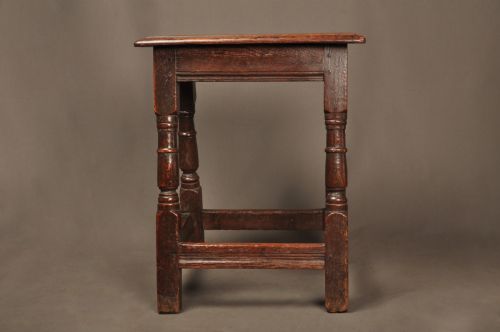
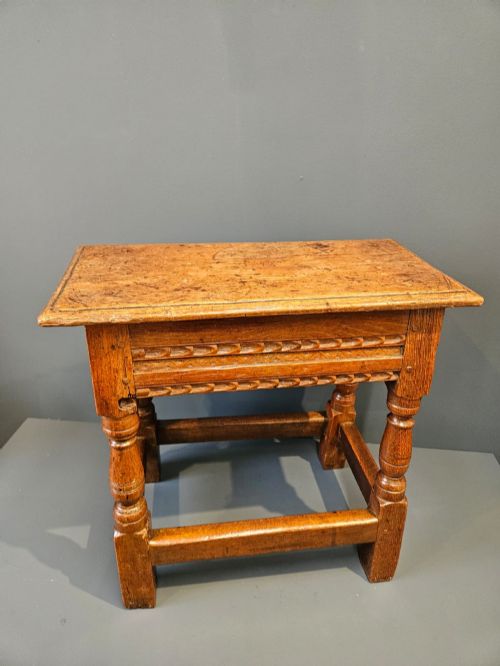
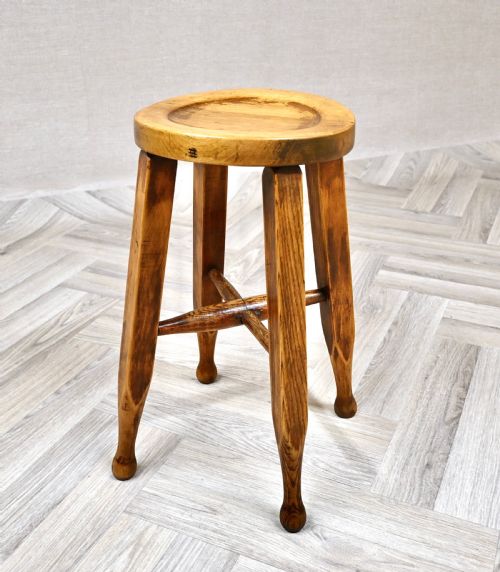
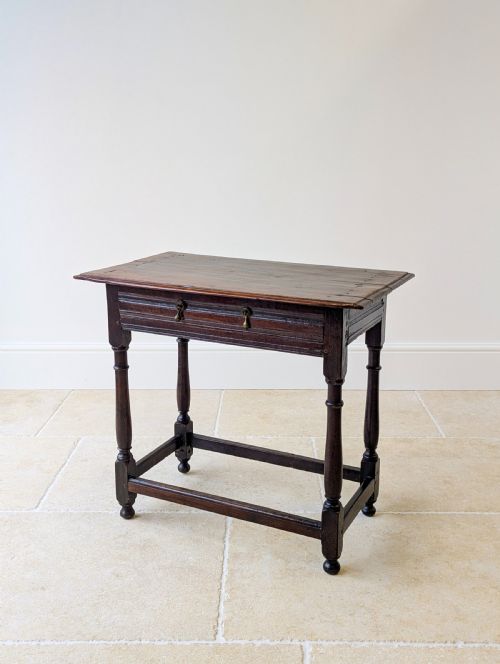


Brown Oak Side Stool
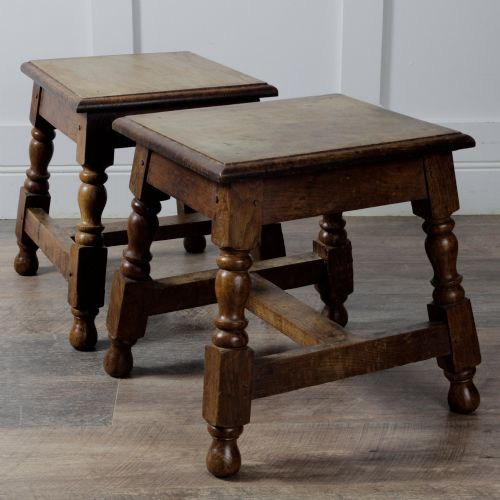
Brown oak side stool examples offer solid timber construction and honest vernacular design, bringing robust character to domestic spaces.
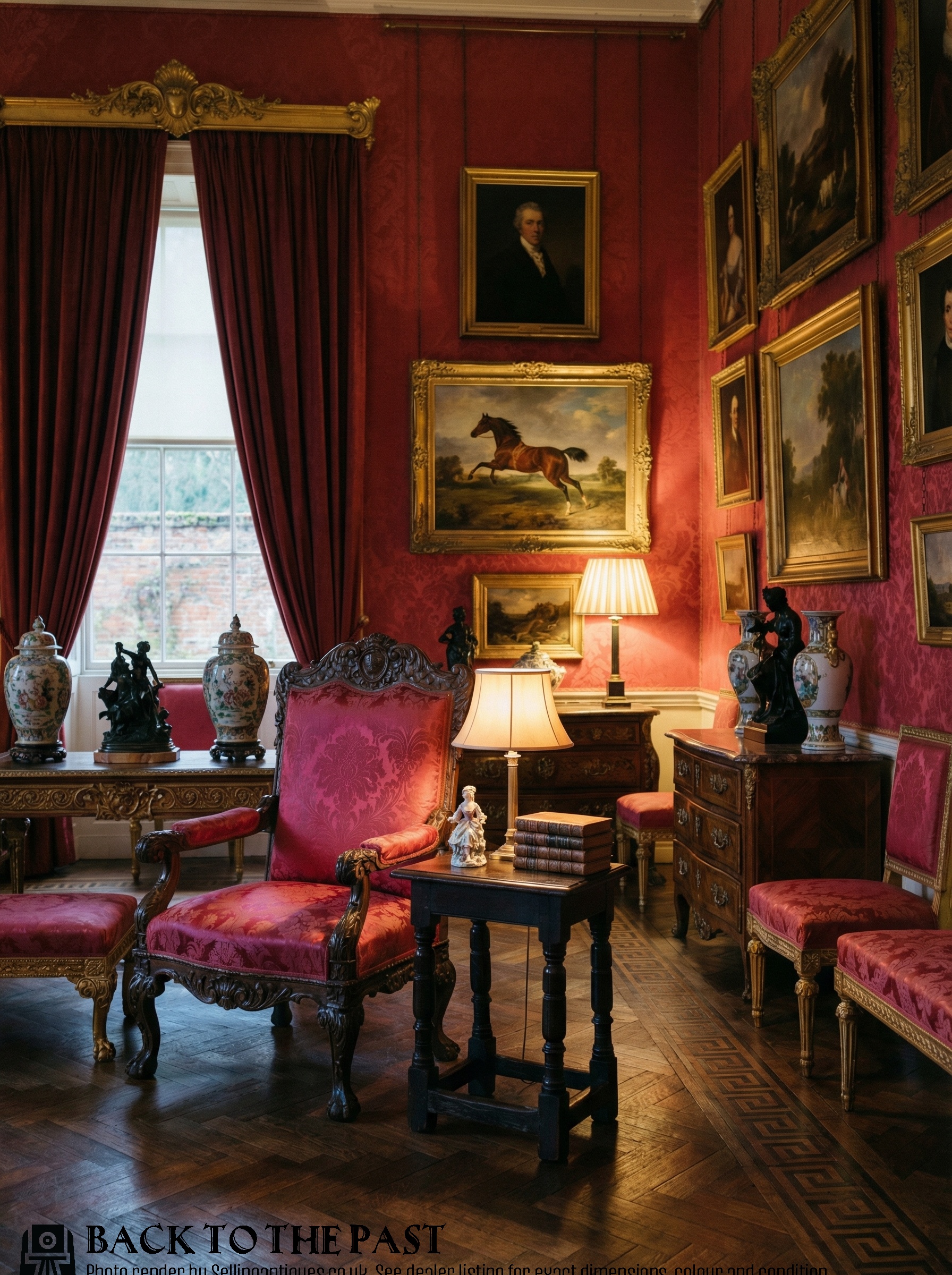
Brown Oak Side Stool
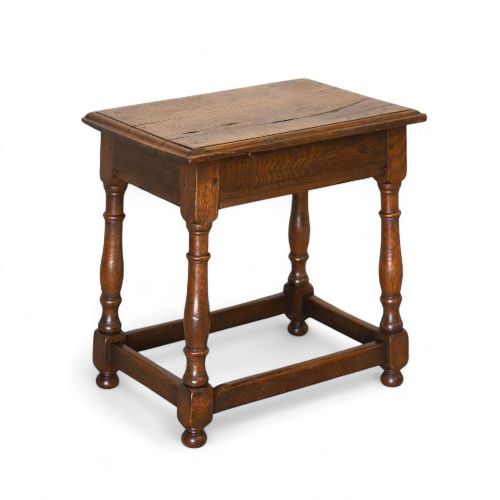
A brown oak side stool brings sturdy seventeenth-century jointed forms and eighteenth-century provincial utility into modern rooms. Buyers seeking a brown oak side stool will most frequently encounter joint stools and low country seats spanning several centuries of English woodworking.
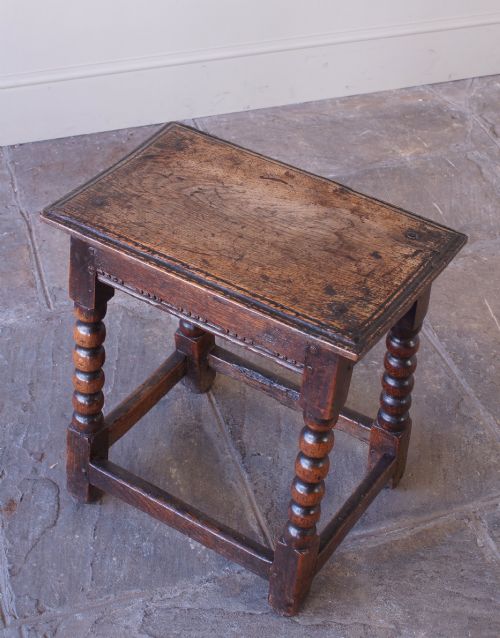
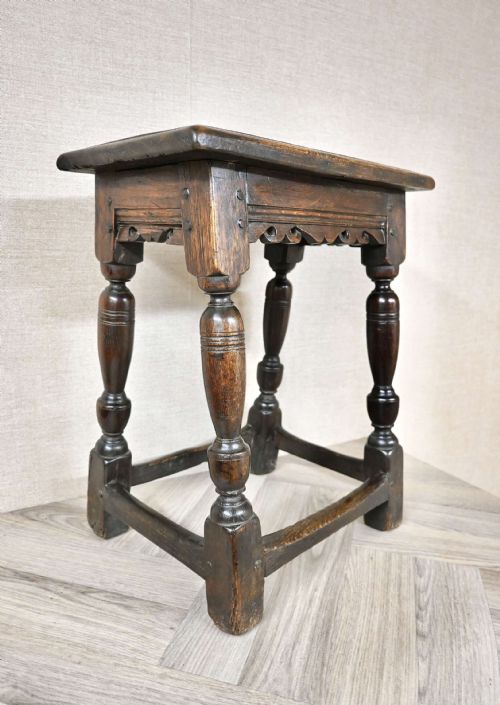
The selection ranges from seventeenth-century joint stools with pegged construction to nineteenth-century vernacular pieces and later revivals. These objects serve flexibly as low seats, small side tables or plant stands.
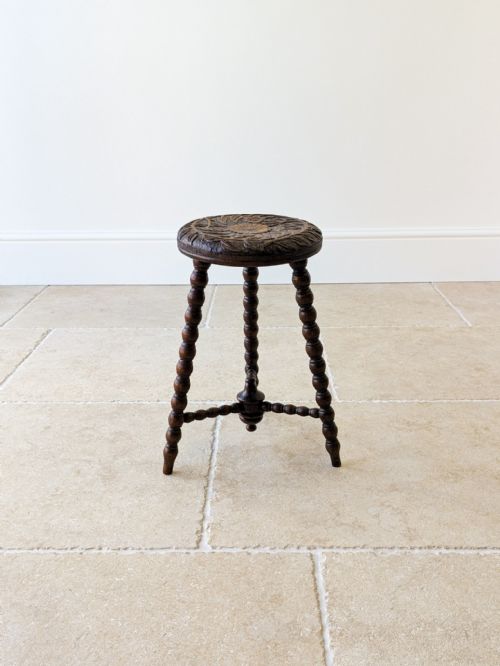
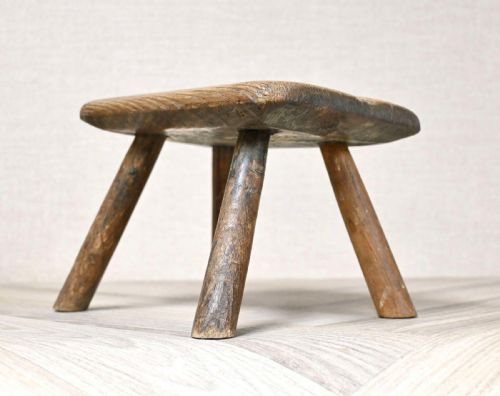
Makers utilised native hardwoods to build low rectangular frames, box stools and three-legged country variants. The prevalence of oak, elm and ash underscores a utilitarian British tradition focused on durability.
Materials and construction methods
Construction relies heavily on English oak, often supported by secondary timbers such as elm and ash for seats and stretchers. Traditional workshops employed pegged joints and sturdy five-plank configurations to secure the frame without complex metal fasteners.
The documented forms range from functional joint stools and milking stools to box stools, plant stands and miniature occasional tables.
Distinguishing quality in timber and form
Quality rests in the integrity of the timber, the tightness of the pegged joints and the depth of the natural patina developed over generations. Superior examples retain their original structural members without extensive timber replacement.
Proportion and stylistic consistency separate standard vernacular pieces from master provincial works featuring confident turnings or subtle carved details. The richness of the wood colour and the honesty of the wear patterns dictate the visual presence of the piece.
Liberty·Liberty and Co
The Brown Oak Side Stool Glossary
- Joint stool
- An early form of wooden seating constructed with mortise and tenon joints held together by wooden pegs. These sturdy pieces predated widespread upholstered chair use in domestic households.
- Box stool
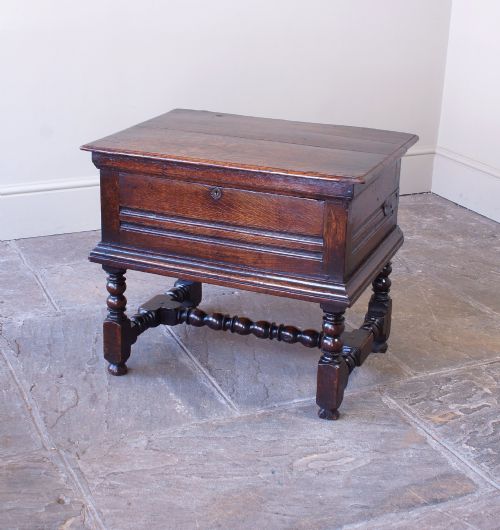
- A multi-functional low seat featuring a recessed compartment beneath the lid for storage. Early variations sometimes served close stool functions in domestic chambers.
- Pegged construction
- A method of joining wooden elements using turned wooden pins instead of metal nails or modern glues. This traditional technique accommodates seasonal wood movement.
- Vernacular furniture
- Domestic items built by local craftsmen using regional materials rather than following high-style metropolitan fashions. These pieces prioritise practical utility and local availability.
- Bobbin turned
- A decorative wood-turning style resembling a string of bobbins or spools, popular on seventeenth-century and revival furniture legs and stretchers.
Brown Oak Side Stool: Frequently Asked Questions
How were joint stools originally used?
Joint stools served primarily as portable seating at the dining table for members of the household of higher status, while others sat on benches. Their flat tops also allowed them to function as small side tables or stands for household items.
Because of their robust pegged construction, people could easily move them around the room for various domestic tasks or stack them aside when floor space was needed.
How can I identify seventeenth-century oak pieces?
Seventeenth-century oak items display hand-riven timber with distinct medullary rays, pegged joinery and structural framing built for heavy utility. Surface wear often shows deep patination developed through centuries of handling and polishing.
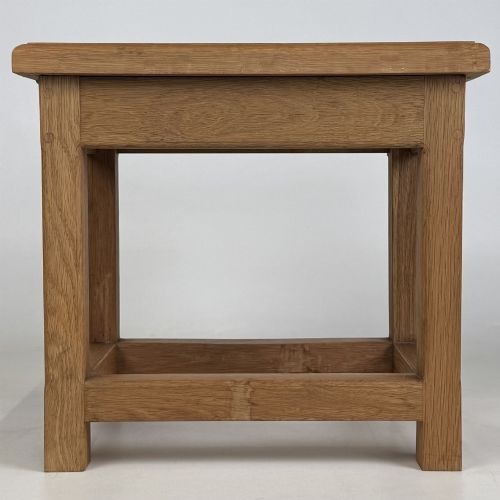
Revival pieces from the nineteenth and twentieth centuries emulate these older construction methods but typically present cleaner tool marks and lighter overall wear.
Where should I place a low oak stool in a modern home?
A low oak stool works well as an occasional seat in a hallway, a bedside stand or a compact surface beside a living room armchair. Their modest footprint allows them to fit easily into tight corners.
Exposed timber grain and warm brown tones complement both traditional interiors and minimalist contemporary spaces by adding organic texture.