
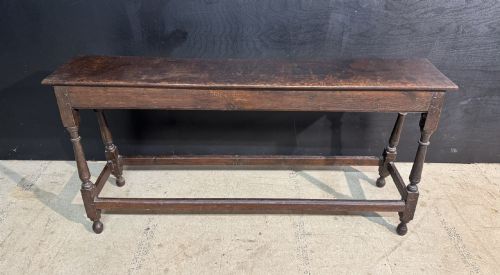
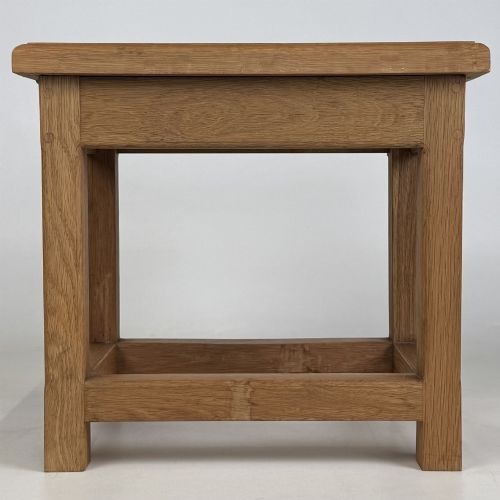


Solid Oak Joint Stool
These solid oak joint stool examples are sturdy domestic seats and tables spanning the seventeenth to twentieth centuries.

Solid Oak Joint Stool
A solid oak joint stool is a heavy wooden seat built with pegged mortise and tenon joints rather than traditional glued joinery. When searching this phrase, buyers encounter original seventeenth century pieces alongside later Victorian and Edwardian revival interpretations.
The form functions equally well as a low side table or a sturdy seat. Examples range from simple square tops to long benches and carved variants produced across multiple centuries.
How they were made
Carpenters constructed each solid oak joint stool using dense timber held together with wooden pegs. Workshops relied on hand tools to shape the straight legs and flat tops.
Some pieces incorporate brass fittings or detailed surface carving depending on the prevailing style of the period, from Jacobean revival to Georgian designs.
Listings on this site range from mid seventeenth century originals to Edwardian revival pieces made of solid oak.
What varies in quality
Quality rests in the integrity of the original timber and the crispness of the hand carpentry. Period pieces from the seventeenth century command attention for their authentic construction methods.
Revival items from the Victorian or Edwardian eras vary according to the weight of the oak and the fidelity of the historical style. Heavy timber and minimal later alteration elevate a piece.
The Solid Oak Joint Stool Glossary
- Joint stool
- A domestic seat constructed with pegged joints rather than turned legs glued into place. These items date from the seventeenth century onwards.
- Jacobean revival
- A nineteenth or twentieth century style copying the heavy carved oak aesthetic of the early seventeenth century. This design appears frequently in Victorian and Edwardian listings.
- Mortise and tenon
- A joint wherein a pegged projection fits tightly into a corresponding cavity. This technique provides the structural rigidity characteristic of these stools.
- Side table
- A small low table utilised for surfaces in domestic rooms. Several joint stools double in function as low side tables.
Solid Oak Joint Stool: Frequently Asked Questions
What is a joint stool?
A joint stool is a rigid wooden seat built by carpenters using pegged joints. The name derives from the joined timber construction rather than upholstered padding.
Historically these items served multiple household purposes, functioning as seats, small tables or steps.
How old are these stools?
The pieces span from the mid seventeenth century through the Georgian and Victorian eras up to the early twentieth century. Revival pieces imitate earlier seventeenth century designs.
Matching the construction style and timber patination helps determine the approximate period of manufacture.
Were they used as tables?
Yes, the flat tops and sturdy frames made them suitable for holding objects as well as sitting. Many listings describe low side table functionality.
Their robust build allowed them to withstand heavy daily domestic tasks across centuries.
What wood is used?
Makers relied primarily on oak for its strength and availability in English carpentry. Brass elements occasionally appear on specific revival pieces.
The density of the oak contributes significantly to the heavy weight of each stool.