


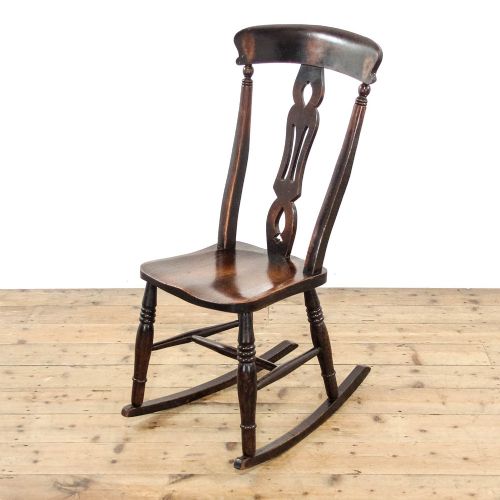


Brown Oak Rocking Chair
A brown oak rocking chair brings the warmth of vernacular country seating and steady motion into any room.
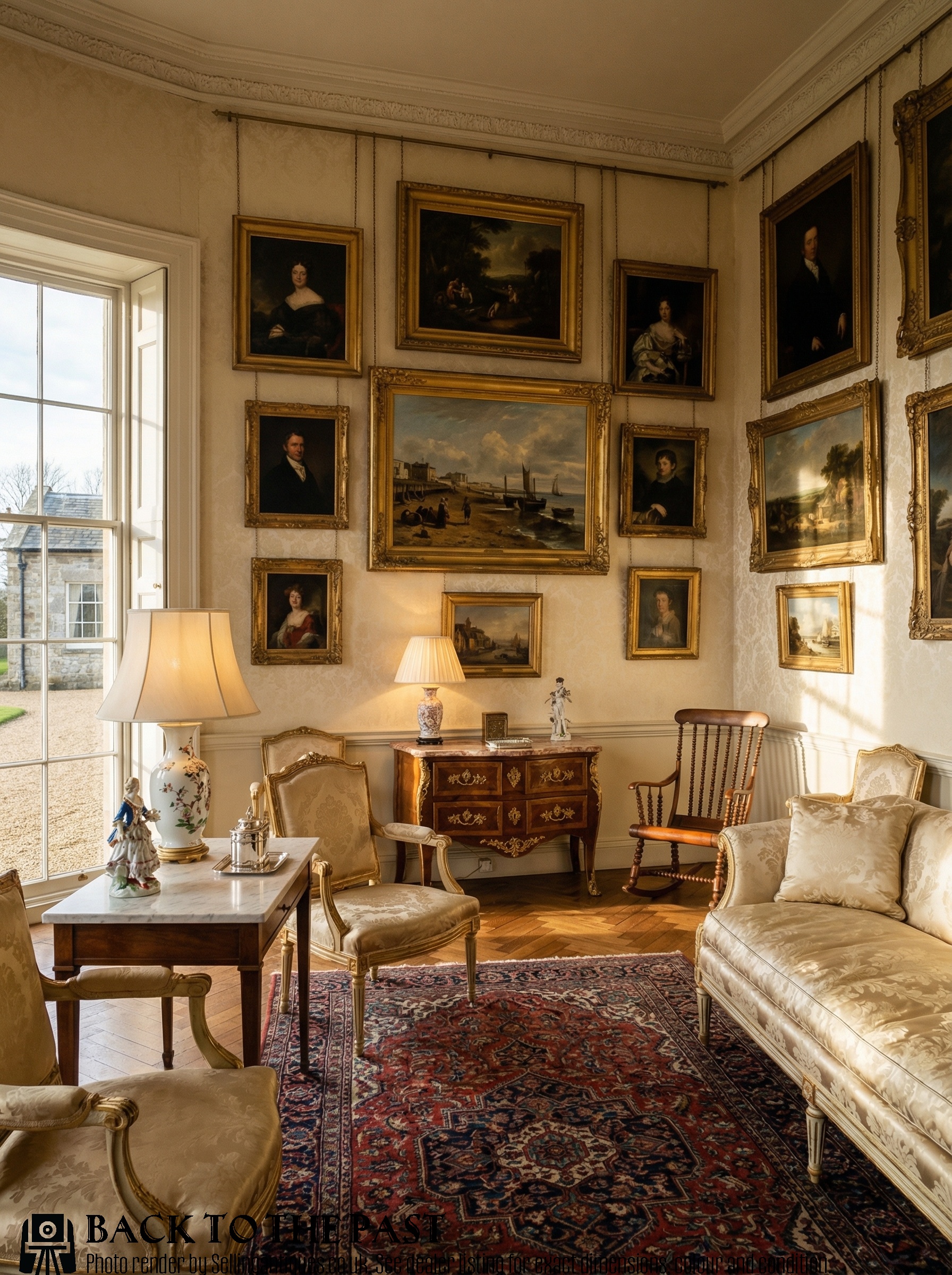
Brown Oak Rocking Chair
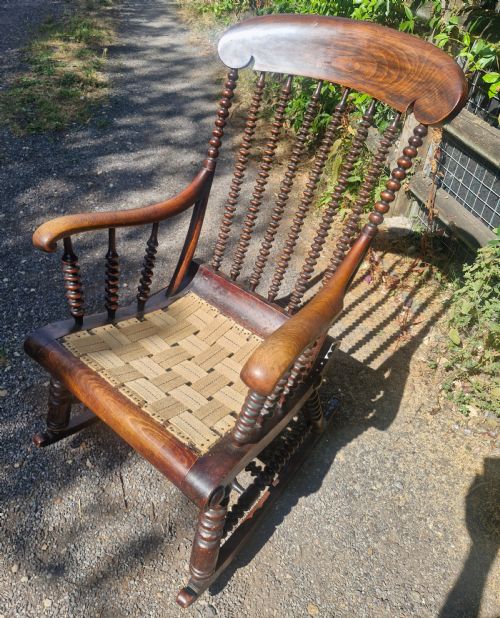
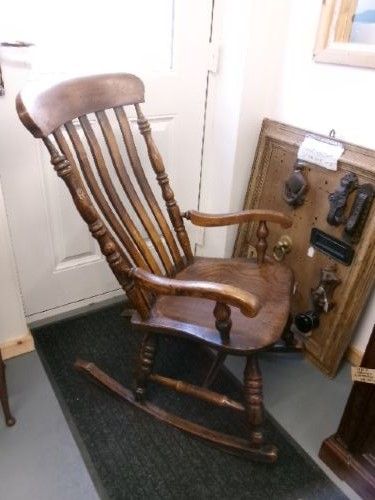
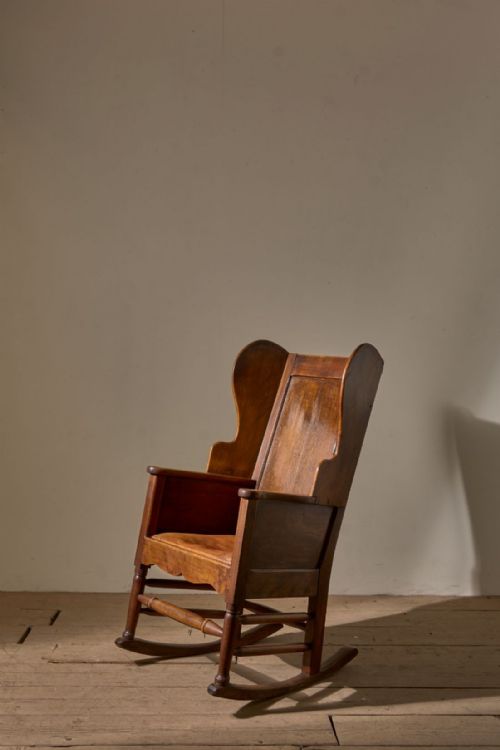
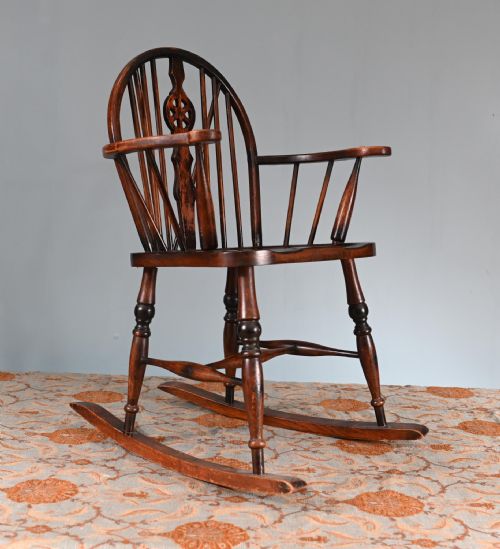
A brown oak rocking chair combines heavy timber construction with curved rockers for fireside comfort. You will encounter forms ranging from 18th century lambing chairs to Victorian Windsor designs and vernacular spindle backs.
The material gives these pieces a distinct deep tone that sets them apart from lighter fruitwoods. Regional variations include Scottish, Welsh, and English country styles with panelled seats or woven webbing.
Makers often combined oak with beech, ash, or elm for structural parts. These chairs served in farmhouses and nurseries, evolving from rigid settles into mobile seats.
Materials and construction
Makers built these frames using solid oak alongside secondary timbers like beech and ash for turned spindles. Seats were shaped from solid planks or fitted with leather, cane, and woven webbing.
Bobbin framing and carved panels required steady hand-tool work by regional joiners. Turned components were shaped on pole lathes before being pegged together tightly.
Some chairs spent centuries nursing generations by the hearth before ever meeting a set of modern rockers.
Assessing the work
Quality rests in the harmony of the timber grain and the integrity of the spindle turnings. Better examples maintain balanced proportions without heavy replacement parts on the rockers.
Surface patination reveals how the oak has aged through decades of use. Superior pieces show crisp detailing on carved panels and secure joints that withstand movement.
The Brown Oak Rocking Chair Glossary
- Windsor
- A chair style featuring turned spindles slotted into a solid wooden seat. This design offers robust support and country character.
- Lambing chair
- An enclosed high-backed seat designed to shield the sitter from drafts by the hearth. Early examples often incorporate rockers.
- Bobbin framing
- Turned woodwork resembling a string of spools or bobbins linked together. This decorative technique appears frequently in 19th century vernacular furniture.
- Vernacular
- Everyday furniture built by local craftsmen using regional traditions rather than metropolitan styles. These pieces prioritise practical use.
- Spindle back
- A chair back constructed from multiple thin turned wooden rods. This configuration lightens the visual weight of heavy oak frames.
Brown Oak Rocking Chair: Frequently Asked Questions
How do I date a rocking chair?
Dating relies on construction methods, tool marks, and stylistic clues like bobbin turnings or panel styles.
Earlier pieces from the 18th century show distinct hand-tool signatures compared to later Victorian workshop production.
Are these chairs comfortable?
Most feature contoured wooden seats designed for long hours by the fire.
Some variants include leather inserts or padded panels for extra support during resting.
Where were these chairs made?
Regional workshops across England, Wales, and Scotland produced these country chairs for local farmhouses and homes.
Local timber availability determined whether makers used oak, elm, or beech.
How do I care for brown oak?
Keep the timber away from direct heat sources and sudden humidity changes to prevent splitting.
Apply a light wax occasionally to maintain the natural finish and deep colour.