

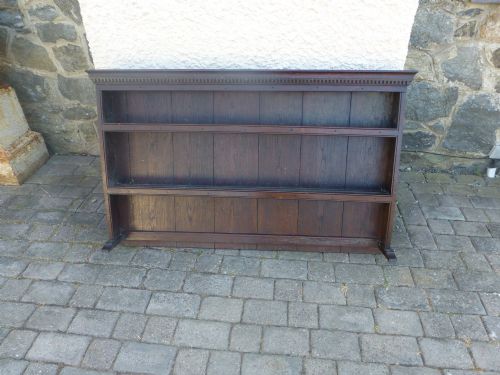
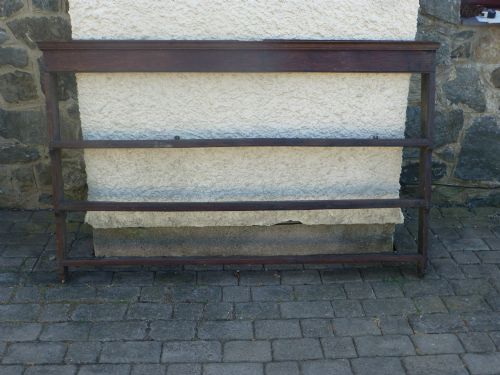
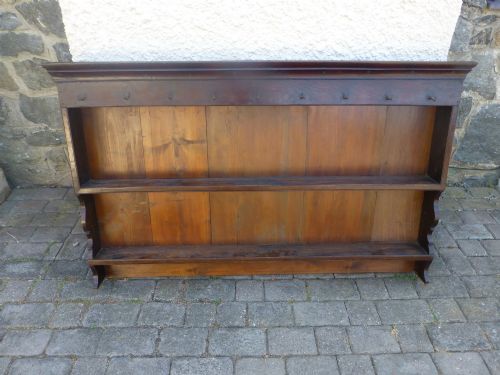
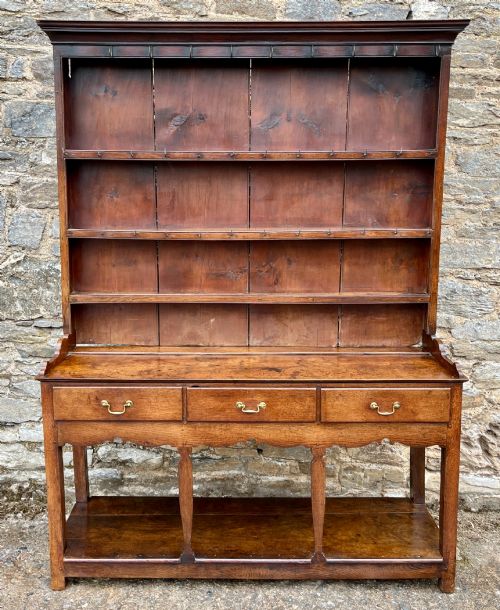
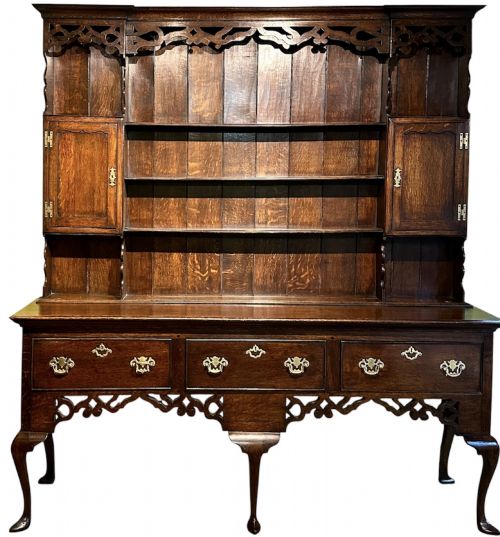
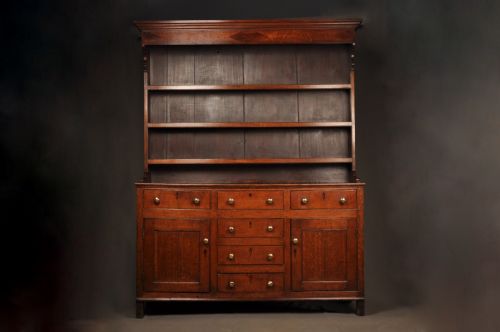
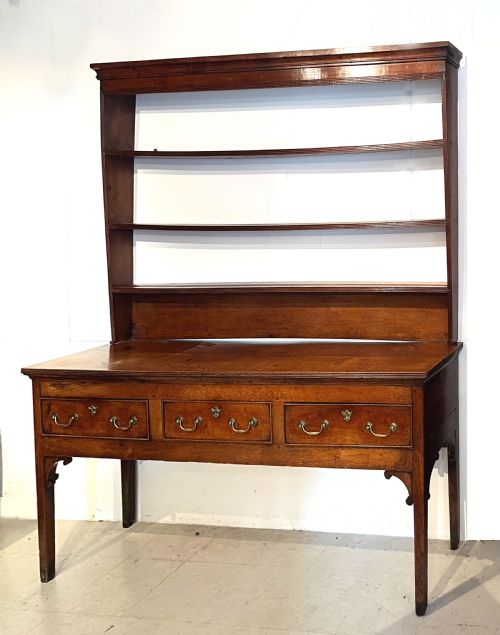

Brown Oak Plate Rack Dresser
A brown oak plate rack dresser offers practical storage and traditional display, bringing warmth and established character to any kitchen or dining room.
Brown Oak Plate Rack Dresser
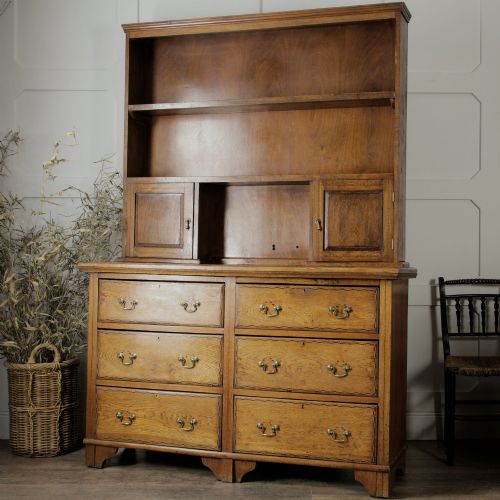
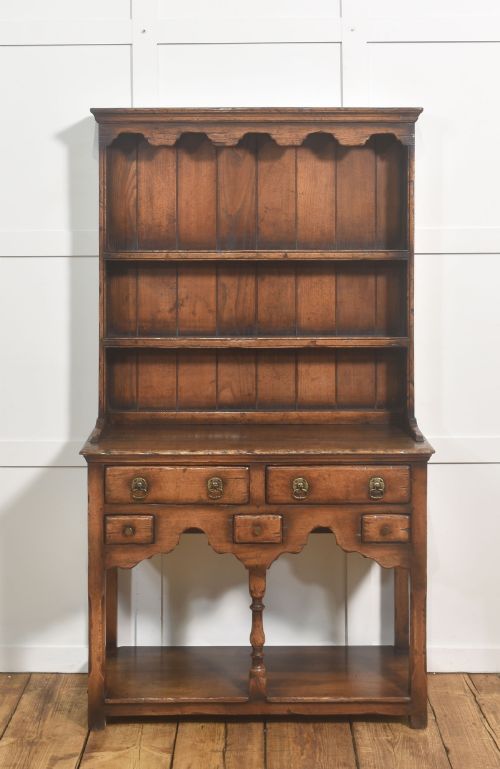
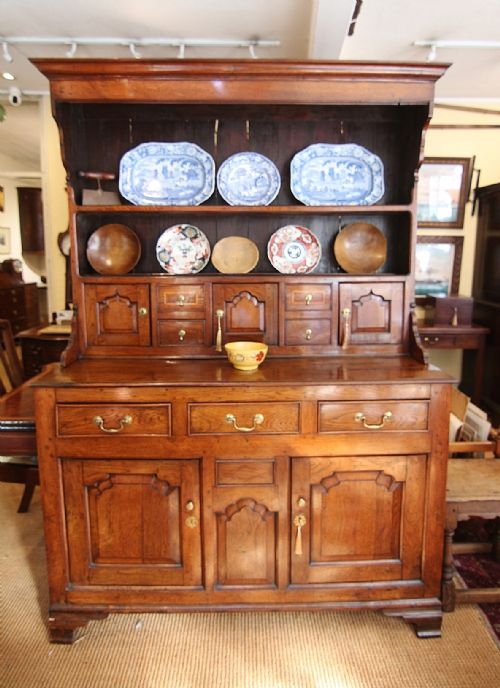
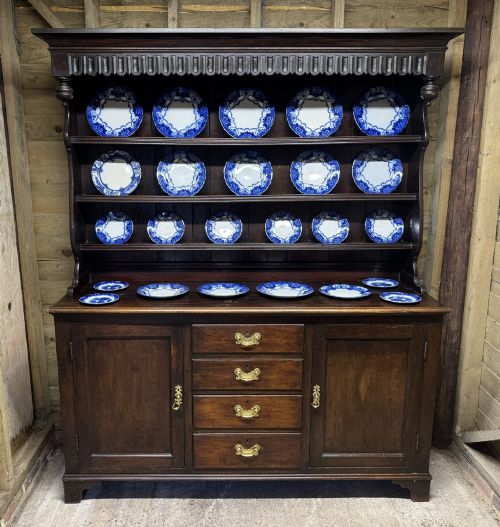
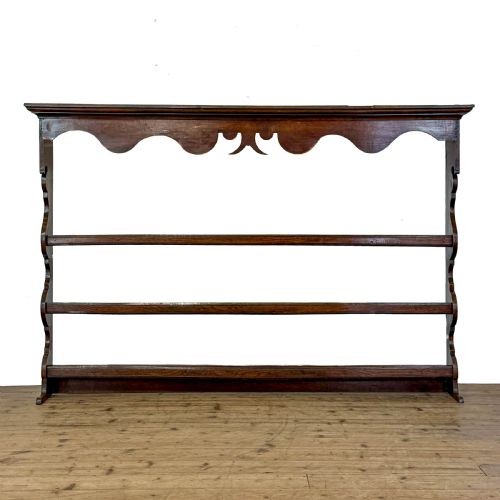
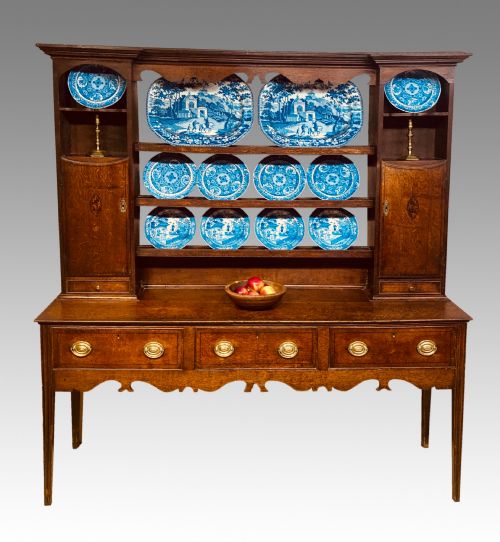
A brown oak plate rack dresser combines a lower base of drawers and cupboards with an upper open shelving structure designed for displaying ceramics. These pieces emerge primarily from the eighteenth and nineteenth centuries, spanning Georgian, Victorian, and later revival periods.
Regional variations include Welsh Vernacular and English Country designs, often featuring pot boards or breakfront drawers. The wood typically displays rich honey or deeper brown tones developed over centuries of use.
Materials and construction methods
Cabinet makers relied predominantly on solid oak, occasionally combining it with secondary timbers such as elm, pine, or mahogany for internal components. Structural assemblies utilised traditional joinery, including pegged mortise and tenon joints.
Metalwork hardware such as brass handles and iron hinges were hand-forged or cast. Selected pieces incorporate decorative inlay wood details to accent the drawer fronts and cornices.
One notable piece on record originates from a cafe in Snowdon, bringing a rugged mountain tea-room history straight into the dining room.
Assessing build quality and condition
Superior examples retain their original upper plate racks married harmoniously to the lower base, alongside undisturbed patination on the timber. The depth of colour and the crispness of provincial carving distinguish finer regional workshops from standard utility pieces.
Proportion and structural integrity dictate the standing of a piece. Retaining original backboards, hardware, and pot boards elevates the authenticity of the dresser.
The Brown Oak Plate Rack Dresser Glossary
- Potboard
- A lower open shelf built near the floor of a dresser, traditionally used for storing heavy pots and pans. This platform sits directly above the feet or plinth.
- Delft rack
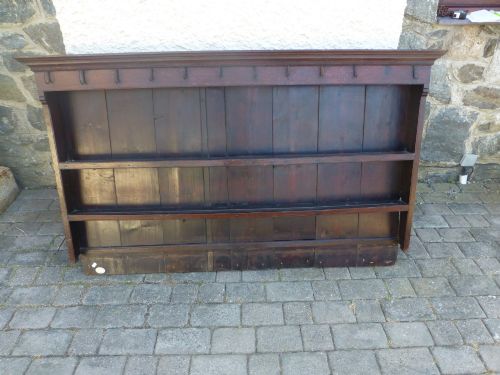
- An upper set of open shelves specifically slotted or grooved to display ceramic plates upright without sliding. These racks form the upper section of many traditional dressers.
- Breakfront
- A cabinet design where the central section projects forward from the flanking sides. This configuration adds visual depth to the arrangement of drawers and cupboards.
- Vernacular
- Furniture made by local craftsmen following regional traditions rather than formal London pattern books. These pieces reflect the specific domestic needs of country areas.
Brown Oak Plate Rack Dresser: Frequently Asked Questions
What is a brown oak plate rack dresser?
A brown oak plate rack dresser is a traditional storage unit consisting of a lower sideboard base with drawers or cupboards and an upper section featuring open shelves for displaying plates.
These items date from the eighteenth, nineteenth, and early twentieth centuries, reflecting regional styles such as Welsh and Georgian vernacular furniture.
How were these dressers used historically?
Historically, families utilised these dressers in kitchens and dining rooms to store and display everyday tableware, including ceramic plates and serving dishes.
The lower cupboards and drawers held cookware, linens, and dry goods, keeping utilitarian items close at hand.
How do I date a brown oak dresser?
Dating relies on examining construction techniques, timber characteristics, and style markers such as Georgian proportions or Victorian breakfront drawers.
Changes in nail types, joint construction, and handle hardware provide further clues to whether a piece originates from the eighteenth or nineteenth century.
Are the plate racks usually original?
Many dressers retain their original upper plate racks, particularly those documented from eighteenth-century Welsh and Georgian workshops.
Because upper racks and lower bases sometimes became separated over generations, examining how the two sections join helps determine if they started life together.