
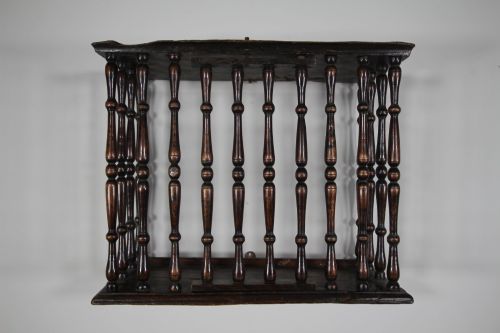
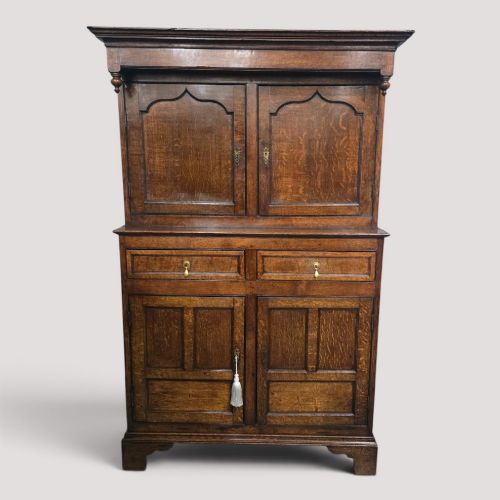
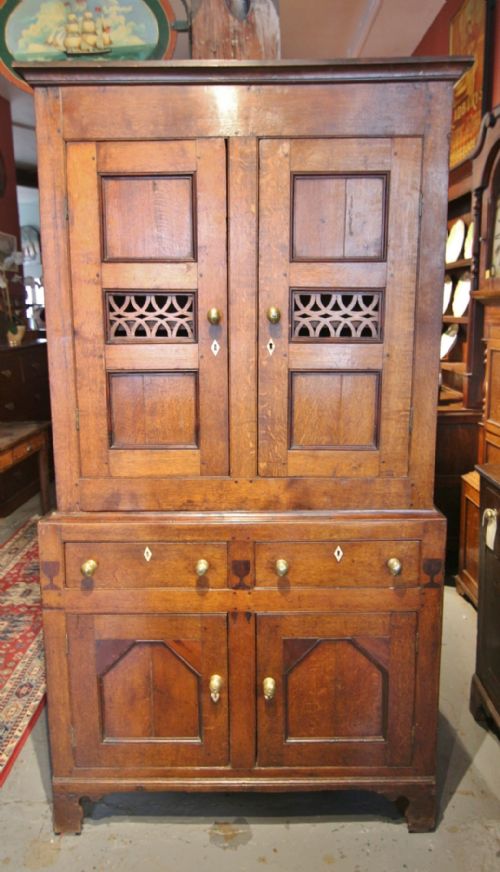
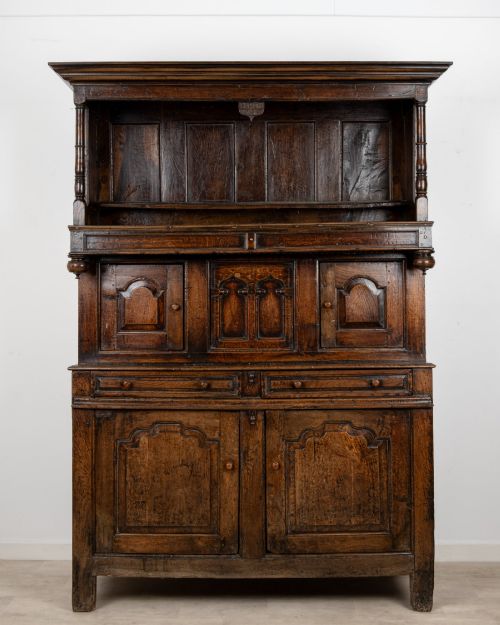


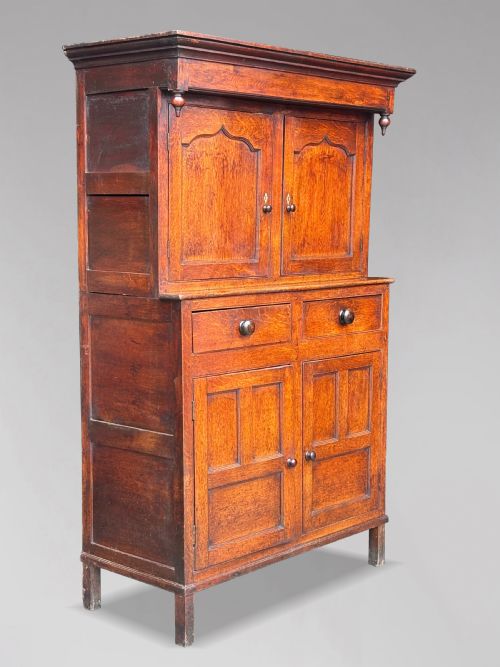


Brown Oak Food Cupboard
These brown oak food cupboard pieces are sturdy regional storage furniture, chosen for their honest timber and ventilation.
Brown Oak Food Cupboard
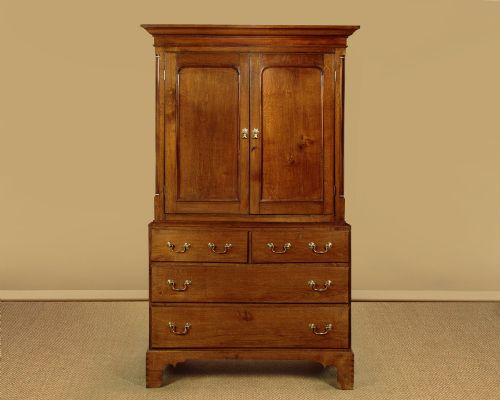
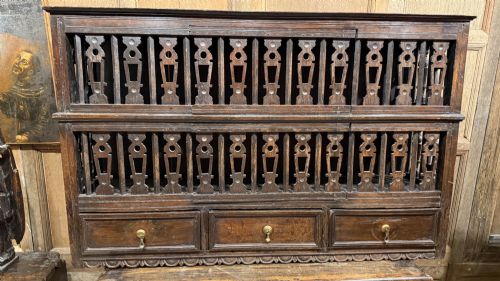
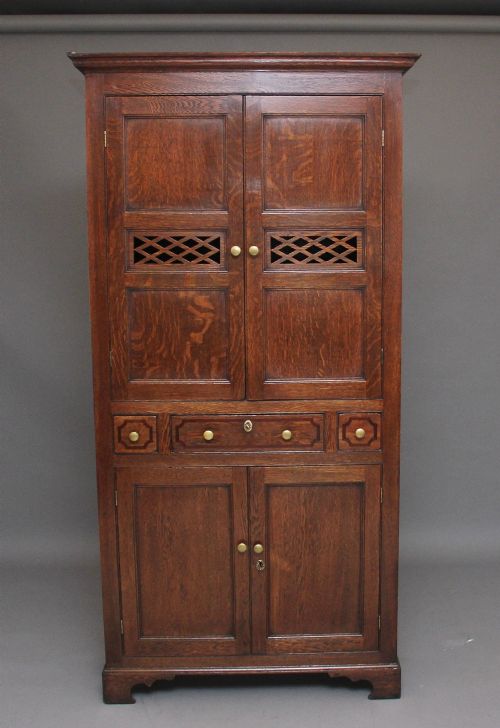
A brown oak food cupboard provides ventilation for provisions through pierced panels or turned spindles, and the examples gathered here span from the seventeenth century to the twentieth century. Many originate from Wales or France, taking forms such as the bread and cheese cupboard, the tridarn, the deuddarn, and the wall-hanging cupboard. Buyers encounter regional vernacular pieces alongside formal Georgian court cupboards and French mountain cupboards.
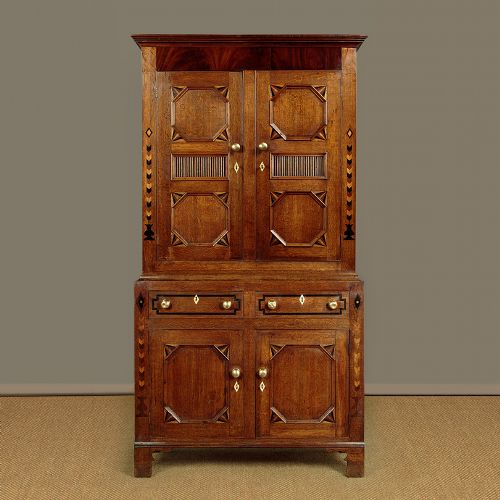
The timber shows deep brown tones acquired over centuries, often complemented by inlaid wood, ebony, or holly. These functional objects served country kitchens and housekeeper's rooms, holding perishable stores away from pests while allowing air to circulate. The range includes small wall cabinets, tall housekeepers' cupboards, and two-part architectural press cupboards.
How they were made
Carpenters built these brown oak food cupboards using solid oak planks assembled with pegged mortise and tenon joints. Carved details, paneling, and inlaid decoration in contrasting woods such as holly and ebony ornament the facades of the better regional pieces.
Blacksmiths forged the iron and wrought iron hinges, locks, and latches that secure the doors. Bone details occasionally appear on vernacular pieces, while interior shelves provide the division necessary for storing foodstuffs.
Early blacksmiths forged bespoke iron locks and hinges that kept hungry farmhands away from the bread and cheese.
What varies in quality
The quality of a brown oak food cupboard rests upon the crispness of the original carving, the retention of its early blacksmith ironwork, and the depth of the timber's brown patina. Unaltered surfaces and untouched regional proportions distinguish superior vernacular furniture from heavily restored examples.
Fine inlay work and well-balanced architectural elements, such as those found on dated court cupboards and Welsh bread and cheese cupboards, elevate an individual piece. The integrity of the original ventilation panels and sturdy framing also governs the standing of each cabinet.
The Brown Oak Food Cupboard Glossary
- Bread and cheese cupboard
- A regional Welsh storage piece fitted with perforated or spindle-turned panels designed to keep provisions aired. These cupboards are key examples of vernacular kitchen furniture.
- Court cupboard
- A formal two-stage or open-shelf cupboard dating from the seventeenth and eighteenth centuries. They display substantial carved ornament and architectural proportions.
- Tridarn
- A traditional three-tiered Welsh cupboard used for storage and display. They represent the more ambitious forms of vernacular joinery.
- Deuddarn
- A two-part Welsh cupboard with cupboards above and below. This form succeeded earlier court cupboards in regional households.
- Panetiere
- A French bread safe featuring spindle galleries for ventilation. These freestanding or wall-hung pieces protected loaves from rodents.
Brown Oak Food Cupboard: Frequently Asked Questions
What is a brown oak food cupboard?
A brown oak food cupboard is a piece of vernacular storage furniture built to keep provisions cool and aired. They feature ventilated panels, spindle doors, or pierced work to allow air circulation around perishable stores.
Most examples originate from rural workshops in Wales, France, and English provinces. They use durable oak timber combined with iron hinges and locks.
How do I tell a Welsh cupboard apart?
Welsh cupboards often take distinct regional forms such as the tridarn, deuddarn, or bread and cheese cupboard. They display local joinery traits and specific proportions developed for domestic farmhouses.
Many incorporate inlaid wood details in holly and ebony alongside traditional carved panels. Their vernacular construction differs from urban Georgian case furniture.
How were these cupboards used?
Households utilised these cupboards in kitchens and larders to store cheeses, bread, and other perishables. The ventilated doors prevented dampness from spoiling stored food items.
Over time, many transitioned from working pantries into principal rooms as decorative furniture. Their sturdy shelves accommodated heavy domestic stores.
How do I date an oak food cupboard?
Dating relies on construction methods, joinery styles, hardware, and timber patination. Seventeenth-century examples show heavy pegged frames and primitive carving, while eighteenth-century pieces adopt Georgian proportions.
Blacksmith-made iron locks and hinges provide further clues to the period. Some pieces bear carved dates or initials on the frieze.
Where should I place a food cupboard?
These cupboards suit dining rooms, kitchens, or hallways where their storage capacity remains functional. Their deep brown oak tones anchor a room's decorative scheme.
Keep them away from direct heat sources to protect the aged timber and historic ironwork. Adequate wall space is necessary for larger two-part press cupboards and court cupboards.