
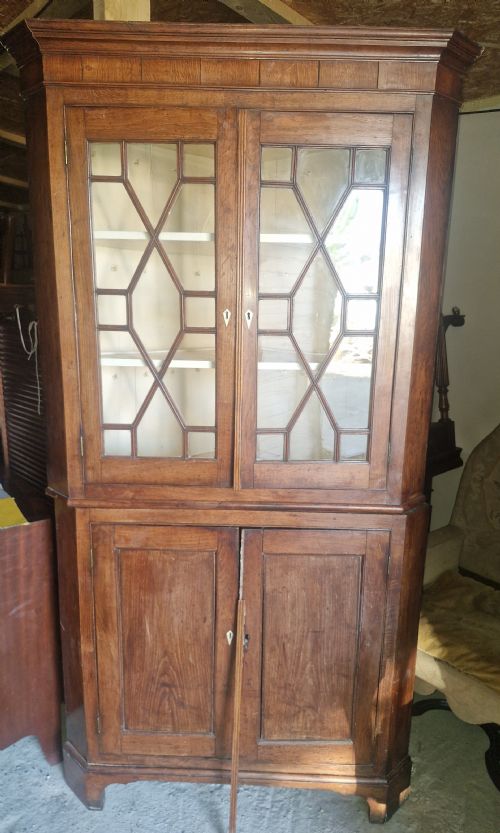
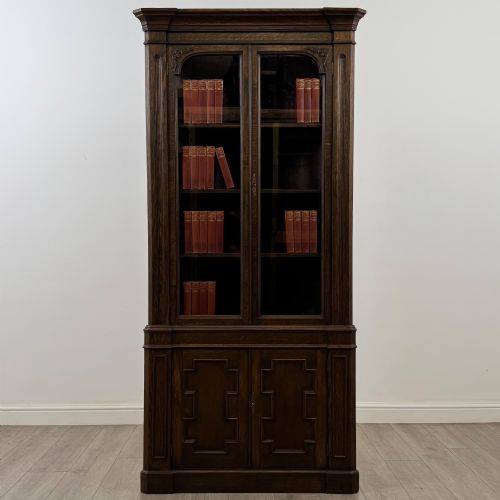
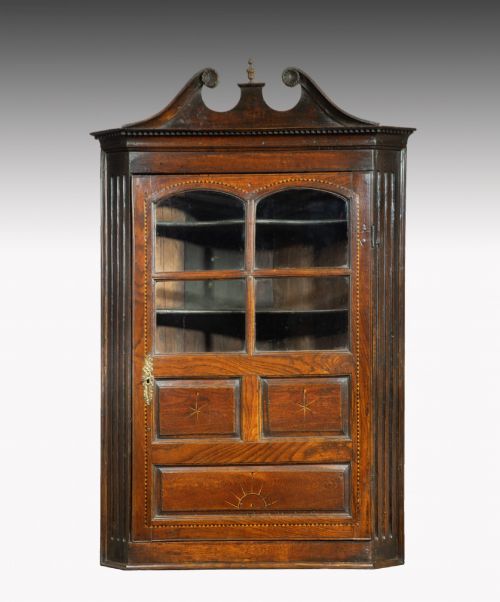
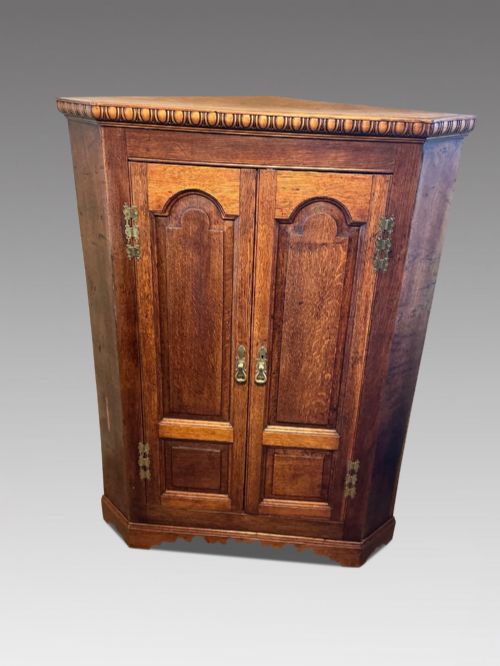



Brown Oak Corner Cabinet
A brown oak corner cabinet makes use of awkward angles, turning empty wall junctions into display and storage.
Brown Oak Corner Cabinet
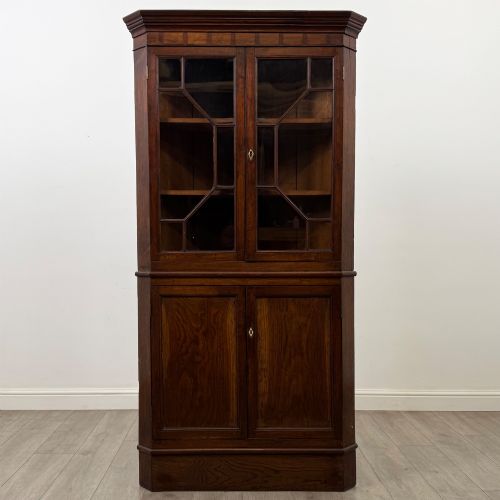
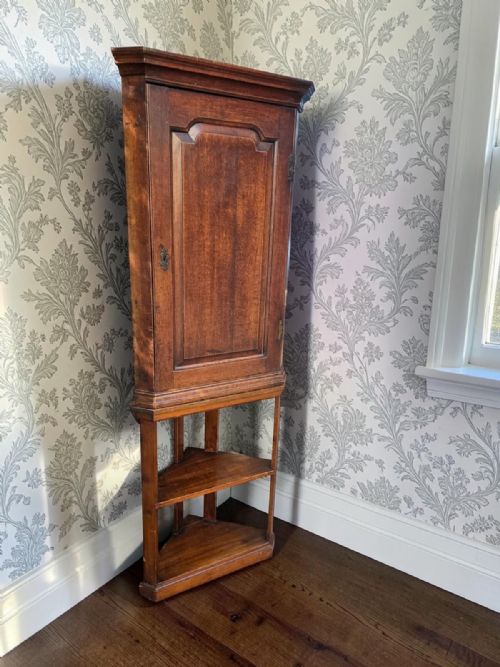
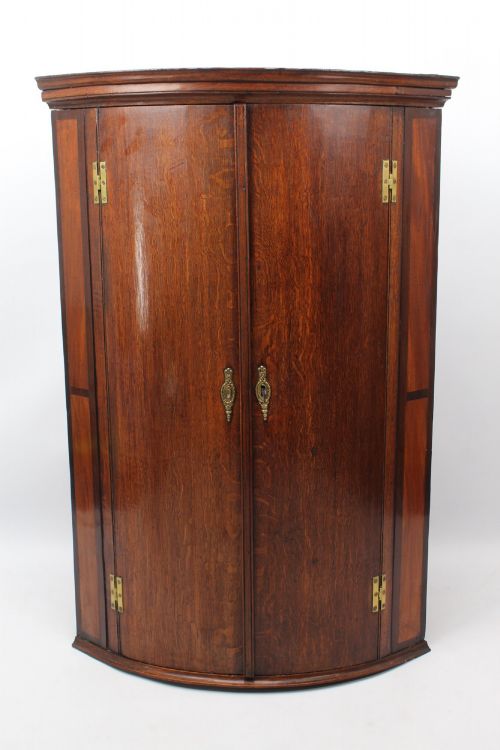
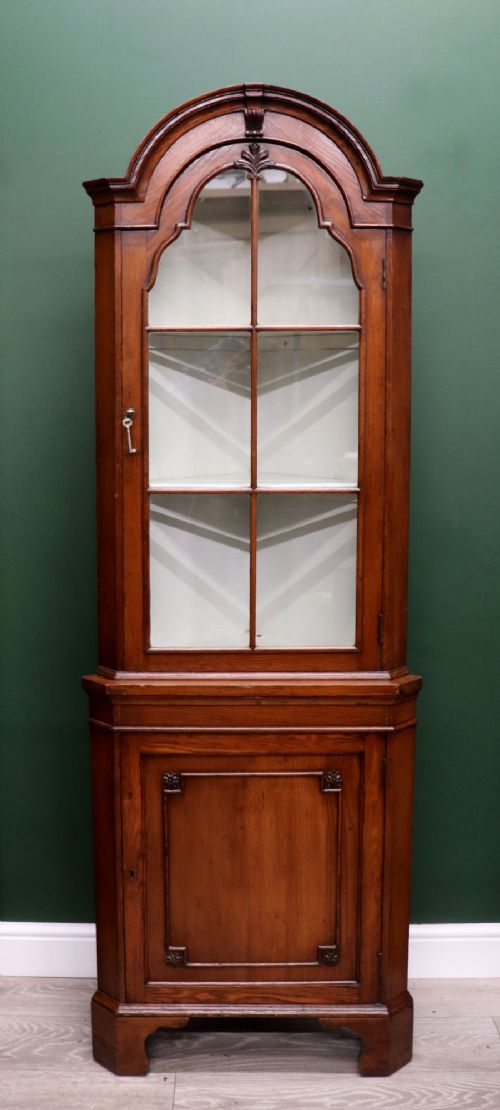
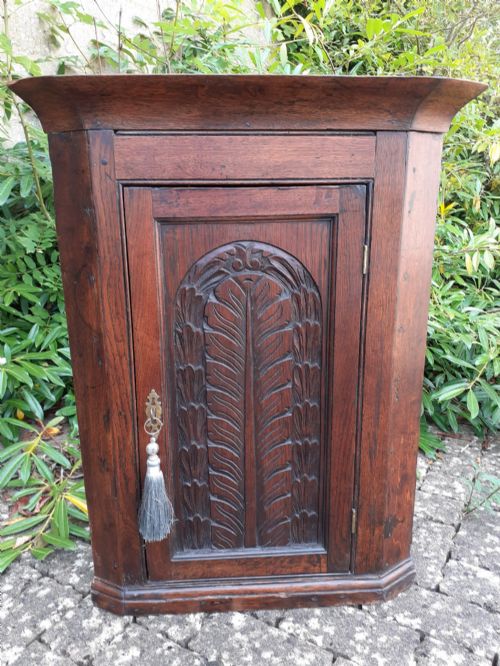
A brown oak corner cabinet is a storage piece built to fit the right angle of a room, saving floor space while housing tableware, books, or curiosities. When searching for this phrase, buyers encounter examples stretching from the eighteenth century into the twentieth century, taking forms such as hanging cupboards, floor-standing units, and two-part designs.
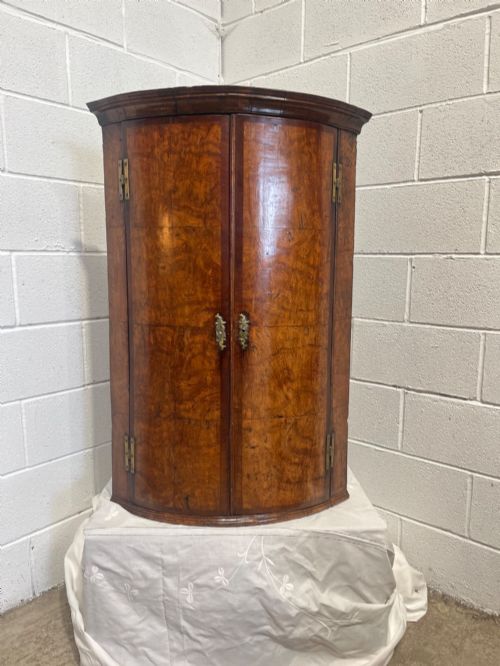
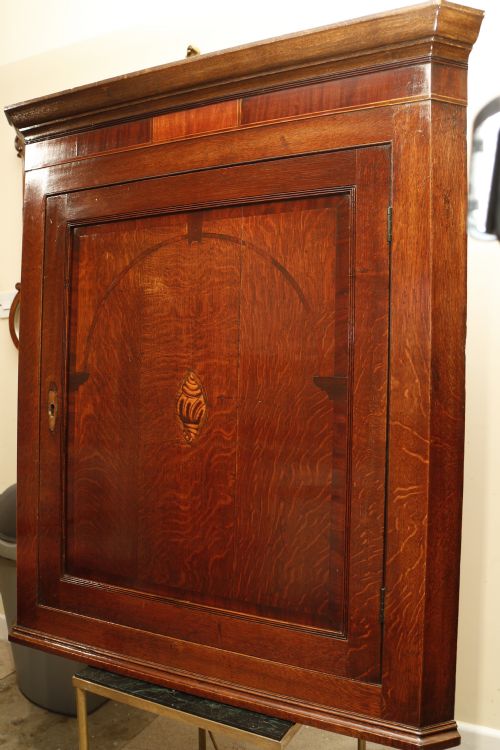
The material gives these pieces a distinct warmth, often showing rich grain patterns in oak, sometimes paired with fruitwood inlay, burr oak, or mahogany crossbanding. Styles span Georgian vernacular, English country, and later revivals, reflecting the domestic needs of rural and urban homes alike.
Quality differences in brown oak corner cabinets
The distinction between ordinary and exceptional pieces lies in the choice of timber and the restraint of decorative detailing. Cabinets featuring highly figured burr oak, deliberate crossbanding in mahogany, or fine fruitwood inlays demand closer attention for their cabinetmaker skill.
Proportion and structural integrity dictate the upper tier of the range, where cornices remain crisp, doors hang true without sagging, and original brass fixings survive intact. Regional provenance, such as eighteenth-century Welsh workshops, often brings a bolder scale and heavier panel moulding to the construction.
Listings span periods from the early eighteenth century through the Georgian and Victorian eras into the twentieth century, dominated by oak timber construction.
The Brown Oak Corner Cabinet Glossary
- Crossbanding
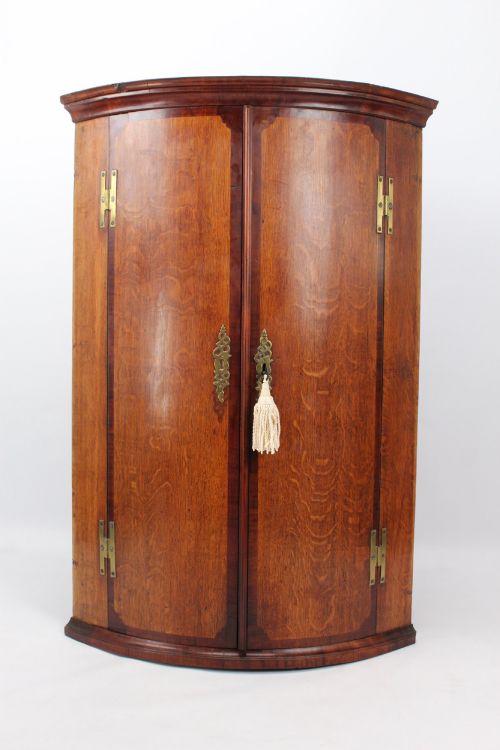
- A narrow strip of veneer applied to the border of a panel or door, running perpendicular to the grain of the central timber. This technique creates a neat framing effect common on late Georgian examples.
- Burr oak
- A growth distortion in the timber that produces intricate, swirling grain patterns full of small knots and eyes. Cabinetmakers utilised this highly decorative wood for prominent door panels.
- Cornice
- The moulded projection that crowns the top of a cabinet, designed to give a finished architectural line to the piece. On taller floor-standing models, these often feature dentil or modillion carvings.
- Escutcheon
- A protective plate surrounding the keyhole of a cabinet door, usually cast in brass. It prevents the timber around the lock from splitting with repeated use.
- Bow front
- A convex, curved front profile that softens the rigid ninety-degree lines of a corner cabinet. This form appears frequently on Georgian pieces to add visual depth to the room.
Brown Oak Corner Cabinet: Frequently Asked Questions
How do I hang a wall-mounted corner cupboard?
Hanging corner cupboards require secure fixing to solid wall studs or masonry using appropriate internal brackets, given the considerable weight of solid oak timber.
Ensure the wall plate or internal hanging loops bear the load evenly before loading the shelves with heavy ceramics or glass.
What is the difference between hanging and floor-standing models?
Hanging models mount directly to the wall to free up floor space underneath, whereas floor-standing or two-part cabinets rest on a plinth, base, or separate stand.
Floor-standing versions often provide greater storage capacity and can incorporate bureau desks or lower cupboard sections.
How do I date an antique oak corner cabinet?
Dating relies on examining construction methods, such as hand-cut dovetails, timber seasoning marks, and the style of brass hardware or panel moulding.
Eighteenth-century examples typically show pegged frame-and-panel construction and simpler hinges, while Victorian and later revivals often incorporate machine-cut elements and distinct period revival motifs.
Are these cabinets suitable for modern homes?
Their triangular footprint allows these cabinets to occupy neglected room corners, turning dead space into functional storage for glassware, books, or displays.
They pair well with diverse interior styles, providing a grounding architectural element and warm timber tones to neutral or contemporary spaces.