


Brown Oak Candle Stand
A brown oak candle stand brings rich, dense grain and a warm, aged presence to any corner of a room.

Brown Oak Candle Stand
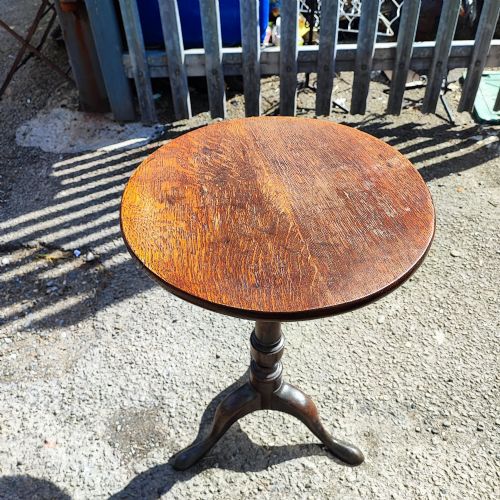
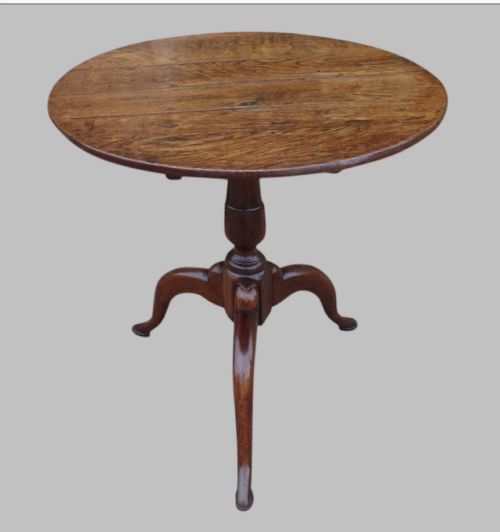
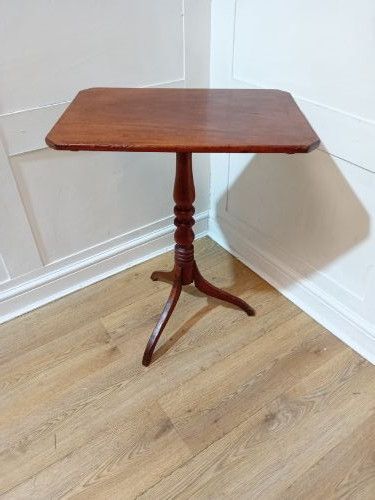
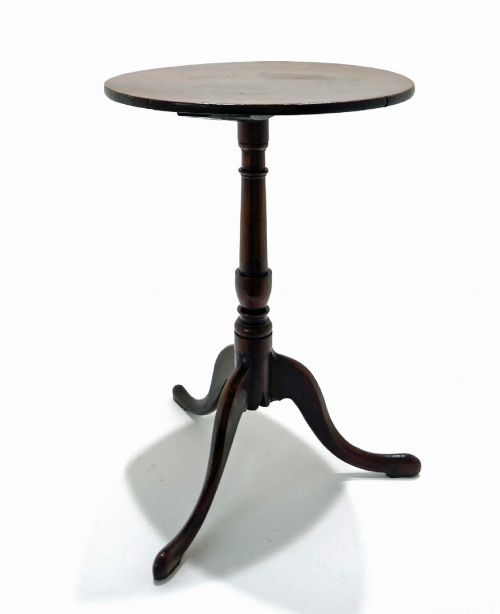
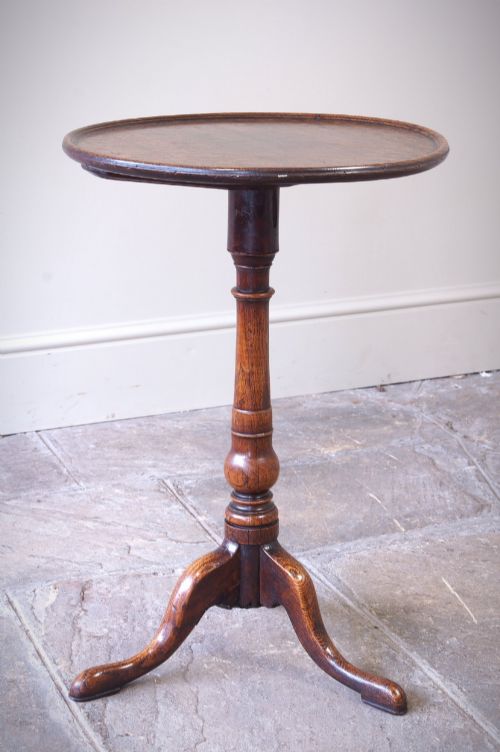
A brown oak candle stand appears as a compact table raised on a central pillar and three legs, built to hold illumination or small objects. The pieces found here span the eighteenth and nineteenth centuries, including Georgian and Victorian examples alongside rustic vernacular work.
Most entries take the form of tripod wine tables, lamp tables, or dedicated stands rather than tall candle holders, though turned wood sticks also emerge. Oak, elm, and burr oak dominate the forms, frequently paired with tilt-top or birdcage mechanisms.
Regional pieces from this selection point towards country workshops and farmhouse interiors rather than urban cabinet makers. The survival of these small tables demonstrates their utility for holding light beside a chair or bed across centuries of domestic life.
Materials and construction methods
Makers utilised solid timber, selecting native oak and elm for their durability and distinctive figuring. Burr oak appears in select pieces, offering intricate patterns within the grain that catch the eye.
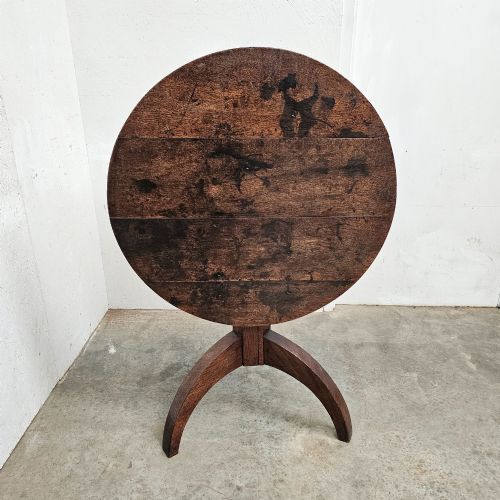
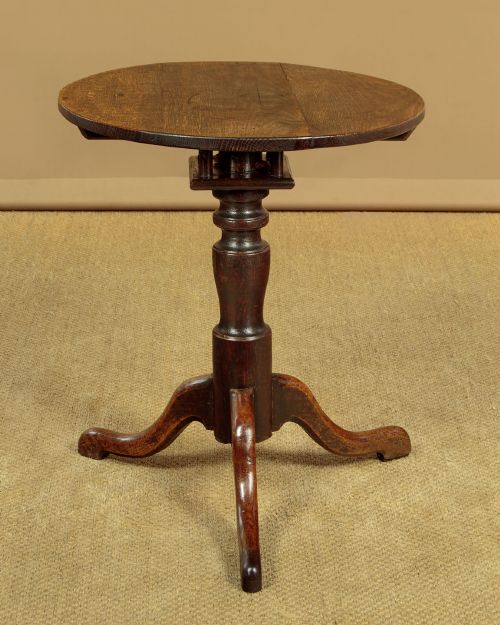
Construction relies on turned central columns joined to three splayed legs and circular tops, occasionally incorporating marquetry inlay or carved detail. Tilt-top and birdcage mechanisms allow the top to pivot and fold flat when not in use, showing clever spatial economy.
Some tables tilt up so sharply they practically fold themselves away when you walk past.
Separating the ordinary from the exceptional
The distinction between standard items and superior examples lies in the depth of patination and the choice of timber figure. Burr oak surfaces and exceptional colour elevate a simple structural form into something visually arresting.
Proportion and turning execution separate country vernacular work from finer Georgian pieces. Slender columns and well-balanced tripod bases demonstrate the maker's eye for line and stability.
The Brown Oak Candle Stand Glossary
- Tripod table
- A small occasional table supported by a central pillar resting on three legs. This format provides stable footing on uneven floors.
- Tilt-top
- A hinged table top that swings from horizontal to vertical. This allows the piece to be stored flat against a wall.
- Birdcage
- A revolving wooden framework beneath the table top that permits the surface to both tilt and rotate. It represents a more complex piece of joinery.
- Vernacular
- Furniture made by local craftsmen for regional use rather than following strict metropolitan design rules. These pieces often display charming rustic traits.
- Patina
- The surface sheen and colour developed by wood over decades of handling and polishing. It serves as a visual record of age.
Brown Oak Candle Stand: Frequently Asked Questions
What is a brown oak candle stand used for?
These pieces function primarily as small occasional surfaces for lamps, cups, or decorative objects. Their compact footprint suits corners and tight spaces beside seating.
Historically they held candles for reading or work before electric lighting replaced open flames. Today they serve equally well as display surfaces in living areas.
How do I date an antique oak candle stand?
Dating relies on observing construction marks, leg profiles, and the complexity of the turning on the central column. Earlier eighteenth-century examples often feature slender proportions and pegged joints.
Later nineteenth-century and Edwardian pieces frequently show machine-cut elements or heavier proportions. Comparing timber movement and surface wear helps confirm the period.
What is a tilt-top mechanism?
A tilt-top mechanism uses a hinged block beneath the table surface that lets the top swing upright. This allowed servants or occupants to tuck the table away against a wall when not in use.
In older pieces this involved a wooden catch or a revolving birdcage frame. It remains a practical feature for modern rooms with limited space.
Are these stands sturdy enough for daily use?
Most tripod stands offer surprising stability due to the wide splay of their three legs. They sit firmly on carpets or floorboards when properly balanced.
Care should be taken not to overload the edges, especially on tilt-top versions where the catch bears the weight. Gentle placement ensures they remain functional daily.