


Brown Marquetry Tripod Table
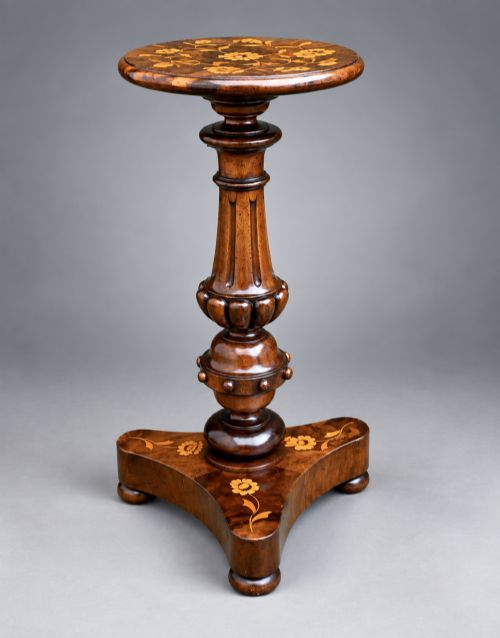
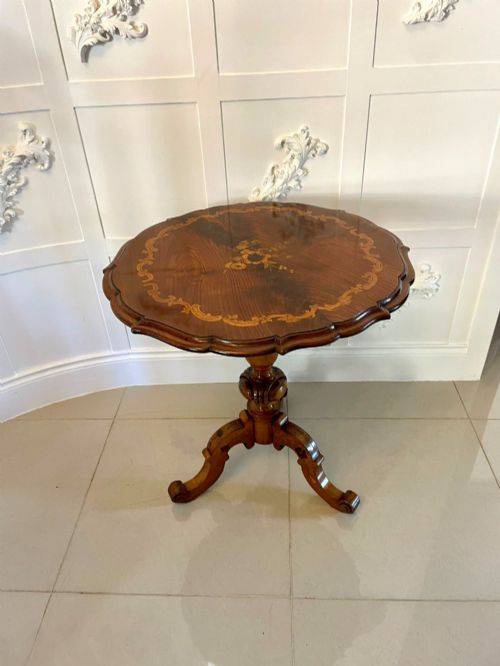
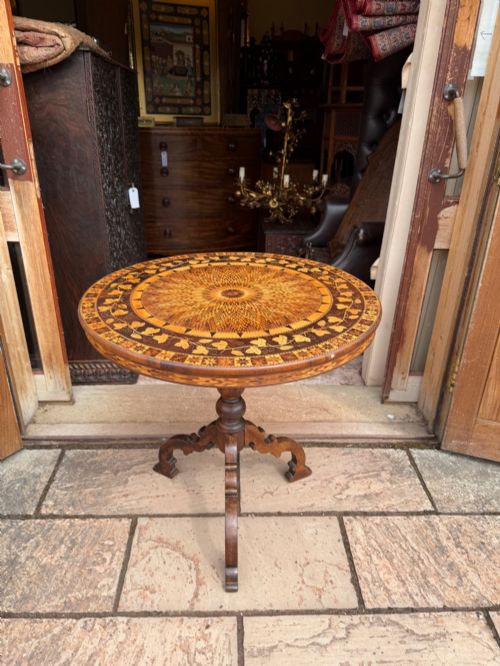
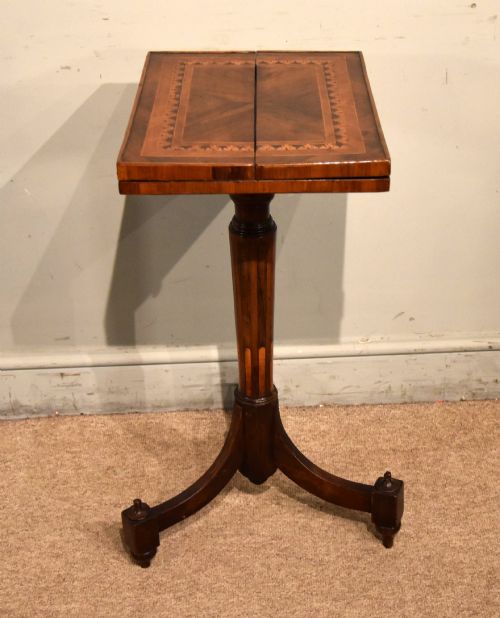
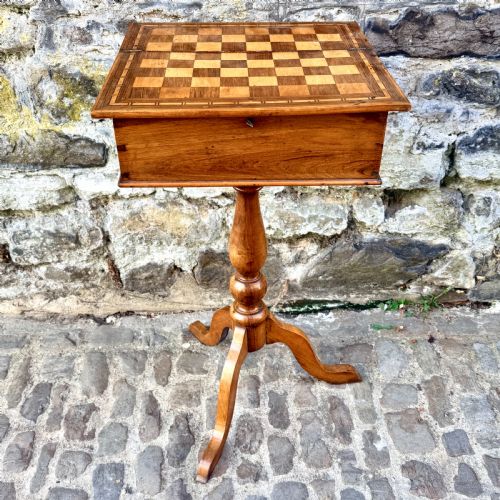
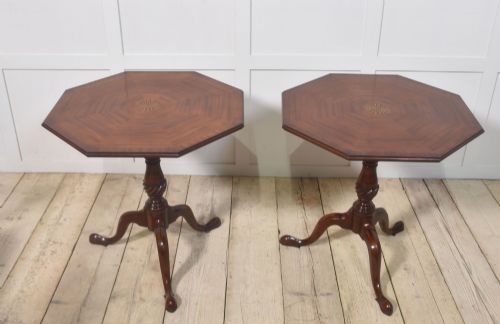
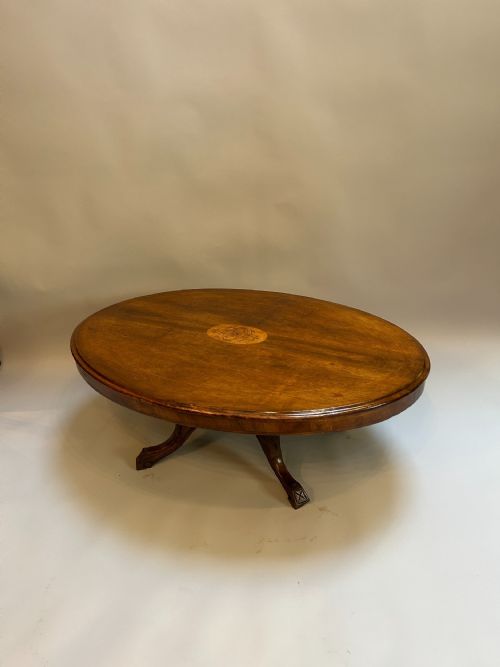
These brown marquetry tripod table pieces bring intricate timber work and compact stands into a room.
Brown Marquetry Tripod Table
A brown marquetry tripod table combines a decorative inlaid top with a supportive three-legged pedestal base, offering both utility and visual depth. Collectors searching for a brown marquetry tripod table frequently encounter Victorian examples alongside Georgian and later nineteenth-century pieces.
The assortment on this page spans several useful forms including wine tables, occasional tables, lamp tables and games tables. Walnut and burr walnut dominate the selection, often enriched with detailed floral or geometric marquetry work.
Origins stretch from English workshops to Italian Sorrento production and French provincial hubs. Buyers find everything from small circular candle stands to larger pedestal tables designed for specific domestic tasks.
Materials and construction methods
Cabinet makers utilised solid timbers such as walnut, mahogany, oak and fruitwood for the structural frames, legs and tilt mechanisms. Veneers of burr walnut, olive wood and satinwood provided stable surfaces capable of receiving intricate surface decoration without warping.
Marquetry and parquetry techniques involved cutting thin pieces of contrasting wood, fruitwood or specimen timbers to form pictorial or geometric motifs. These delicate inlays were then set flush into the primary timber ground and polished to a smooth finish.
Several examples include clever tilt-top mechanisms designed to tuck flat against the wall when the tea had been cleared away.
Distinctions in execution and design
The precision and complexity of the wood inlay mark the primary division between standard items and exceptional examples. Finer specimens display tight joints, varied natural timber tones and deeply expressive botanical or architectural motifs rather than simple geometric borders.
The turning and carving of the tripod base dictate overall balance and structural integrity. Superior pieces feature harmoniously proportioned cabriole or pillar supports that complement the richness of the top without obscuring the craftsmanship.
Almerico Gargiulo
The Brown Marquetry Tripod Table Glossary
- Marquetry
- The art of forming decorative patterns by fitting together contrasting veneer slices on a wooden ground.
- Tripod base
- A furniture support consisting of three legs radiating from a central pillar.
- Sorrento ware
- Intricately inlaid wooden items produced in the Italian town of Sorrento during the nineteenth century.
- Snap top
- A tabletop mounted on a catch mechanism allowing it to tilt vertically when not in use.
Brown Marquetry Tripod Table: Frequently Asked Questions
What is a brown marquetry tripod table used for?
These tables served various domestic functions in nineteenth-century parlours and drawing rooms, holding lamps, small objects or wine glasses.
Their compact footprint made them easily movable to firesides or seating areas depending on daily requirements.
How do I identify a Sorrento table?
Sorrento tables typically feature distinctive Italian marquetry depicting floral sprays, figures or buildings using varied fruitwood veneers.
Many examples date from the nineteenth century and originate from specialised workshops along the Italian coast.
What woods were used for these tables?
Walnut and burr walnut form the primary foundation for the majority of these pieces, providing rich brown tones and swirling grain patterns.
Makers also incorporated mahogany, oak, olive wood and assorted fruitwoods to create contrast within the inlaid designs.
Are these tables suitable for modern living?
Their modest proportions allow them to fit beside modern sofas or chairs as functional accent surfaces.
The stable three-legged design performs well on various floor surfaces while introducing historical warmth to a room.