



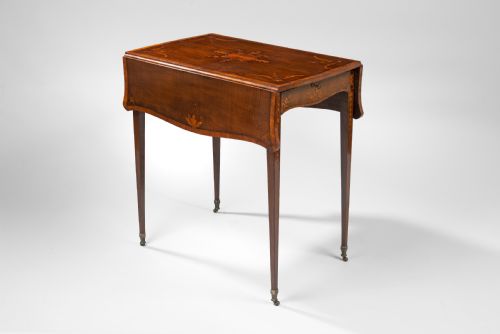


Brown Marquetry Drop Table
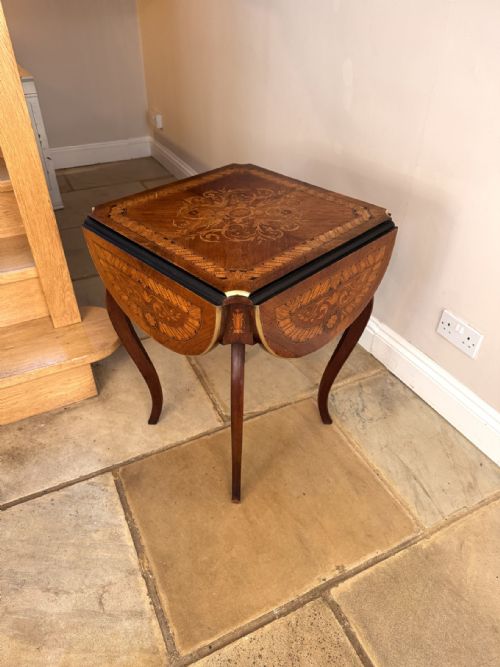
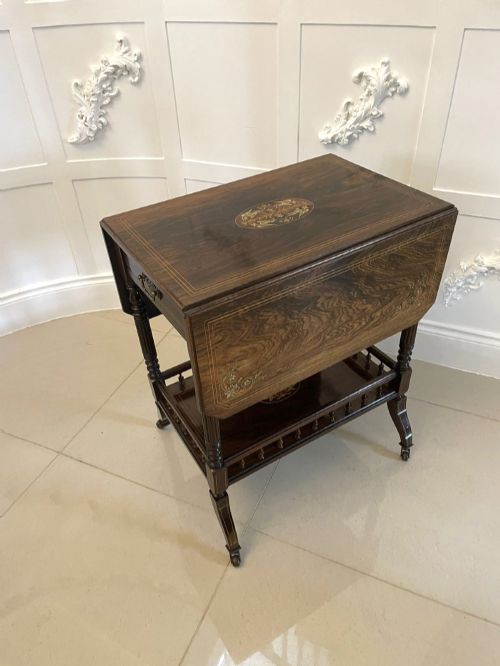
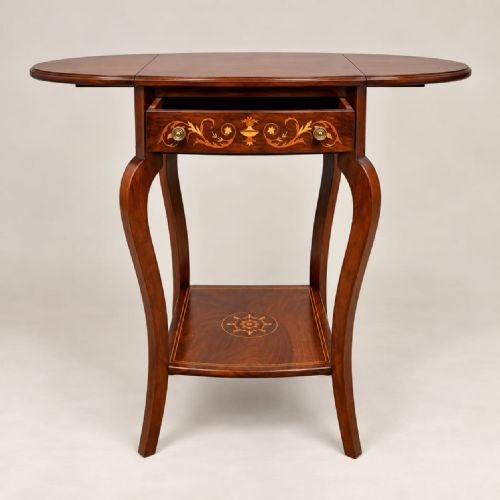
A brown marquetry drop table brings elaborate floral and geometric wood inlay together with folding leaves for flexible living.
Brown Marquetry Drop Table
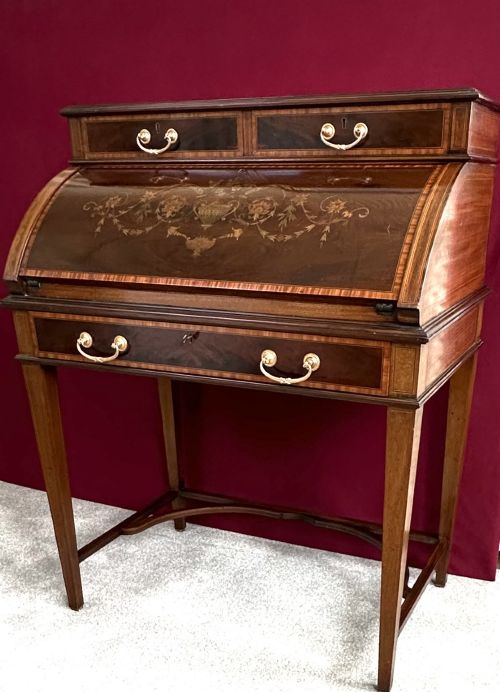
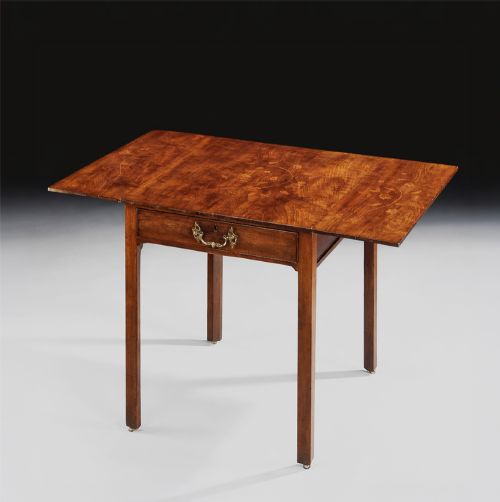
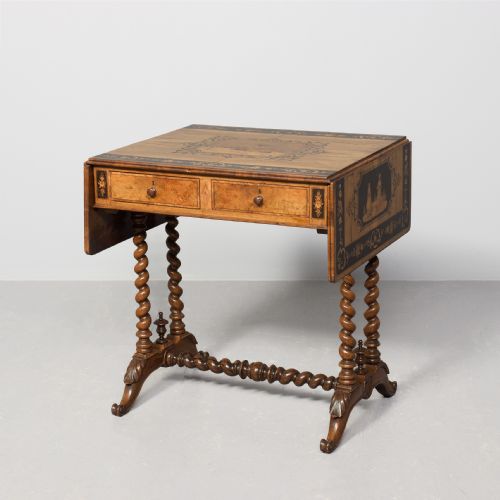
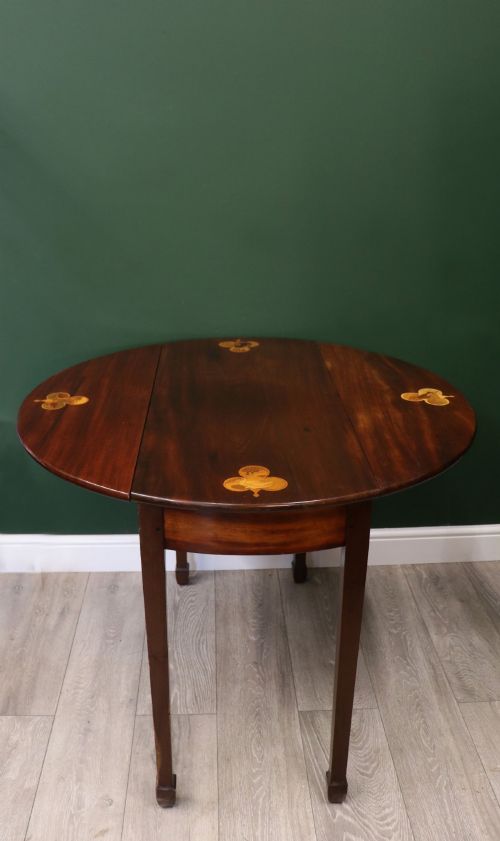
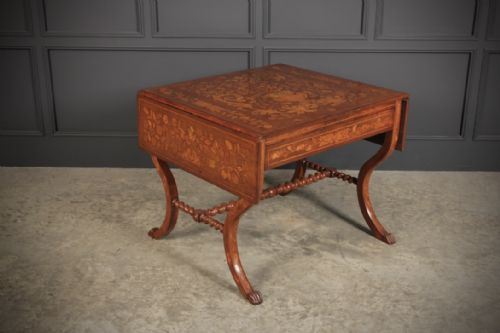
A brown marquetry drop table combines darker cabinet timbers with contrasting wood veneers arranged in pictorial or geometric patterns, featuring hinged leaves that lower or raise as needed. When you search for a brown marquetry drop table, you encounter occasional tables, Pembroke tables, Sutherland tables, and sofa tables originating from Victorian, Edwardian, and Georgian periods.
The format relies on drop leaves supported by swing brackets or gatelegs, allowing compact storage against a wall or expanded surface space for tea and writing. Examples span Dutch marquetry, Italian Sorrento work, and Sheraton styles, using rich timber bodies such as mahogany, walnut, rosewood, and satinwood.
Materials and construction
Cabinetmakers constructed these tables using solid foundational timbers like mahogany, walnut, and rosewood, applying thinner decorative veneers across the top and leaves. Marquetry details required meticulous hand-cutting of contrasting woods such as boxwood, satinwood, and harewood, which were then fitted directly into the surface recesses.
Metal elements including brass hinges, castors, and ormolu mounts provided structural articulation and movement for the folding leaves and drop flaps. Surface finishing involved polishing the timber grain to highlight the natural colour variations and the precision of the wood inlay.
Brown Marquetry Drop Table Retail Price Guide 2026
Typical asking prices for brown marquetry drop table among the pieces listed under this phrase on Sellingantiques today, from the lower quarter to the upper quarter. They describe what is for sale here now, not the wider market.
Drop leaves hide secret hinges that have patiently folded down for tea parties since the age of crinolines.
Determinants of quality
Quality rests upon the precision of the wood inlay and the crispness of the marquetry cutting, where tighter joints between contrasting timbers indicate superior craftsmanship. The choice of underlying cabinet wood, such as burr walnut or figured mahogany, alongside the complexity of the floral or geometric design, elevates the standing of a piece.
Structural integrity of the drop mechanism and the stability of the folding leaves dictate daily utility, distinguishing finely engineered tables from simpler utilitarian versions. Original surface patination and retention of matching brass or wood components preserve the historical authenticity of the work.
The Brown Marquetry Drop Table Glossary
- Marquetry
- Decorative veneer work assembled in patterns to form pictures or geometric designs on furniture surfaces. It involves cutting thin sheets of different coloured woods and fitting them together like a puzzle.
- Drop leaf
- A hinged section of a table top that can be folded down to save space or raised and supported to extend the surface. These leaves operate using swing brackets or hinged gatelegs.
- Pembroke table
- A small rectangular table featuring two hinged drop leaves on opposite sides and usually one or two drawers. It was developed during the eighteenth century for versatile use as a writing or breakfast table.
- Sutherland table
- A narrow drop-leaf table where the leaves comprise a very large portion of the top, supported by gatelegs that swing out almost to the edge. When folded down, the table occupies minimal floor space.
- Satinwood
- A yellowish or light brown timber prized for its lustrous grain, frequently utilised for contrasting inlay work and banding on eighteenth and nineteenth century furniture.
Brown Marquetry Drop Table: Frequently Asked Questions
What is a drop leaf table?
A drop leaf table is a piece of furniture featuring a fixed central section and hinged flaps on one or both sides that lower or raise.
This design allowed households to conserve floor space when the leaves were down and expand the surface area for dining or writing when needed.
How do I date a marquetry table?
Dating relies on examining the underlying timber species, the style of the marquetry motifs, and the construction methods used in the frame and drawer linings.
Georgian pieces tend towards symmetrical Sheraton patterns in mahogany, whereas Victorian and Edwardian examples often display denser floral marquetry in walnut or rosewood.
Where were these tables used?
These tables served multiple functions in nineteenth and early twentieth century drawing rooms, parlours, and sitting rooms as occasional, lamp, or sofa tables.
Their compact footprints and folding leaves made them adaptable for serving tea, holding books, or writing correspondence.
What is the difference between marquetry and inlay?
Marquetry involves covering the entire surface of a panel with an assembled mosaic of wood veneers to create a picture or pattern.
Inlay traditionally refers to sinking pieces of contrasting material into recesses carved into a solid timber ground rather than a complete veneer skin.