

Brown Marquetry Bureau
A brown marquetry bureau brings patterned woodcraft and a sloping fall-front lid to a room, offering hidden pigeonholes alongside a practical writing surface.
Brown Marquetry Bureau
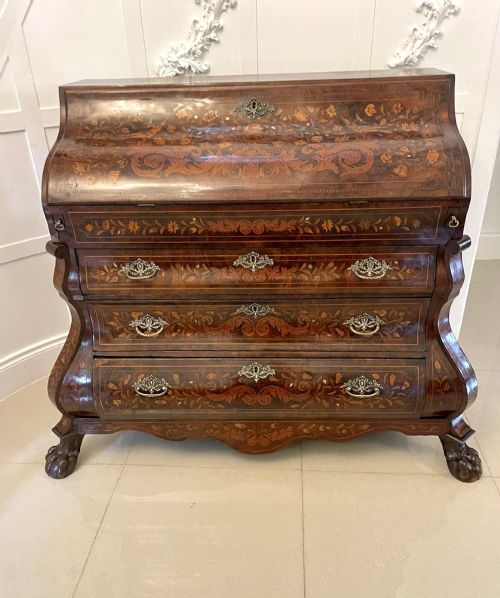
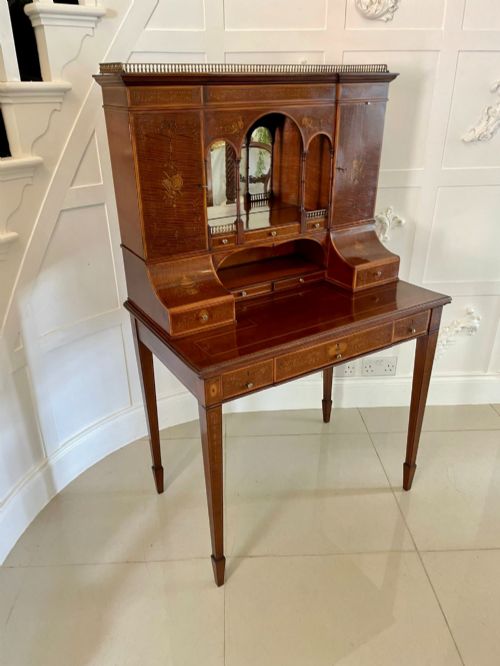
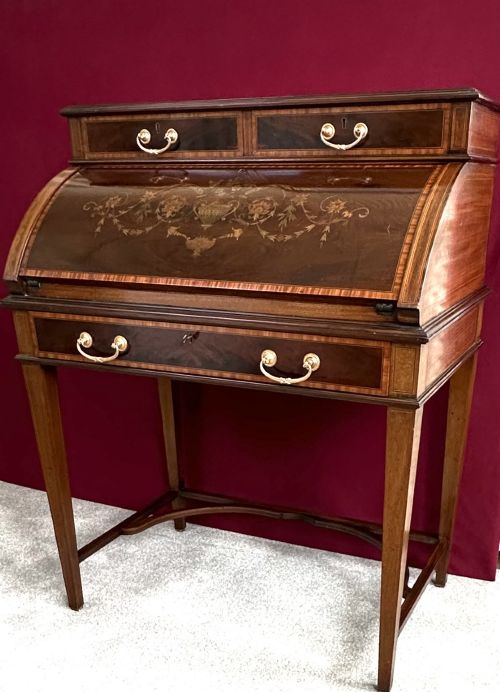
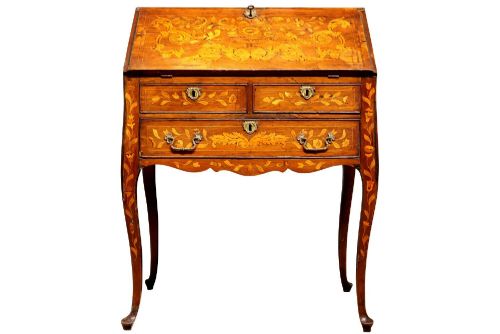
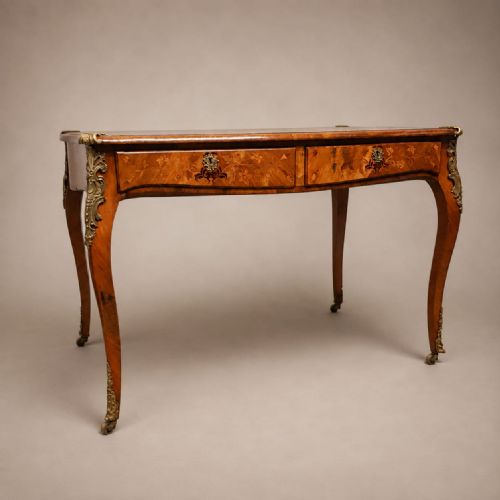
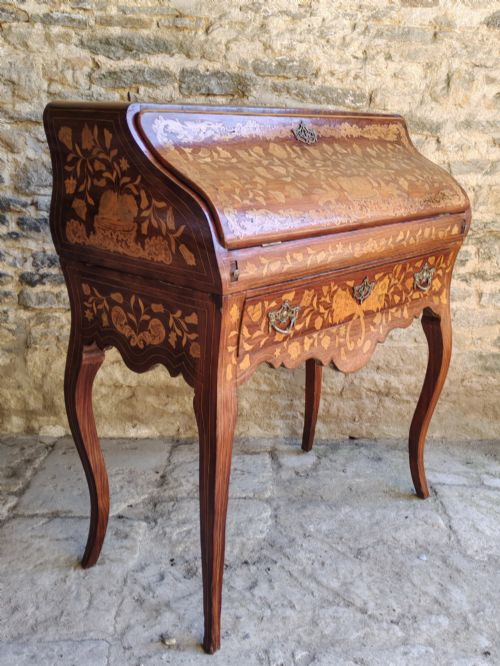
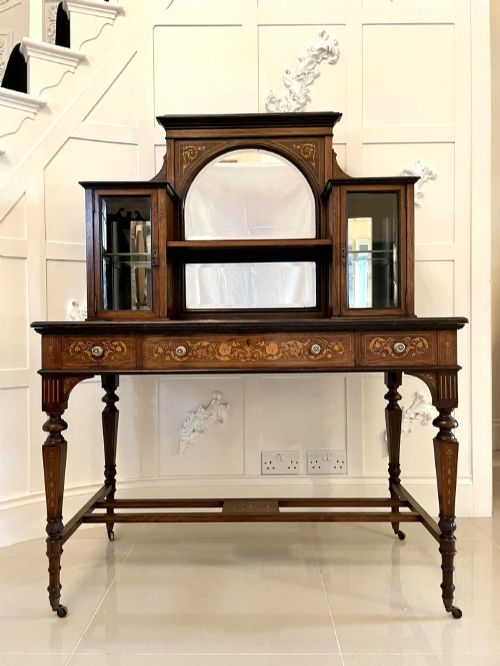
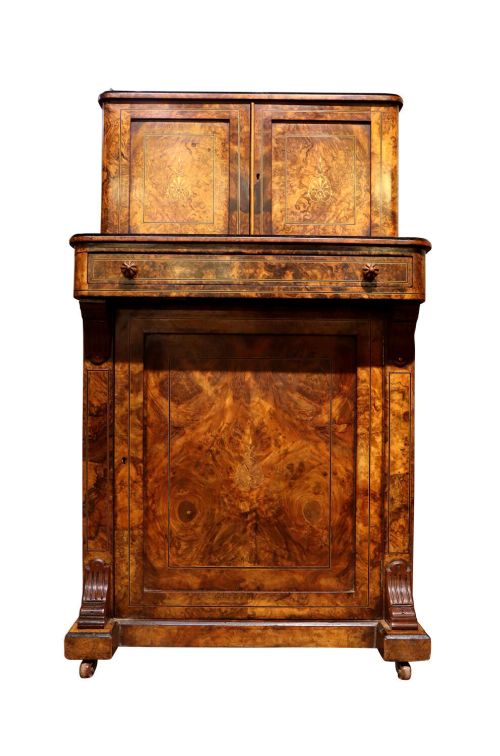
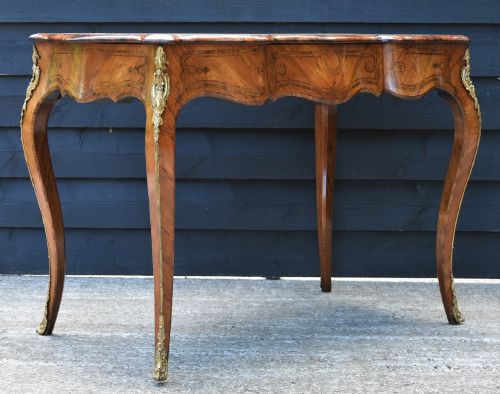
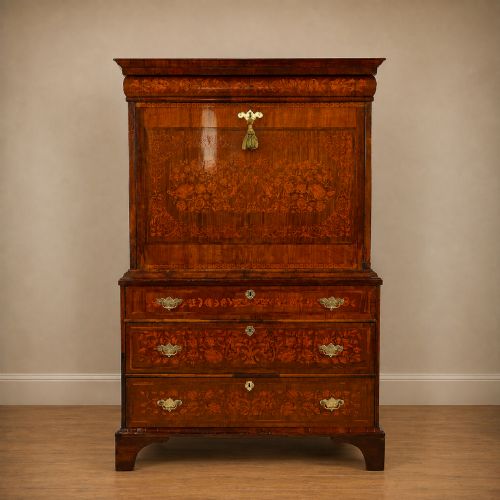
A brown marquetry bureau combines a fitted writing compartment with pictorial or geometric wood veneers. The selections on this page span several centuries, including 18th century Dutch and Italian examples alongside later Victorian and Edwardian interpretations.
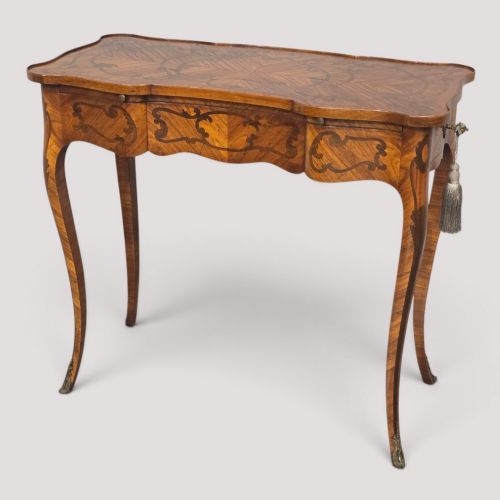
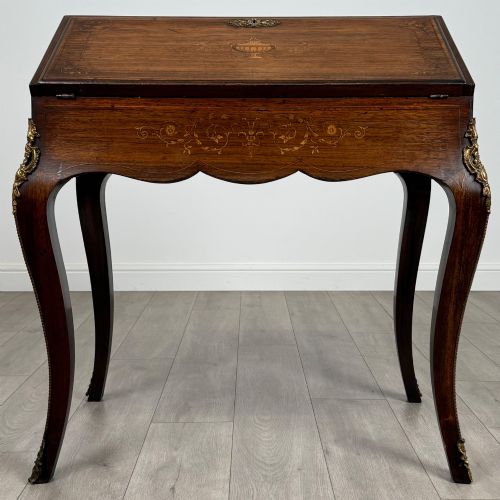
Buyers will encounter various forms ranging from compact bureau de dame writing tables to substantial bureau bookcases. Walnut, mahogany, and kingwood serve as primary timber backdrops for intricate floral and scrolling inlay work.
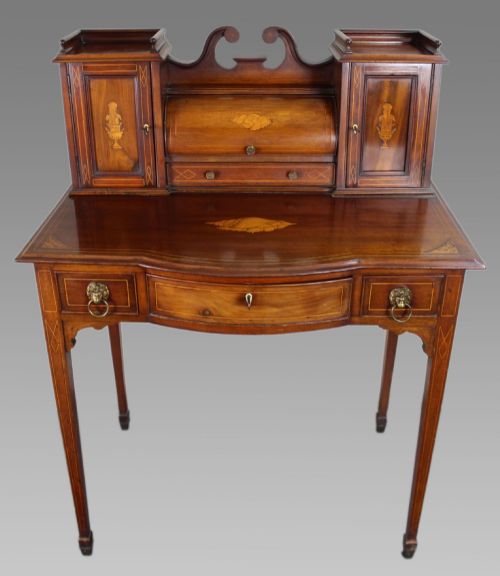
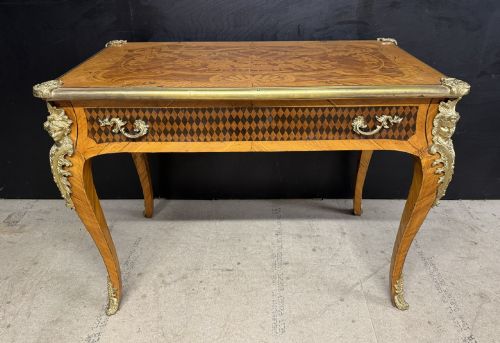
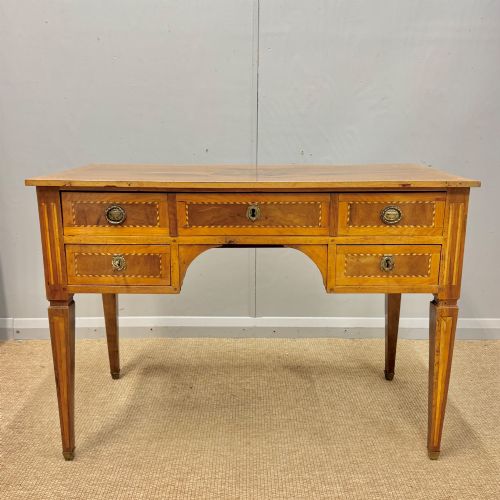
Continental pieces often display Dutch Baroque and French revival influences with serpentine fronts and bombé shapes. British variations tend toward structured mahogany and satinwood finishes with delicate stringing and classical motifs.
Materials and Construction
Cabinet makers constructed carcass frames from solid secondary timbers before applying fine veneers of walnut, mahogany, rosewood, and kingwood. Contrasting light woods such as satinwood and fruitwood were cut into floral and pictorial patterns for the marquetry panels.
Specialised brass hardware, ormolu mounts, and fitted leather writing surfaces completed the functional sections of the desks. Cabinet makers utilised hand-cut dovetails for internal drawers and secured applied mouldings with traditional animal glues.
Desks range from compact nineteenth-century ladies writing tables to substantial eighteenth-century bureau bookcases with extensive floral marquetry.
Distinctions in Quality
The sophistication of the veneer work dictates the standing of an individual piece. Subtle tonal variations within the contrasting woods give floral motifs depth, whereas flat or repetitive patterns lack visual interest.
Structural integrity of the fall-front hinges and the smoothness of internal small drawers separate standard commercial items from finer workshop output. Original mounts, patinated leather, and retained keys contribute to the coherence of a surviving desk.
Edwards and Roberts·Maple & Co
The Brown Marquetry Bureau Glossary
- Marquetry
- The decorative technique of applying thin veneers of various woods onto a carcass to create pictorial or geometric patterns. These designs often depict elaborate floral sprays, birds, and scrolling foliage.
- Bureau
- A desk featuring a sloping hinged lid that opens to reveal a fitted interior of small drawers and pigeonholes. The form evolved during the seventeenth century into a standard domestic writing furniture type.
- Fall-front
- The hinged writing flap on a bureau or bureau bookcase that drops into a horizontal position for writing. When closed, it conceals the inner compartments and supports the external marquetry display.
- Bombe
- A swelling, outward-curved contour found on the sides and fronts of certain continental case pieces. This undulating profile requires skilled carpentry to fit veneer across curved surfaces.
- Ormolu
- Gilded bronze mounts applied to furniture edges and corners for decorative accent. These metal enrichments appeared frequently on French revival desks.
- Bonheur du jour
- A small, light ladies writing desk featuring a tiered superstructure with shelves or small drawers above the main work surface. This form gained popularity during the nineteenth century.
Brown Marquetry Bureau: Frequently Asked Questions
What is a bureau bookcase?
A bureau bookcase combines a sloping desk compartment with upper shelving enclosed by glazed or solid wooden doors. This dual-purpose furniture piece served for both correspondence and book storage in period homes.
Lower sections typically contain graduated drawers beneath the fall-front writing surface. The upper bookcase adds vertical presence to the overall room arrangement.
How do I care for marquetry surfaces?
Maintain marquetry furniture by keeping pieces away from direct heat sources and strong sunlight that can dry out old veneers. Apply microcrystalline wax sparingly to nourish the timber and protect the historical surface.
Avoid using modern liquid polishes or silicone sprays, which penetrate open grain and attract dust. Gentle dusting with a dry lint-free cloth preserves the subtle sheen of the wood.
How do I distinguish Dutch from English styles?
Dutch marquetry pieces generally feature dense floral and urn motifs executed in contrasting light woods across walnut frames. These examples often display bombé profiles or distinctive curved outlines.
English variants usually adhere to more rectilinear proportions in mahogany or satinwood with restrained stringing. Classical decorative motifs replace the exuberant floral displays seen on continental work.
Where were these desks placed?
These writing pieces occupied private studies, drawing rooms, and boudoirs where correspondence and personal record-keeping took place. Freestanding variants allowed placement away from walls to display patterned veneers on all sides.
Smaller formats such as the bureau de dame suited bedroom spaces or intimate morning rooms. They functioned as both decorative display items and practical writing stations.