
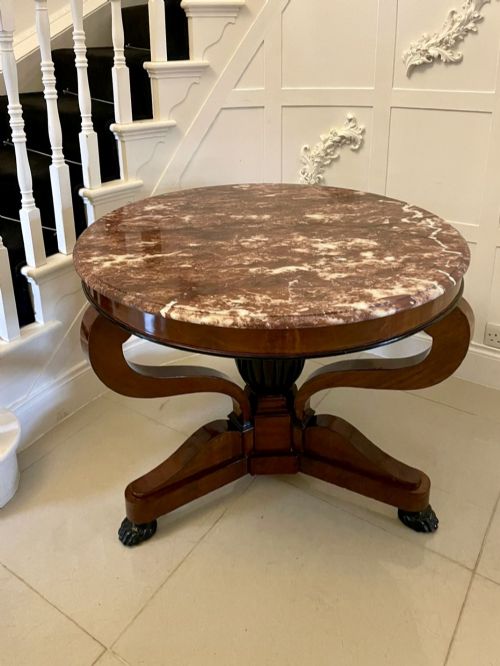
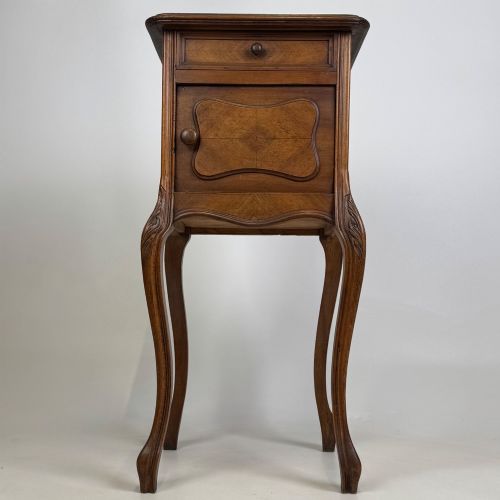
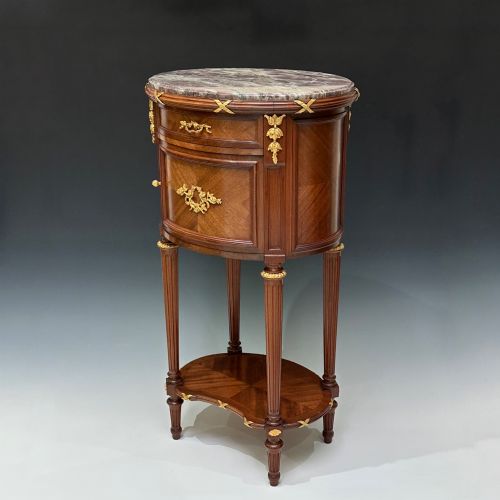
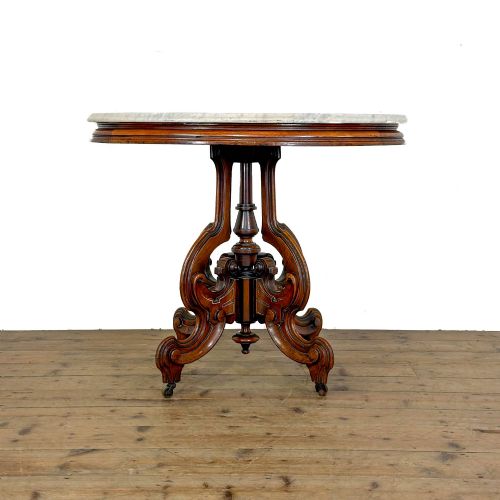
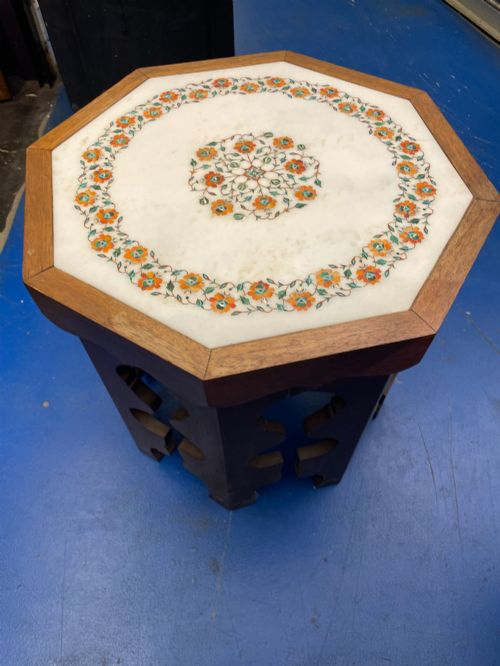
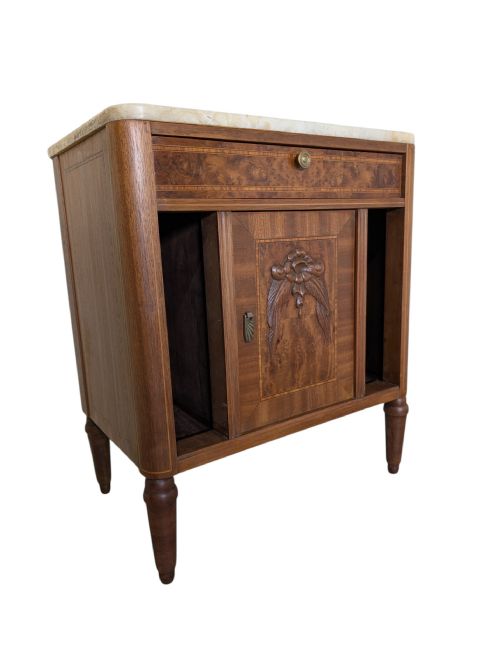
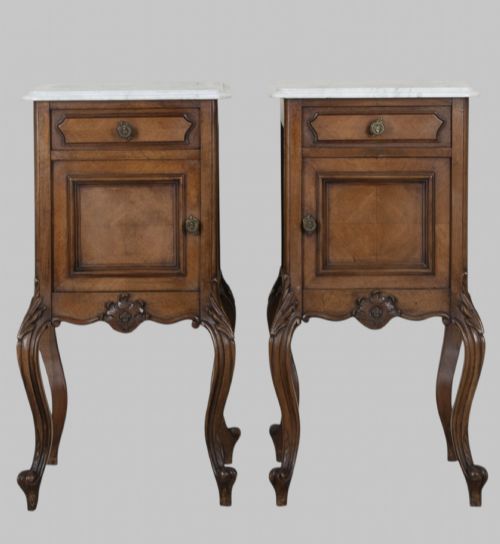
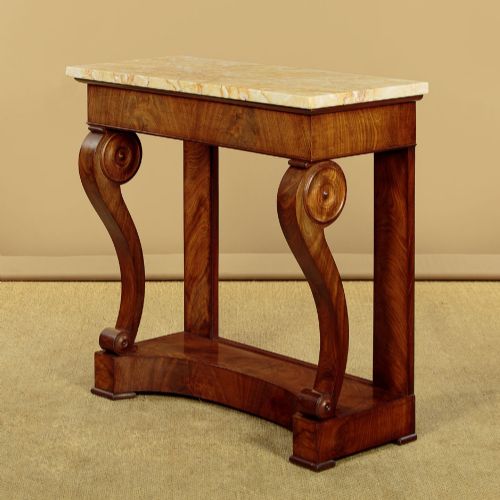
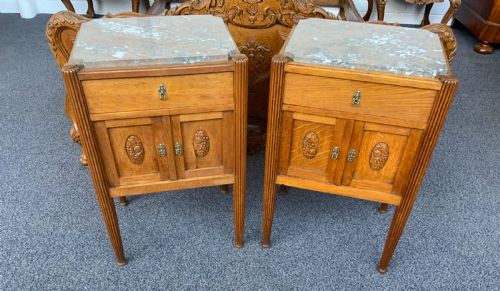

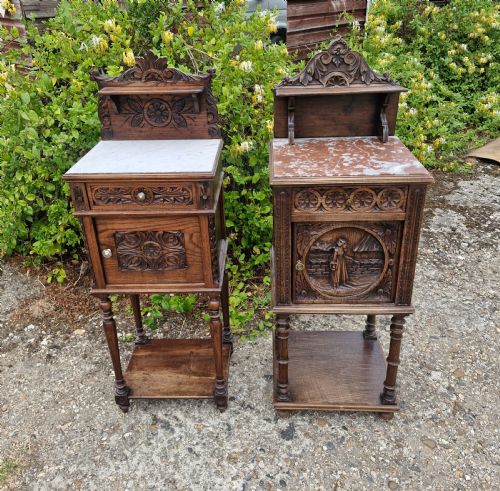
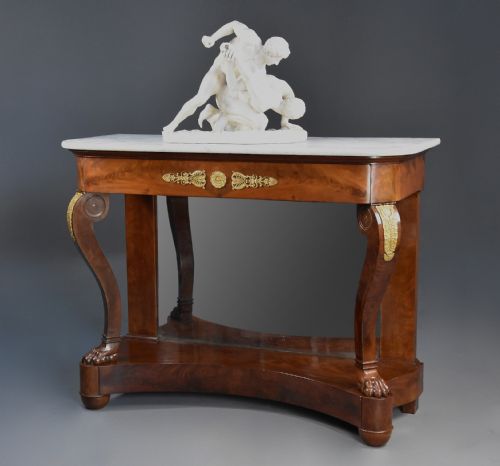
Brown Marble Top Table
A brown marble top table brings solid stone and warm timber together in forms ranging from French centre tables to compact bedside cabinets.
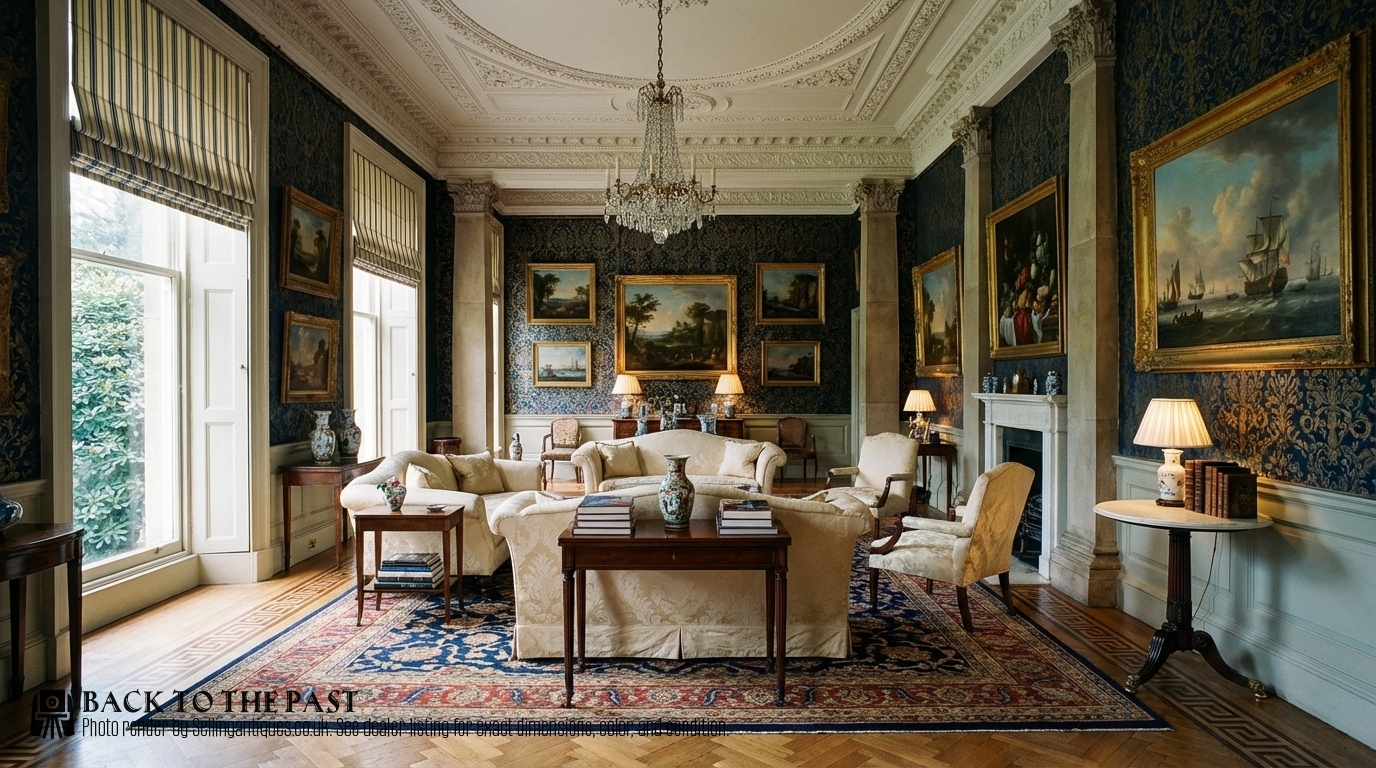
Brown Marble Top Table
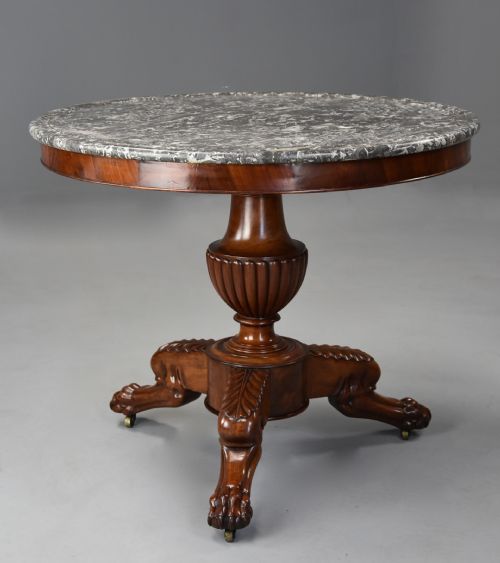
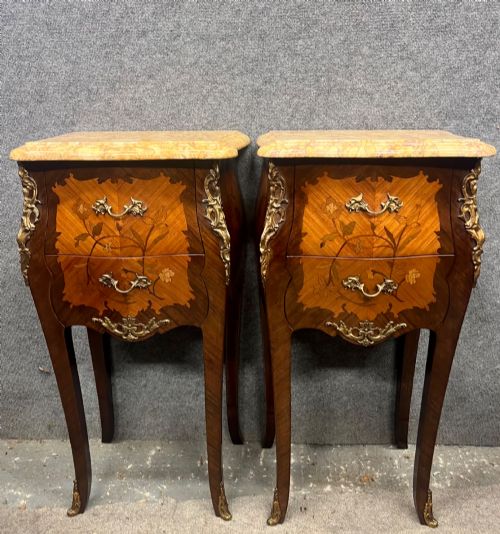
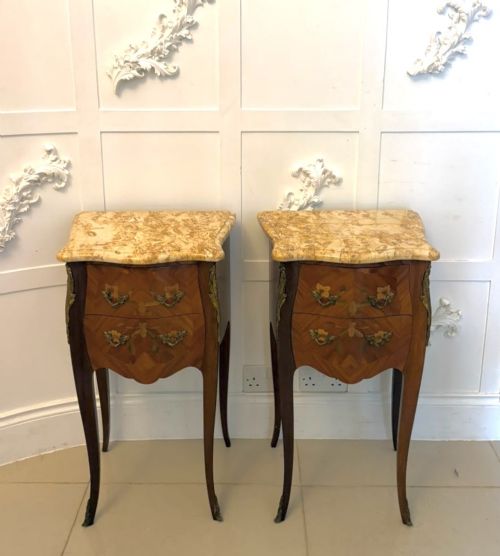
A brown marble top table functions primarily as a sturdy surface for lamps, wash basins, or display, combining useful utility with decorative stone. When searching for a brown marble top table, buyers encounter a broad variety of forms originating mostly from the nineteenth and early twentieth centuries.
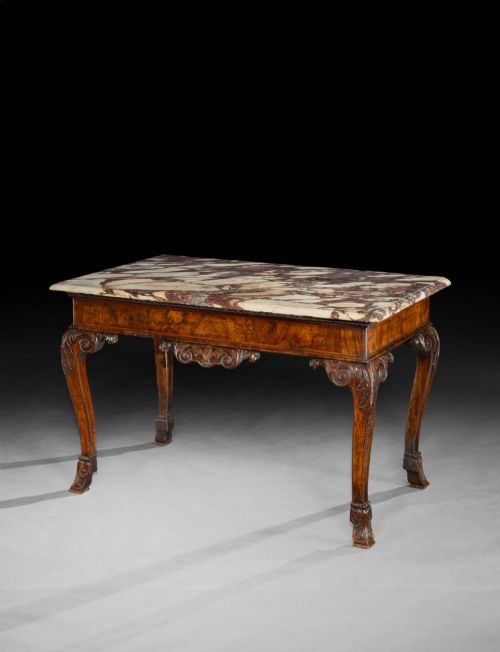
The selection on this page leans heavily toward French bedside cabinets, console tables, and centre tables rather than simple utilitarian stands. Pieces from the Victorian, Edwardian, and Art Deco eras appear alongside earlier Regency and George II styles.
Makers utilised walnut, mahogany, oak, and kingwood for the structural frames, mounting veined marble slabs securely upon them. These tables range from grand freestanding centrepieces to intimate bedside chests and washstands.
How they were made
Craftsmen shaped dense hardwoods such as mahogany, walnut, oak, and kingwood to build stable frames capable of supporting heavy stone. Veneers including burr walnut and fruitwood added decorative grain patterns to the wooden carcasses.
Slabs of natural marble, including Belgian Sainte-Anne varieties, were cut and polished to fit precisely onto the wooden tops, often featuring curved or serpentine edges. Ormolu mounts, brass details, and marquetry inlay further embellished the French and Victorian designs.
Listings feature woods such as walnut, mahogany, oak, kingwood, and rosewood paired with marble and brass.
What varies in quality
The distinction between ordinary and exceptional pieces lies in the choice of timber figures and the refinement of the cabinetmaking. Finely matched veneer grains, intricate marquetry inlay, and crisply carved wooden details elevate a table's stature.
The character and thickness of the marble top also dictate quality, particularly where distinctive veining and original polish remain intact. Stamped maker signatures or superior structural joinery further separate standard workshop output from premier creations.
François Linke·JACOB·Maples
The Brown Marble Top Table Glossary
- Gueridon
- A small French round table, typically supported by a central pillar or column. These often feature inset marble tops and originated in the seventeenth century.
- Ormolu
- Gilded bronze applied as a decorative mount to furniture pieces. It is frequently seen on French console tables and cabinets from the nineteenth century.
- Marquetry
- Decorative veneer work arranged in geometric or pictorial patterns using various coloured woods. It adorns the surfaces of fine Edwardian and Art Deco bedside chests.
- Console table
- A table designed to stand against a wall, frequently secured with brackets. Examples in this selection are topped with marble and constructed from mahogany or oak.
- Washstand
- A piece of furniture built to hold a basin and jug, commonly fitted with a protective marble top. Victorian and Edwardian examples often include cabinetry or tile backs.
Brown Marble Top Table: Frequently Asked Questions
What rooms suit a brown marble top table?
Bedside cabinets and small occasional tables fit comfortably into bedrooms as functional stands for lamps and personal items. Larger centre tables and console variants anchor living rooms or hallways as striking focal points.
The cool stone surface provides a practical, wipeable area that withstands daily use while introducing rich timber tones to the interior space.
How do I care for the marble?
Marble requires gentle cleaning with warm water and mild, non-acidic soap to preserve its polished surface. Avoid abrasive cleaners and acidic substances like citrus or vinegar that can etch the stone.
Using coasters and mats protects the natural material from staining and scratches during everyday domestic life.
Are these tables heavy to move?
The inclusion of solid stone slabs adds considerable weight to the overall structure of each table. Most pieces require two people to lift and position them safely without straining the wooden joints.
Lifting the base rather than the marble top prevents the stone from shifting or detaching during relocation.
How do I identify a French piece?
French tables often display distinct stylistic traits such as curved cabriole legs, Ormolu mounts, and intricate marquetry or kingwood veneers. Forms like the gueridon and bedside cabinet reflect traditional continental proportions and joinery techniques.
Specific signatures, stamps, or the use of distinctive regional marble varieties like Belgian Sainte-Anne further confirm continental origins.
How do I tell Victorian from Art Deco?
Victorian tables typically feature heavier carved wooden details, rich burr walnut or mahogany grains, and ornate serpentine or bow fronts. They lean towards traditional revival styles with elaborate ornamentation.
Art Deco examples embrace cleaner geometric lines, streamlined forms, and simpler oak or walnut structures that reflect mid-twentieth-century design shifts.