


Brown Mahogany Upholstered Footstool
A brown mahogany upholstered footstool brings solid timber frames and period upholstery into a room.
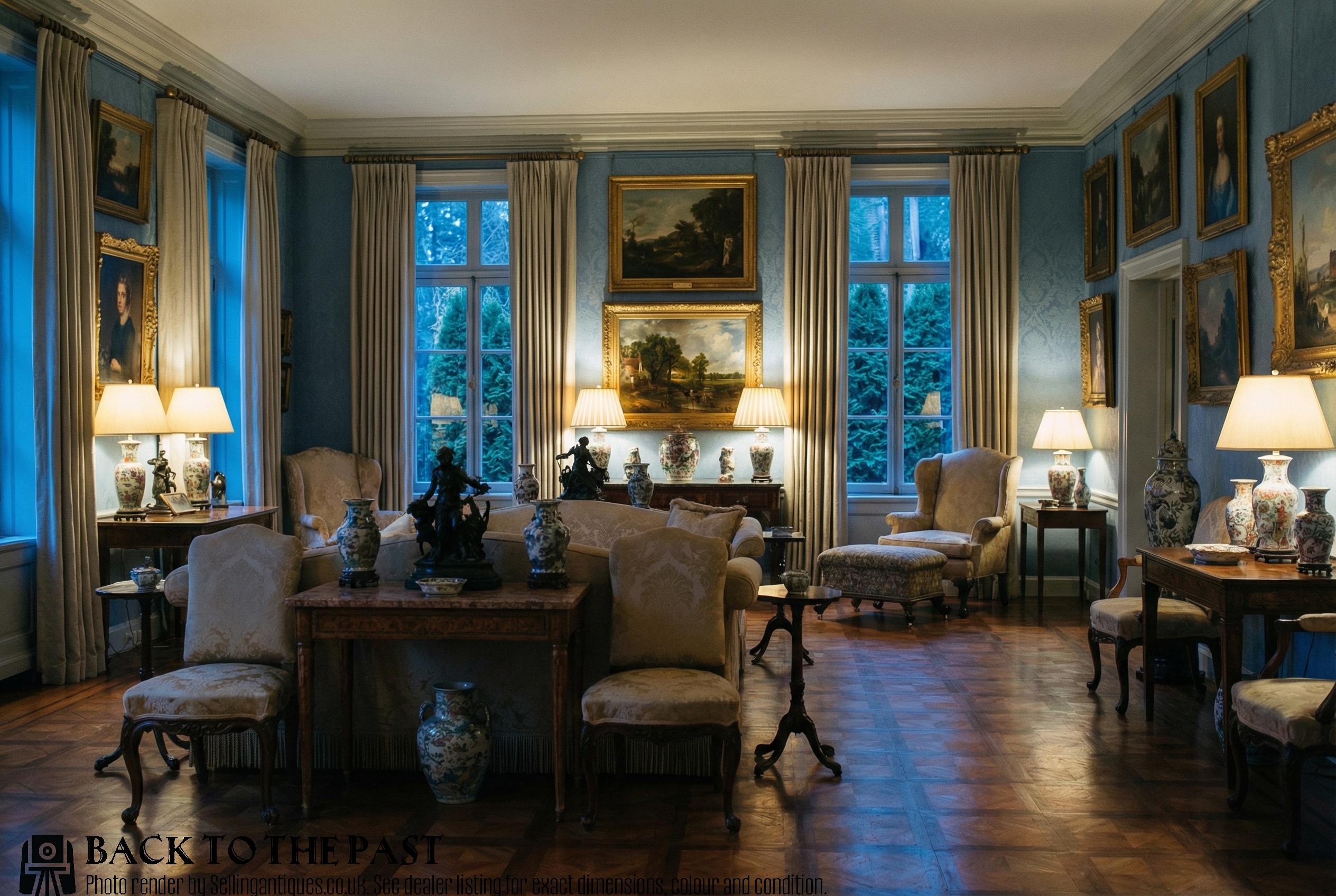
Brown Mahogany Upholstered Footstool
A brown mahogany upholstered footstool spans various historical periods including the Georgian, Regency, Victorian and Edwardian eras. These pieces appear in forms ranging from small fireside rests to long ottomans and piano stools.
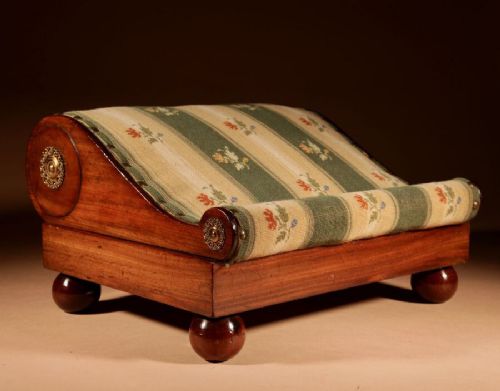
Victorian examples upholstered in leather or velvet surface frequently, alongside Edwardian piano stools and earlier George III or Regency frames. The timber displays the rich grain characteristic of mahogany across different centuries of cabinetmaking.
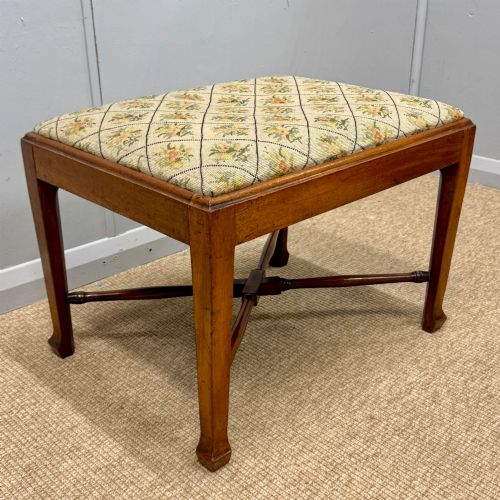
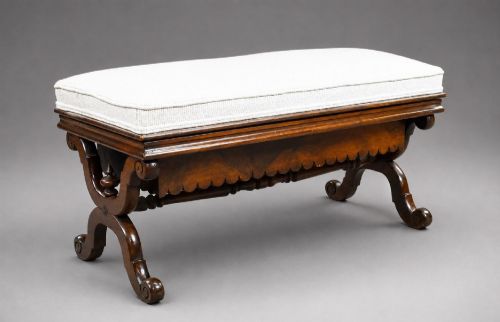
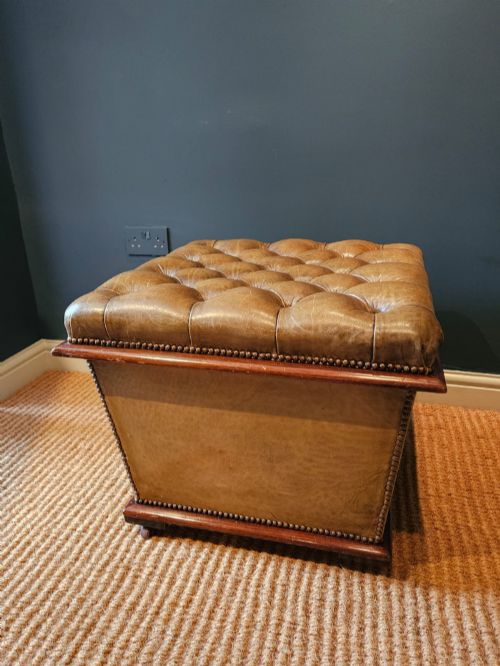
Formations include simple four-legged designs, X-framed supports, cabriole legs, and larger pieces featuring internal storage or carved stretchers. Each version reflects the seating requirements and domestic habits of its original period.
Materials and construction
Makers utilised solid mahogany for the structural frames, often shaping the timber into cabriole legs, turned supports, or cross stretchers. Brass details and ebonised accents occasionally complement the primary wood.
Upholstery techniques varied from buttoned leather and tweed to woven tapestry, wool, velvet, and various textiles. Interior padding and webbing secured the top cover to the wooden base during the manufacturing process.
The listings feature mahogany frames paired with diverse textiles, including leather, velvet, tapestry, wool, and tweed across various historical periods.
Assessing quality and craftsmanship
The precision of the wood carving and the stability of the frame joints distinguish finer examples from standard production pieces. Superior timber selection shows deep grain patterns and solid weight without excessive modern repairs.
The standard of the upholstery work and the durability of the covering material contribute significantly to the overall execution. Original period fabric or well-executed traditional reupholstery maintains the integrity of the design.
James Shoolbred·Liberty and Co·Morris and Co·Whytock and Reid·Gillows of Lancaster
The Brown Mahogany Upholstered Footstool Glossary
- Cabriole leg
- A furniture leg that curves outward at the knee and tapers inward toward the foot, often ending in a pad or scroll. This design appears frequently on 18th-century and Victorian pieces.
- Cross stretcher
- A system of wooden braces connecting the legs underneath a stool to provide structural rigidity. These supports often feature central turnings or decorative joinery.
- Ottoman
- A low upholstered seat or footstool, sometimes constructed with internal storage space beneath a hinged lid. Larger versions accommodate seating alongside foot support.
- X-frame
- A furniture base formed by intersecting diagonal timbers resembling the letter X. This classical configuration provides distinct architectural support for small stools.
Brown Mahogany Upholstered Footstool: Frequently Asked Questions
How do I date a mahogany footstool?
Dating relies on examining the construction methods, leg styles, and secondary timbers used in the frame. Victorian and Edwardian pieces often display machine-tooled elements, whereas 18th-century examples show hand-cut joinery.
Upholstery materials and tack types also offer clues, though many pieces have been recovered over time. Comparing the overall silhouette against known period designs helps narrow down the decade of manufacture.
Where were these stools used in the home?
Footstools and ottomans served primarily in sitting rooms and libraries as fireside rests for the feet. Piano stools were placed specifically beside keyboard instruments for adjustable or seated performance.
Larger ottomans with storage functioned at the foot of beds or within dressing rooms to hold linens and garments. Smaller variants moved easily between seating areas depending on daily needs.
Are leather and fabric upholstery original?
Original upholstery rarely survives intact on pieces dating back to the 18th and 19th centuries due to standard wear and tear. Most surviving examples have undergone reupholstery at least once during their lifespan.
When traditional methods and period-appropriate textiles are utilised, the replacement work respects the historical character of the wooden frame. Leather coverings also get replaced to maintain usability in contemporary settings.
How should I care for mahogany frames?
Mahogany requires minimal maintenance, typically involving occasional dusting with a soft, dry cloth to prevent dirt buildup. Avoiding direct sunlight and extreme temperature fluctuations protects the timber from drying out or splitting.
Applying a traditional beeswax polish periodically helps nourish the wood surface and preserve its natural sheen. Leather and fabric top sections require cleaning methods appropriate to their specific textile type.